
- The history of the Lorkh potato
- Description and characteristics of the culture
- Productivity
- Taste qualities and substance content in the tuber
- Advantages and disadvantages of the variety
- Potato planting technology
- Deadlines
- Selecting a site and preparing the soil
- We observe crop rotation
- Selection and culling of planting material
- Landing plan
- Necessary care for potatoes
- Irrigation
- Loosening and mulching the soil
- Fertilization
- Protection from diseases and insects
- Harvesting and storage
- Reviews of the variety
To date, over 4,000 potato varieties have been developed. They all differ in taste, planting and ripening times, and fruit size. Therefore, choosing the right potato variety for your garden can be a challenging task. However, there are time-tested varieties that have never failed. The Lorkh potato is one such vegetable, and a detailed description of this variety is provided in this article.
The history of the Lorkh potato
The crop was developed during the difficult times of the 1920s. Breeders were faced with the task of producing a high-yielding potato variety that was resilient to climate conditions. The work was led by the renowned Soviet scientist A.G. Lorkh, after whom the new potato variety is named.
Until the middle of the last century, this variety was considered the main one grown in the country's fields and was recognized as elite. However, a little later, the new selection was forgotten and was only revived in the 1970s. Acquiring seed for this crop is not easy. Therefore, fortunate gardeners cultivate and propagate this variety.
Description and characteristics of the culture
The variety was bred for cultivation in regions with moderate and warm climates, but due to the crop's resistance to temperature fluctuations, it is also cultivated in northern latitudes.
Main characteristics:
- Branched bushes grow up to 80-90 cm.
- The foliage cover is dense, bright green in shades.
- The inflorescence is dense, blooming with medium-sized purple flowers.
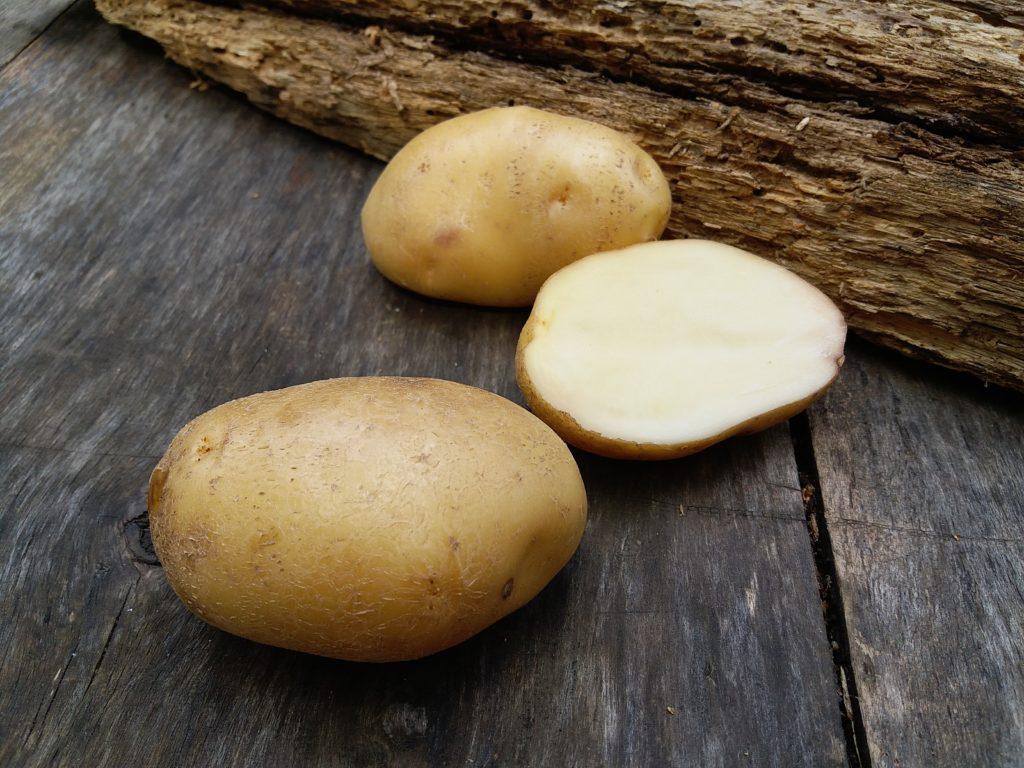
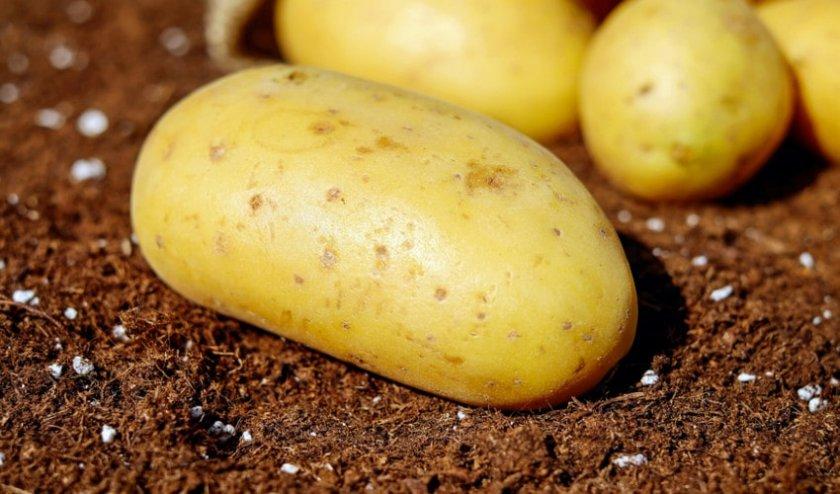
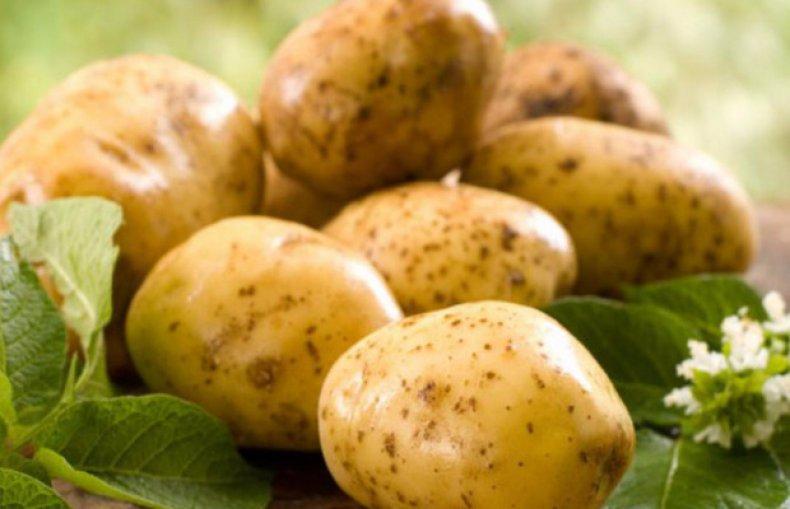
- Ripe tubers are large, 90-120 g, elongated, light brown in color.
- The vegetable has white flesh inside.
- The skin is smooth.
 Important! The Lorkh potato doesn't require much care or attention, but it is sensitive to soil moisture.
Productivity
This variety was bred for commercial cultivation, so it has a high yield but late maturation. Ripening time depends on climate conditions, but on average, it takes 110 to 125 days from planting to harvest. 20-25 large tubers are harvested from a single plant. The variety's yield is considered to exceed 90%.
Taste qualities and substance content in the tuber
The crop's primary purpose is culinary use. Experts rate this potato variety's taste as exceptional. It's used for boiling, mashing, soups, and frying. Its high starch content makes it indispensable for commercial cultivation.
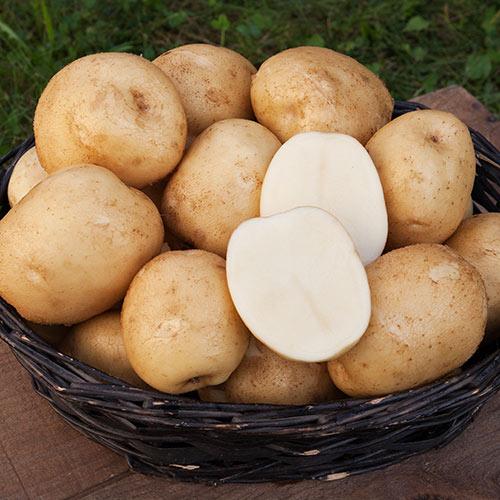
The vegetable tubers contain a large amount of vitamin C – 18%; protein – 2.3%; dry matter – 23-25%; starch from 15 to 20%.

Advantages and disadvantages of the variety
Like any vegetable crop bred through selection, Lorkh has both advantages and disadvantages.
Advantages of the variety:
- Resistance to various climatic conditions.
- Unpretentiousness to soil.
- High resistance to fungal and viral diseases.
- The excellent taste of the vegetable allows it to be used in all culinary applications.
- Long-term storage of harvested crops.
- High crop yield.
Disadvantages of the variety:
- Potatoes are sensitive to watering and high temperatures. Insufficient soil moisture causes the plant to stop growing and die.
- Although the variety is resistant to fungi and viruses, the plant is often affected by the cancerous disease scab.
Important! To avoid problems when growing potatoes, ensure proper care and timely preventative measures.
Potato planting technology
The Lorkh potato variety is easy to care for, but proper planting and high-quality seed will ensure high yields.
Deadlines
The timing of potato planting in open ground directly depends on climate conditions. In temperate regions, planting begins in early May. In southern regions, this can be done a little earlier, and in northern regions, when the soil warms to 8 degrees Celsius.
Selecting a site and preparing the soil
For planting, choose level, well-lit areas. In shaded areas, the crop develops bushes, which hinders the ripening of the tubers.
Although the Lorkh potato is considered undemanding to soil, the more fertile the soil, the better and more productive the harvest will be.
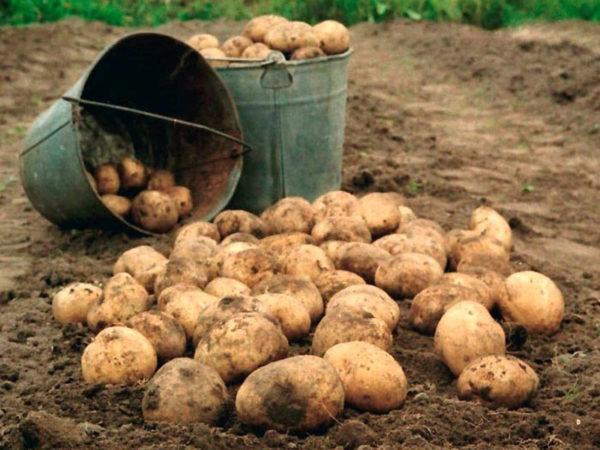
To plant the plant, the soil is prepared in advance, usually in the fall. Initially, the selected area is thoroughly loosened. After a couple of weeks, the loosened soil is dug deeply and organic fertilizer is added. In the spring, before planting, the beds are dug again, and nitrogen-rich fertilizer is added to the soil.
We observe crop rotation
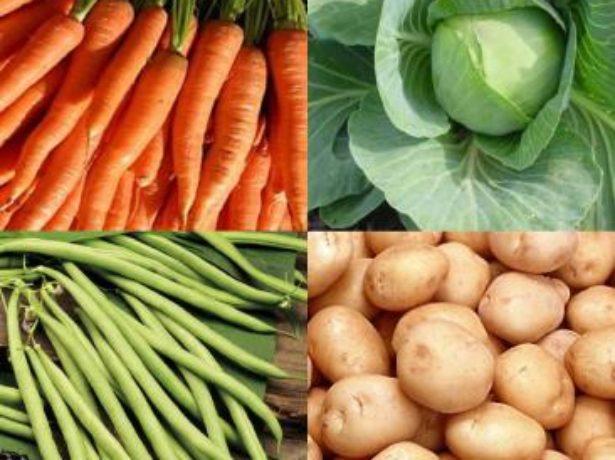
The development, growth, and fruiting of a crop directly depend on the preceding crops grown in the same soil. Tomatoes, sorghum, and sunflowers spread fungi and viruses that are harmful to potatoes. Therefore, Lorkh is not planted after these crops.
Pumpkins, beets, strawberries, carrots, cucumbers, and legumes are suitable pre-planting crops for potatoes. The soil left behind by these vegetables is rich in nutrients that promote plant development and growth.
Important! It's especially good to plant potatoes after cereal crops. Cereals are excellent soil conditioners, disinfecting it from fungi and viruses.
Selection and culling of planting material
The better the quality of the planting material, the greater the chance of getting a large harvest.
The selection of seed material requires a serious and thorough approach.
- Tubers of medium size are selected.
- The surface of the seed material is smooth, without visible damage or defects.
- The tubers are washed from the soil and processed by placing them in a weak solution of potassium permanganate.
- Next, the seeds are placed in small containers for germination.
- During the sprouting process, the tubers are moistened and turned over as needed.
- As soon as the sprouts appear, the tubers are ready for planting in open ground.

This potato variety produces low yields if the tubers are cut and divided into several pieces during planting. The crop can also be planted without sprouting the tubers, in which case the growing season begins 2-3 weeks later.
Landing plan
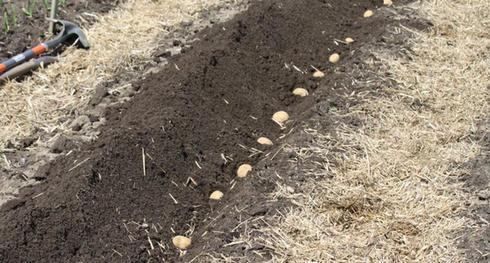
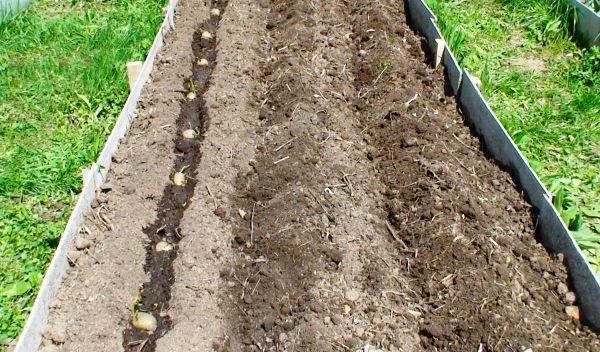
When planting, consider the tallness of the plant. The distance between holes should be at least 35-40 cm, and between beds, 70 to 80 cm. This variety is tall, with spreading bushes, so they should not interfere with growth or shade each other. Prepared tubers are laid out in pre-dug holes or harrows. Large potatoes are planted 8-10 cm deep, and small ones 6-8 cm.
Important! If the soil has a high water table, raise the beds 15-20 cm before planting.
Necessary care for potatoes
Hybrid plant varieties always have unique characteristics and care requirements. The Lorkh potato variety is no exception. To ensure a healthy and fruitful plant, certain rules must be followed.
Irrigation
If there is not enough moisture during the ripening period of the tubers, they become deformed.
The tubers become irregular in shape, and small shoots form at their tips.
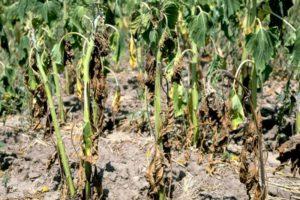
Irrigation is especially important in arid, southern regions. The first sign of soil dehydration is wilting of the bush.
- The first abundant watering is done after the seedlings appear.
- The following irrigation works are carried out at the beginning of the growing season.
- Plants require abundant watering during the period of active flowering.
- The final stage of irrigation work occurs after the end of the flowering period, when the main energy and nutrients are spent on the growth and development of root crops.
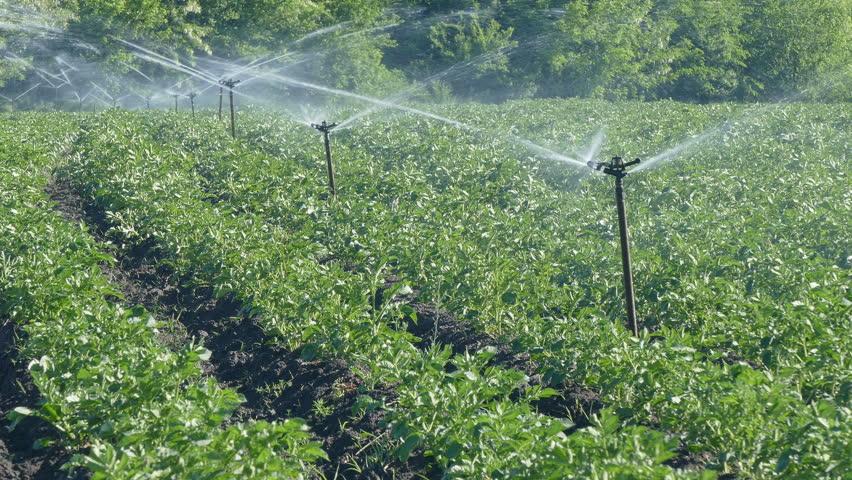
When watering, the soil should be moistened to a depth of 45-50 cm, with a water consumption of 50 liters per square meter.
Loosening and mulching the soil
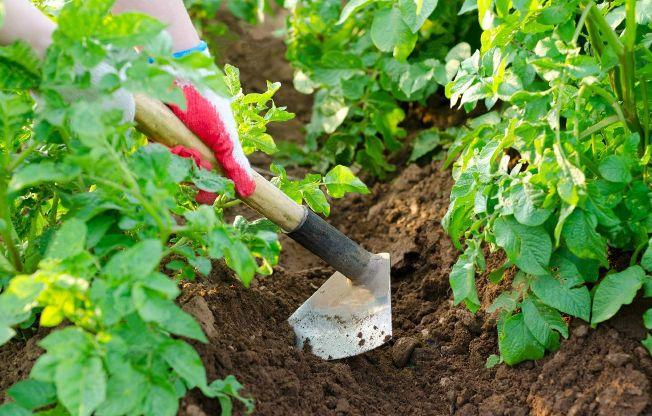
To retain moisture in the soil for a long time, it is loosened. This process is carried out after watering or rainfall. The top layer of soil is covered with a dense crust, which prevents air and moisture from penetrating the roots. During loosening, this crust is removed, as well as weeds that rob the plant of nutrients.
After loosening the soil, mulch it with dry grass or sawdust. Mulch helps retain moisture in the soil longer and inhibits weed growth.
Potatoes are hilled. This method of care saturates the soil with oxygen and retains moisture, and during unexpected frosts, it protects the root system from freezing.
Fertilization
The crop has a long period of growth and flowering, so it requires additional feeding.
The main activities for fertilizing potatoes are carried out:
- During planting, the crop is fed with humus and bone meal.
- After 2 weeks, organic fertilizers are added to the soil.
- Potassium fertilizers are applied during the growing season.
Important! Breeder and Professor Lorch, who created this variety, believed that the new potato variety required exclusively organic fertilizers and supplements.
Protection from diseases and insects
Hybrid potato varieties have natural immunity to many diseases and pests. However, root canker, or scab, is a common cause of plant death.
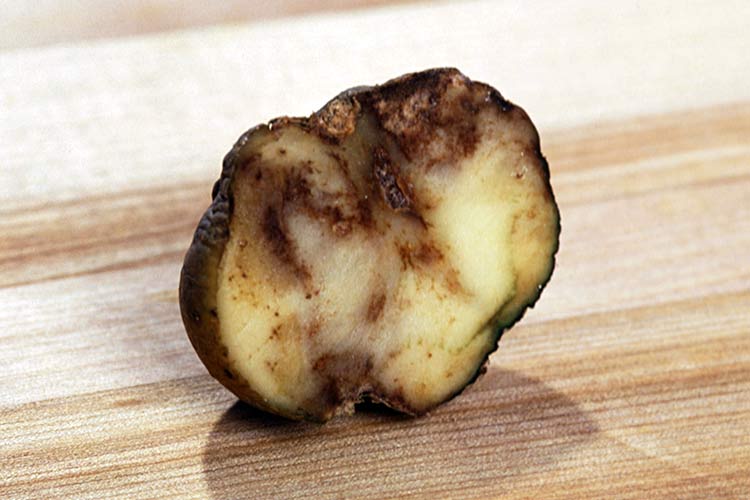
To prevent this disease, it's important to follow proper care, and timely fertilizing will provide the plant with nutrients that will prevent the disease from developing. Arid regions with dry soil are the highest risk for cancer. Proper watering will protect the plant from infection and death.
If the plant has been attacked by the Colorado potato beetle, ash, which the pest cannot tolerate, is added to the soil.
To prevent root crops from being damaged by mole crickets, they are treated with special preparations before planting.
Harvesting and storage
Potato harvesting depends on the climate of the growing region. In temperate climates, harvesting begins in August. As soon as the plant's vines begin to dry out and fall, the roots are ready to eat. The tops are trimmed 8-10 days before harvesting. Harvesting is done with a pitchfork. Using this garden tool reduces the risk of damaging the potato tubers.
The dug-up roots are dried and aired, then stored in a cool, dark place. At the right temperature, the Lorkh potato variety will keep until spring.
Reviews of the variety
Andrey Ivanovich. Saratov
We've been searching for Lorkh potatoes for a long time. We remember how delicious these potatoes are from Soviet times. We finally found them, and now we get a harvest of our favorite potatoes every year. We love everything about this variety: the smell, the taste, and the appearance of the vegetables. Now We store potatoes for sowing as the apple of my eye.
Igor. Volgograd
My Lorkh potato produces only large tubers, but unfortunately, I encounter late blight every year. I have to spend a lot of time caring for and treating the plants. But when you eat these potatoes, you forget all the troubles and difficulties. It's a very tasty variety, and I recommend it to everyone.
Elena Petrovna. Saint Petersburg
We decided to try planting a new potato variety and settled on Lorkh. We planted them and then made two trips to cultivate them, as our dacha is far away. The potatoes grew large, and we harvested almost 7 bags from 200 square meters of land. We decided to abandon other varieties and plant this variety exclusively in our garden.
Related posts:
 Description of the best potato varieties of domestic and foreign selection
 Why potatoes aren't growing well in the garden, and what to do to ensure a bountiful harvest
 Description of the best potato varieties for 2025, selection for regions
 Description and treatment of potato diseases, methods of control using folk and chemical means
 Description and characteristics of the Rodrigo potato variety, cultivation and care
 Description and characteristics of the Gulliver potato variety, planting and care
 Description and characteristics of the Arosa potato variety, planting and care
 Description and characteristics of the Bellarosa potato variety, planting and care