
Fusarium wilt is an ancient disease that co-evolved with plants and animals. Different species of this parasitic fungus cause a wide variety of diseases. The crops most susceptible to fusarium wilt include wheat, barley, rye, corn, and members of the nightshade family, such as tomatoes and potatoes. In this review, we'll discuss fusarium wilt in potatoes, describe its symptoms, and explore control methods.
Causes of fusarium development
Fusarium wilt of potatoes is caused by a dangerous pathogen, Fusarium oxysporum. It causes a disease that causes wilt in many crop plants. The areas most susceptible to infection are the Far East and southern Russia (Rostov Oblast, Krasnodar Krai, Stavropol Krai, Kalmykia, Volgograd Oblast, Astrakhan Oblast, and the Northwest Caucasus Republics).
Fungal hyphae penetrate plant blood vessels through roots damaged by pests such as mole crickets and wireworms. The vessels become clogged, and the plant dies. The main causes of potato fusarium wilt are:
- use of infected seed material - seeds contain fusarium spores;
- lack of crop rotation – annual planting of the same crop creates and feeds the source of infection;
- a combination of circumstances – a warm, humid, rainy summer and an invasion of pests;
- incorrect conditions potato storage in a warm, humid room.
The main symptoms of the disease development
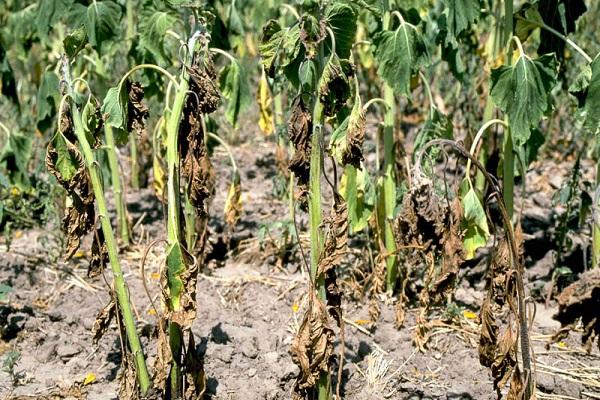
In the worst case, infection occurs during the period of most active root development and the formation of new tubers. At this time, the plant is most susceptible to Fusarium infestation. At this time, the plant is visually undetectable. Only after a month do the main signs and symptoms of infection begin to appear. The most obvious signs are:
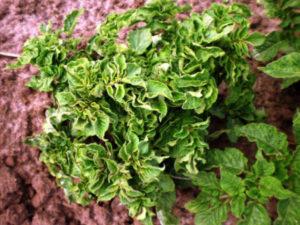
- at the top of the bush the leaves look definitive and twisted;
- yellow spots appear on the leaves, and the process of withering of the tops begins, followed by the falling of the leaves;
- the stems droop slightly, and a brownish color appears at the tops;
- if it is a hot, humid summer, then the processes of rotting of the stems at the base, leaves and roots immediately appear;
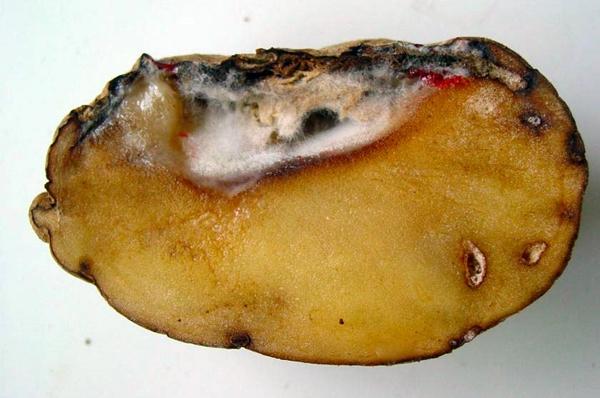
- On the medium the tuber is dry and porous, the skin loses turgor and wrinkles.
Preventive procedures
It's a well-known fact that prevention is always easier and cheaper than cure. This principle also applies to Fusarium plant diseases. Here are several essential preventative measures that will help protect potatoes from Fusarium oxysporum:
- for sowing it is necessary to use planting material of disease-resistant varieties;
- Crop rotation is the key to a productive harvest. Whenever possible, use your plot wisely by rotating crops. Don't plant the same crops in the same spot;
- Infected plants must be removed, including the root ball. Fusarium foliage is best burned;
- Garden tools and shoes used for handling damaged plants are also thoroughly treated with water and a bleach solution. The fungal spores are resilient.
Fusarium wilt treatments
The chemical industry produces a huge number of products annually for potato disease control. Some are highly specialized, targeting specific pathogens, while others offer a wide range of applications. Let's briefly review some popular products.
Biological substances
- Baktofit is a proven microbial product capable of suppressing the growth and development of major fungal and other potato diseases. It is available as a powder or suspension for aqueous solutions. Baktofit is not recommended for use in combination with other products, including growth stimulants and fertilizers. Bacteria are highly sensitive to other substances. The powder dilution rate is 1 gram per liter. Each sachet contains 10-12 grams.

- Integral is a domestically produced, multi-purpose product. Like Baktofit, it is based on live microbiological material and performs a wide range of beneficial effects on garden crops: it inhibits the growth and development of pests, protects seedlings, stimulates their growth, disinfects seedlings, and increases the productivity of young plants.
Take a look Also

- Fitosporin-M is a versatile product for the prevention and control of diseases such as late blight, root rot, scab, fungal and bacterial diseases, rust, blackleg, and many others. Fitosporin has proven effective for treating potatoes before planting. To do this, dilute three tablespoons in a glass of water and wash the tubers before planting. To prevent damage to the vegetative above-ground parts, spray every two to three weeks at a rate of 10-12 grams per 5 liters of water.
We have listed microbiologically derived preparations that are safe for humans and animals. There are many different complex chemicals available for fusarium control. Let's look at some of the most effective ones.

Chemicals
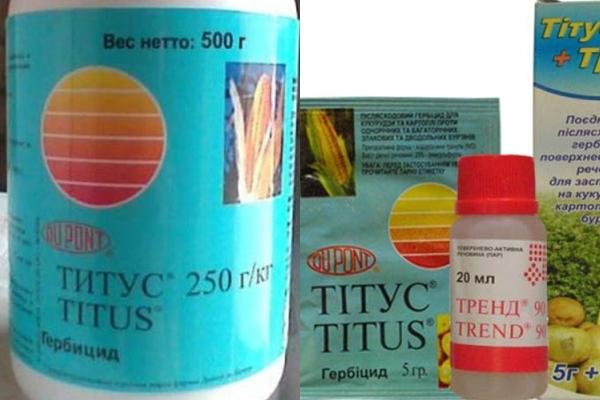
- Titus isn't a specialized product for mycological diseases. It's a weed control herbicide. However, it's quite effective at disinfecting potato crops from many diseases. It should be applied very carefully, at a rate of 1 gram per 5-6 liters of water. This amount is enough to treat a 200-square-meter potato field. The herbicide effectively controls weeds, inhibiting their growth. It also kills most pests.
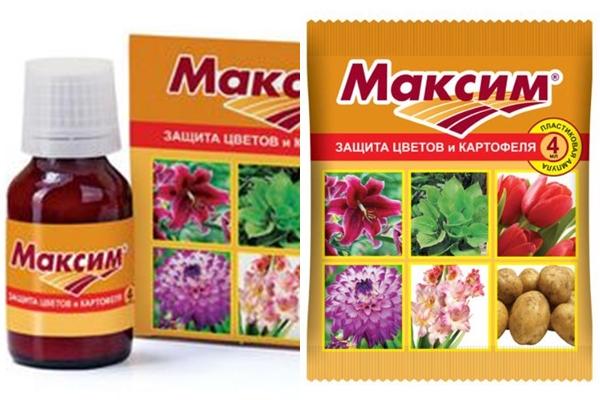
- Maxim is another excellent domestically produced fungicide. Maxim is used primarily for pre-treatment of planting material and for preparing potatoes for storage. Dilute 8 milliliters per 4 liters of water. One liter of solution is sufficient to disinfect 2-3 kilograms of potatoes. Unfortunately, Maxim's spectrum of action is superficial: it destroys hyphae and spores on the surface, but does not combat the parasite inside the tubers.
- Vist is an excellent product for treating a storage room or cellar after storing vegetables. It's a smoke bomb for fumigation. Potatoes and other vegetables should be fumigated a week after they've been stored. Close the ventilation and doors tightly, light the smoke bomb, and evacuate the room immediately. Fumigation lasts approximately three hours. Afterward, the cellar should remain closed for 24 hours. Opening the ventilation is permitted if it's low-flow. Vist effectively combats insects, bacterial, and fungal pathogens that can actively parasitize stored crops.

- Colfugo Super is a relatively new product, little known. Its main active ingredient is carbendazim. This water-soluble powder interferes with fungal cell division, inhibiting mitosis without affecting DNA. This prevents mutations and the development of resistant forms of the fungus. It is non-toxic to humans, animals, and bees. For Fusarium wilt of eggplant, tomatoes, and potatoes, spray the vegetative aerial parts at a ratio of 2 grams of the product per 1 liter of water.

Processing scheme
- For planting, select tubers that are uninfected and do not raise any concerns. Treat them with Maxim or Fitosporin.
- Before flowering, preventative treatment with the products mentioned above is necessary. After flowering, treatment should be continued every 2-3 weeks until the foliage wilts naturally.
- Clean in dry weather. After storing, fumigate the cellar with Vist.
What mistakes do gardeners make?
Fusarium is a common occurrence that can occur due to a mistake made by the gardener:
- crop rotation and crop rotation are not observed;
- the same planting material is used from year to year.
- Before digging up potatoes, you need to remove and destroy dry tops
- They do not disinfect the cellar before and after storing vegetables.
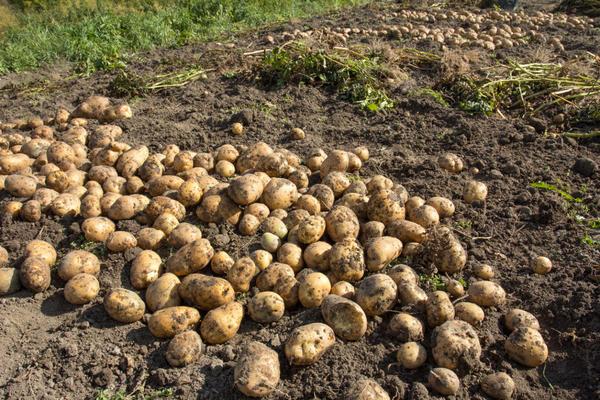
Follow our recommendations and your harvest will always be good!
Related posts:
 Why potatoes aren't growing well in the garden, and what to do to ensure a bountiful harvest
 Description and treatment of potato diseases, methods of control using folk and chemical means
 Description and treatment of potato pests, control measures
 How to properly prepare planting material and when to plant potatoes to get a rich harvest
 Pre-plant potato treatments for Colorado potato beetle
 Description of the best potato varieties of domestic and foreign selection
 Types of garden fungicides and descriptions of the top 24 best, instructions for use
 Reasons why potatoes don't bloom, and what to do to ensure a good harvest