
- Botanical description of New Zealand delphinium
- Application in landscape design
- Growing conditions
- Popular varieties
- White Knight
- New Zealand dwarf
- The Queen of Spades
- Bridal bouquet
- New Zealand giant
- Sowing delphinium seedlings
- Seed preparation
- What kind of substrate is needed?
- Step-by-step landing
- Caring for a flower in open ground
- Watering, fertilizing
- Garter
- Diseases and pests
- Methods of flower propagation
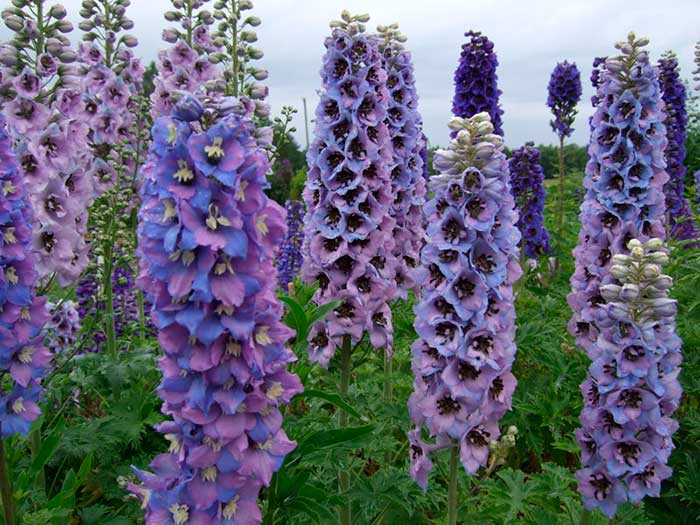
This large plant has long been known to gardeners for its beauty and diverse color palette. This species has particular advantages due to its longevity. Designers also use the flower. The stems are densely covered with flowers, creating a luxurious bouquet with their vibrant colors. The New Zealand delphinium can reach 2 meters in height, making this plant truly unique.
Botanical description of New Zealand delphinium
The flower cluster reaches 70 centimeters in height. Delphiniums also produce fairly large flowers, ranging from 9 to 11 centimeters in diameter when open. The stem is covered with leaves that cling tightly to the base of the plant. The petals vary among delphinium varieties. They can be single, semi-double, or double to the touch. The plant doesn't require frequent repotting, as it can grow in the same spot for up to 9 years. This makes delphiniums a perennial plant.
Application in landscape design
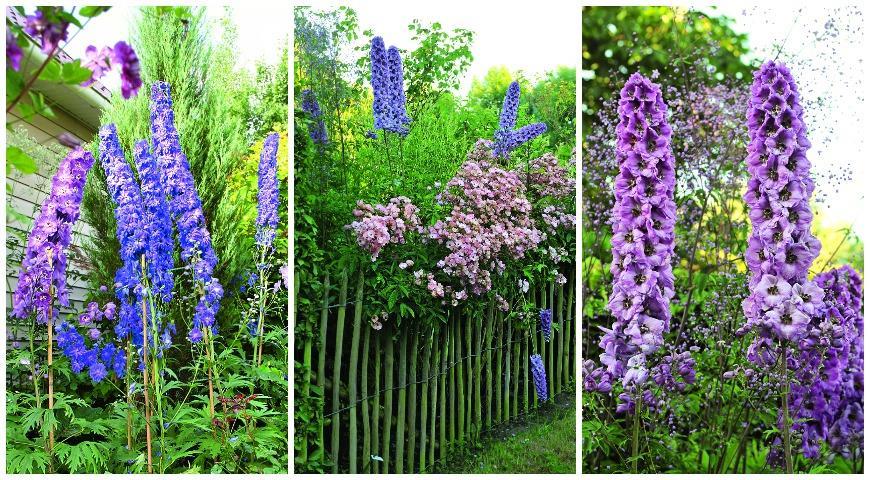
When designing an alley or park, flowers are always a must. Designers often use delphiniums, as their lush plumage creates a sense of luxury while simultaneously enhancing the naturalness of the area.
Flowers can be combined in flowerbeds by planting several varieties, but they are also placed together with other crops.
Growing conditions
Another advantage of delphinium is its ease of cultivation. While the flower is undemanding of soil and weather conditions, proper care is still essential. Proper planting is an essential part of successful cultivation. Ensure a location where sunlight will nourish the plant, and remember to water and perform preventative maintenance to protect it from insects and various diseases.
Popular varieties
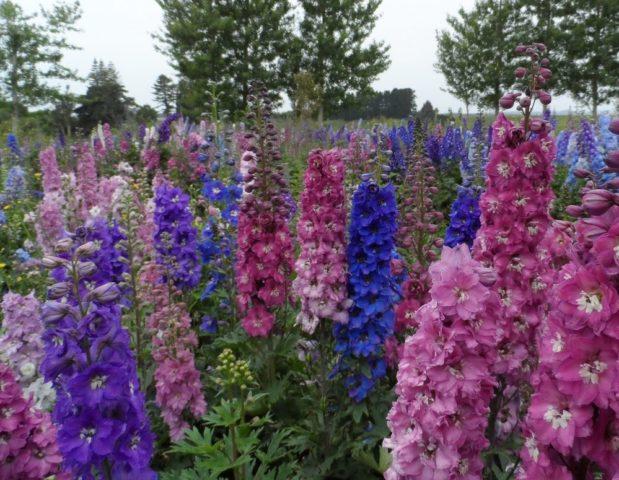
The New Zealand delphinium has many hybrids, varying in color, flower shape, and size. Some varieties are particularly popular today due to their qualities:
- Dusky Maiden.
- The Queen of Spades.
- Giant lime.
- New Zealand dwarf and others.
White Knight
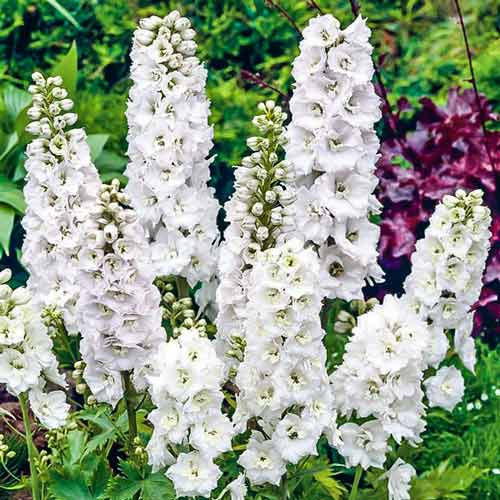
The flower has a lush white plumage. It is a very winter-hardy variety. Delphiniums grow up to 200 centimeters tall. They bloom twice a year. The first bloom occurs in June-July, the second in August-September. The flowers are double.
New Zealand dwarf
This delphinium is a blend of other varieties. It grows to no more than 70 centimeters, making it ideal for growing on a windowsill. The New Zealand Dwarf's stem is thick, so it requires no additional support. The inflorescences are also large, and the petals are double and very pleasant to the touch. It blooms in the summer, the second year after planting. The color ranges from soft pink to deep blue.
The Queen of Spades
This variety is renowned for its large flowers, which boast a unique coloring. The black and red hues add grandeur and yet also add a delicate touch. The petals are also double to the touch. This hybrid grows up to 2 meters.
Bridal bouquet
The Bridal Bouquet is also a hybrid. This giant plant produces large, lush flowers that form enormous clusters. This variety is easy to care for. The flowers range in color from pink to a delicate purple. It is quite popular among gardeners.
New Zealand giant
One of the most popular cultivars of this species today, it grows large, rarely exceeding 2 meters. It tolerates frost well and is a long-lived plant.
Sowing delphinium seedlings
Most gardeners don't buy seedlings because they're expensive and can't guarantee the plants haven't been modified. So, they first prepare the seeds, then the container, and plant the flower of their dreams. After two years, they receive their seedling.
Seed preparation
Before planting seeds in the soil, they are treated with special disinfectants. To do this, take a solution of potassium permanganate, place the seeds in cheesecloth, and soak them in the solution. After a while, rinse the seeds with clean water.

What kind of substrate is needed?
You can buy a soil and fertilizer mixture for planting at the store, or if that's not possible, make your own. To do this, take soil and mix it with peat moss and humus. You can also use garden soil. Before planting a seed in this soil, it is first frozen to kill various microbes and prevent diseases.
Step-by-step landing
The selected mixture is placed in a container. The pot should be 2/3 full. Then, the soil is watered with warm water. The seeds are spread over the surface. The seeds are covered with soil, but only in a very thin layer. Give or take 3 millimeters of soil should cover the seeds. If different varieties are planted in the same container, they are labeled. Finally, everything is watered with boiled water.
Caring for a flower in open ground
Once the seeds have sprouted and the seedlings have been transplanted into the ground, the plant requires regular care and feeding. The New Zealand delphinium is an easy-to-grow plant that can grow in the same spot for a long time. It tolerates low temperatures well and is not often attacked by insects.
Watering, fertilizing
While the plant is still growing, don't neglect watering. Dry weather will kill it, or its growth and development will be disrupted. This means all your efforts have been in vain. Dried blooms should be removed promptly to give new, young, and strong plants a chance to grow.
Watering is also important if planting in an area with low humidity. Avoid watering during the day when the sun is scorching the leaves; it's best to do this in the evening. After watering, loosen the soil to allow the roots to absorb the moisture.
Fertilizing is also important during the plant's first years. Phosphate-potassium fertilizers are also used during the delphinium's active flowering period. These nutrients strengthen the plant, prolong flowering, and produce vibrant flowers.
Garter
Plants reaching two meters in height require this procedure. Dwarf varieties can support themselves due to their thicker stems. To tie them up, use a small stick and thin rope. The stake is inserted close to the plant, approximately 30-40 centimeters away. The rope is tied around the delphinium stem and gently pulled taut, then tied to the stick. This procedure is typically used for perennial specimens or plants with lush "feathering."
Diseases and pests
Despite its resilience, the plant is sometimes susceptible to insect attacks and fungal infections. Some of these can quickly destroy a young plant or even an entire flowerbed. The most common problem gardeners encounter is powdery mildew. It is characterized by a grayish-white coating that covers the leaves. Later, the leaves turn brown and dry out. To combat this problem, use a solution of Bordeaux mixture.
Leaves can also become infected with water-soaked spots. In this case, the affected parts of the plant should be trimmed off and destroyed to prevent further infection. If a large portion of the plant is infected, the entire plant will have to be destroyed.
Black spots may occasionally appear on the stem; these can be corrected at the initial stage of infection. Dissolve tetracycline in water and spray the infected plants with the resulting solution. Repeat this procedure regularly until the delphinium is completely cured.
If gardeners encounter ringspot, they should be aware of its characteristics to avoid confusing it with other diseases and defects. Initially, a yellow spot appears on the stems and foliage, which later develops into a solid yellow coloration across the entire flower. The flower slowly wilts and loses its vitality. It is impossible to cure such a plant; there is only one way out: to cut off the diseased parts.
As for insects and other small pests, the delphinium fly (phorbia) has long been known. This small parasite lays its eggs on the leaves of the flower. The larvae hatch and begin to feed on the foliage. Over time, the entire flower will be destroyed. Insecticides are used to control these creatures.
Slugs can also eat the roots and stems, infecting the plant with other diseases. Placing lime near the flowerbed can repel pests. Sometimes, homemade traps made from cabbage leaves are used, placed near the delphinium overnight and removed in the morning, along with the slugs.
Aphids are eliminated when black clumps are noticed under the leaves. In the spring, flowers are sprayed with tobacco and treated with laundry soap.
Methods of flower propagation
There are many methods for propagating and improving this variety. Some are used frequently because they offer more advantages, while others are used by breeders in specific cases. Dividing the plant is considered one of the most effective. This method helps produce healthy and strong flowers. It is recommended to select young plants aged 3-4 years, as older delphiniums adapt poorly to new locations and are more susceptible to disease. Dig up the plant in spring or fall. Gardeners prefer spring for this procedure. It's important to time the young stems to begin growing.
Carefully remove the root, making sure to leave tufts of soil around it so the plant can adapt to its new location more quickly. The large rhizome is carefully broken apart, ensuring at least one dormant bud is exposed under each root. This ensures the flower will sprout later. Development occurs quickly, making this method suitable for those who want to grow this beautiful flower as soon as possible.
Cuttings are another method of propagation. In the spring, 10-centimeter-tall cuttings are taken. To accelerate growth, a mixture of equal parts sand and peat is prepared. After harvesting, the cuttings are placed in boxes, with the heel of the cutting deepened into the soil. A constant temperature of 20-25 degrees Celsius is maintained. After 4-5 weeks, the cuttings will develop small roots, and after another week, they can be replanted.
Related posts:
 Description of perennial delphinium varieties, planting and care in open ground
 When and how to properly transplant delphinium to another location in the fall
 What is the best way to feed geraniums at home? - a list of fertilizers
 Planting and caring for indoor pomegranates at home for beginners
 Description of varieties of sowing peas and cultivation, to which family they belong
 Description of bearded iris, planting and care in open ground, and preparation for winter
 Description and pruning group of clematis Rouge Cardinal, cultivation and propagation
 Methods for planting and propagating cherries at home