
- What is the best time to plant tulips?
- In the spring
- In the fall
- Late summer
- Optimal timing depending on the growing region
- In the Moscow region
- In the Leningrad region
- In the Urals
- In Siberia
- The influence of lunar phases on tulip crops
- What to consider
- Important conditions for proper planting
- Planting depth
- Distance between bulbs
- Preparatory work
- Plot and soils
- Processing bulbs
- Tulip planting methods and patterns
- Traditional
- In one hole
- In boxes or containers
- Into the pots
- On the lawn
- In tiers
- Further care
- Common mistakes made by novice gardeners
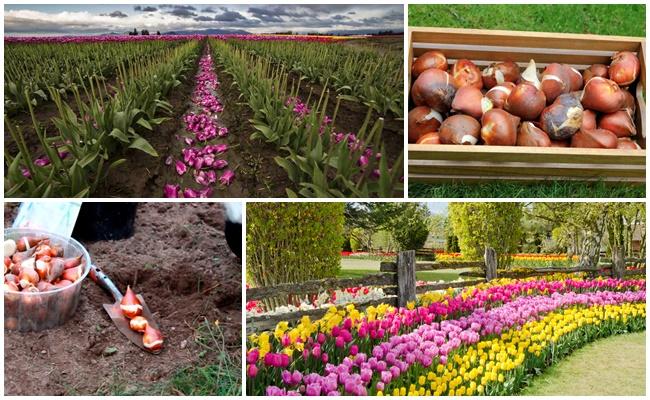
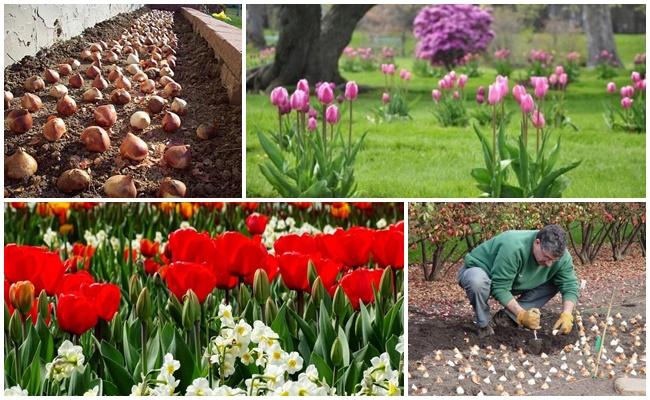
Bulbous plants are easy to care for, but demanding when it comes to planting conditions. The growth and flowering of tulips are influenced by the season, regional climate, soil temperature, and even the phase of the moon. The first months of autumn and spring are favorable for planting outdoors. However, warm Septembers and snowy Marches often deprive tulips of their blooming joy. It's easy to determine when to plant bulbous tulips with a thermometer and weather observations.
What is the best time to plant tulips?
Tulip bulbs accumulate nutrients and growth-promoting substances from midsummer. To release their energy in the spring, they need three to four months of cold and dormancy. When growing garden varieties, traditional planting methods are followed, reflecting the development of bulbous plants in the wild. Tulips are planted in the fall and awaited for flowering in the spring.
With careful care, you can create favorable conditions for bulb ripening at any time of year. However, planting in the fall and spring has its advantages and disadvantages.
In the spring
Spring planting is used as a precaution. If the fall weather turns cold quickly and there's been precipitation, the bulbs are stored and planted in March.
Advantages of spring planting:
- flowering can be observed soon;
- Delaying the deadline will not harm the bulb.
Why gardeners don't like to plant tulips in the spring:
- it is necessary to cover plants from night frosts;
- The buds will appear late, at the end of April or the beginning of May.
Bulbs planted in the fall germinate with the first warm weather, and flowers appear in early April.
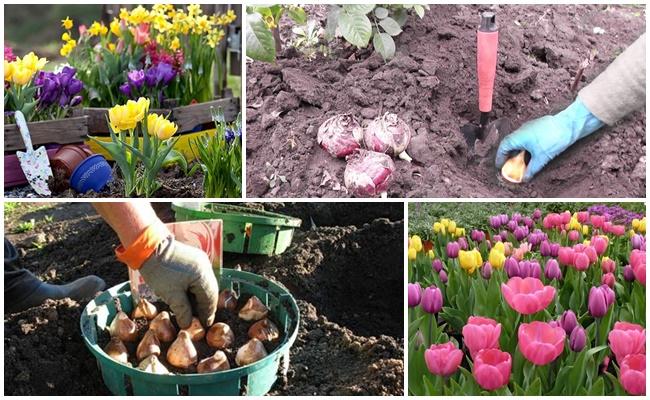
Tulips are usually planted after the snow melts, and late varieties until June. However, if frost persists in March, the bulbs are planted in boxes as seedlings and transplanted into open ground after the thaw.
In the fall
Benefits of autumn planting:
- stable weather;
- more time for rooting.
September and October don't bring the sudden frosts and snowdrifts that March brings. The bulbs take root while the weather remains warm, enter dormancy as the soil gradually cools, and survive the winter safely under cover.
Negative points:
- Delay in planting slows down the development of bulbs;
- Warm autumn stimulates stem growth.
By October, tulips are supposed to shed their above-ground parts. If warm weather persists during this period, the bulbs do not go dormant. Accumulated nutrients are prematurely expended on stem formation. Tulips that sprouted in the fall greet spring weakened, with poorly developed roots. The plants bloom late and produce small buds.
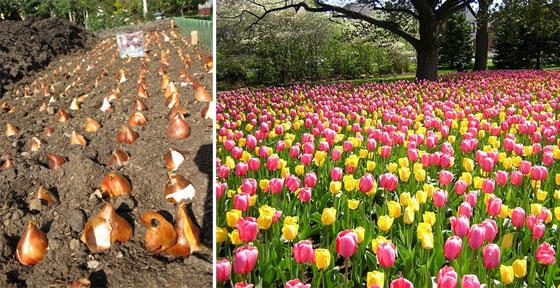
Autumn planting periods are from September 10 to October 31.
Late summer
Planting tulips in August is generally not recommended because the soil is very warm at this time. Insufficient moisture causes the bulbs to dry out, and overwatering can lead to rot. The last month of summer is ideal for separating the bulblets, which are then stored in a cool place until a favorable planting time in the fall.

Optimal timing depending on the growing region
When choosing the month to grow tulips in your region, consider the approximate time of frost. Bulbs develop roots in 20-30 days. They need a month to grow before the cold weather sets in.

In the Moscow region
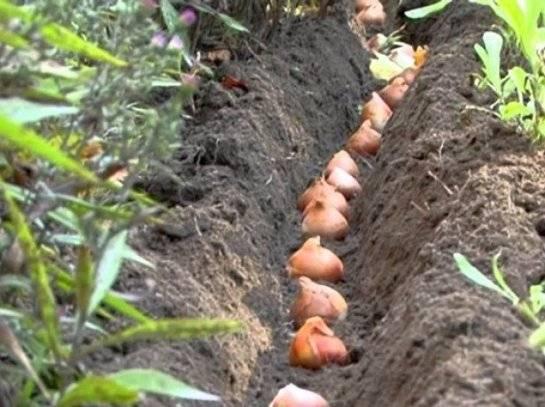
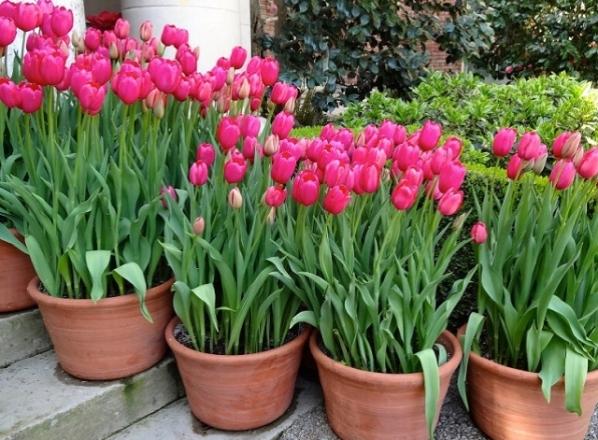
Tulip planting time in temperate climates is from September 20th to the end of October. Warm weather still lingers in early September. Planting 10 days earlier can encourage stem growth.
In the Leningrad region
In the region north of Moscow, the bulb planting period shifts to early September. If the weather remains consistently warm, tulips can be planted until the 20th.
In the Urals
In the mountains, tulips are planted in the fall and spring. The best time for the Middle Urals is September 10th to 20th, while in the Southern Urals, the planting period extends until October 10th. In the northern part of the region, planting should be completed by September 15th.
In Siberia
In cold regions, the best time to start growing bulbs is August. Due to early Siberian frosts, planting should begin as early as possible.
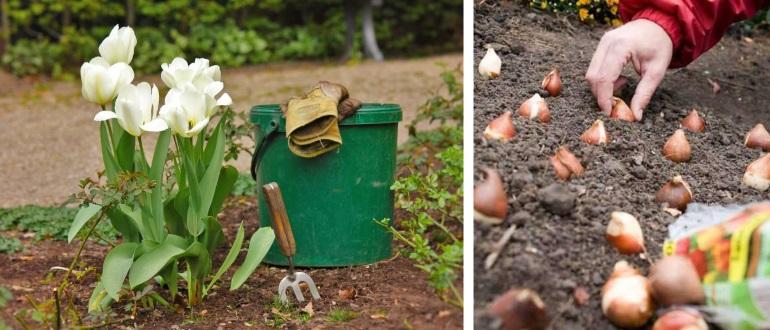
The influence of lunar phases on tulip crops
Favorable days for planting bulbous and seed crops do not coincide. Tulips take root and grow well at the beginning of the third quarter. They can be planted throughout the waning moon—from the 19th to the 28th lunar day. The 29th is an unfavorable day for planting any crops.
What to consider
Measuring the soil temperature will help determine the right time to plant tulips, and proper watering will help maintain the viability of the bulbs.
Important conditions for proper planting
Bulbs are planted in the spring when the soil temperature is 10°C (50°F), and in the fall when it is 7°C (45°F) to 9°C (45°F). The calendar dates can be used to determine when to measure the temperature. If the soil hasn't cooled to the desired temperature by the twenties of September, it's best to postpone planting. The same approach is used to determine the time for spring planting—when the soil warms to 10°C (50°F) and maintains this temperature for three days.
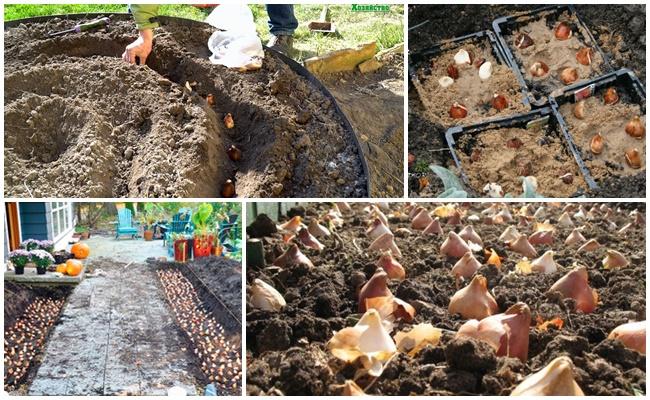
When planting, it's important to ensure proper watering. If the soil is moist after rain or snow, watering is not necessary. Dry soil should be moistened. Moisture ensures contact between the root system and the soil. Therefore, when planting without watering, gently press the bulb into the soil. Be careful not to over-water, as this could damage the bulb.
Planting depth
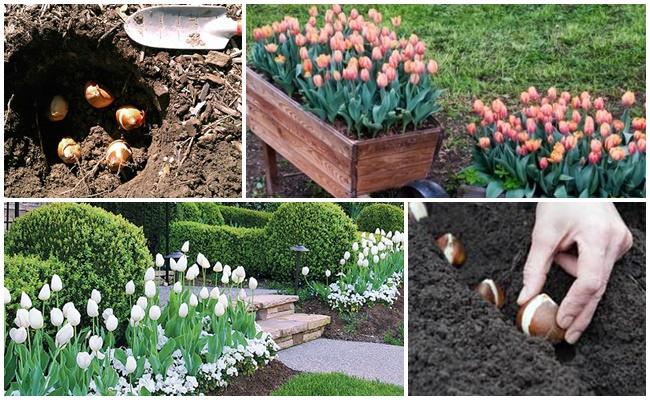
Large tulips are planted at a depth of 15 centimeters, while smaller ones are planted at a depth of 5-7 centimeters. Holes are dug individually to the size of each bulb—three times its width and height.
Distance between bulbs
The average spacing is 10 centimeters. If the tulips are to be replanted next year, the distance between them is reduced to 5-7 centimeters. The size of the bulbs is also important: 12-15 centimeters can be left between large ones, while 5 centimeters between small ones is sufficient.
Preparatory work
The general rules for preparing planting material and the site are the same for autumn and spring planting.


Plot and soils
Requirements for the site for growing tulips:
- the thickness of the fertile soil layer is 35 centimeters;
- loamy loose soil of neutral acidity;
- the depth of groundwater is 1.5-2 meters;
- bright, uniform lighting with partial shade at midday;
- wind protection.
Garden plot preparation begins 2-4 weeks before fall planting and 6-8 months before spring planting. The soil is dug to the depth of a spade with compost, wood ash, and superphosphate.
To make the soil looser, add sand. However, its proportion should not exceed 30 percent. Sandy soil is not suitable for bulbous plants, as it cools and dries out quickly.
Processing bulbs
The planting material is sorted, peeled, and then treated with disinfectants and stimulating agents:
- manganese solution - 2 grams are diluted in ten liters of water;
- growth stimulator - a drop of "Epin" is dissolved in two liters of water;
- fungicide - dilute 2 milliliters of "Vitaros" or 30 grams of "Fundazol" in ten liters of water.
The bulbs are dipped in manganese and fungicide for an hour, and in the stimulator for 24 hours. The volumes and concentrations of the solutions are calculated for treating ten bulbs.
Disinfecting bulbs before planting them in the soil prevents the spread of viruses and bacteria that may infect purchased bulbs.
Tulip planting methods and patterns
To ensure that tulip heads rise evenly above the ground and that dry stems do not spoil the appearance of the flowerbed after flowering, various planting methods are used.
Traditional
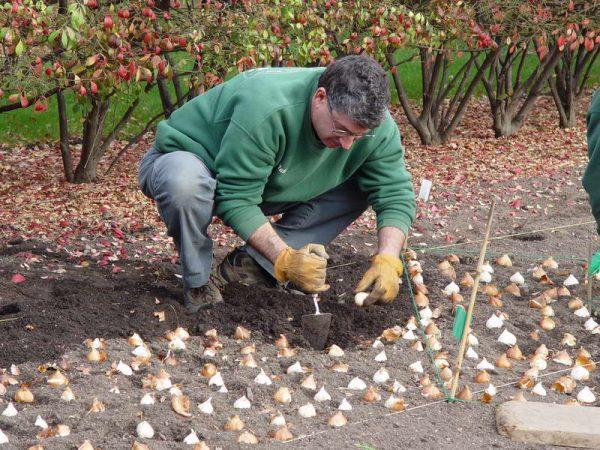
Tulips are usually planted in open ground:
- holes or trenches are made in pre-dug and fertilized soil;
- water and wait until the moisture is absorbed;
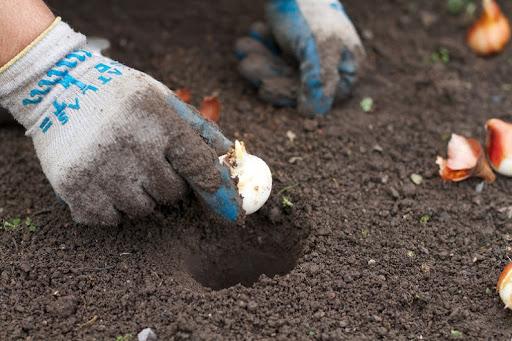
- place the bulbs with the tops up and press lightly;
- covered with earth;
- watering again.
If the soil is moist, lightly watering the already buried bulbs is sufficient. When planting, it's important to choose the correct depth. Small bulbs grow slowly when planted too deep, while larger ones dry out close to the surface.
In one hole
To decorate a garden with separate groups of tulips of different varieties, plant 3-5 bulbs per planting hole. Dig a larger hole than usual, approximately 50 centimeters in diameter. Space the bulbs 3-5 centimeters apart, depending on their size.
In boxes or containers
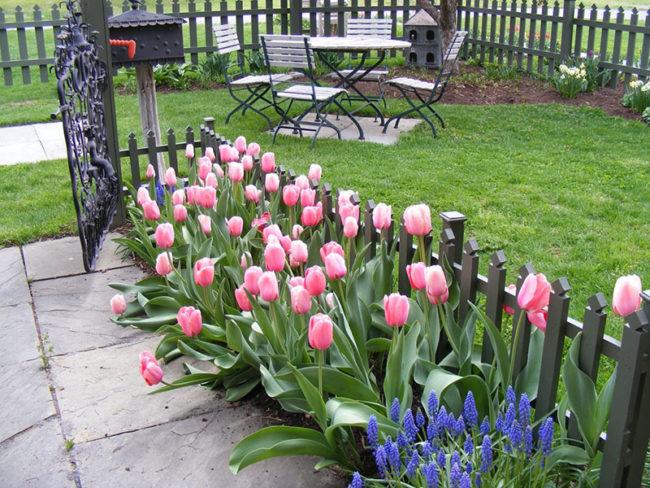
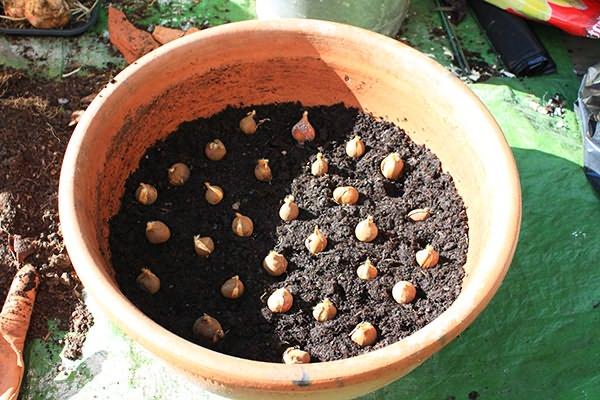
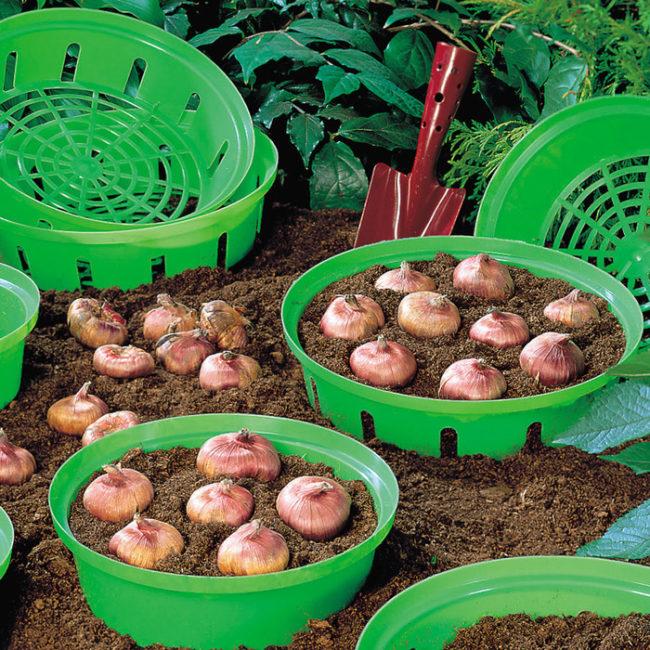
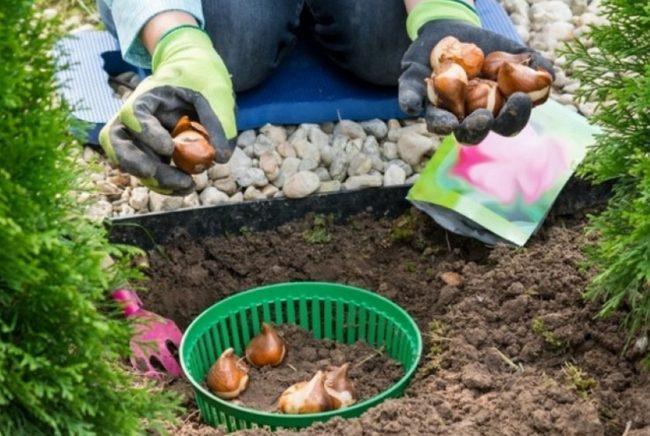
A practical way to grow bulbs is in plastic containers. Fill a box, bowl, or container with soil and fertilizer, and plant the bulbs in the holes at intervals.
This method prepares tulips for spring planting. There's no need to repot them. The container can be dug into the soil. The advantage of growing tulips in containers is that the color of the borders, visible on the surface, makes it easy to distinguish varieties and quickly locate stemless bulbs.
Into the pots
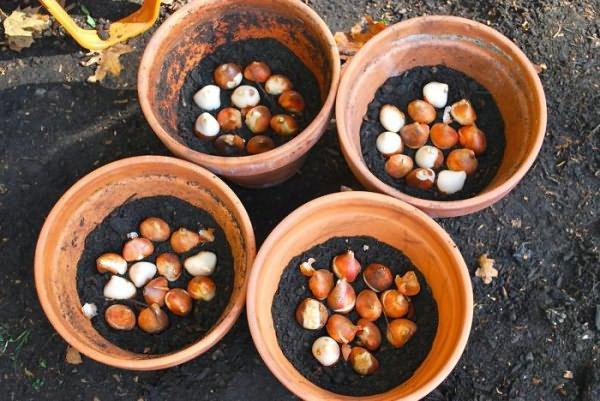
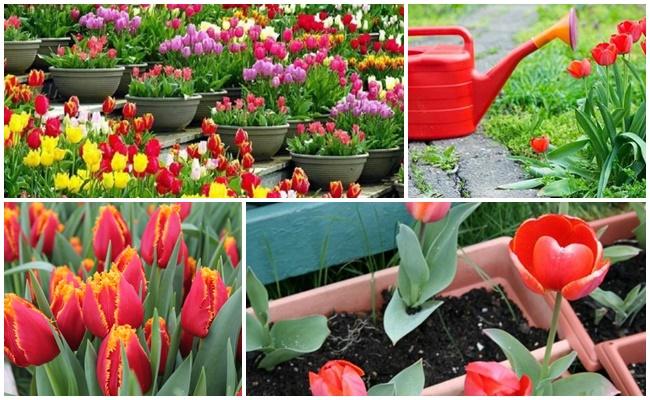
Tulips are planted in pots for continuous growth or forcing.
Plastic and ceramic containers with holes are suitable for planting:
- a drainage mixture of pebbles, 5 centimeters thick, is placed on the bottom;
- fill with soil up to half;
- place the bulbs at a distance of ten centimeters from each other;
- covered with earth;
- water.
For growing tulips in pots, a ready-made mixture or substrate made from equal parts of garden soil and humus with the addition of sand and peat is suitable.

On the lawn
Tulips planted in containers can beautify your front lawn without the need for additional borders. However, the borders of the containers should be covered to preserve the integrity of the lawn.
Planting method:
- remove a layer of turf that matches the shape of the box and is slightly larger than the size of the box;
- dig a hole in the ground the size of the container;
- install a container with planted bulbs;
- cover with a layer of turf and hide the planting site.
The lawn soil must be loose to allow the sprouts to grow to the top.
In tiers
The bulbs are planted at varying depths: large ones in a deep layer, and small ones closer to the soil surface. This method is suitable for creating arrangements of large-flowered and small-flowered, early- and late-flowering varieties. When planted in tiers, large and small buds are positioned at the same height and do not shade each other.


Further care
How to care for planted tulips:
- remove unsprouted and diseased stems from the beds to prevent healthy plants from becoming infected;
- water moderately, do not allow the soil to dry out, loosen the surface;
- After rain, do not water the beds, just loosen them;
- apply nitrogen fertilizer, nitroammophos after the stem appears;
- at the beginning of bud formation, feed with potassium-phosphorus fertilizer;
- During flowering, water generously, using 10 liters of water per square meter;
- remove weeds and loosen the soil after each watering;
- add fertilizer containing boron, manganese and zinc to the soil of flowering plants;
- after the stem has wilted, reduce watering, and stop after it has fallen off;
- cut off the dry stem.
It is better to dissolve fertilizers in water for irrigation and apply them in dry form after rain.
Common mistakes made by novice gardeners
When planting tulips, the following mistakes are often made:
- failure to meet deadlines;
- incorrect bookmark depth;
- neglect of disinfection and sorting of planting material.
Bulbs planted in late fall don't have time to develop roots before frost and continue this process in the spring. Late planting weakens the bulbs, resulting in delayed flower appearance. It's also best not to delay spring planting.
A peculiarity of tulip development is that their flower stalks cannot withstand temperatures above 25 degrees Celsius. Therefore, plants planted in May may fail to bloom.
The depth at which the planting material is planted also affects flower development. If the bulbs are planted too close to the soil surface, they will freeze in winter. Planting them too deep will delay the emergence of the shoots.
Bulbs should be inspected upon purchase, division, and during and after storage. Damaged or soft bulbs are unsuitable for germination, as they are infected with fungus or a virus. These bulbs produce weak plants with small or deformed buds, and the disease spreads to healthy flowers. Therefore, only whole, firm bulbs without blemishes are suitable for planting.
Related posts:
 When and how to plant tulips in the Urals in autumn and care for them outdoors
 Description of the top 20 most beautiful tulip varieties and types, their planting and care
 When is the best time to plant tulips in the Moscow region in autumn? Timing and care instructions.
 Timing and methods for planting tulips with your own hands in baskets for bulbous plants
 How to plant tulips beautifully: diagram and ideas for landscape design
 Top 10 methods and rules for treating tulips in the fall before planting
 How to prepare and store tulip bulbs, possible difficulties
 Timing and rules for replanting tulips in the fall, further care