
- Pros and cons of fall planting
- Recommendations for choosing a variety
- Specifics of preserving bulbs before planting
- Optimal times for planting in the Moscow region
- Planting Tulips: Diagrams and Technology
- Selecting a flower bed and preparing the soil
- Processing bulbs
- Planting depth and spacing between bulbs
- Interesting ways to plant tulips
- Flower care tips in the Moscow region
- Watering and fertilizing
- Weeding and mulching the soil
- Preventive treatments
- Trimming
- Insulation for winter
- When to dig up tulips after flowering
- Deadlines
- How to properly dig up and store spent bulbs
Tulips are one of the most popular spring flowers in gardens. There are many varieties suitable for growing in central Russia. However, to ensure spectacular blooms, they need to be planted at the right time. Below is information on when to plant tulips in the Moscow region in the fall, as well as how to care for them, and how to properly dig up and store spent bulbs.
Pros and cons of fall planting
A unique feature of tulips is that they require a cold winter to bloom in the spring. Planting the bulbs in the fall provides the necessary stratification. Furthermore, the underground portions of the bulbs take root well and receive a supply of nutrients. A disadvantage is the risk of bulb freezing if the procedure is not performed correctly.
Additional information: According to the lunar calendar, bulbous plants should be planted during the waning moon. During this period, everything underground takes root easily.
Recommendations for choosing a variety
Breeders have developed early, mid-, and late-blooming tulips. They come in a variety of shapes, sizes, and bud colors. Experts recommend mid- and late-blooming tulips for growing in the Moscow region. There are many varieties, and the choice depends on the gardener's preference. Early varieties are suitable for forcing.

Specifics of preserving bulbs before planting
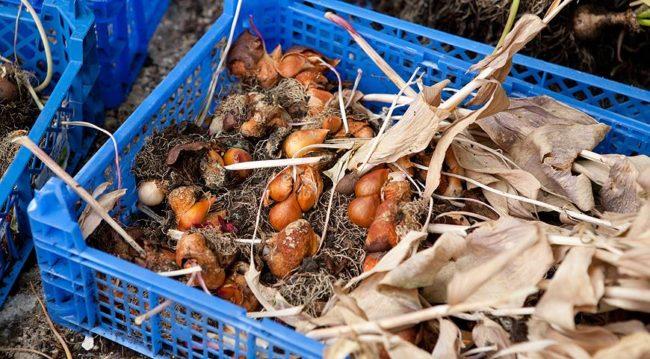
To ensure planting material lasts until fall, it must be stored properly. Here's the procedure:
- the dug up bulbs are cleared of any remaining soil;
- placed in a disinfectant solution;
- dry;
- divide the bulbs into small, medium, and large;
- placed in boxes or perforated containers.
The bulbs are placed at a distance of 1-2 centimeters from each other and sprinkled with sawdust and shavings.
Optimal times for planting in the Moscow region
Tulips require about a month to root. Therefore, when planting bulbs, you need to consider the weather conditions. Early planting is problematic because tulips may sprout prematurely in the fall. Typically, primroses are planted in the Moscow region starting in late September and finishing in late October. This will give the bulbs time to take root and survive the winter safely.

Planting Tulips: Diagrams and Technology
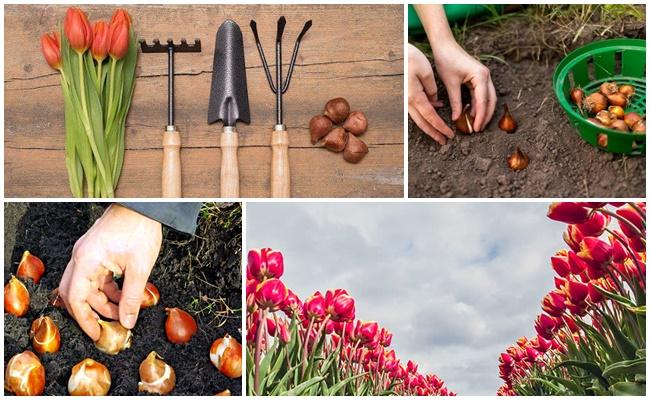
The development and flowering of the crop depend on proper planting. To ensure adequate ventilation and prevent fungal attack, the bulbs are planted at a distance from each other. They can be planted not only in open ground but also in containers.
Selecting a flower bed and preparing the soil
Choose a sunny planting site. The plant does not tolerate stagnant water, so it is planted at a slight elevation. This will prevent spring meltwater and summer and autumn rains from flooding the flowerbed. Otherwise, the bulbs may be attacked by pathogens.
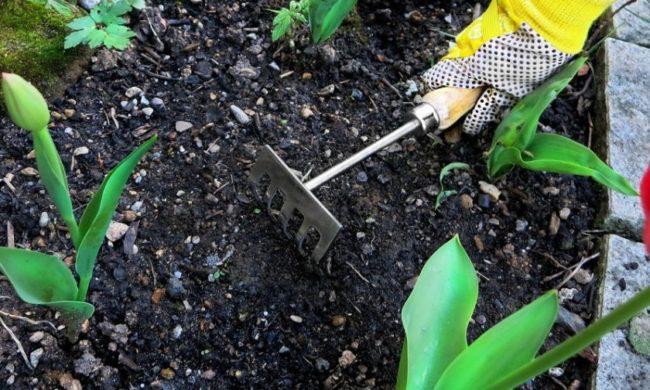
Before planting, the soil is cleared of debris and dug over. If the soil is heavy and clayey, sand and compost are added. Conversely, if the soil is too light and sandy, add clay. Otherwise, the flowerbed will need frequent watering. Lime and dolomite flour are added to acidic soil. The area is then leveled with a rake.
Important! The flowerbed should be located in a location where the groundwater level is a considerable distance from the soil surface.
Processing bulbs
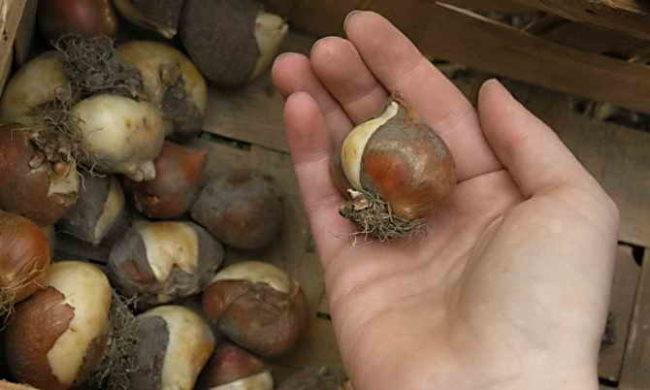
The planting material is carefully inspected. If there are any minor damages on the bulbs, they are cut out to the healthy parts. The planting material is then disinfected by placing it in a solution of potassium permanganate for 30 minutes. Fundazol or Vitaros can also be used.
Planting depth and spacing between bulbs
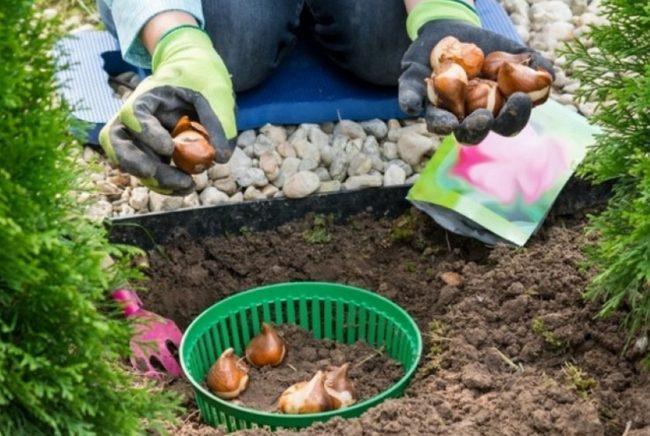
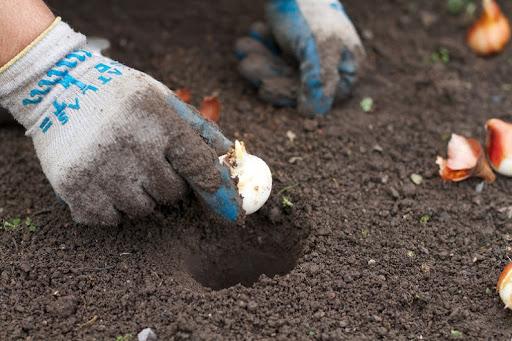
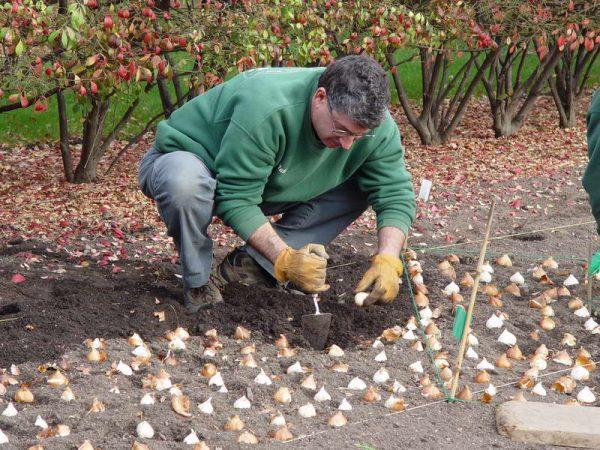
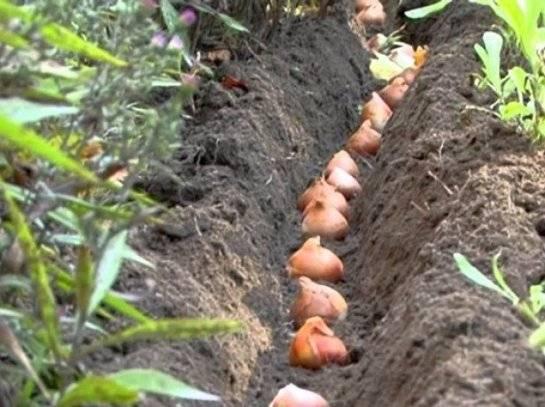
Large bulbs are planted in the flowerbed at a distance of 10-12 centimeters from each other. Planting depth is 10-12 centimeters. If the bulbs are not planted deep enough, they may freeze during harsh winters. Medium-sized bulbs are planted individually at a depth of 7-10 centimeters.
Interesting ways to plant tulips
Traditionally, primroses are planted outdoors. They are planted randomly, in a checkerboard pattern, or in neat rows. Tulips can also be planted in beautiful pots, baskets, or decorative boxes. In this case, the bulbs are planted close together. Florists often force them to produce luxurious bouquets for March 8th.

Flower care tips in the Moscow region
Plant care involves watering, fertilizing, loosening the soil, weeding, and mulching. Preventative treatments are used to prevent diseases. In anticipation of harsh winter, the bulb bed is insulated, remembering to uncover it in early spring.
Watering and fertilizing
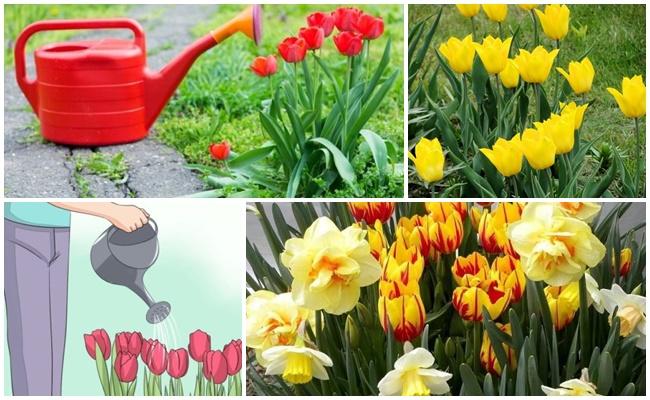
Water the soil after the top layer has dried. Moisture is especially necessary in early spring, then during budding and flowering. If sufficient rainfall occurs during the season, additional watering is not necessary. Excess moisture can cause fungal infections of the root system.
Plants are fertilized three times per season. In early spring, nitrogen fertilizers are used to promote rapid growth. During budding, mineral fertilizers containing primarily potassium, phosphorus, and magnesium are applied. After flowering, potassium is added to the soil beneath the bushes.
Weeding and mulching the soil
Weeds around plants are removed. This is especially important during the growing season. Tall weeds can deprive crops of nutrients and sunlight. Therefore, weeding is carried out periodically.
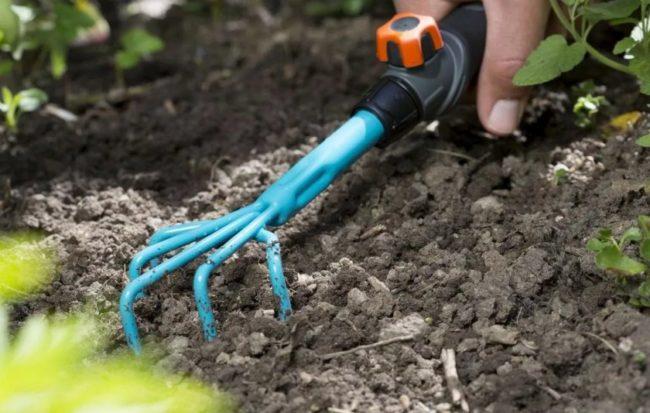
After watering, loosen the soil around the plants to allow air to penetrate deeper. Mulching will prevent moisture from evaporating quickly. Furthermore, under cover, weeds will be less likely to break through to the surface. Straw, peat, compost, and tree bark are all good mulching materials.

Preventive treatments
To prevent fungal diseases, bulbs are disinfected with a fungicide solution before planting. To protect tulips from diseases, they are treated with copper-containing preparations in the spring. Additionally, to keep the bulbs healthy, they should be dug up promptly and stored in a ventilated area until autumn.
Trimming
Don't cut the above-ground portion of tulips immediately after flowering. Allow the leaves to dry naturally. The bulbs breathe through the leaves, providing them with nutrients. Only the flower stalk is cut, leaving stumps 2-3 centimeters above the ground.
Insulation for winter
In the Moscow region, flowerbeds need to be insulated for the winter. To do this, apply a 3-5 centimeter layer of mulch consisting of peat, sawdust, and straw. This process begins with the onset of sustained frosts, otherwise the tulips may sprout prematurely and freeze in the cold winter.
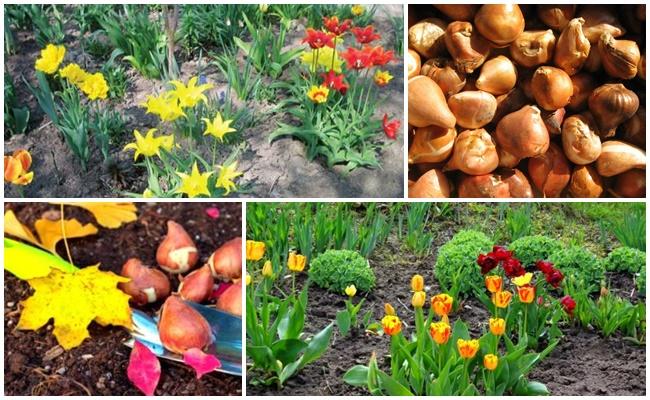
Snow provides a good cover. If winter snowfall is light, the flowerbed can be further insulated with spruce or pine branches. In the spring, as soon as the sun warms up, remove the cover. Otherwise, the tulip bulbs may rot.
When to dig up tulips after flowering
Some varieties require annual digging and then autumn planting. Failure to do so can cause the blooms to lose their distinctive characteristics. Most tulip varieties require digging once every three years. Otherwise, the bushes will become denser and the blooms will become smaller.

Deadlines
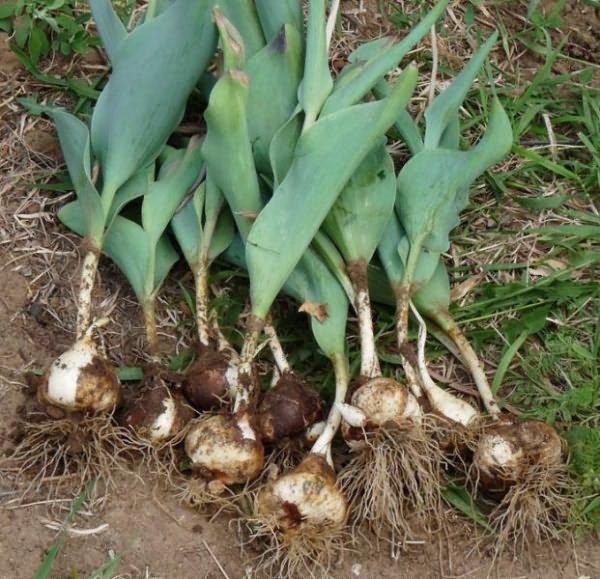
In the Moscow region, bulbs are typically dug up around the end of June. However, there's no specific date. Gardeners should rely on the appearance of the bushes. The leaves should turn yellow and dry out. Don't allow them to dry out completely, otherwise, you might not be able to find the bulbs' growing location. This could damage the bulbs during digging.
How to properly dig up and store spent bulbs
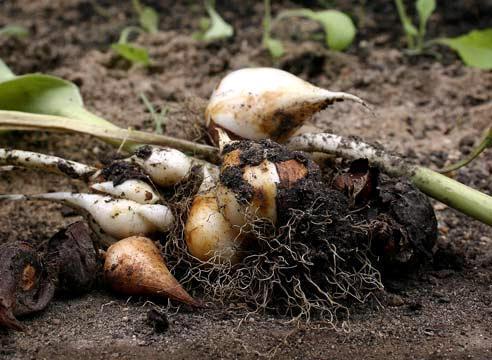
Dig up the planting material in dry weather. The soil shouldn't be wet, otherwise the bulbs will become soiled, making drying difficult. Dig them out with a disinfected tool: a garden shovel or pitchfork.
The bulbs are shaken free of any remaining soil, the roots are trimmed, and they are dried. They are then thoroughly rinsed with plain water. To disinfect, they are soaked in a potassium permanganate solution for half an hour. They are dried again and placed in a container, ensuring that the planting material does not touch each other. The container is kept in a cool, dry place until autumn.
Related posts:
 When is the best time to plant tulips in open ground? Timeframes by region and rules.
 When and how to plant tulips in the Urals in autumn and care for them outdoors
 Description of the top 20 most beautiful tulip varieties and types, their planting and care
 How to prepare and store tulip bulbs, possible difficulties
 Description of shallot varieties, cultivation and care, when to harvest
 How to plant tulips beautifully: diagram and ideas for landscape design
 Timing and rules for replanting tulips in the fall, further care
 Timing and methods for planting tulips with your own hands in baskets for bulbous plants