
- Why are tulips dug up?
- Recommended times and rules for digging
- How to prepare bulbs for storage
- Calibration and rejection
- Drying
- Treatment with disinfectants
- Conditions for long-term storage
- Container and premises
- Temperature and humidity
- Control of planting material
- What difficulties can arise from improper storage?
Tulips are among the first flowers to grace a garden with the arrival of warmer weather. However, after flowering, their bulbs should not be left in the ground until the following season. This is because the planting material reacts negatively to moisture and temperature fluctuations, and is susceptible to insect pests and fungal diseases. Before planting these primroses, it's important to understand how to properly store tulip bulbs until next spring.
Why are tulips dug up?
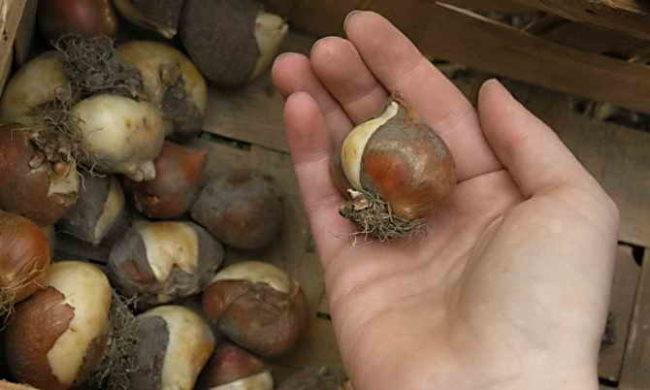
The reason tulips need to be dug up annually is because the plant replaces its bulb each season—the old one dries up, and several new ones form in its place. Varietal plants, in addition to their bulblets, also produce several offshoots.
If tulips aren't dug up after flowering, the newly formed tulips will begin to crowd each other and compete for nutrients. This causes the buds to become smaller, preventing the plants from producing beautiful, large flowers. Furthermore, this crowded environment encourages the development of various rots, which damage the bulbs.
Another reason why tulips need to be dug up is that their native summers are hot, and the bulbs warm up well, which is necessary for the formation of new flower buds. However, our climate doesn't allow the plant material to warm up in the soil even in full sun. Furthermore, after digging up the bulbs, the gardener has the opportunity to add nutrients to the soil to improve its quality and remove weeds.
Bulbs that haven't been removed from the ground sink deeper and deeper each year. After a few years, the shoots have difficulty breaking through to the surface, and at such a depth, the heat needed for flower buds becomes deficient.

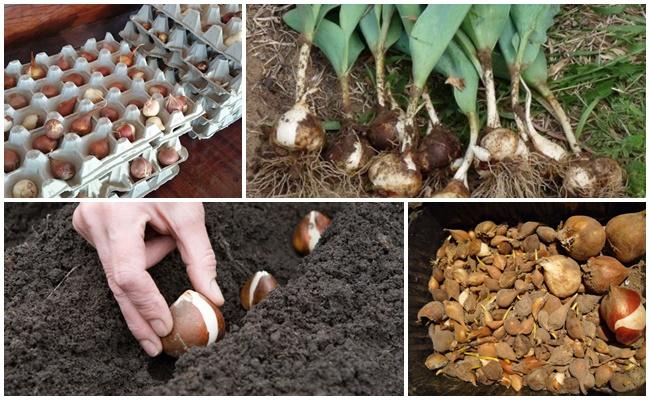
Recommended times and rules for digging
The optimal time for digging up bulbs in the temperate climate zone is late June or early July. These times vary in different climate zones, but there's a sign you should look for to avoid missing the opportune time. When the leaves turn yellow over two-thirds of their length, the planting material is removed from the soil. By this time, the young bulblets have already strengthened, and the baby bulblets are firmly attached to them.
In the fall, the excavated material is planted back into the flowerbeds; this work is carried out from the end of September to mid-October.
To ensure bulbs are stored well at home, they must be dug up and prepared correctly:
- Experts recommend carrying out work when the soil is dry and crumbly.
- A pitchfork is used for digging so as not to damage the planting material.
- They take over a section of soil, slightly away from the flowers.
- If the stems have not yet wilted, the soil is carefully shaken off the bulbs, and the above-ground part is not cut off; it still contains nutrients that it will give to the bulbs.
- If the work was carried out in rainy weather and the soil is damp, the planting material is washed under running water and inspected for damage and signs of disease.
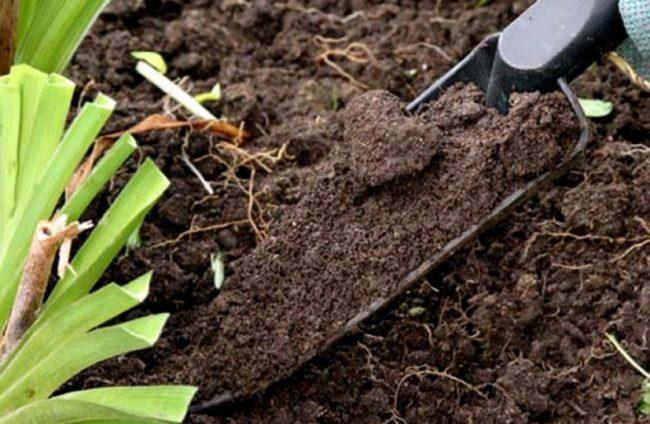

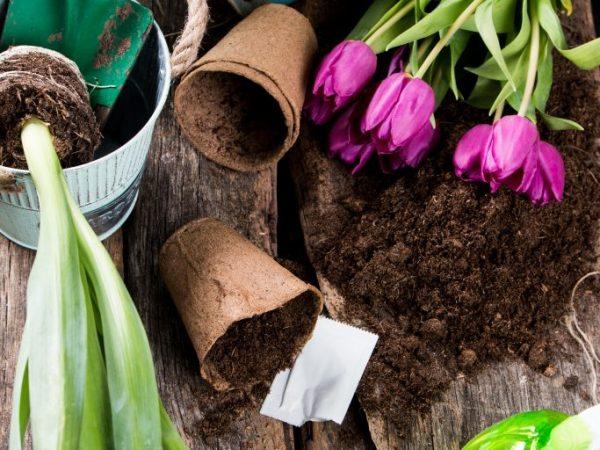
Watering of flowers is stopped a week before the planned work.
How to prepare bulbs for storage
To ensure that the planting material remains intact until the next planting, the bulbs must be properly prepared and favorable conditions must be created in the room where they will be stored until autumn.
Calibration and rejection
After the bulbs are dug out of the ground, they are inspected. Infected specimens and those showing signs of rot or insect damage are discarded first. Such planting material will infect the remaining tulips during storage. After this, they are graded, separating the large bulbs from the small ones, and sorting the baby bulbs separately. This is done because small planting material will be planted at a shallower depth than the larger ones.
Drying
To pre-dry the excavated material, use boxes with mesh bottoms. The bulbs are laid out in two or three layers and placed under cover to protect them from sunlight and rain. The material is left to dry for two to three days.

After this time, dry scales are removed from the bulbs and the stems are cut off, and old roots are also trimmed.
Treatment with disinfectants
After drying, the tulip bulbs are treated with a disinfectant. A 0.5% concentration of potassium permanganate is used for this. The bulbs are soaked in the solution for 30 minutes. This treatment protects the tulips from disease and imparts manganese, which is essential for large, vibrant buds.
Conditions for long-term storage
To keep flower bulbs healthy until planting, it's important to provide suitable conditions. The key requirements are low light, stable temperature without fluctuations, and low humidity.
Container and premises
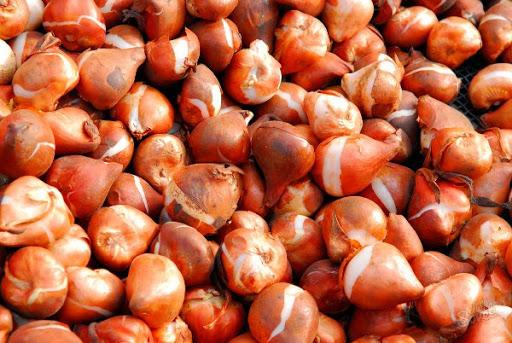
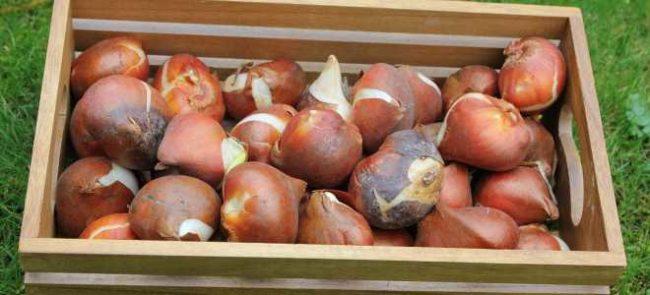
For storing planting material, it is recommended to use wicker baskets or wooden boxes. Place the bulbs in a single layer and sprinkle them with sawdust or vermiculite to protect them from excess moisture.
If rodents are present in a private home, tulip planting material should be placed in mesh bags and hung from the ceiling. It is not recommended to store the bulbs in cardboard boxes or plastic bags before planting. In the former case, the boxes quickly become damp, leading to mold. Bags lack ventilation, and the bulbs begin to rot.
Store containers with planting material on an insulated balcony or in a storage room. At a dacha, a dry cellar or basement is a suitable location. The main thing is to maintain a stable temperature there.
Temperature and humidity
The storage temperature should be between 24-28°C. If the bulbs are not planned for planting in the fall, gradually reduce the temperature to 12-15°C. Humidity in the storage area should not exceed 60%, otherwise fungal diseases will develop, damaging the bulbs. Ventilate the room containing the flower material periodically.

Control of planting material
Stored bulbs are periodically inspected for signs of disease and pest damage. If diseased bulbs are found, they are discarded to prevent them from infecting healthy planting material. If the bulbs have shriveled from dryness, spray water in the room to increase the humidity. It's advisable to store bulbs of different sizes and plant material separately.
What difficulties can arise from improper storage?
Problems typically arise when tulips are stored improperly. If humidity and temperature are too high, the bulbs rot or sprout prematurely. However, excessively dry air is also harmful to the planting material, causing it to shrivel and die. Diseased and healthy tulips should never be kept together, as fungal diseases spread quickly and lead to the death of the tulip bulbs.
Related posts:
 Description of shallot varieties, cultivation and care, when to harvest
 When and how to plant tulips in the Urals in autumn and care for them outdoors
 When is the best time to plant tulips in open ground? Timeframes by region and rules.
 Planting and caring for daffodils in open ground, the best time and growing rules
 When to dig up gladioli for the winter, timing and rules for storing bulbs
 Description of the best varieties of onions, planting and care in open ground
 When is the best time to plant tulips in the Moscow region in autumn? Timing and care instructions.
 When and when can daffodils be repotted? Step-by-step instructions and care.