
- Examples of flowerbed and garden design
- Selecting varieties
- By color composition
- Grouping by height
- By flowering time
- Tulip planting patterns and secrets
- Large patches of color
- Ornaments and patterns
- We plant in a path
- Plant in containers and boxes
- How to combine tulips with other plants
- Successful compositions with neighboring flowers
- How to highlight the uniqueness and characteristics of tulips: tips from gardeners
- What to do with faded tulips?
Tulips are the first spring flowers to bloom after a long winter, brightening up a barren garden. These primroses are planted in flowerbeds, along paths, around arbors, in single-flower arrangements, and alongside other plants. There are many ways to beautifully plant tulips in your garden and create a cozy atmosphere. To avoid mistakes, it's important to plan your planting plan before you begin.
Examples of flowerbed and garden design
There are several interesting solutions for landscaping with tulips in your dacha:
- Placement under trees (preferably fruit trees). Plant the bulbs in several rows around the trunk. Kaufmann tulips are ideal for this purpose. It's best to choose flowers of the same height and complementary colors. This creates a hedge in the garden.
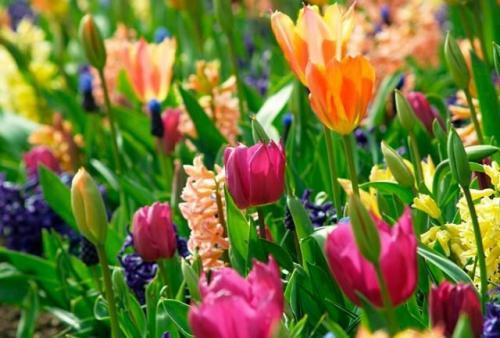
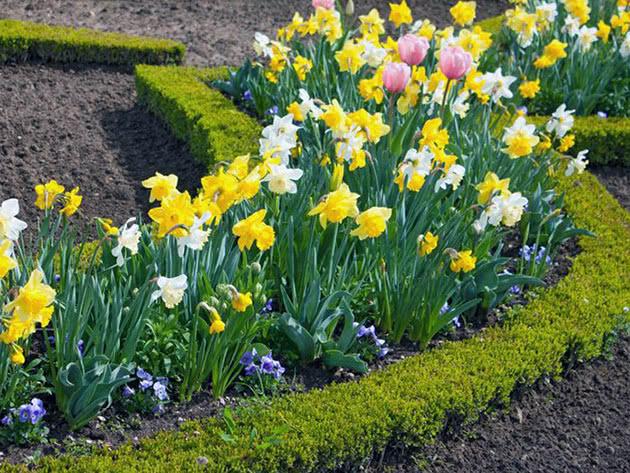
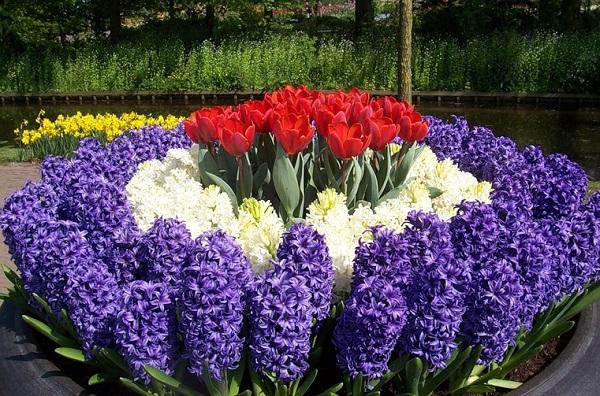
- In a flowerbed, in a composition with other primroses. They look attractive when planted together with hyacinths, daffodils, pansies, and primroses.
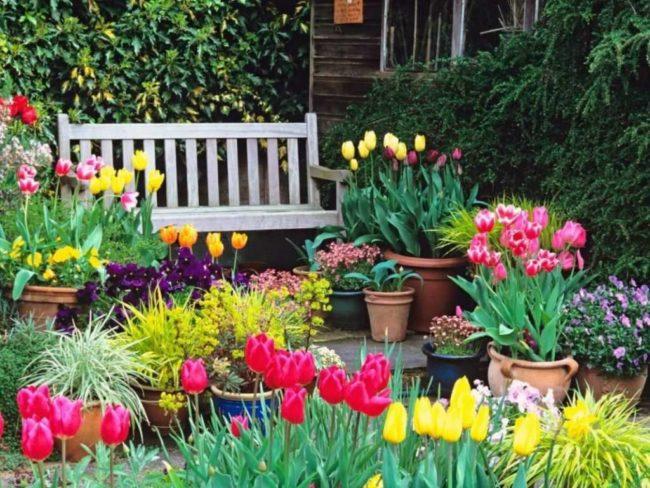
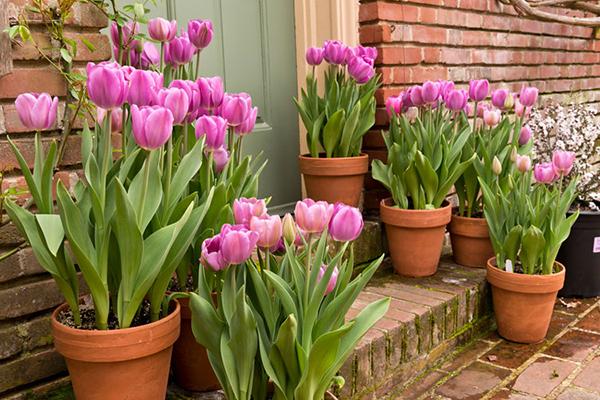
- As a landscape decoration when planted in containers and pots. They can be moved as desired.
- Group plantings of tulips look harmonious against a background of green lawn, as well as in flower beds, alpine slides and mixed borders.
Selecting varieties
Over the years, numerous tulip varieties have been developed through breeding, so when choosing varieties to plant in your garden, consider characteristics such as plant height, flowering time, and bud color.
By color composition
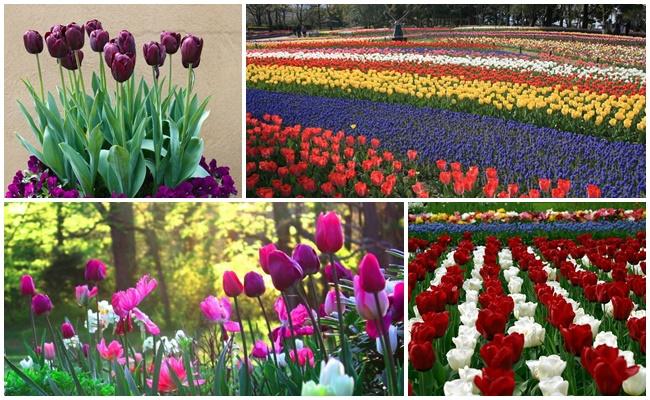
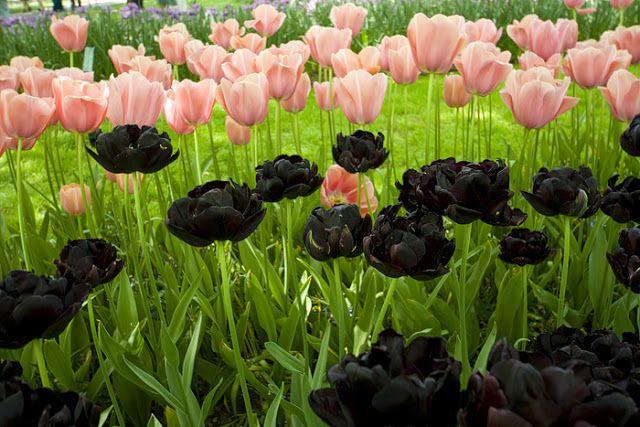
The basic tulip color palette includes five shades: red, yellow, pink, lilac, and white. Gardeners also cultivate plants with orange, black, and purple petals. To avoid a flowerbed looking gaudy and garish, it's important to select varieties with complementary shades. Circular patches of blue, yellow, white, and red tulips look particularly striking. In this case, it's important to create smooth transitions from one shade to another.

To create an attractive flowerbed, plant fringed varieties next to single-flowered varieties, and double-flowered varieties next to single-flowered varieties. Avoid using more than three shades in a single arrangement, otherwise it will look gaudy.
Grouping by height
If low-growing and tall varieties are not properly distributed during planting, they will shade or overlap each other. Dwarf varieties should be placed in the foreground of the composition, followed by medium-sized tulips, and tall varieties in the very back of the flowerbed. However, this rule only applies to flowerbeds located on a level surface. Alpine gardens can accommodate plants of similar height, as they have a multi-tiered structure.
By flowering time
To maintain the attractive blooming appearance of a flowerbed for a long time, select tulip varieties with different blooming times. Double and single-flowered varieties are planted in the same area; they begin to delight with blooming buds in late April. Kaufmani and Darwin hybrid tulips bloom shortly after. From mid- to late May, numerous late-blooming varieties will delight the eye. The key is to choose complementary shades.
Tulip planting patterns and secrets
Experienced gardeners offer recommendations and advice on how to properly plant tulips in your garden to create a striking landscape design.
Large patches of color
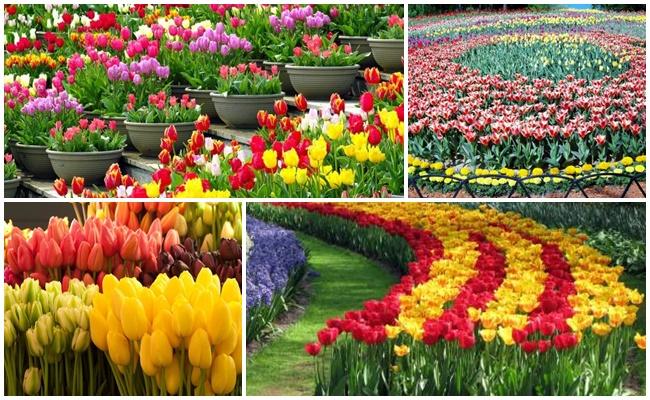
Individually planted flowers don't look as attractive as group plantings. Therefore, at least 10 bulbs of each desired variety are purchased at once. The splashes of color of red, yellow, and white tulips look especially striking against a green lawn or surrounded by coniferous shrubs.
When planting, use the principle of contrast or create smooth transitions from one shade to another. A flowerbed planted with tulips of different varieties but the same color looks no less attractive. Several such beds are created within a plot, spaced closely apart.
Ornaments and patterns
When planting tulips in your garden in patterns and designs, you should first create a diagram on paper. Use colored pencils to mark where each color of tulip will be placed. This is essential to avoid confusion during planting. Patterns and designs consist of two or more colors; interwoven green groundcover plants look spectacular.
There are many ideas for creating beautiful patterns using primroses, but you need to focus on the characteristics of your garden plot and your own tastes.
We plant in a path
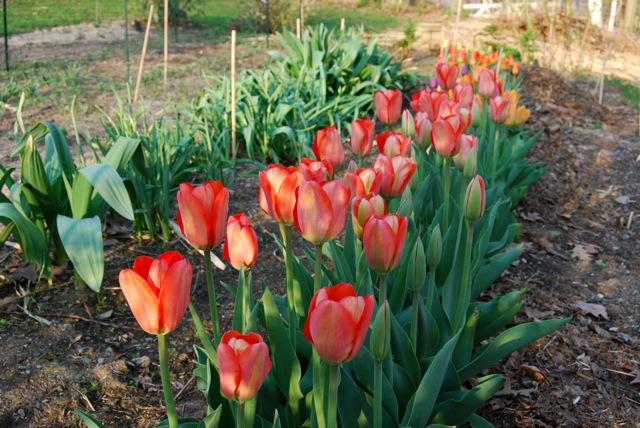
If a garden plot has many paths and walkways, they can be decorated by planting dwarf and mid-sized tulips along them. When planting, combine different bud shades or stick to a monochrome look. Tall varieties are not recommended for planting along paths, as they tend to break. A path of tulips can be planted along the perimeter of a green lawn, or primroses can be placed diagonally.


Plant in containers and boxes
Some gardeners plant primroses in boxes or containers. This is convenient because the containers with the faded plants can be moved to another location for further growth, and they don't spoil the flowerbed's appearance with yellowing leaves.
How to combine tulips with other plants
The best flowers to plant next to tulips depends on the size of the plot and the gardener's tastes. Bulbous plants pair perfectly with other primroses, coniferous perennials, and other plants.
Successful compositions with neighboring flowers
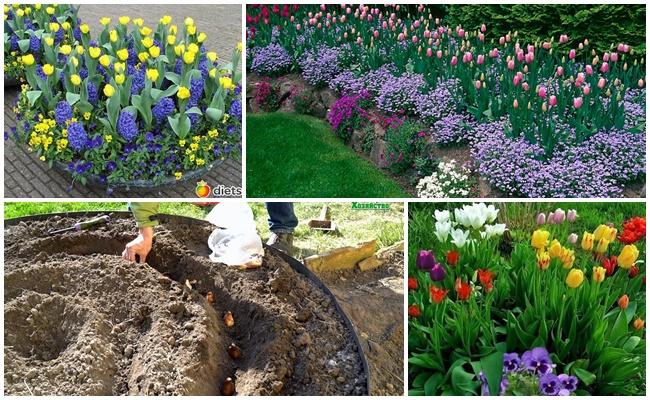
The following options are considered successful combinations of tulips with other flowers:
- A combination with daffodils is appropriate if the gardener wants the plants to bloom at the same time.
- A striking composition is achieved by planting them in the same flowerbed with white and pink double forget-me-nots. In this case, dwarf varieties are selected.
- If you plant the plants together with the evergreen iberis, after flowering the yellow foliage will not be so noticeable in the flowerbed.
- Red varieties of primroses look spectacular next to imperial fritillaries.

How to highlight the uniqueness and characteristics of tulips: tips from gardeners
To highlight the full beauty of a particular variety, avoid placing multiple tulip varieties in a single flowerbed; they will distract the eye. If a gardener has acquired a rare and striking primrose variety, it's best to plant the bulbs in a group, surrounded by green groundcover.
What to do with faded tulips?
After the plants' flowering period ends, the bulbs should be removed from the ground and stored in a cellar or basement. This is typically done after the foliage has completely turned yellow. The foliage contains nutrients the bulbs need to survive the winter.
Related posts:
 When is the best time to plant tulips in open ground? Timeframes by region and rules.
 Description of the top 20 most beautiful tulip varieties and types, their planting and care
 When and how to plant tulips in the Urals in autumn and care for them outdoors
 Timing and methods for planting tulips with your own hands in baskets for bulbous plants
 Timing and rules for replanting tulips in the fall, further care
 When is the best time to plant tulips in the Moscow region in autumn? Timing and care instructions.
 Top 10 methods and rules for treating tulips in the fall before planting
 How to prepare and store tulip bulbs, possible difficulties