
- The goals and purposes of transplantation
- When should peonies be replanted?
- In the fall
- Is it possible in summer?
- In the spring
- We follow the rules
- Digging up peonies
- Specifics of dividing bushes
- We transplant flowers to a new location
- Selecting and preparing a site
- Scheme and technology for planting different types of peonies
- Further care
- Irrigation and fertilizing
- Loosening and hilling
- Trimming
- Mistakes of novice gardeners
Peonies don't tolerate repotting well. However, it should be done at least once every five years. If the bushes aren't repotted, they lose their decorative appeal and shrink in size. They may even stop blooming. The best time to repot is early fall. Below is information on repotting peonies, their subsequent care, and the mistakes that novice gardeners often make.
The goals and purposes of transplantation
Every year, the peony bush grows larger and larger. Young shoots begin to compete with each other for nutrients and sunlight. A dense bush loses its decorative appearance and stops blooming. Another reason why peonies need repotting is the aging of the basal collar area. Colonies of ants and slugs begin to settle there.
The third reason is that the gardener wants to establish the plant as quickly as possible. To do this, they divide the bush into sections and transplant them to another location. Finally, peonies don't fit into the design of a plot altered by outbuildings. In this case, the plant is also dug up and replanted.
Additional information: To ensure peonies continue to delight you with their appearance and fragrance for as long as possible, cut them when the buds are just beginning to open.
When should peonies be replanted?
The best time of year to perform this procedure is late summer or early fall. This allows the plants to adapt with minimal losses.
In the fall
By September, the bushes have stocked up on nutrients. During this period, adventitious roots stop forming, but absorptive roots continue to emerge. To prevent damage to these roots during replanting, this procedure should be performed before they emerge en masse.
Plants planted in early September will have time to establish themselves well before the winter cold sets in. Autumn rainfall is abundant, making caring for the bushes easier. Sufficient soil moisture promotes rapid establishment.
Is it possible in summer?
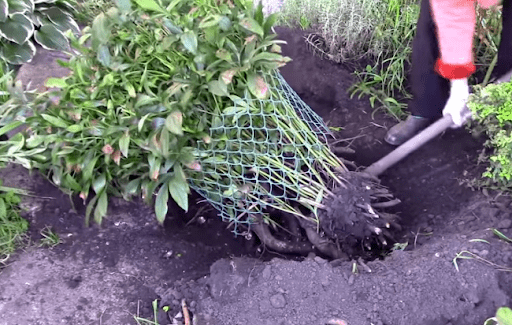
Experienced gardeners do not recommend this procedure in the summer. During this period, the sun's rays become scorching. Transplanted peonies may not withstand the negative effects. It is recommended to replant the bushes only in August, when the summer heat subsides.

In the spring
During this period, peonies are repotted only if absolutely necessary. The plant will take a long time to adapt, and flowering will not occur immediately. The bushes are planted in the spring, immediately after the danger of frost has passed. The sooner the repotting occurs, the easier the plant will survive the procedure.
We follow the rules
To help peonies adapt to new growing conditions, proper agricultural practices must be followed.
Digging up peonies
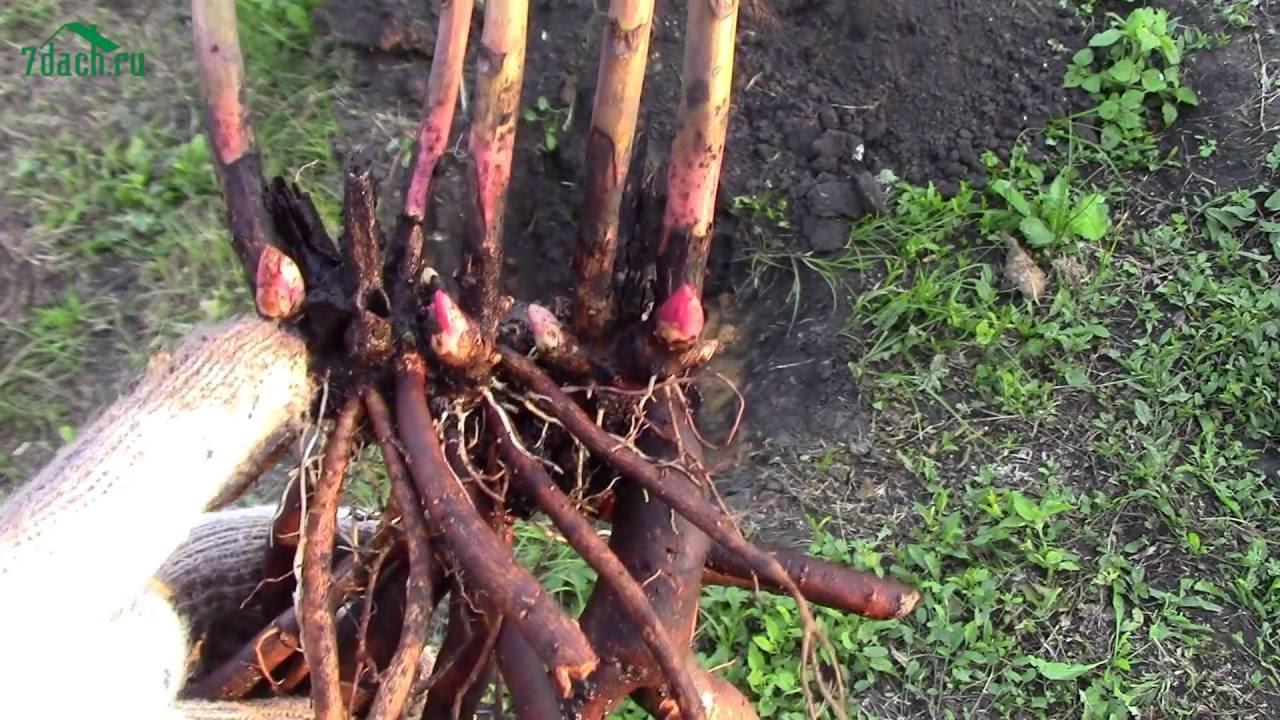
All stems of the mother plant are cut off at a height of 15 centimeters from the soil surface. Peonies' root systems extend up to a meter deep, making them difficult to dig up. To facilitate this process, the bush is first dug around on all sides. The rhizome is removed by shaking it out, along with the soil ball.
Specifics of dividing bushes
The roots are intertwined, so care must be taken to ensure the procedure is carried out carefully. A sharp, disinfected knife is used. The plant is divided into sections so that each section contains 3-5 roots and the same number of buds.
If the roots are too long, they are trimmed to 20 centimeters. Damaged or rotted parts are cut out and allowed to dry. Then, they are treated with an antifungal agent and sprinkled with wood ash.
We transplant flowers to a new location
Peonies grow in one place for at least 5 years, so the area for planting them is selected carefully.
Selecting and preparing a site
Choose a site with good sunlight. It's best to place the bushes in partial shade during hot midday hours. Otherwise, the blossoms of some varieties may fade in the sun. The planting site should be well-ventilated, but cold winds will have a negative effect on peonies.
Groundwater should not be closer than 1 meter to the soil surface. Otherwise, the deep root system of plants may rot. Bushes will not thrive in a garden plot near buildings. They should be planted 1.5-2 meters away from other plants.
The soil should be loamy and fertile. Heavy soil should be thinned with river sand. If the soil is too light, a mixture of clay and compost should be added. Dolomite flour and lime should be added to acidic soil.
Scheme and technology for planting different types of peonies
Peonies are divided into tree and herbaceous varieties. The former are taller. The planting technique for all types of peonies is the same. Planting is done as follows:
- For disinfection, the root system is placed in a solution of potassium permanganate for 30 minutes.
- They dig a hole measuring 60×60 centimeters.
- A drainage layer is placed on the bottom.
- They add fertile soil.
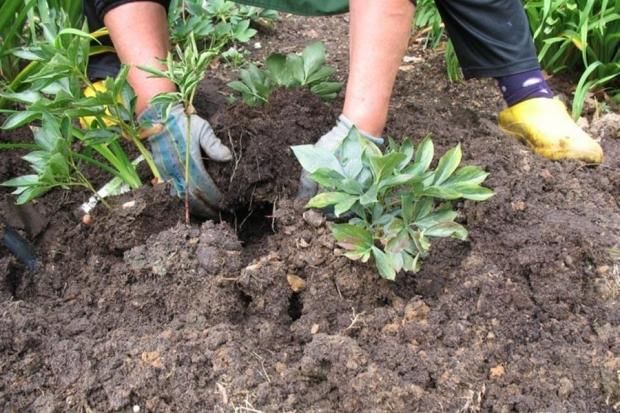
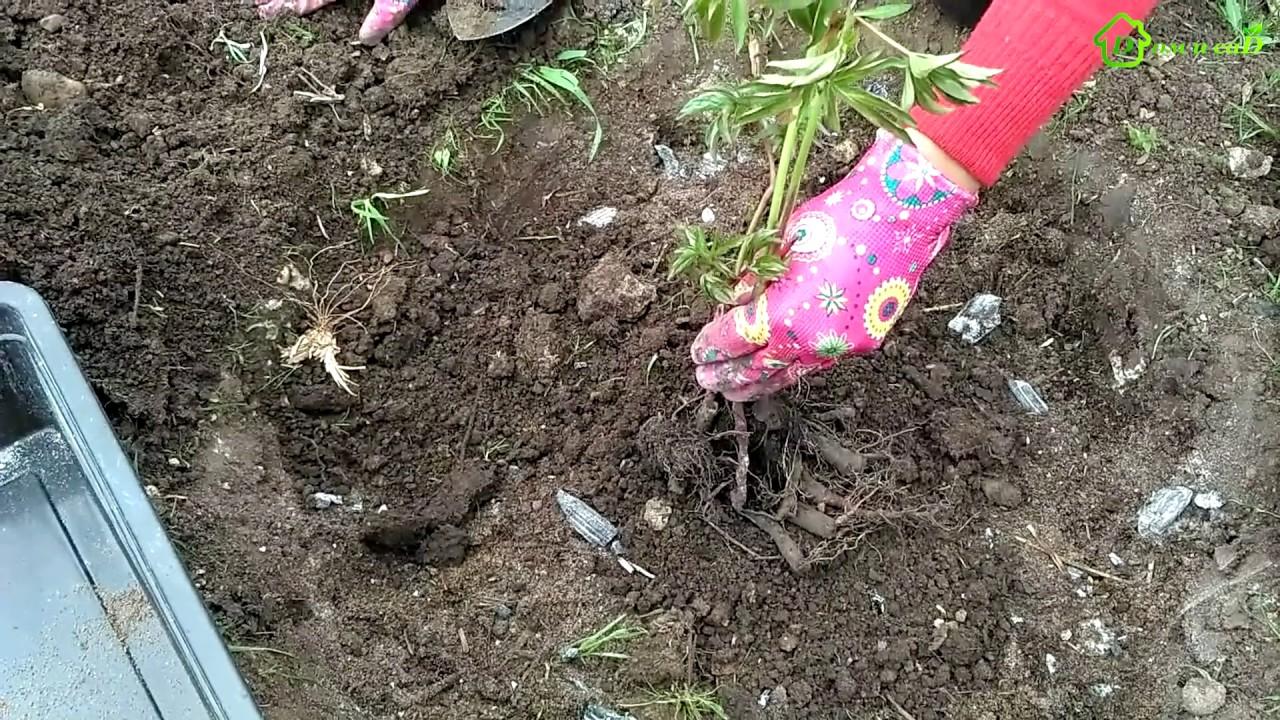
- The rhizomes are laid out in the middle of the hole and carefully spread out to the sides.
- Cover with substrate, trying not to deepen the root collar more than 5-6 centimeters.
- Water generously.

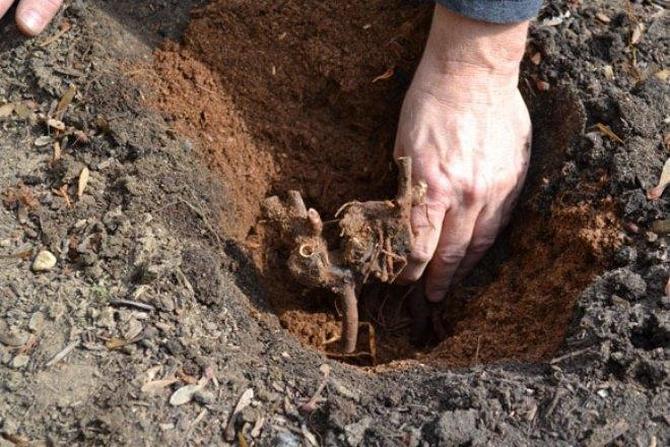
The root zone is covered with mulch. This will help retain moisture deep in the soil.
Please note! If the root collar is planted too deep, peonies may not bloom. If the renewal buds are too high, the shoots will be weak and brittle.
Further care
Subsequent care consists of timely watering and fertilizing the plants. The soil around the bushes is loosened. Stems with faded buds are cut off. The above-ground portions should droop naturally. They can be pruned only in late autumn.
Irrigation and fertilizing
Peonies are watered as the top layer of soil dries out. This is done in the morning or evening. Watering during the day will cause rapid evaporation and will negatively impact the plant. Use warm, settled water. Pour 20-30 liters of water under the bush. Avoid watering the leaves and flowers.
Nutrient application begins the year following planting. In early spring, an ammonium nitrate solution is added to promote rapid, strong shoot growth. During budding, peonies are watered with phosphorus-potassium fertilizers. The same solution is added two weeks after flowering ends.

Loosening and hilling
After watering, loosen the top layer of soil. This procedure will allow air to reach the peonies' root system. Loosen the soil with a disinfected tool. During this process, trim away any weeds that interfere with the growth of the bushes.
To ensure successful root development, peonies are earthed up. Peat and compost are used. Mulch is also used to ensure successful overwintering of the bushes. In late autumn, the bed is covered with a 15-centimeter layer of insulation. As soon as the sun warms up in the spring, the mulch is raked away from the root system.
Trimming
Shoots with faded buds are cut back. Bushes continue to grow in the summer, so complete pruning of the stems is not necessary. The presence of above-ground growth is especially important in late summer. This is when the buds that will bloom the following season are formed. If pruning is necessary, the shoots are cut back to leave 3-4 leaves.

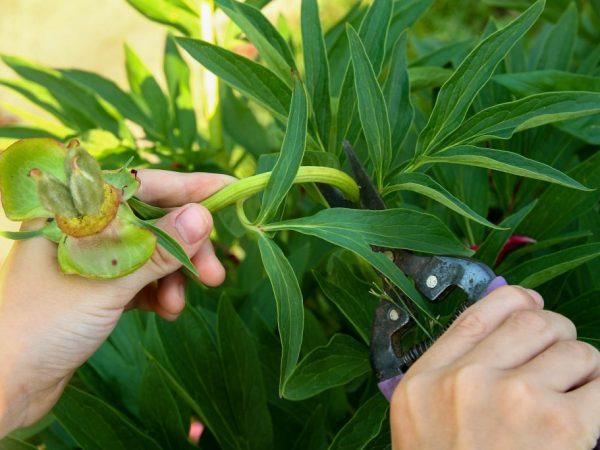
Important! Remove flowers that appear on young, immature bushes. Flowering takes a lot of energy away from them, which is essential for development.
Mistakes of novice gardeners
Inexperienced gardeners can make certain mistakes when replanting peonies. As a result, the plants develop slowly, and flowering may not occur at all. The most common mistakes are:
- The root collar was planted incorrectly. If planted too deep, flowering will occur late. If planted too high, the stems will break in gusts of wind and may freeze in winter. The ideal depth is 5-6 centimeters.
- The peonies were planted in the wrong location. The bushes don't thrive in the shade. The shoots grow weak, and the flowers are dull. If the groundwater level is too high, the root system can be attacked by pathogens.
- Incorrect planting time. Peonies are ready for transplanting in late summer or early fall. This will reduce stress on the root system and allow the bushes to adapt before frost sets in. Replanting in June or July can kill the plants.
- Incorrect care is being provided. Insufficient watering results in small, unsightly flowers. In colder regions, mulching is necessary, otherwise the shoots may freeze.
- The mother bush chosen for division is too young. Peonies older than 5 years are divided and replanted. If the plants are young, they will bloom only in the third or fourth spring after planting.
Peonies don't like being repotted. But sometimes it's necessary. Otherwise, the bushes may lose their decorative appeal and stop blooming. By learning about repotting and putting these skills into practice, gardeners can enjoy beautiful blooms for a long time.
Related posts:
 Descriptions and characteristics of all varieties of peonies, varieties and names of the best
 Timing of planting and care of peonies in open ground, growing rules
 TOP 20 Itoh Peony Varieties and Their Characteristics, Planting and Care Guidelines
 Winter preparation guidelines for peonies by region, timing, and care
 Top 11 Coral Peony Varieties and How to Grow Them
 Planting and caring for tree peonies: the best varieties and growing mistakes
 Description and characteristics of the Sarah Bernhardt peony variety, planting and care instructions
 Description of the hybrid peony variety Bartzella, planting and care instructions