
- Types of hosta
- Straight-leaved
- Plantain
- Curly
- Beautiful
- Lanceolate
- Wavy
- Siebold
- Fortune
- Ovoid
- Swollen
- White-bordered
- Giant
- Dwarf species
- The most beautiful varieties and hybrids
- Aureomarginata
- Blue Ivory
- Big Daddy
- Brim Cap
- Blue Angel
- June Fever
- Green Fountain
- Gold standard
- Red October
- Christmas Candy
- Liberty
- Praying hands
- Orange Marmalade
- Purple Heart
- The leaves are green and heart-shaped. The petioles and veins are tinged crimson to the center of the leaf. The bushes reach a height of 30 centimeters.
- Paradise Island
- Wolverine
- Sow Sweet
- Stylet
- White Feather
- First Frost
- Chalcedony
- Master of June
- Gypsy Rose
- Patriot
- Royal
- Recommendations for choosing and combining varieties in a flowerbed
Hosta is an easy-to-grow plant, perfect for decorating shaded areas of the garden. It can be grown as a solitary shrub or combined with other plants. Flower buds open in midsummer. However, hosta is prized not for its flowers, but for its beautiful, textured leaves. Below is information about hosta species and varieties, as well as how to combine them in a flowerbed.
Types of hosta
Experts classify the crop by leaf shape and color, and by bush height. Each variety has its own advantages and disadvantages.
Straight-leaved
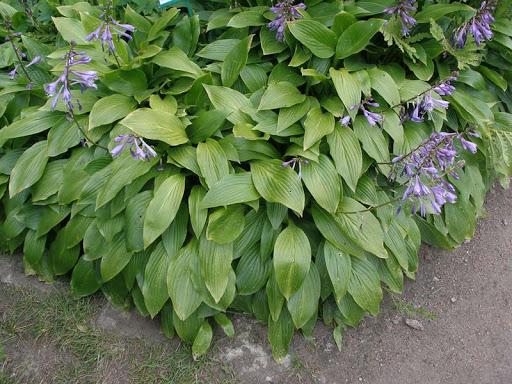
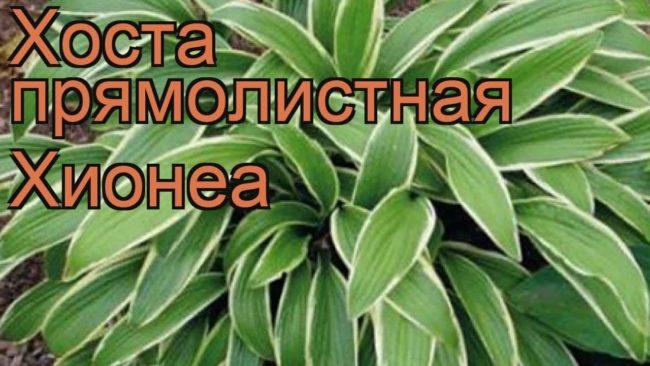
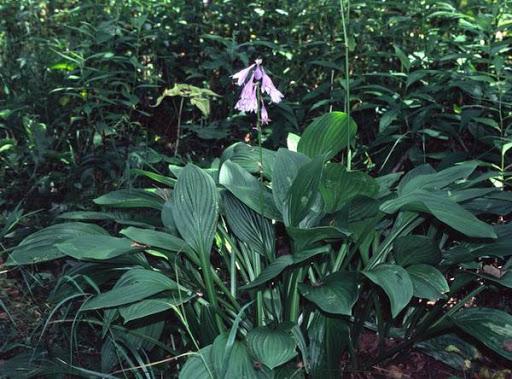
The plant grows into bushes 70-85 centimeters tall. The leaves are erect, arranged almost vertically. In summer, inflorescences with lilac-colored buds form.
Straight-leaved hosta is used in flowerbeds and mixborders.
Plantain

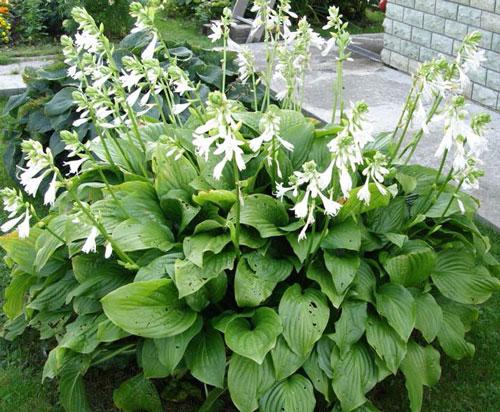
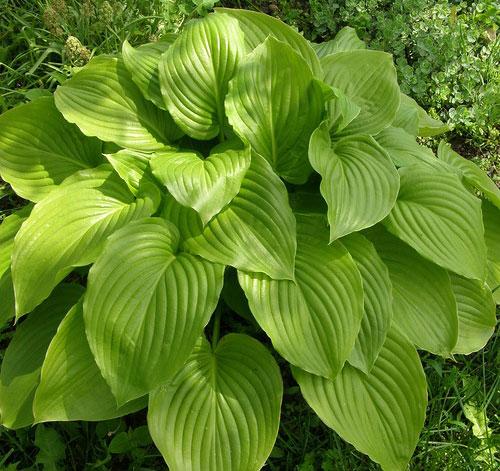
The bushes reach a height of 40 centimeters. The plant spreads up to 60 centimeters in width. The leaves are light green and wide. White buds open in July.
The plantain hosta has been popular in Europe since the 18th century.
Curly
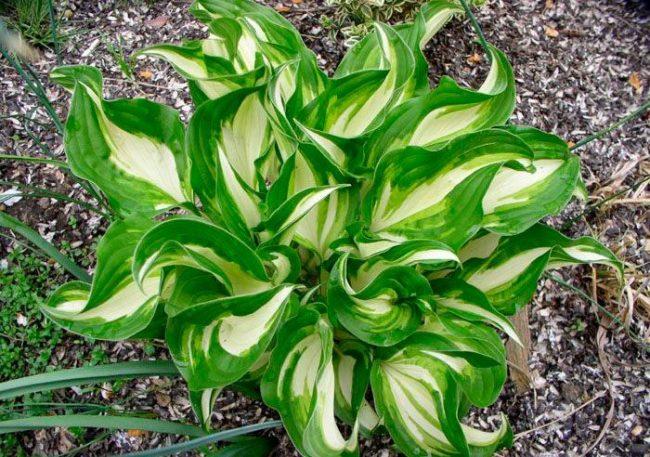
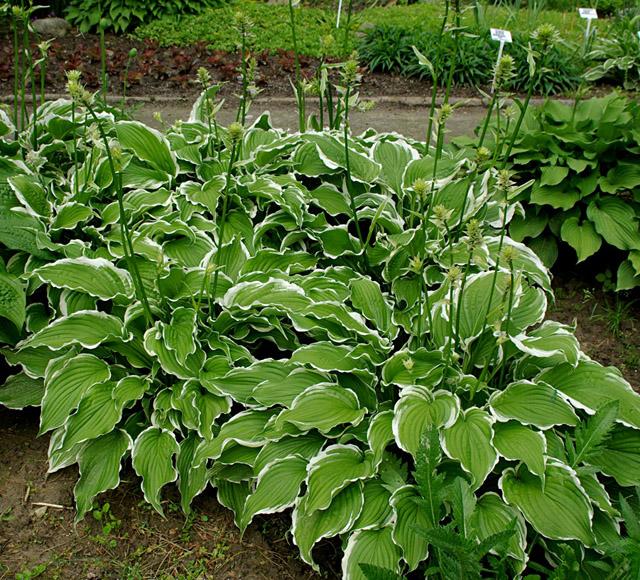
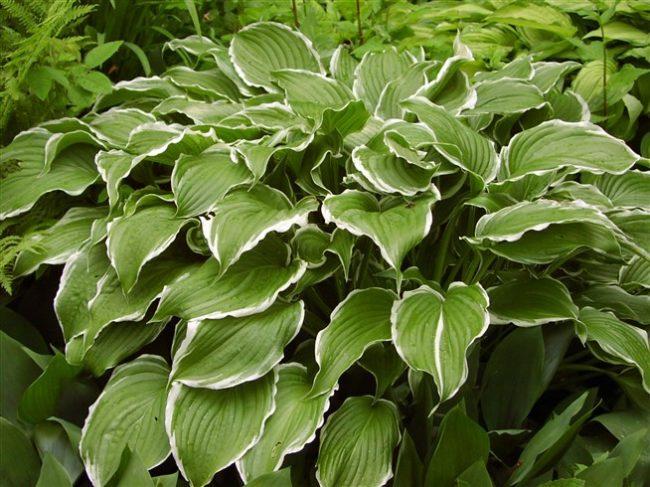
The ovate-cordate leaves are twisted and pointed at the top. A white stripe runs down the center of the green leaves. Lilac flowers form on long, slender stems. The buds open in late summer.
Hosta with curly leaves serves as a decoration for mixborders, flower beds, and alpine slides.
Beautiful
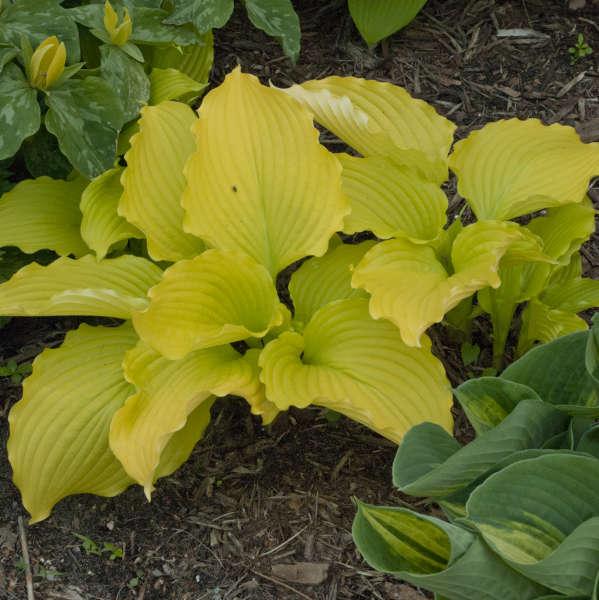
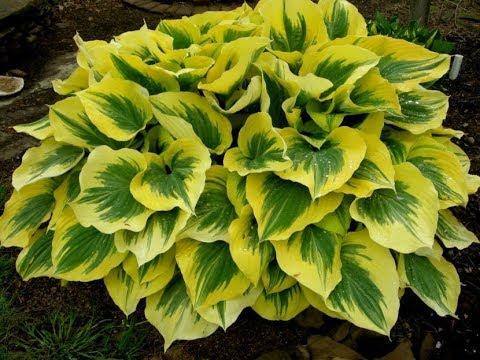

The plant's leaves are ovate, wavy, and green. A wide white stripe runs along the edges. The inflorescence consists of 30-40 purple buds. It blooms from late summer until the onset of cold weather.
This beautiful hosta is native to Japan, but is particularly popular in Europe.
Lanceolate
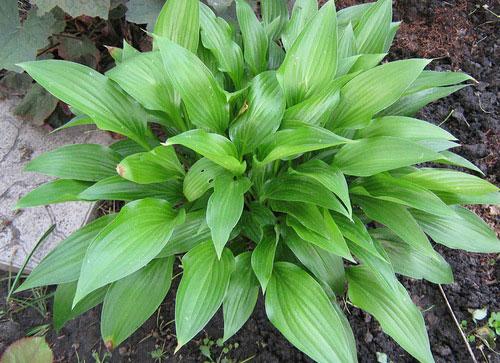
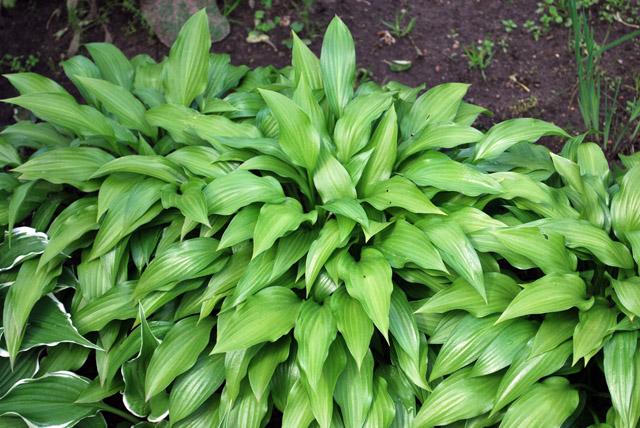
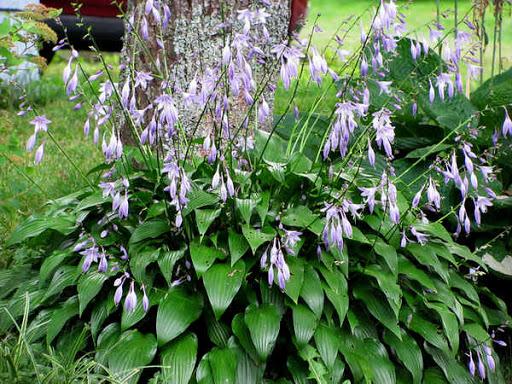
The bushes reach a height of 30-35 centimeters. The green leaves are narrow and lanceolate. The inflorescences are small and lilac. Flowering occurs in midsummer.
The lanceolate hosta blooms until the autumn cold weather.
Wavy
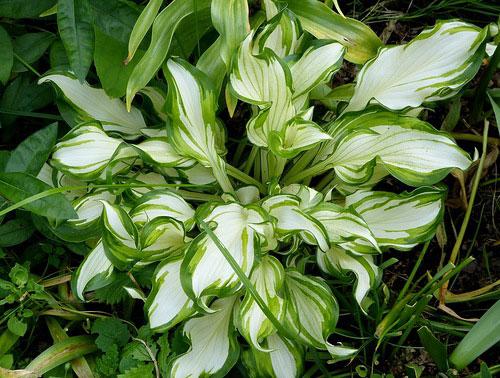
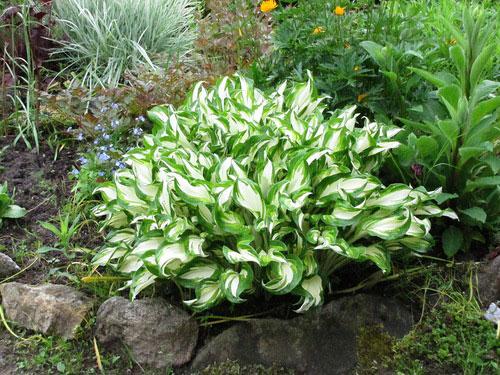
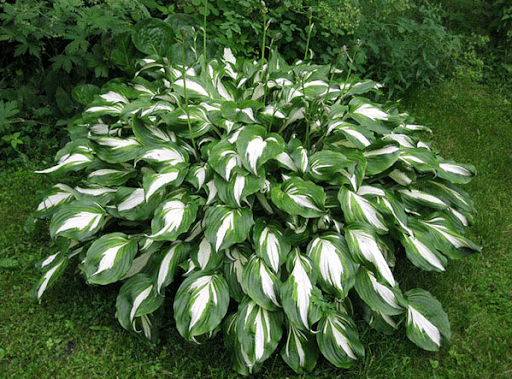
Funkia's leaves are wavy. The base color is white. The edges of the leaves are tinted green. The inflorescence is formed by purple buds that bloom in late summer.
The wavy hosta, bred in Japan, quickly won the hearts of Europeans.
Siebold
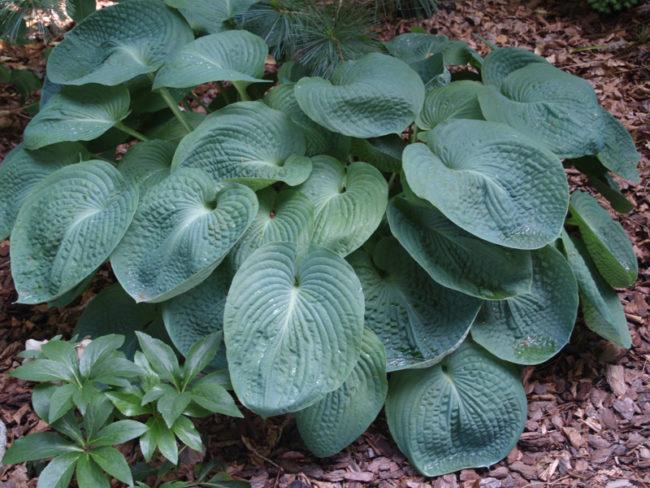
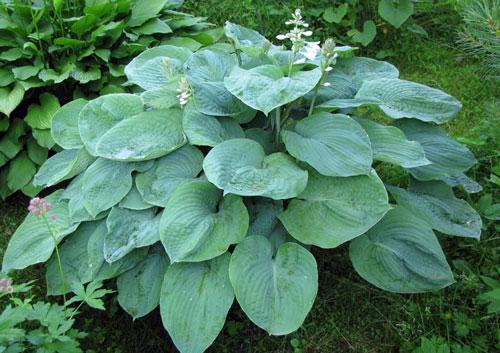
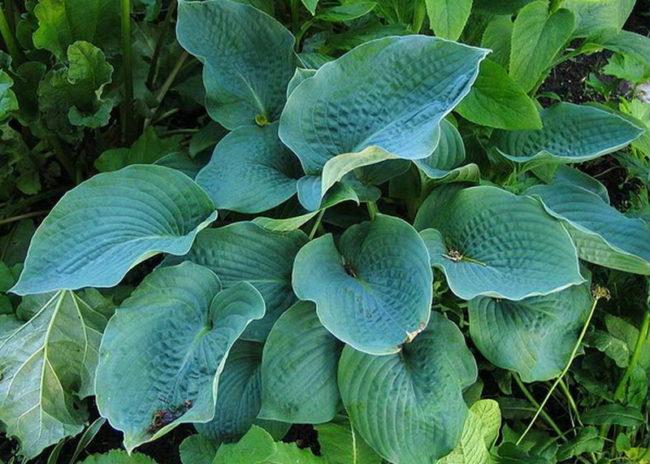
The bushes reach a height of 35-40 centimeters. The broad leaf blades are covered with a bluish bloom. Depending on the variety, the flowers are white or lilac.
Based on the Siebold hosta, breeders have developed many beautiful varieties.
Fortune
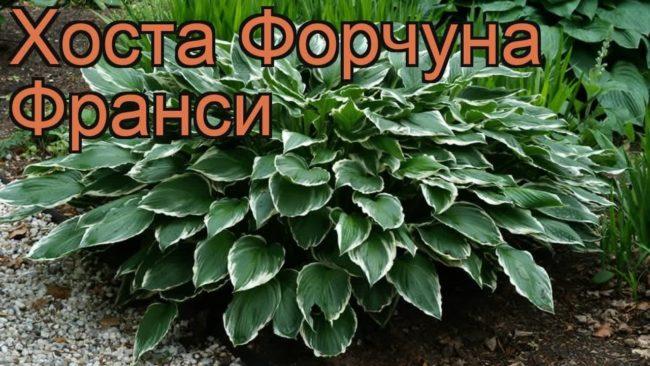

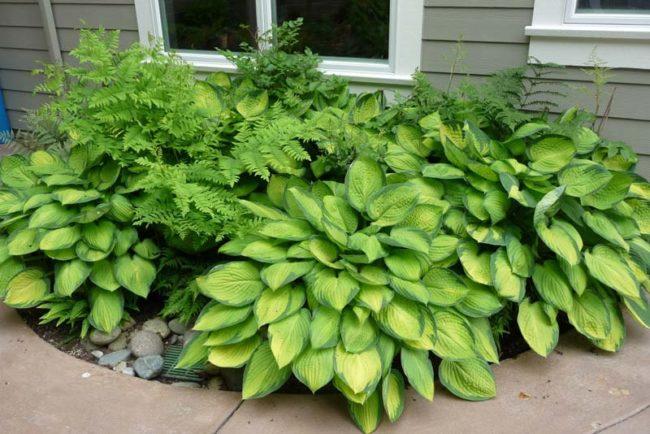
This hosta grows to a height of 50-70 centimeters and a width of 60 centimeters. Leaf blades vary in size and color depending on the variety. Purple flowers bloom in late summer.
Hosta Fortune blooms before the onset of cold weather.
Ovoid
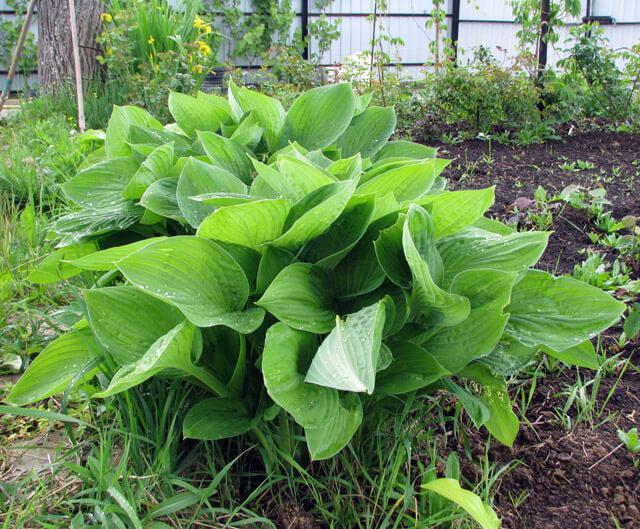
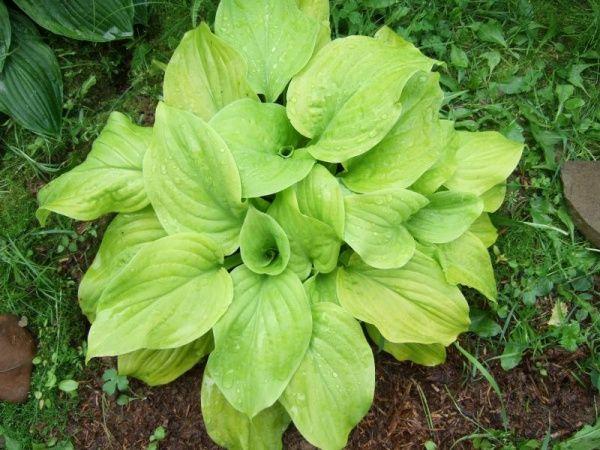
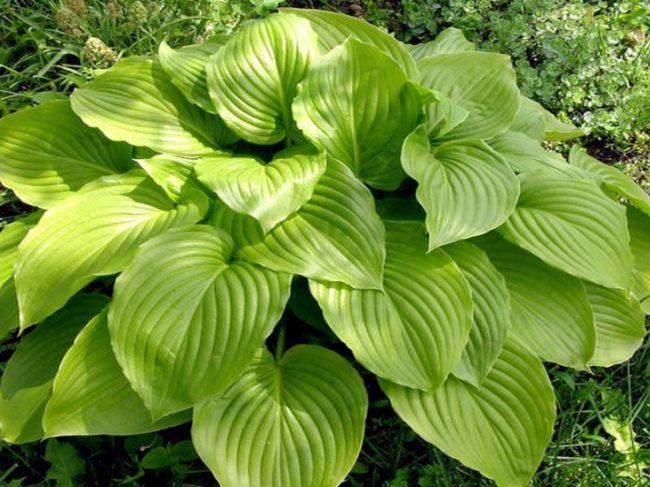
The bushes reach 40 centimeters in height and width. The leaves are large, oval, and green. Purple flowers appear in late July or August.
The ovoid hosta is planted in shady areas of the garden.

Swollen
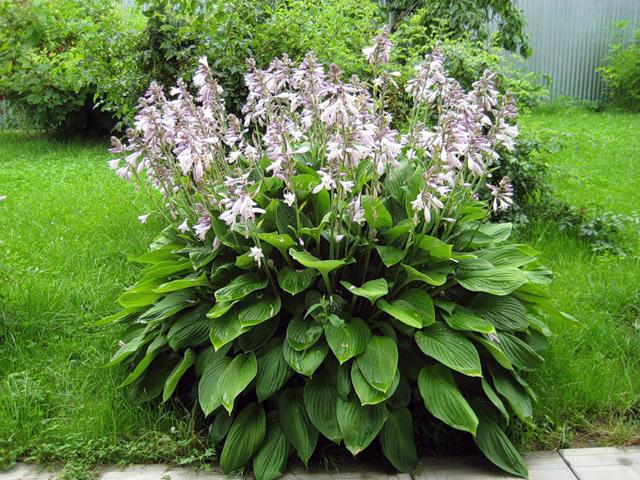
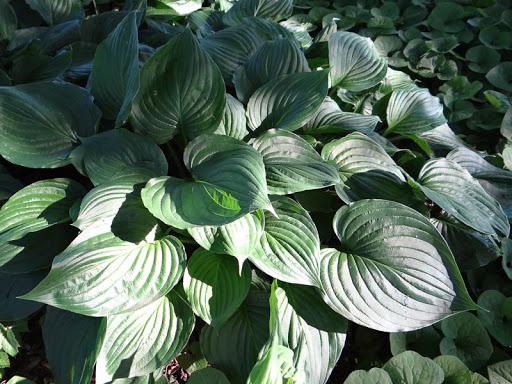
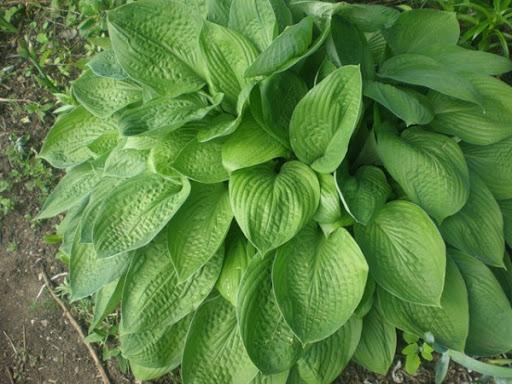
This funkia grows tall and wide. Flower stalks reach 120 centimeters. The leaves are heart-shaped, wide at the base and tapering at the tip.
The color of the flowers of the culture is purple or lilac.
White-bordered
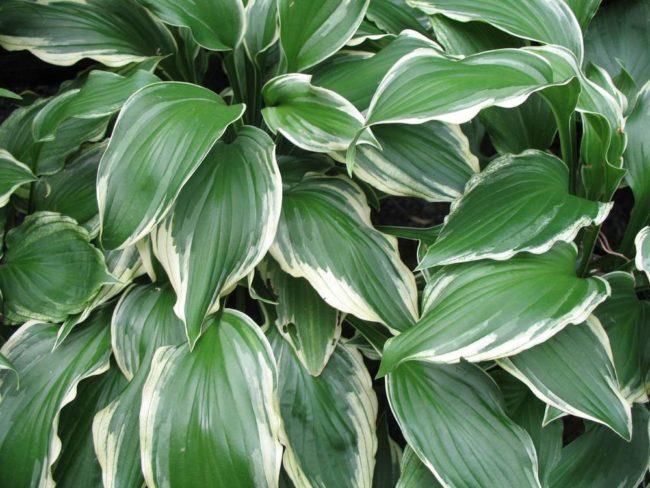
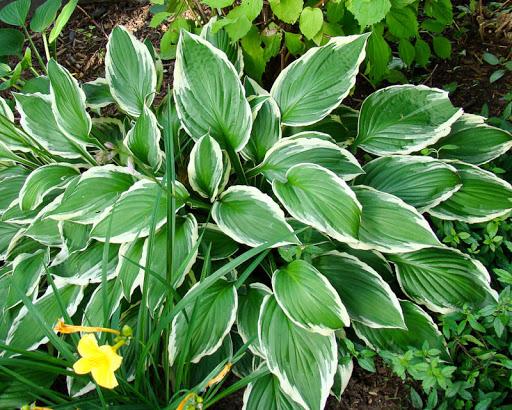
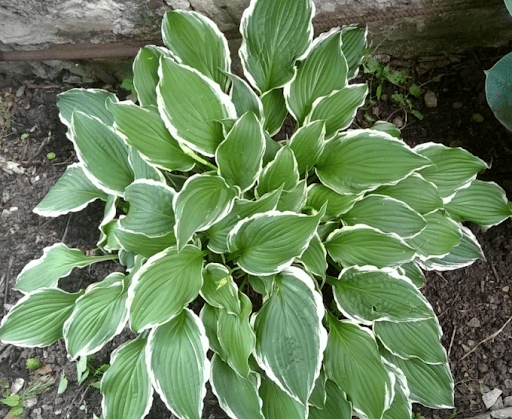
The plants reach a height of 30 centimeters. The bushes spread to a similar width. The leaves are green. A shallow white border runs along the edges.
White-edged hosta blooms in July and August.
Giant

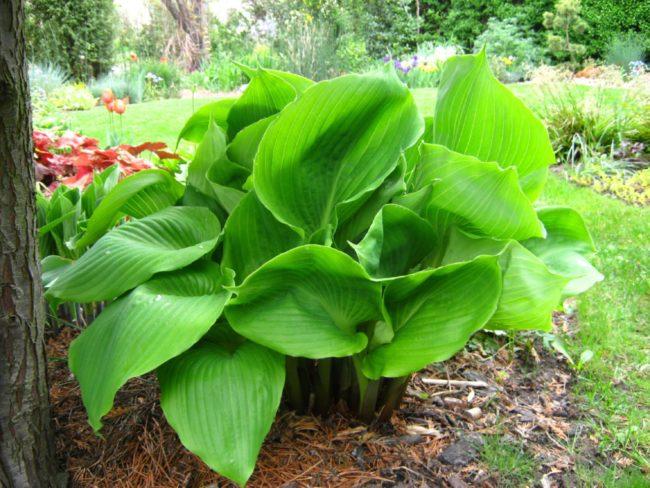

This group includes hostas ranging in height from 150 centimeters to 1.5 meters. Their diameter can reach 2 meters. The leaves are either solid or variegated.
Sheet plates can be glossy or matte.
Dwarf species
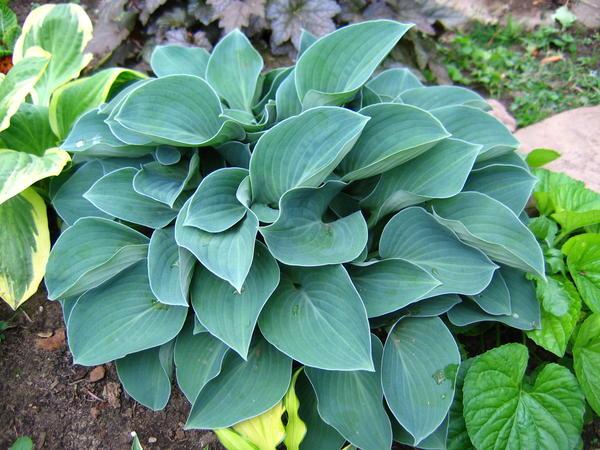
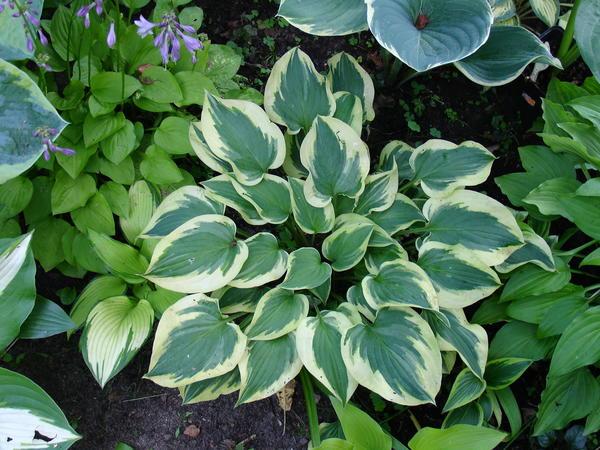

These hostas grow no taller than 15 centimeters. The leaves are green and can also be variegated. They can be grown in flowerbeds or pots.
Miniature hostas can be kept on a balcony or loggia.
The most beautiful varieties and hybrids
Breeders have developed numerous hosta varieties and hybrids. The following varieties are the most popular among gardeners.
Aureomarginata
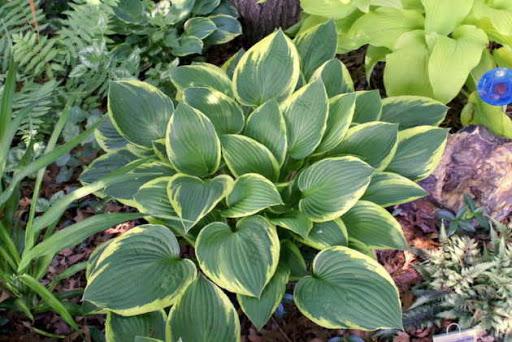

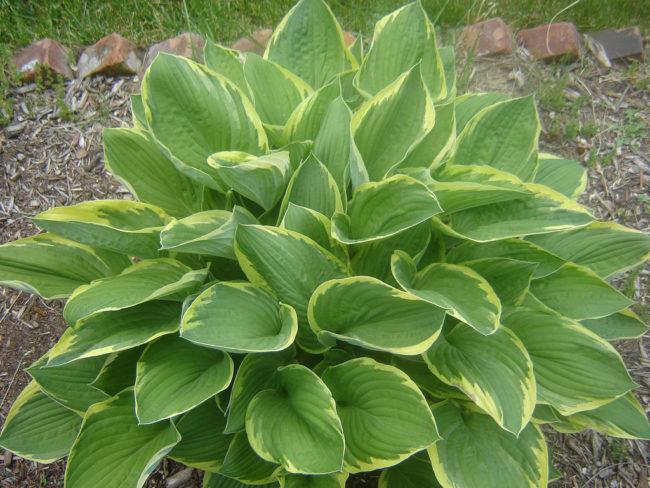
The plant can reach a height of 100 centimeters. The bushes spread widely. The leaves are large and green. A beautiful yellow stripe runs along the edges.
Hosta Aureomarginata can become the central decoration of a garden plot.
Blue Ivory
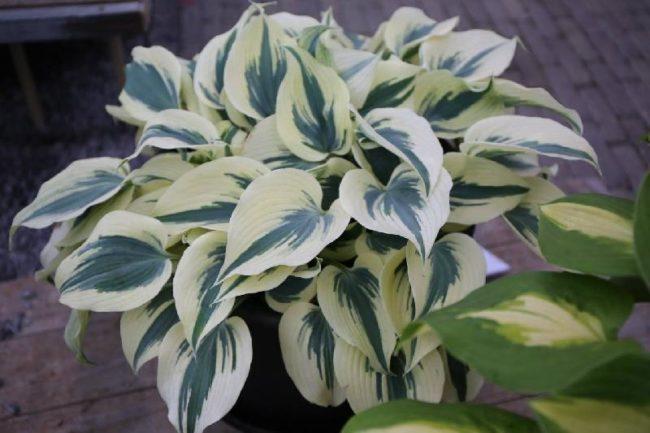
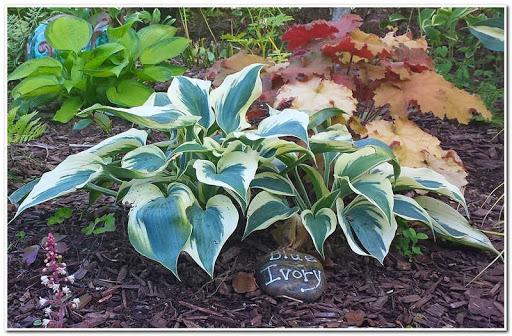
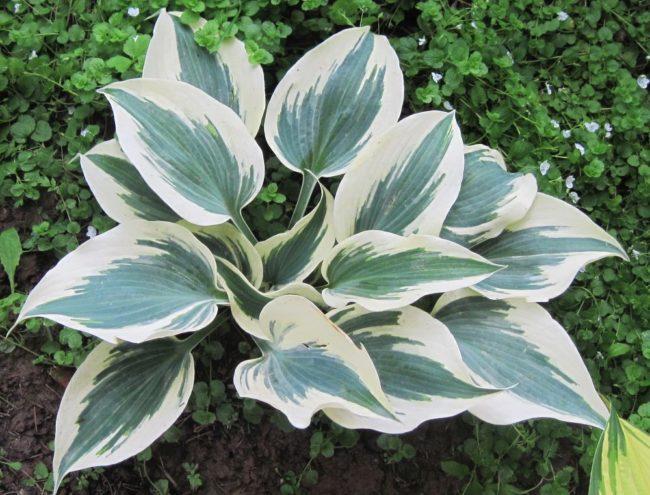
Funkia bushes reach a height of 45 centimeters and a width of 120 centimeters. In spring, the leaves are bluish-green, with a creamy border forming along the edges. Later, the center of the leaf turns blue, and the edges turn white.
Hosta Blue Ivory is planted in a semi-shaded area of the garden.
Big Daddy
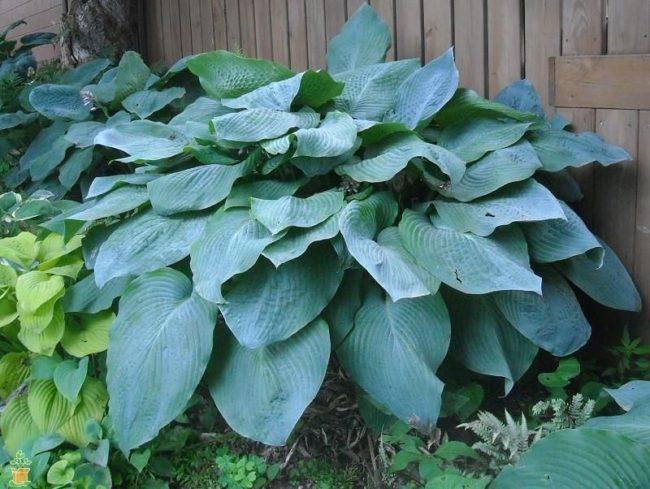

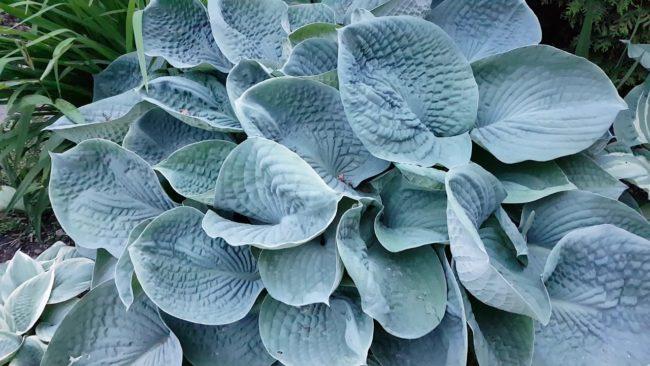
Funkia grows to 60 centimeters tall and 1 meter wide. The leaves are dark blue, covered with a bluish bloom. By autumn, they become more green. The flower stalks are 70-120 centimeters tall. White buds appear in July or August.
Hosta Big Daddy is planted next to ferns, lupines, and low-growing conifers.
Brim Cap
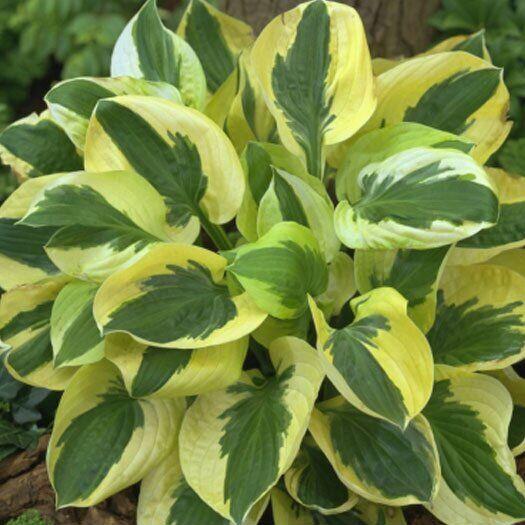
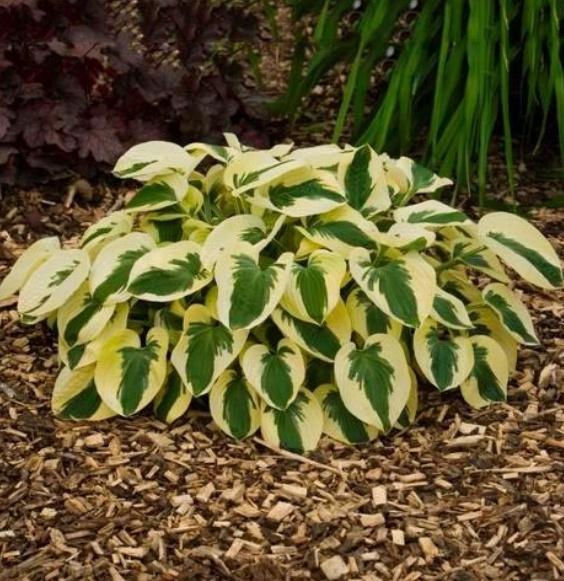
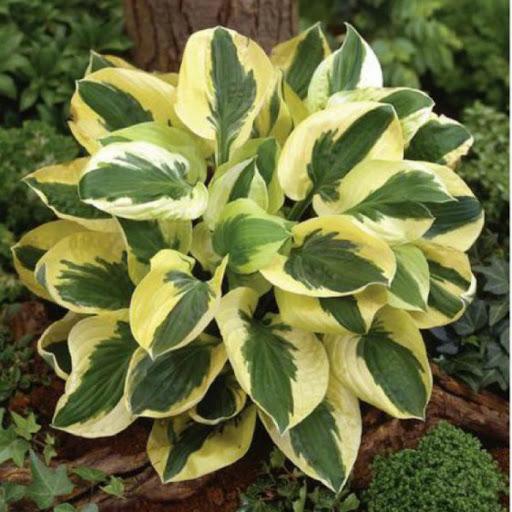
The shrub's leaves reach a height of 40 centimeters. They are dark green. A longitudinal yellow stripe runs along the leaf edges. Flowering begins in mid-July.
Brim Cup buds have a blue tint when they open. When fully open, the flowers turn white.
Blue Angel
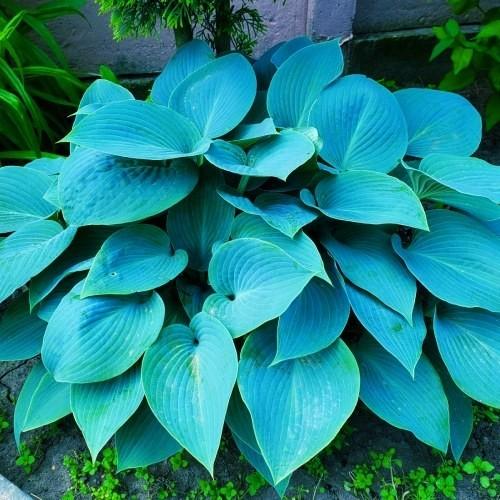

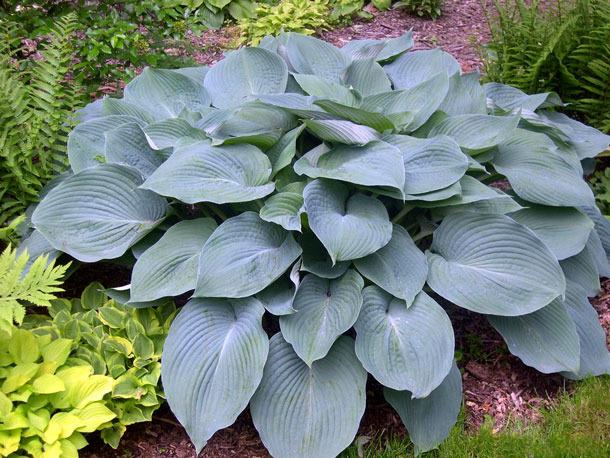
The bushes grow to a height of 1 meter. The leaves are heart-shaped. In spring, they are glaucous-blue. In autumn, green predominates. In summer, funnel-shaped white inflorescences form.
Hosta Blue Angel can be used to decorate the banks of ponds.
June Fever
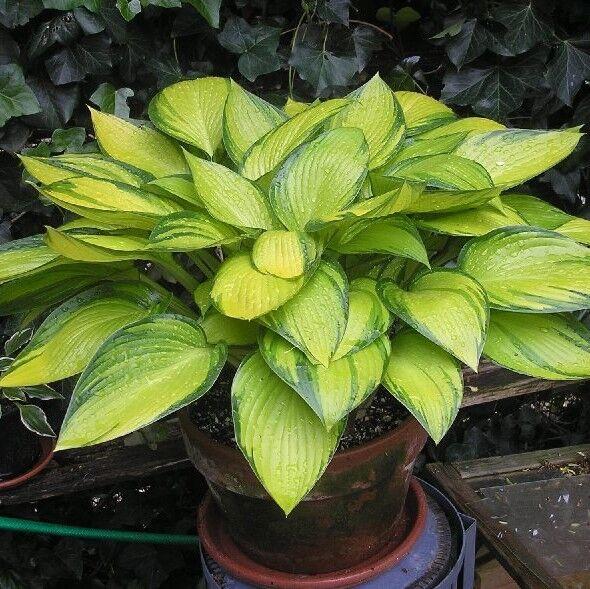
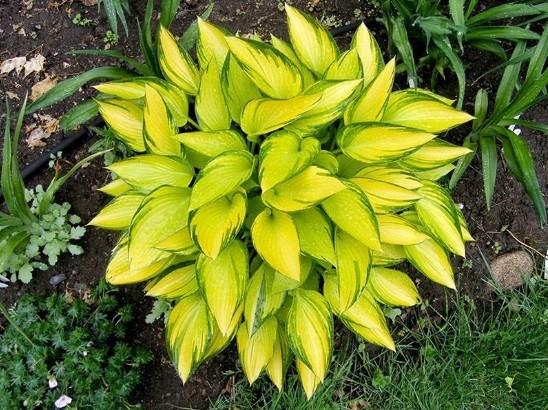
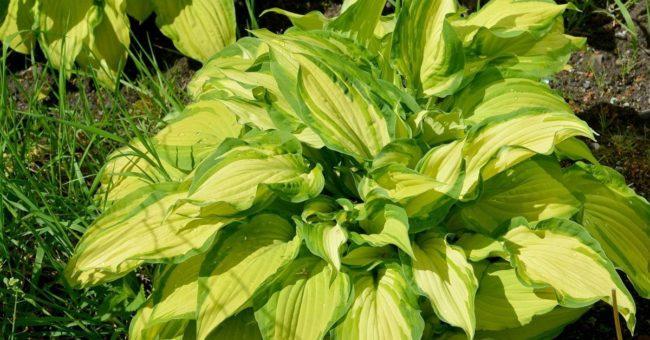
The plants grow to a height of 30-40 centimeters. The leaves are pointed and yellow. They have a green border around the edges. Purple flowers appear in summer.
June Fever looks beautiful in the garden as a solitaire.
Green Fountain
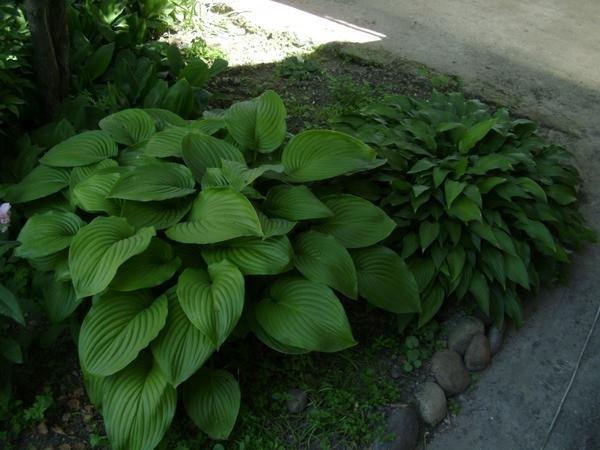
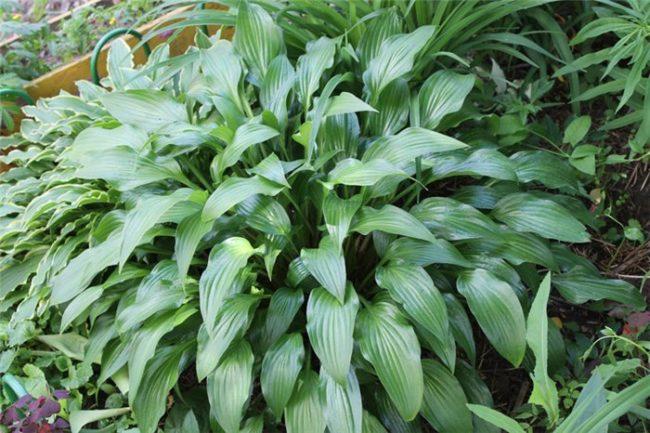
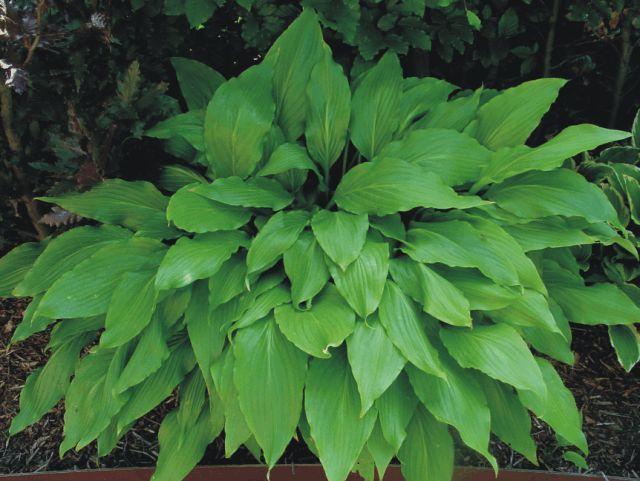
The rosette of leaves on these half-meter-tall bushes looks very neat. The blades are wide at the base and taper toward the top. The leaves are green, and the inflorescences are lavender.
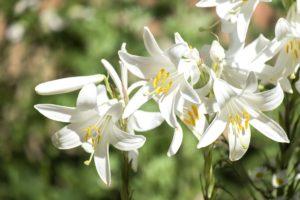
Green Fountain grows to form a green fountain of leaves.
Gold standard
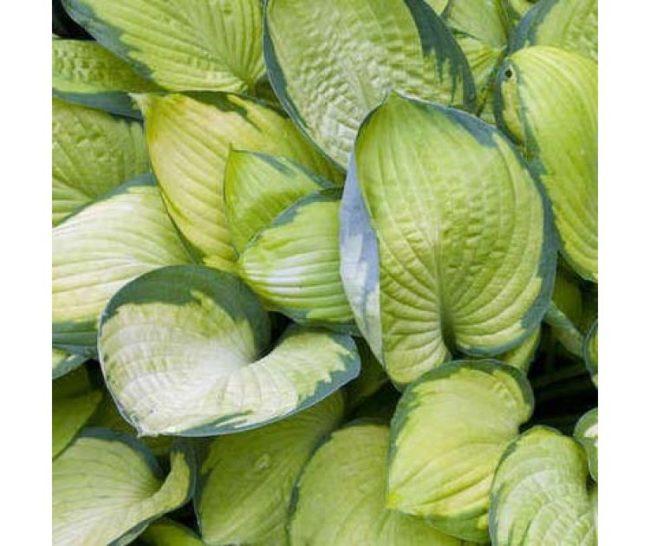
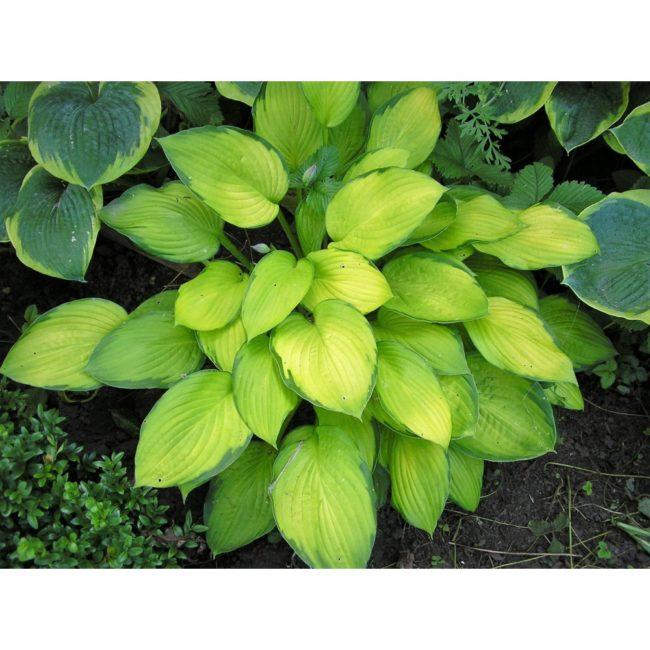
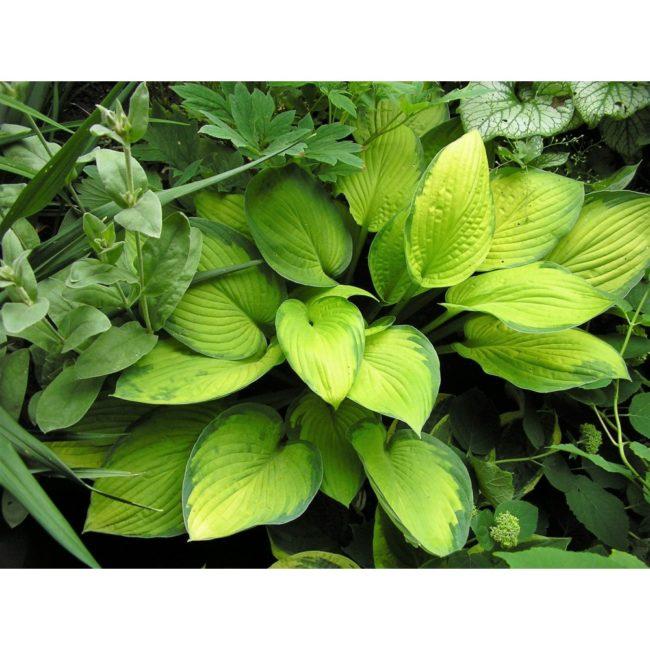
The mature plant is 70 centimeters tall and 120 centimeters wide. The leaves have a green-yellow center and a dark green stripe along the edge.
Flower stalks with lilac buds begin to open in mid-summer.
Red October
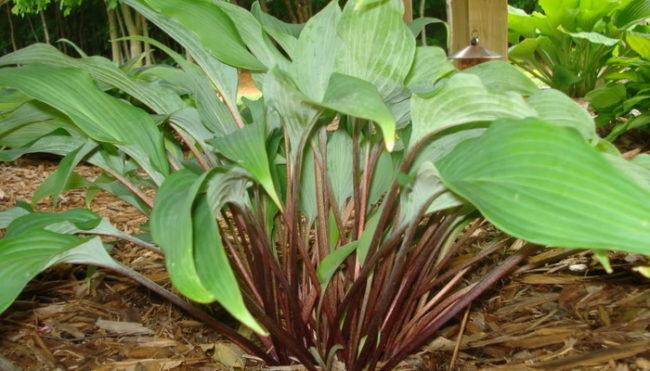
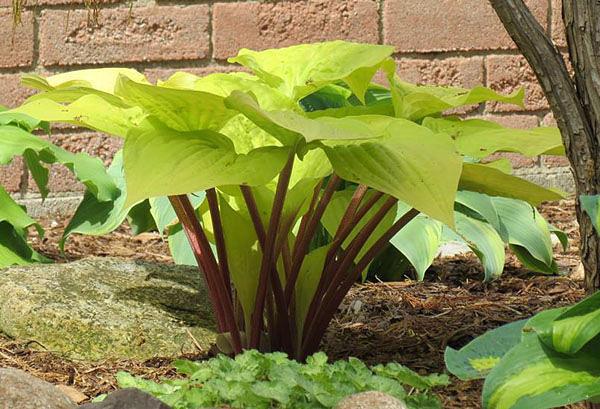

The plants reach 40 centimeters in height and width. The broad, lanceolate leaves are green with prominent red veins. The petioles are the same color. Lavender buds form on a dark purple flower stalk.
Hosta Red October blooms in August and September.
Christmas Candy
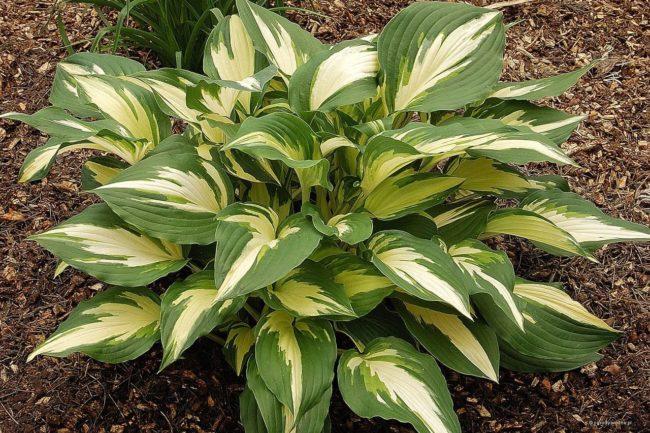

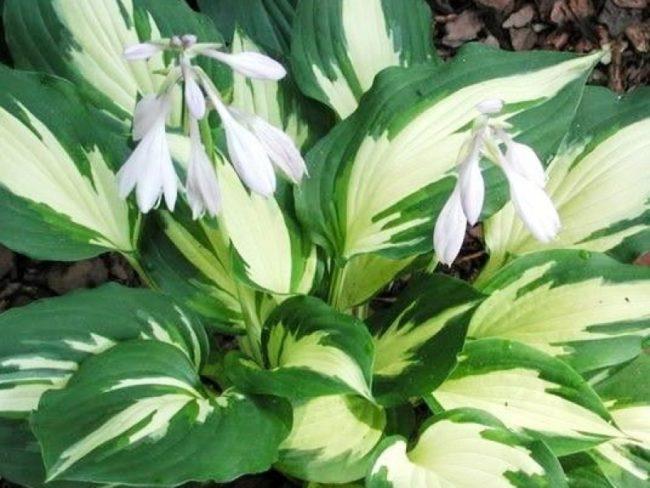
The bushes are 35 centimeters tall and 60 centimeters wide. The leaves are dark green. A white stripe runs down the center. The edges of the leaf blades are slightly wavy.
Christmas Candy's lavender blooms appear in July.
Liberty
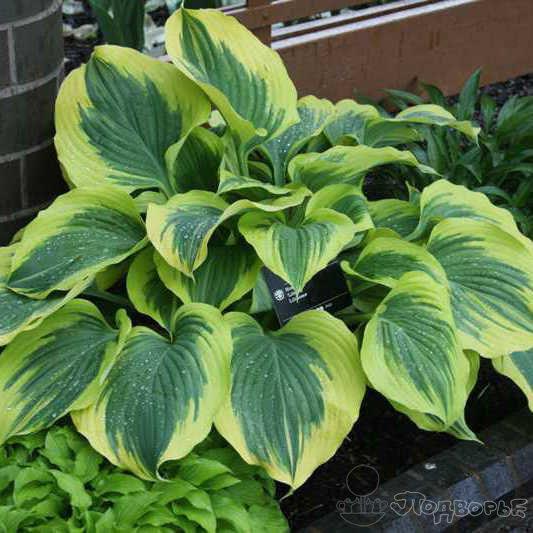
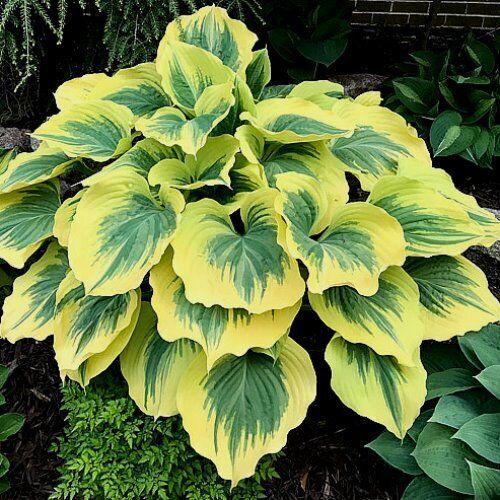
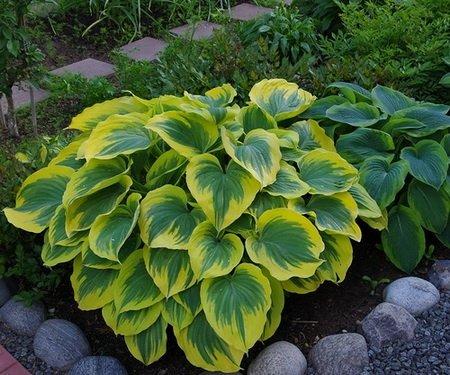
The variety's second name is "Freedom." Plants reach a height of 80 centimeters. The broad leaves are blue-green with a yellow stripe along the edges. Light lilac buds open in midsummer.
The decorative effect of the Liberty hosta remains until late autumn.
Praying hands
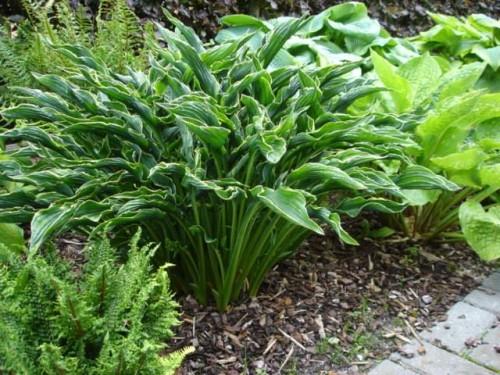
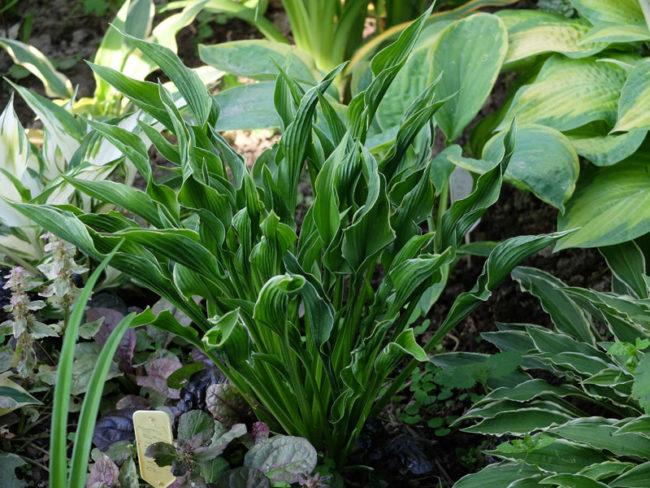
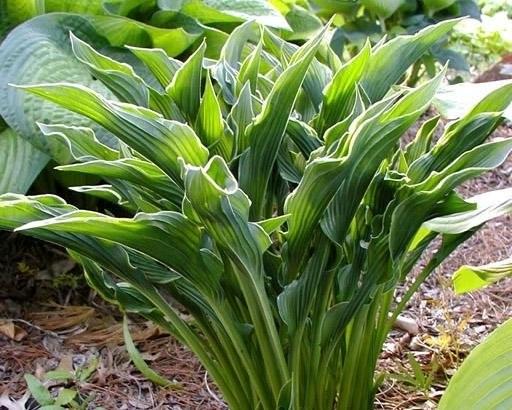
The leaves of this variety are narrow and folded in half. Their vertical orientation gives the hosta its name, Praying Hands. A narrow golden border runs along the edges of the leaf blades.
Light lilac buds bloom in July and August.
Orange Marmalade
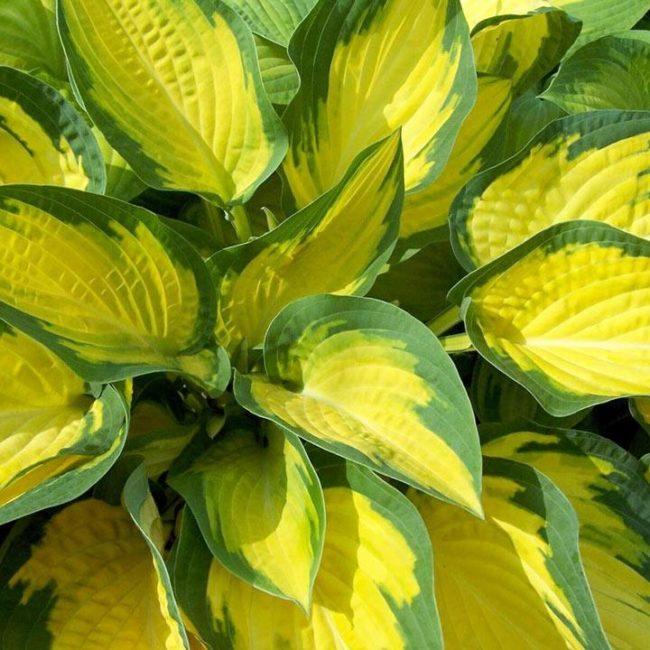

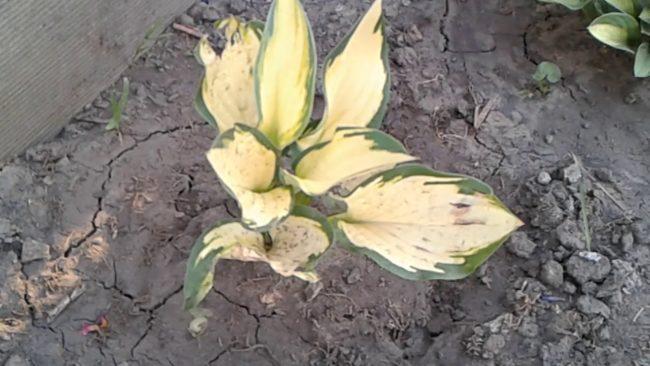
At the beginning of the growing season, the leaves are golden-yellow. In summer, they acquire a bright orange hue. By autumn, the leaves turn creamy.
The inflorescences of the Orange Marmalade hosta are light purple and funnel-shaped.
Purple Heart
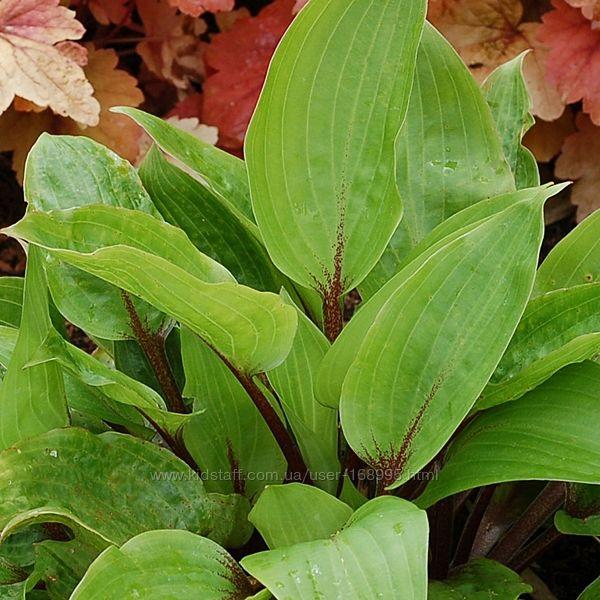
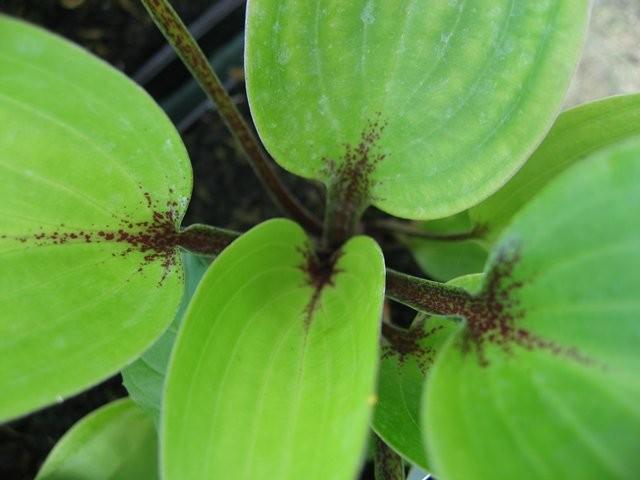
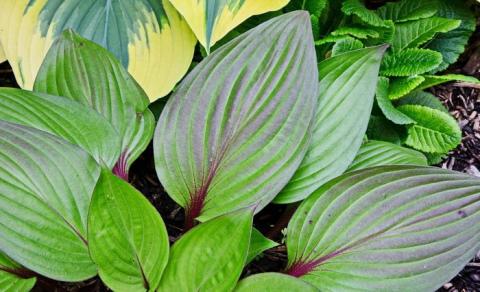
The leaves are green and heart-shaped. The petioles and veins are tinged crimson to the center of the leaf. The bushes reach a height of 30 centimeters.
Pale purple flowers form on dark purple inflorescences.
Paradise Island
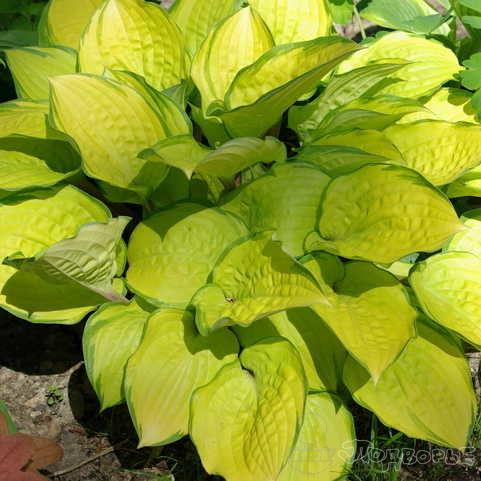
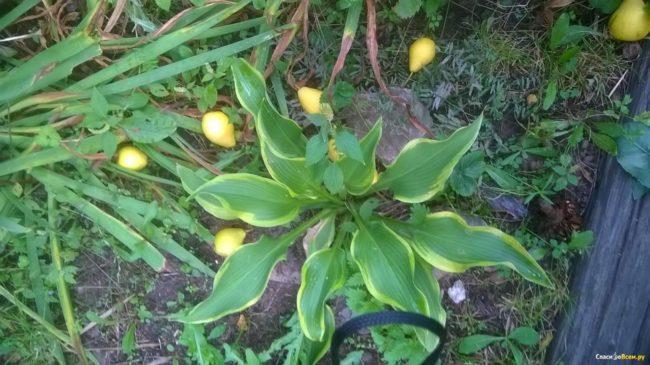
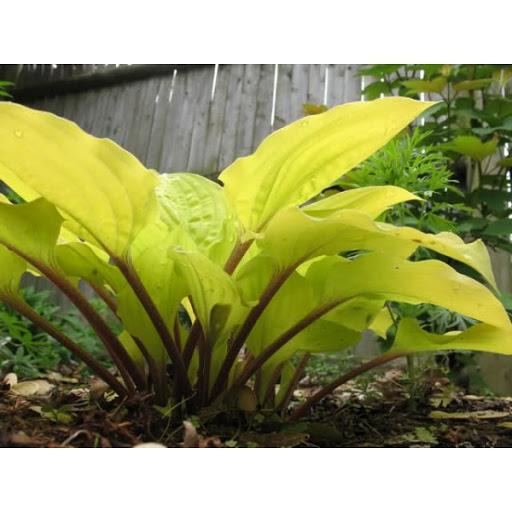
This hosta variety reaches a height of 40 centimeters. The leaves are heart-shaped and yellow. The edges are decorated with a narrow green border. The petioles are red.
Lavender hosta flowers appear in late June.
Wolverine
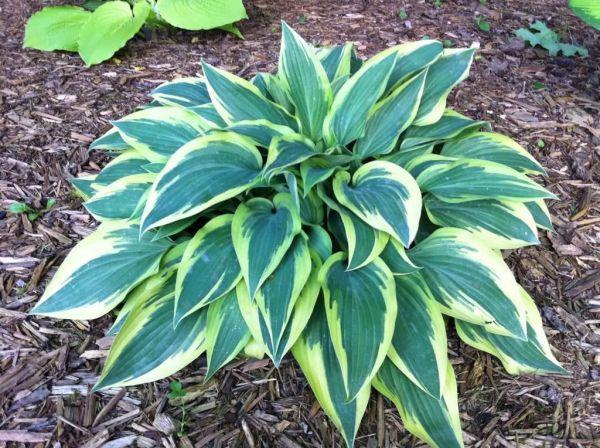
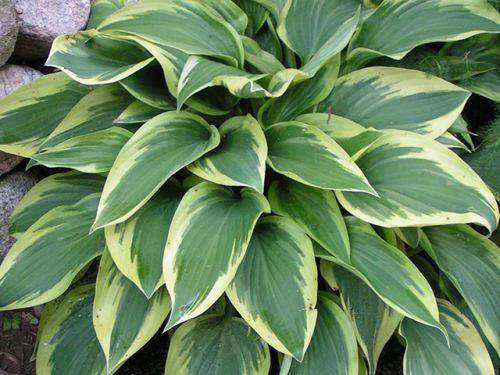
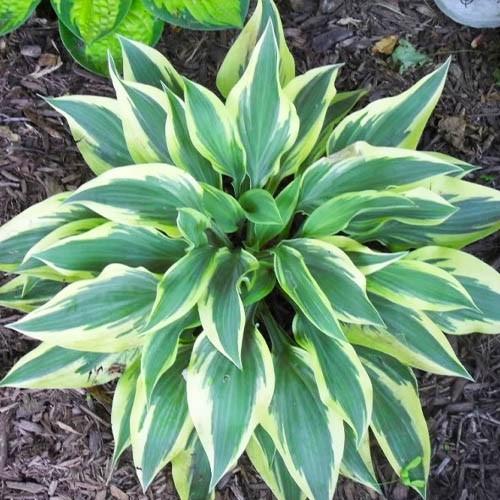
The bushes grow to a height of 35-40 centimeters. The leaves are lance-shaped and blue-green. The edges of the leaf blades are covered with a narrow yellow border.
Wolverine is planted in a shady spot in the garden.
Sow Sweet
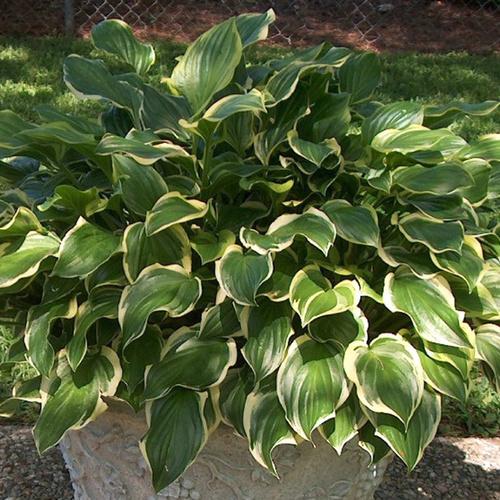
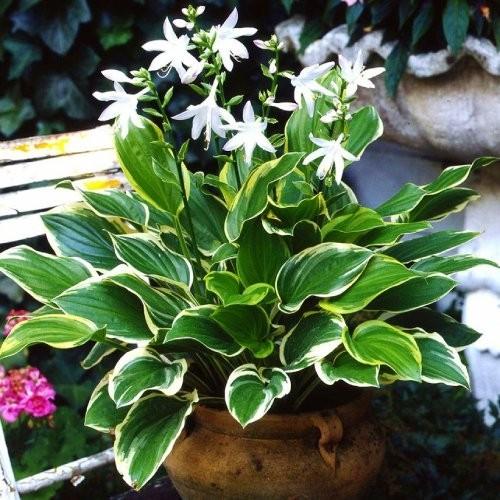
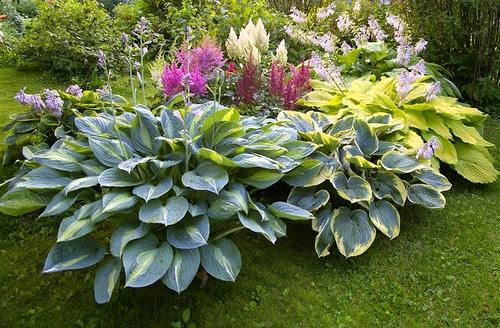
This hybrid hosta grows up to 40 centimeters tall. The oval leaves taper to a point at the top. The base color is green. The edges are yellow, turning creamy in sunlight.
Hosta Sow Sweet looks spectacular as a solitary plant against the background of a lawn.
Stylet
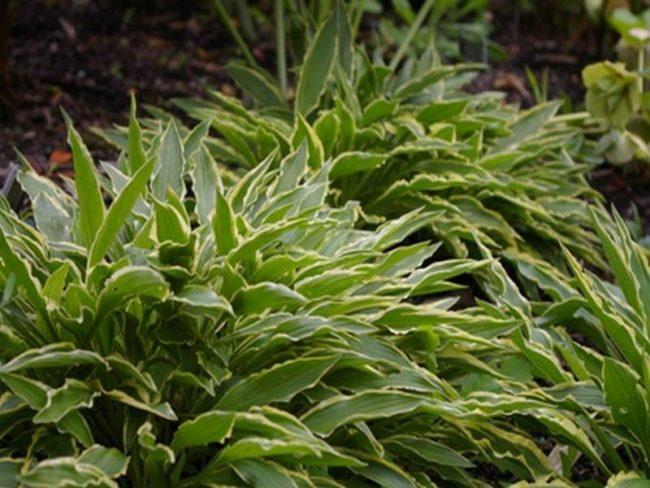
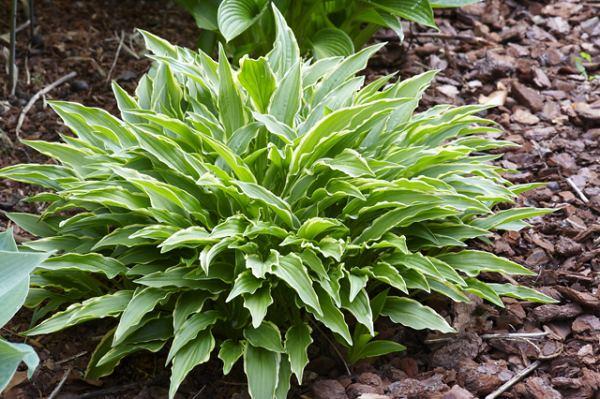
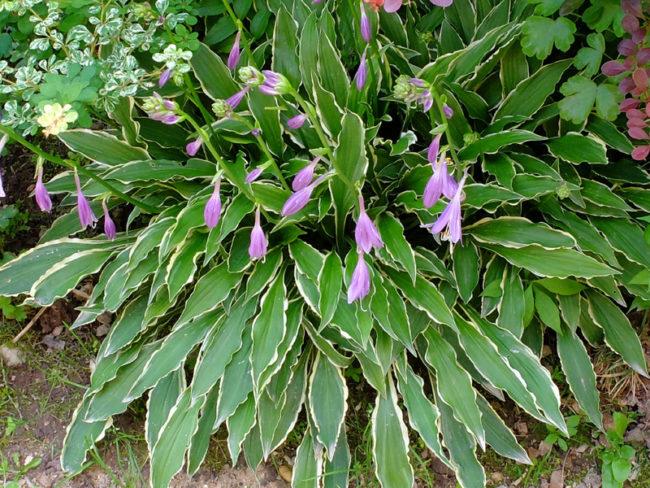
The bushes are formed by narrow, ribbed leaves. The center is green, and the edges are white. The bushes are small, so they are often used to border garden paths.
Hosta Stiletto blooms in the second half of summer.
White Feather
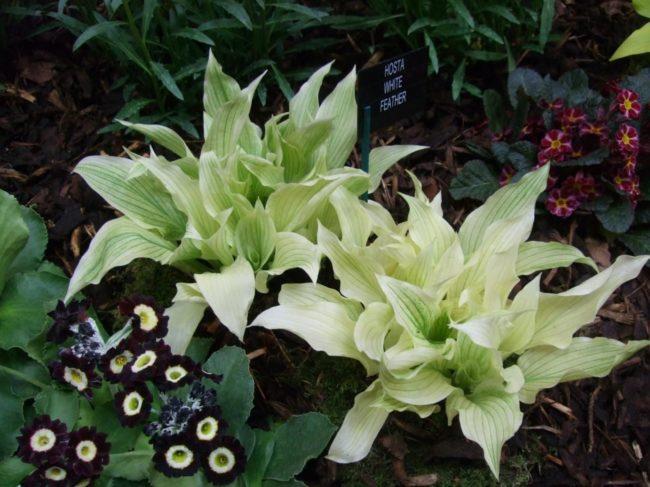
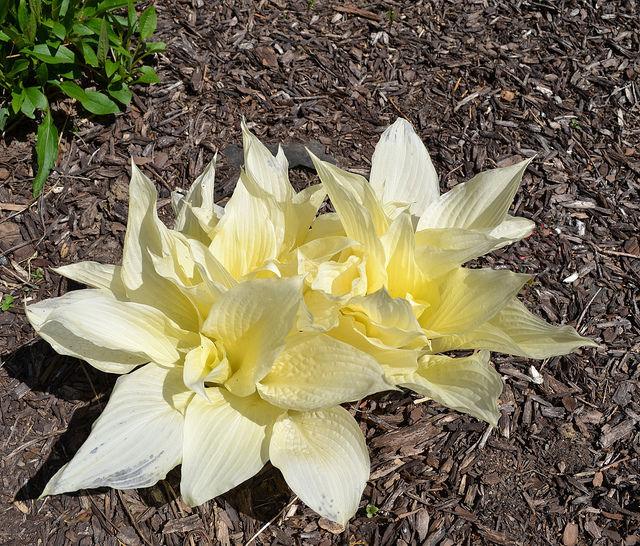
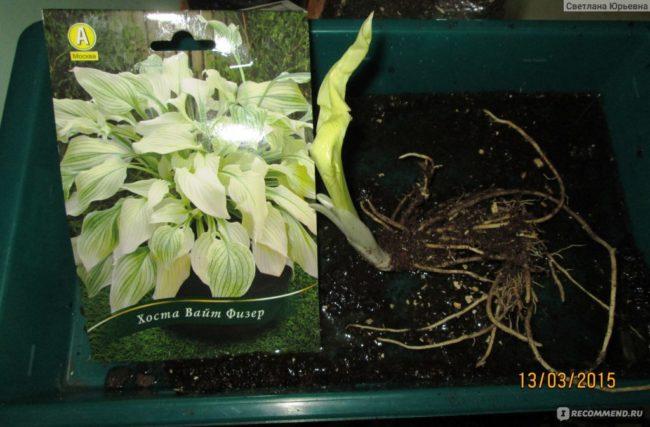
Hosta is called "White Feather" in English. At the beginning of its development, the leaf blades of the White Feather cultivar are white. Later, the herbaceous veins begin to show through. By late summer, the leaves of the "Feather" cultivar become increasingly green.
The buds open in late July or early August. The white flowers adorn shaded areas of the garden.
First Frost
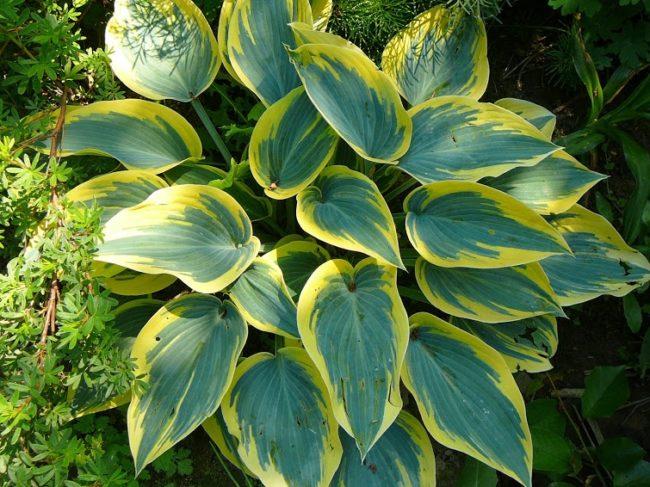
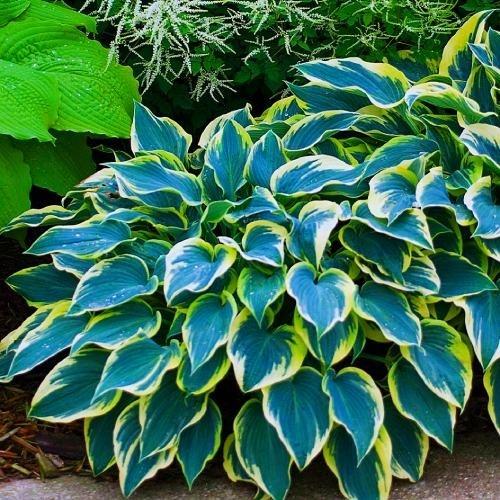
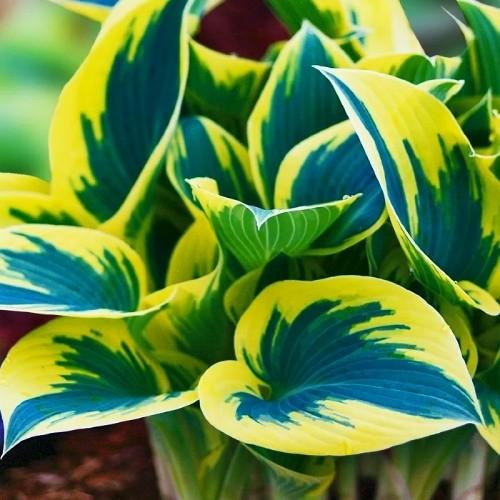
The hosta grows to a height of no more than 40 centimeters. The leaves are greenish-blue. A yellow border runs along the edge, turning creamy by the end of summer.
Hosta hybrid First Frost combines well with monochromatic crops.
Chalcedony

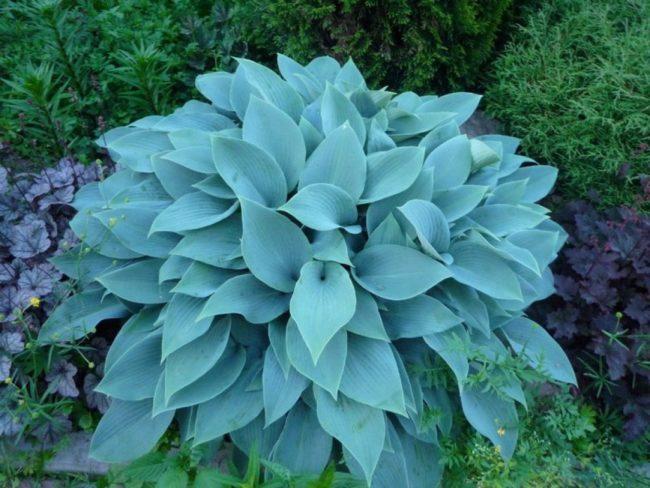
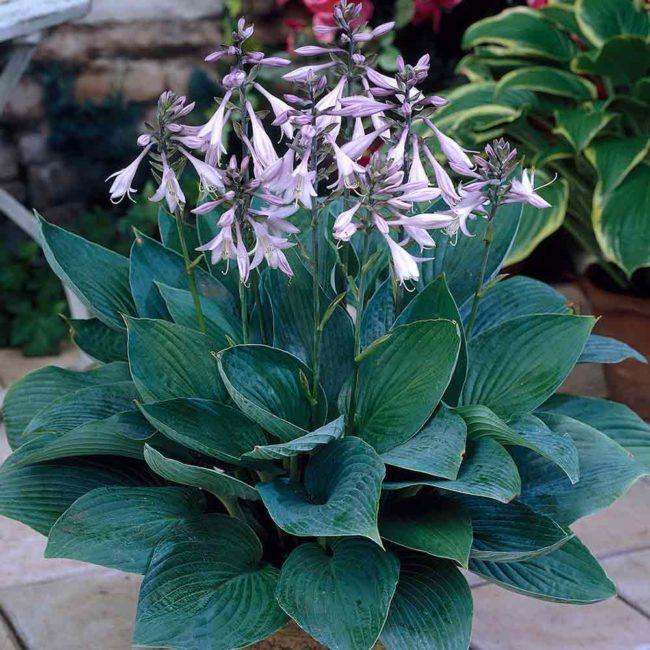
The heart-shaped leaves of the funkia have prominent veins, which are colored blue. The entire leaf surface is covered with a waxy coating.
The best place to plant hosta is partial shade.
Master of June
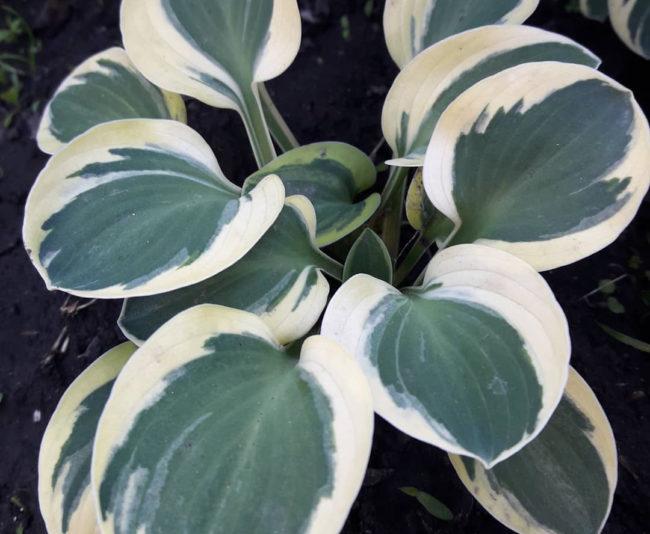
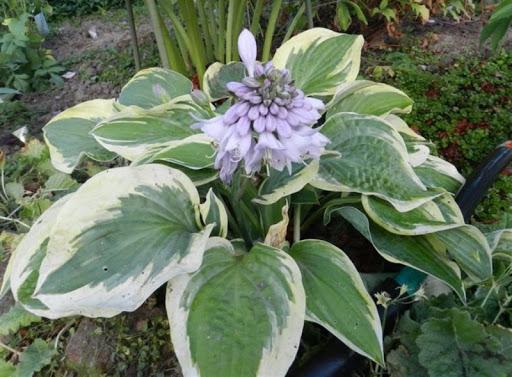

The plants grow to 30-40 centimeters tall. The leaves have yellow centers and glaucous-blue edges. Lilac flowers open in midsummer.
Hosta June is widely used in ornamental gardening.
Gypsy Rose
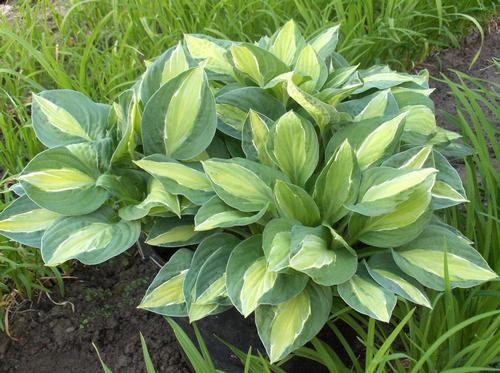
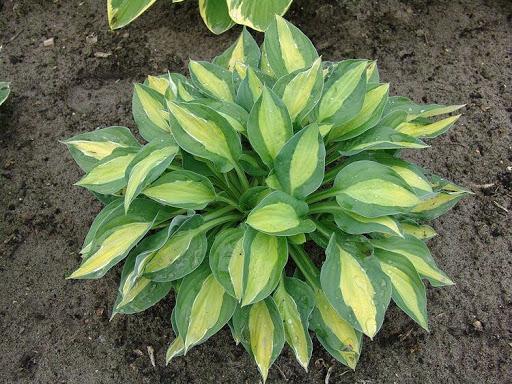
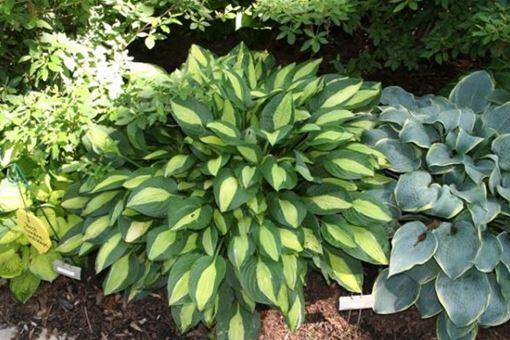
The leaf blades are oval, tapering toward the tip. The edges are green. The center is yellow. A narrow white stripe runs between the edges.
The plants produce delicate purple flowers that bloom in midsummer.
Patriot
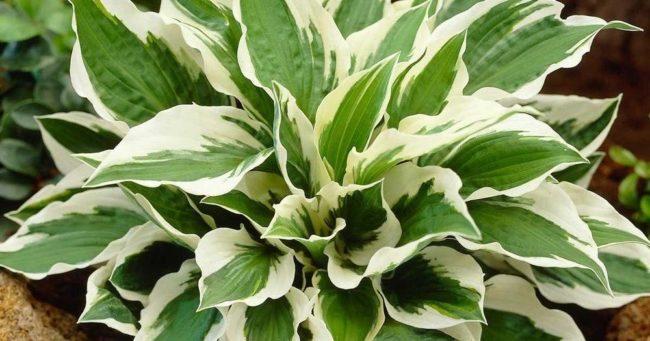
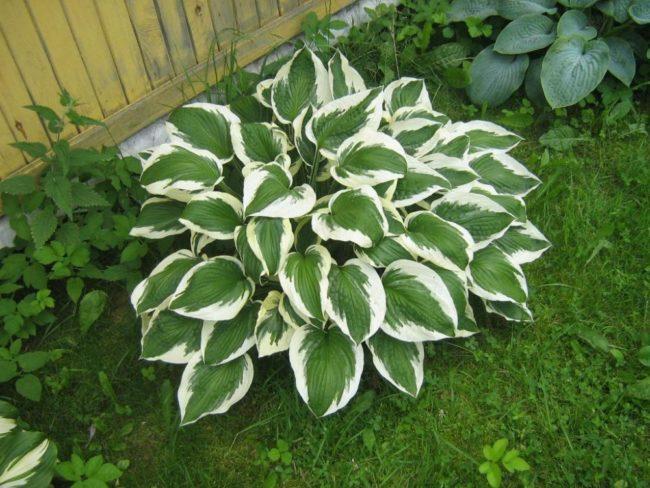
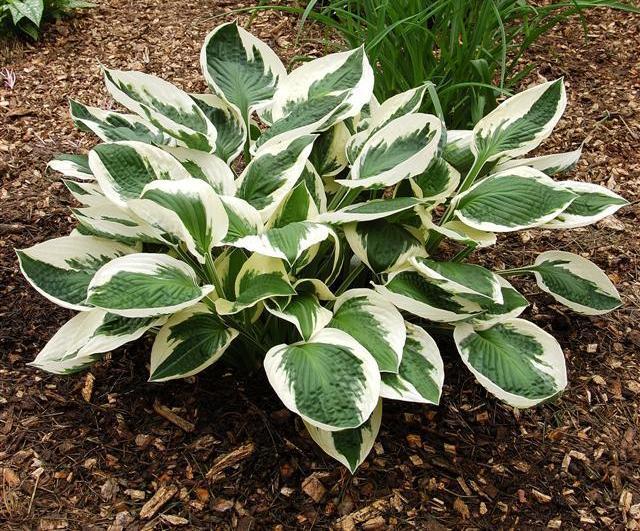
The leaf blades form a rosette 70 centimeters tall. The center is dark green. A wide white stripe runs along the edge of the leaf blades.
Hosta Patriot is planted along garden paths and along the banks of ponds.
Royal
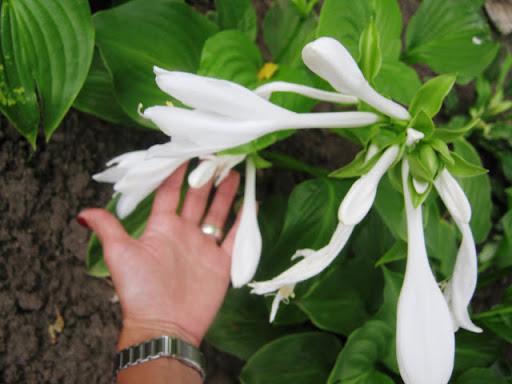
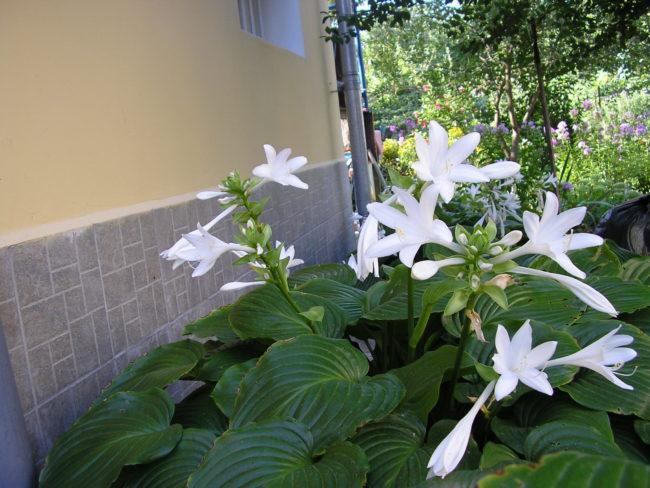
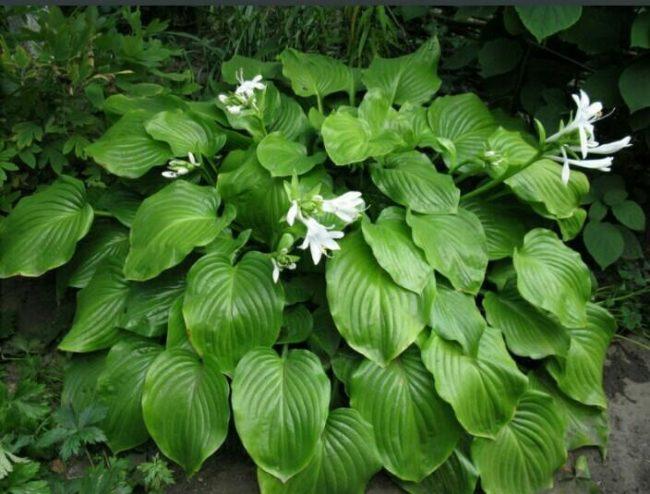
Funkia bushes reach 80 centimeters in height. The leaves are bright green. It blooms from midsummer until the onset of cold weather.
The flowers are large and white and emit a delicate fragrance.
Recommendations for choosing and combining varieties in a flowerbed
If a gardener has a shaded area in their garden, hosta is the best plant for it. It thrives in shade and partial shade.
Hostas grown in full sun are susceptible to sunburn, and their leaves begin to shrink. Recently, breeders have developed new hosta varieties. These are suitable not only for shaded areas but also for sunny ones. These plants typically have numerous yellow stripes on their leaves. These sun-loving plants thrive in any corner of the garden.
Hostas with similar requirements should be planted next to each other. With equal care, they will look their most decorative. You can also combine plants with contrasting leaf colors. They will not only complement but also set off each other.
Related posts:
 Planting and caring for hostas in open ground, growing at home
 Description of the top 20 most beautiful tulip varieties and types, their planting and care
 Top 15 Korean Chrysanthemum Varieties, Planting and Care in the Open Ground
 Top 16 Best Hybrid Tea Rose Varieties: Planting and Care in the Open Ground
 Top 16 Peony Rose Varieties, Planting and Caring for Them in the Open Ground
 Top 10 Chrysanthemum Varieties, Planting and Care Guidelines for Outdoor Plants
 Planting and care guidelines for the Multiflora chrysanthemum and the top 9 beautiful varieties
 List of the top 16 fungicides for grapes and instructions for their use