
- Main characteristics of hanging petunias
- Popular varieties
- Big Time hanging
- Starry Sky
- Creisytunia mandevilla
- Success
- Avalanche
- Rapunzel
- Opera
- Easy Wave
- Shock Wave F1
- Opera Supreme F1
- Ekaterina F1
- Peculiarities of growing petunias from seeds
- Rules for caring for seedlings
- Transplanting into pots and further care
- Plant diseases and pests
- Examples of using hanging petunias
Petunias are versatile plants, suitable for both hanging and open-ground cultivation. They are as popular among gardeners as roses. Hybrid petunia buds come in both warm and cool shades. Trailing petunia varieties are grown from seed. To ensure successful germination and establishment of the seedlings in pots, certain care guidelines are required.
Main characteristics of hanging petunias
Petunia is memorable for its vibrant flowers in shades of purple, lilac, and crimson on long, drooping stems. The plant is a creeping vine. Appearance:
- shoots reach a length of 30 centimeters to 2 meters;
- the leaves are soft, with a rough hair covering; in perennial plants they are larger than in first-year plants;
- bell-shaped flowers, abundantly formed in the axils of the shoots;
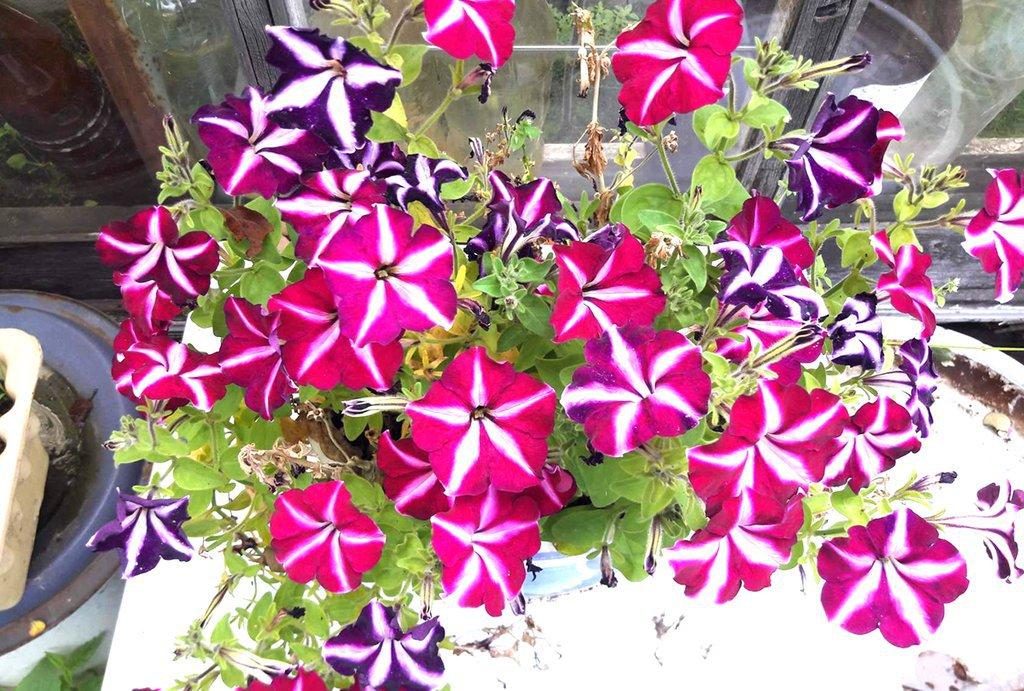
- the flowers are painted in two shades of the same color - light on the outside and dark on the inside;
- On the outer side of the petals of some varieties, two contrasting colors are combined - for example, purple specks on a white background.
Petunia stems twine downwards. To keep them horizontal, supports of various shapes are used. Flexible and colorful petunias give landscape designers free rein.
Popular varieties
There are two main groups of petunias for growing in pots: trailing and semi-trailing, or cascading, varieties. Plants of the first group form a lush globe of bell-shaped flowers and look beautiful in hanging pots. Their shoots grow only downward.
Semi-trailing petunias are an intermediate option between garden and potted species.
They produce longer, thicker stems than trailing varieties, making them more popular with gardeners. Trailing petunias bloom more profusely, but cascading varieties require more space. Bicolor flowers appear on semi-trailing varieties.
Another group of petunias are surfinias. They can be either trailing or cascading. Their main characteristic is their resistance to harsh weather conditions. They are suitable for growing outdoors. Surfinias also come in a wide variety of colors: purple, blue, lilac, white, and red. Varieties of each group have their own advantages and differ in their cultivation techniques.
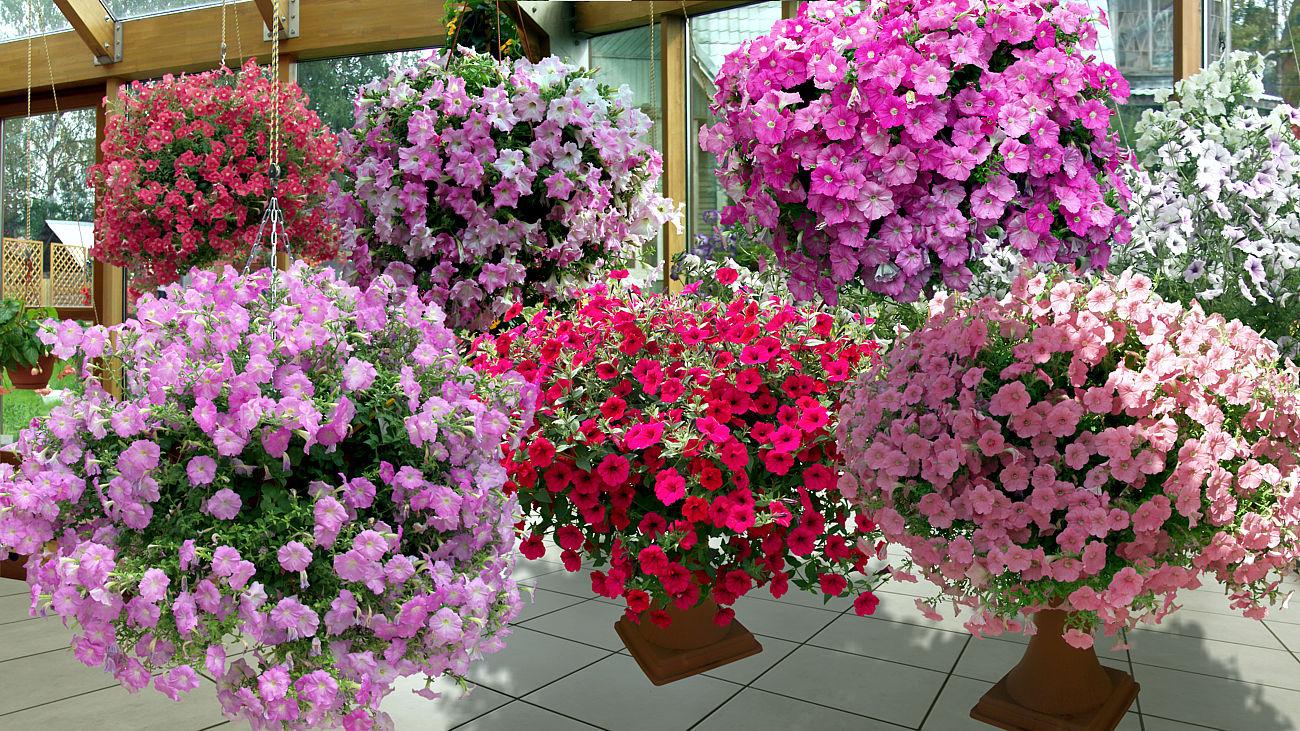
Big Time hanging
This frost-hardy variety produces stems up to 60 centimeters long, forming a spherical crown. Pink flowers cover the leaves. The plant has high disease resistance.
Starry Sky
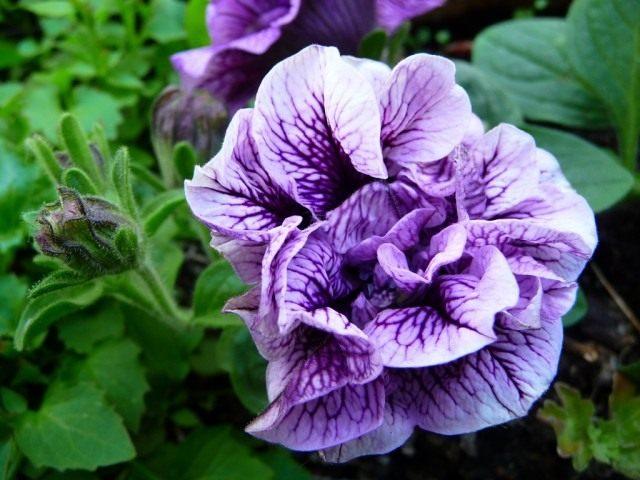
This new variety was bred in Germany in 2015. The double buds are deep blue with a purple tint and covered with white dots reminiscent of stars.
Take a look Also
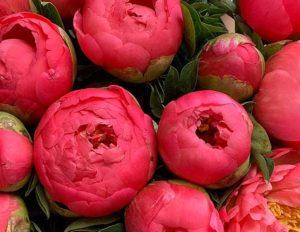
Creisytunia mandevilla
The variety's distinctive feature is its vibrant burgundy-scarlet flowers with yellow stripes down the center of the petals. The meter-long shoots form a ball.
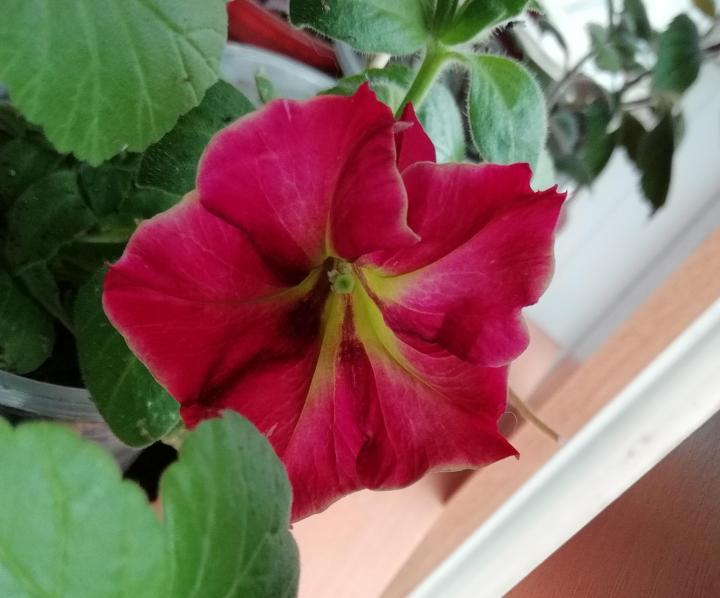
Success
This early-flowering variety produces seeds in the form of dense, pill-like balls. Petunias reach 35 centimeters in height, with shoots 70-90 centimeters long.
Avalanche
This variety boasts a wide variety of colors: red, pink, blue, white, and orange. Seeds of different shades are alternated when planted, resulting in a vibrant composition.
Rapunzel
This variety produces medium-length shoots—80 centimeters. Flowers reach 8 centimeters in diameter. Petunia Rapunzel requires little watering and tolerates heat well. It can be placed on a south-facing balcony.
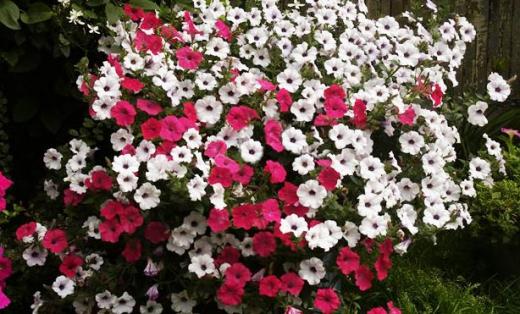
Opera
This variety produces purple-crimson, white, or blue flowers. The buds are 5 centimeters in diameter. The meter-long shoots form a spherical crown.
Easy Wave
Gardeners consider the Easy Wave variety one of the best and easiest to care for. The plant forms a hemisphere of shoots, making it a semi-trailing variety. Its primary use is in floor vases. However, it also thrives in hanging pots and even in open ground. Stems up to a meter long bloom so densely that the leaves are almost invisible.
Shock Wave F1
A petunia variety with double flowers. White petals open against a backdrop of soft green leaves. Shock Wave petunias are suitable for indoor growing and can be propagated by cuttings.
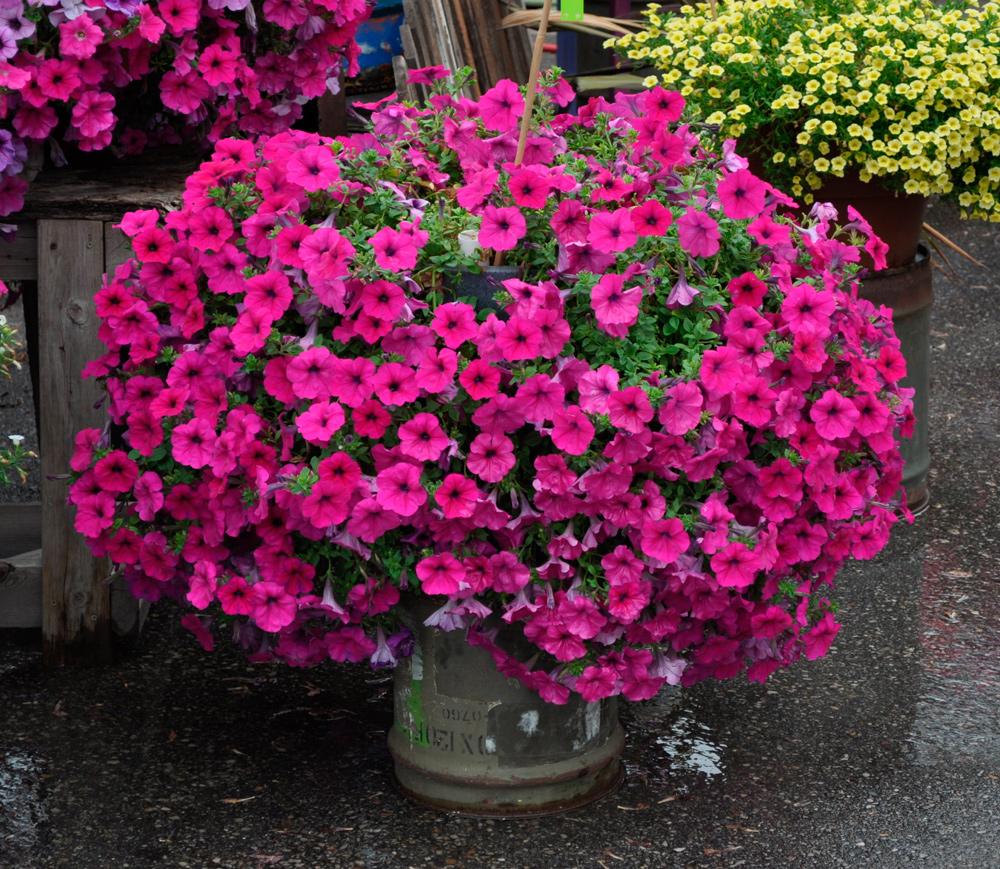
Opera Supreme F1
This plant belongs to the cascade group. The stems grow over a meter in length. Opera Supreme is distinguished by its small flowers. This variety blooms year-round and requires little care.
Ekaterina F1
This hybrid is notable for its vibrantly colored buds, a blend of yellow, red, and orange. The open flowers reach 6 centimeters in diameter.
Peculiarities of growing petunias from seeds
Trailing petunia seeds are planted in mid-March, when daylight hours increase. It's best to plan planting after the vernal equinox. Under artificial lighting, seedlings are grown in February.
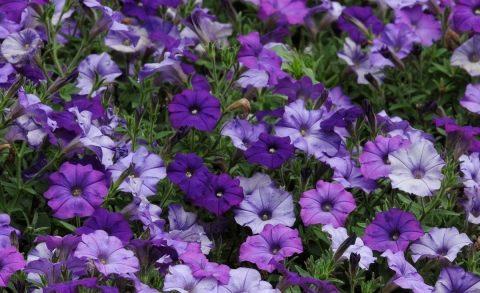
Seeds are planted in containers or directly into a pot. Soil mixture components:
- fine sand;
- peat;
- turf;
- leaf soil;
- humus.
Almost all ingredients are mixed in equal proportions. Only half as much sand is needed. The finished mixture is sifted to achieve a uniform consistency. To prevent water stagnation, holes are made in the bottom of the pot, a drainage layer of pebbles is placed inside, and then soil is added. The day before planting, the soil is watered. Plastic film placed over the pots will create a microclimate that will speed up germination.
Rules for caring for seedlings
The seeds germinate at a temperature of 22 degrees Celsius. Visible stems will appear within a week if the temperature is maintained. The next step is to maintain soil moisture and prevent the surface layer from drying out. If condensation forms on the film, there is too much moisture.
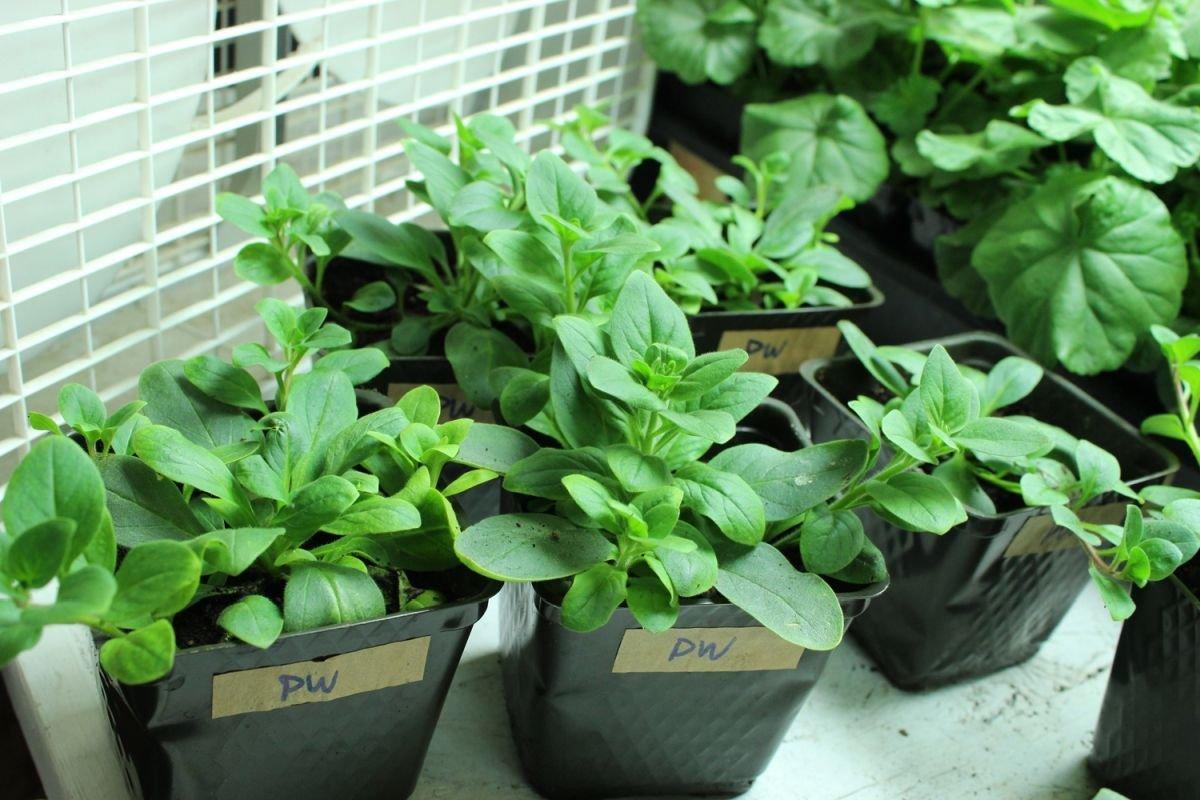
The seedlings are kept under 24-hour artificial lighting. The light is dimmed at night. Once the leaves emerge, the seedlings are ready for transplanting to their permanent location.
Transplanting into pots and further care
Trailing petunias are planted in large and small pots, suspended at different heights or placed indoors and outdoors. Neutral loamy or sandy loam soil, as well as ready-made packaged potting mix, are suitable for petunias. Cascading varieties require a pot of 5 liters or more. Larger containers are placed outdoors, near a veranda, porch, or gazebo. The minimum distance between pots and planters is 25 centimeters.
Varieties with stems longer than 60 centimeters will require support. The best time to transplant plants is on a cloudy evening.
Rules for replanting hanging petunias:
- remove the seedlings together with the root ball;
- dig holes 10 centimeters deep;
- water the plants after planting;
- cover the soil with peat or humus.
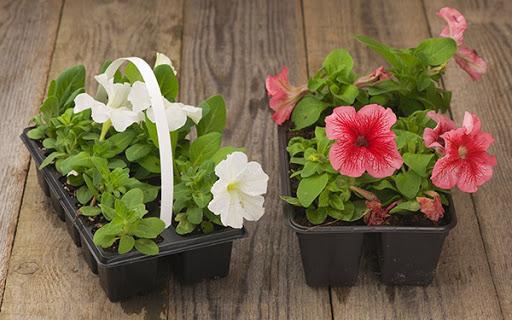
Mulching will protect outdoor petunias from night frosts. Indoor plants need adequate light. Fluorescent lights will increase daylight hours to 17 hours.
How to care for petunias:
- water generously when the deep layer of soil dries out;
- Fertilizers are added to water for irrigation, humates and potassium sulfate are alternated weekly, 4 grams of the substance are dissolved in 10 liters of water;
- After 24 hours, the watered soil is loosened to prevent a crust from forming;
- The shoots of adult plants are shortened, leaving a third of the length.
Cascading petunias' stems initially grow upward or horizontally, then droop to the ground under their own weight. To encourage the downward-growing plant to spread out, the ends of the stems are pinched. If the shoots spread horizontally, pinching will slow their growth. Flowers will bloom 2.5-3 months after planting. Seeds for germination are collected from the lower flowers. The fruits on the faded buds are fully ripe.
Plant diseases and pests
Excess moisture, lack of light and unstable temperature cause fungal diseases of hanging petunias:
- Powdery mildew - affects dense seedlings, manifested by white spots on the leaves. To prevent the fungus, plants are treated with a sulfur solution, the soil is cleared of the top layer and mixed with a fungicide;
- Blackleg—the stem becomes soft and dark. The disease develops in densely planted plants and in waterlogged or acidic soil. Affected areas are removed and the plants are treated with late blight.
- Gray mold – occurs due to excess moisture or nitrogen in the soil; plants become covered with brown spots from the roots onward, followed by a gray coating. Vibrance Integral, a complex treatment, is used to combat the disease.
- Brown spot – occurs in humid environments and appears as brown spots on leaves. Infected plants are sprayed with a copper solution;
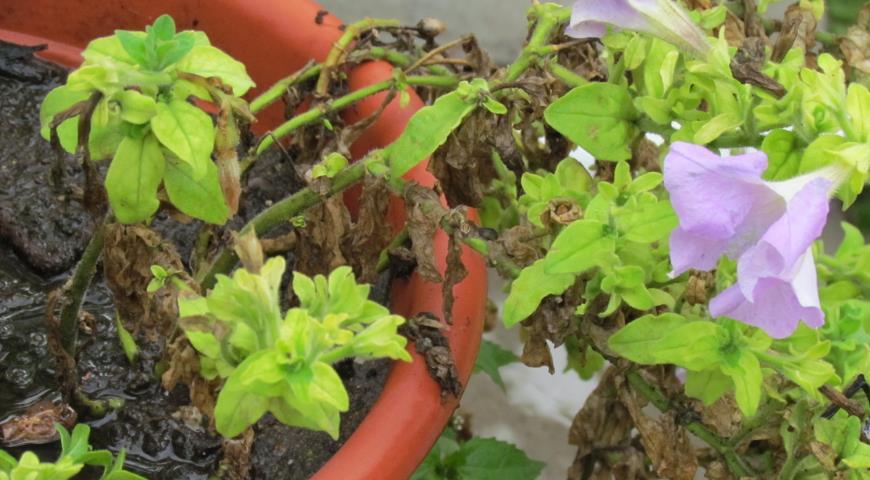
- Chlorosis develops due to iron deficiency in the soil. The disease stunts plant growth, deforms flowers, and dries out leaves.
To treat chlorosis, prepare a fertilizer: mix half a tablespoon of citric acid and ferrous sulfate, dissolve in a liter of water, and water the soil. The solution burns the leaves, so do not wet the plant with it.
Petunia pests:
- whitefly;
- aphid;
- spider mite.
Insects are controlled with pesticides. Preventative measures against the recurrence of diseases and pests include monitoring soil pH and moisture, and thinning dense plantings.
Examples of using hanging petunias
Petunias have a remarkable ability to cover large areas with stems and flowers. The combination of two contrasting varieties looks spectacular.
Flowers that go well with petunia:
- begonia;
- left-handed;
- snapdragon;
- marigold;
- pansies;
- primrose;
- hazel grouse.
Green plants with decorative leaves and bulbous flowers are also successful companions for bright petunias. Flowering vines can be planted in both shade and sun. In shaded areas, hostas, spiderworts, and ornamental grasses are planted alongside them. Impatiens and pelargoniums pair well with petunias in pots.
To decorate a garden with ampelous varieties, vertical flower beds are used:
- containers - are fixed to a pole at different heights;
- Mesh: A mesh cylinder is placed in a pot filled with soil and wrapped inside with fabric. Soil is poured into the cylinder to the top and watered. Holes are cut in the fabric and the seeds are inserted through the holes.
- Window boxes - are attached under windows, on the walls of houses and other buildings.
For traditional circular flowerbeds, a single, single-color variety is used. Yellow marigolds or other plants with contrasting flowers are planted along the perimeter. The border is decorated with painted wooden beams, panels, and multicolored paving slabs.
Petunias look beautiful in a gravel garden. To create one, divide the area into squares using narrow plastic borders and plant petunias in a checkerboard pattern. Fill the empty squares with colored pebbles. A gravel garden with petunias will brighten up the patio.
Related posts:
 Description and properties of the 50 best varieties of asparagus beans, benefits and harms
 The best eggplant varieties for growing in a polycarbonate greenhouse: planting and care
 50 Best Carrot Varieties with Descriptions and Characteristics
 The best grape varieties for growing in the Urals, planting and care rules in summer
 Top 15 Korean Chrysanthemum Varieties, Planting and Care in the Open Ground
 Descriptions of hosta species and the top 25 most beautiful varieties, growing rules
 Descriptions and characteristics of all varieties of peonies, varieties and names of the best
 Description of the best pepper varieties for greenhouses and open ground in 2025