
- General description of coral peonies
- Benefits of using in landscape design
- The most beautiful and best varieties
- Beach
- Cora Luis
- Quinn
- Magic
- Pink Hawaiian
- Sunset
- Supreme
- Topeka
- Fay
- Charm
- En gold
- Rules of agricultural technology and plant care
- Step-by-step procedure for planting a peony
- Watering and fertilizing the flower
- Mulching and loosening
- Trimming
- Preventive treatment
- Preparing for winter
- What to do if the peony does not bloom?
- Methods of reproduction
- Gardeners' reviews
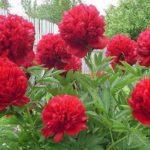
Peonies are distinguished by an impressive variety of colors. Coral-colored flowers have become increasingly popular in recent years. The classic peony palette is being replaced by warm tones reminiscent of southern seas and hot sun. Coral peony shades are a complex blend of pink and orange tones, creating a bright and sunny bud. Among the coral peony varieties, there are many impressive specimens that can decorate and add color to a garden.
General description of coral peonies
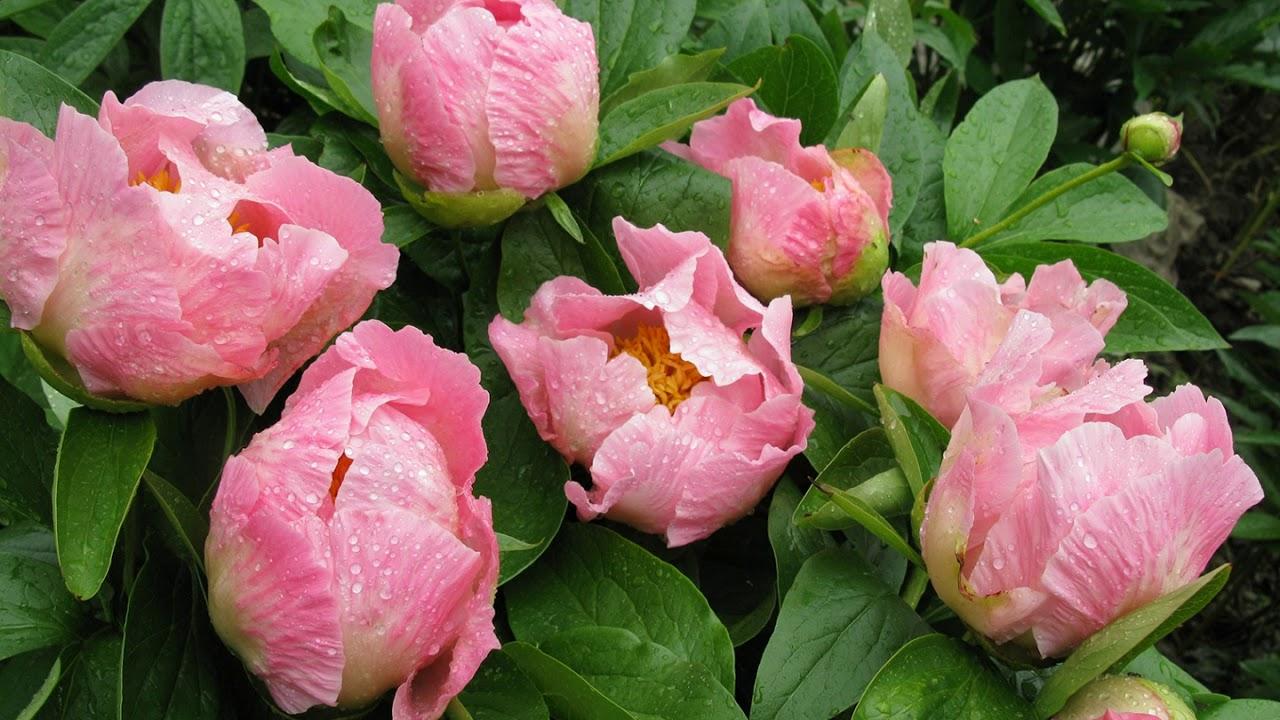
All coral species are hybrids, most of them created by American and Canadian breeders. The coral era began in the mid-20th century, with the best species created by Sam Wissing and Arthur Sanders from the United States. Coral-hued hybrid peonies have sturdy stems and a lush bush with bright green, glaucous foliage. By autumn, the bush turns yellow or red. The flowers are densely or semi-double, sometimes single.
Coral hybrids are distinguished by a gradual change in petal color. The bright bud at the beginning of flowering fades over time, and the coral palette gives way to apricot, sand, beige, and yellowish hues. Many hybrids fail to maintain this rich color.
Hybrids are resistant to disease, heat, and frost, and resist fungal infections better than many varieties. The bush does not spread, does not require staking, and the large flowers do not droop. Over the course of a season, numerous shoots with buds emerge, and the flowers open gradually, ensuring a long blooming period.
Note: To preserve vibrant colors, it is recommended to plant coral varieties in areas with afternoon shade.
Benefits of using in landscape design
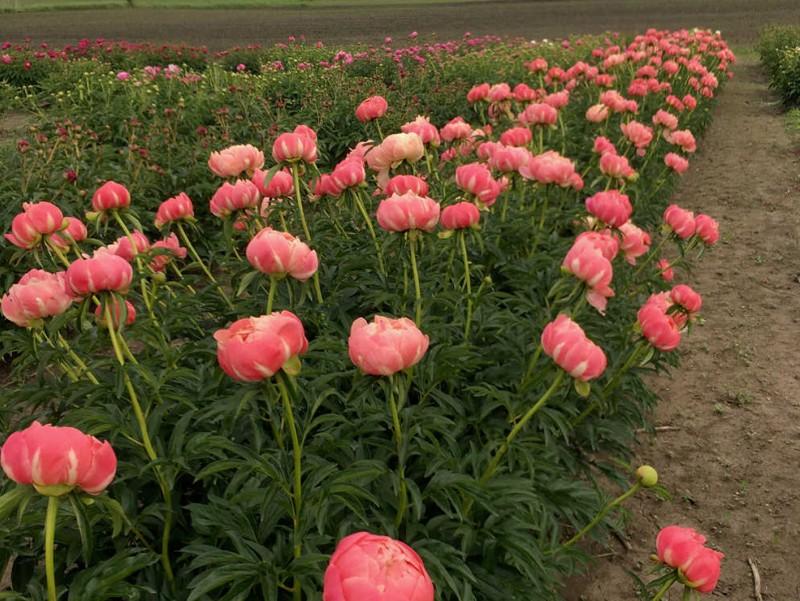
Coral peonies look striking when planted individually or in groups. Vigorous bushes and vibrant foliage brighten up spaces, and the richly hued buds are noticeable from afar. The coral hue complements red peonies beautifully.

In a group with a peony you can plant:
- irises of white, yellow, brown tones;
- low coniferous crops;
- Heucheras;
- lilies;
- primroses.
The coral peony looks great against the backdrop of a grassy lawn.
The most beautiful and best varieties
Coral-colored peonies are the result of interspecific crossbreeding. The result is a multitude of impressive hybrids that have earned the love of gardeners worldwide.
Beach
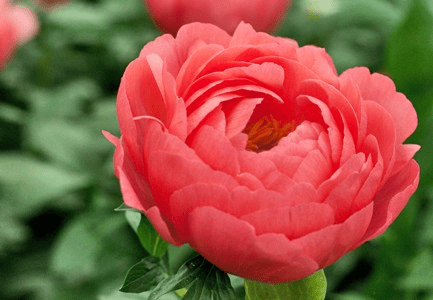
The peony blooms in early spring, growing to a height of up to a meter, with three or more buds forming on sturdy stems. The semi-double flowers open with a delicate coral hue, turning peach over time. When fully open, the bud reaches 15-18 centimeters in diameter, with a brightly glowing yellow center. The bush contains buds of varying shades.
The Coral Beach variety is unpretentious, easily survives winter, and looks great in the garden and in a bouquet.
Cora Luis
An ITO hybrid with a mid-season blooming period. Petals are white, white-pink, or white-lilac in subtle shades. The base of the petals is tinged with violet-lavender. A light fragrance adds additional charm to this peony. The stems are strong and sturdy, and the foliage is dark green and delicate.
Quinn
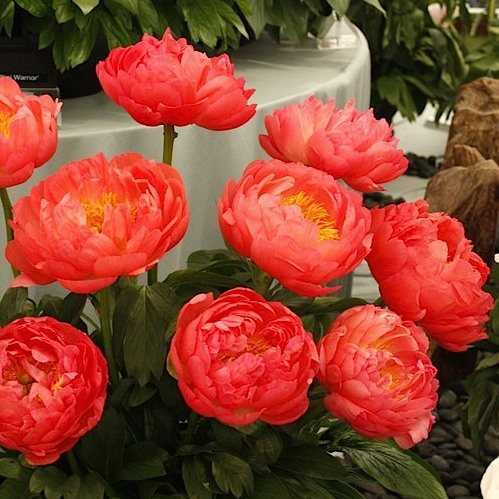
Dense, densely packed double flowers have complex coloring—petals of white, soft pink, and cream, with lilac highlights inside. The foliage is small, and the bush reaches up to 80 centimeters. It is a late-ripening variety. Its main highlight is its rich, spicy aroma.
Magic
This early variety is one of the first to bloom in April. The petals are arranged in three rows, and the flower is semi-double. The petals are a very vibrant coral-red hue, with a yellow center. The flowers, glowing scarlet and coral, look stunning against the light green foliage. The main distinguishing feature is that the brightness remains throughout the blooming period; the petals do not fade even in direct sunlight. There is no fragrance, making this peony ideal for those who prefer scentless flowers.
Take a look Also
Pink Hawaiian
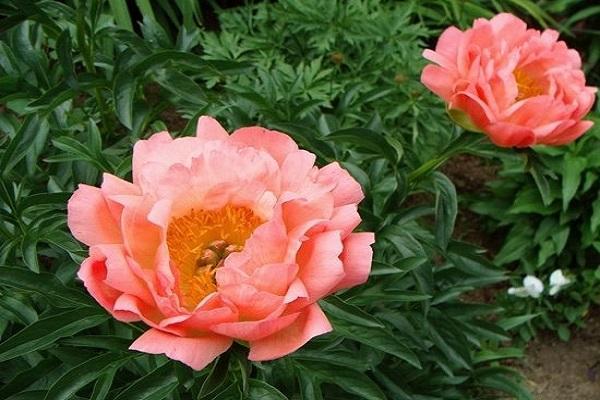
A stunning coral-pink flower, bright and sparkling like the Hawaiian countryside. Semi-double, the flower diameter is 19 centimeters. An early, milky-flowered variety, it is renowned for its abundant blooms and frost resistance. Flower stalks rise to 90 centimeters, creating a sturdy, lush herbaceous shrub.
In 2000, the Pink Hawaiian variety received a gold medal in the prestigious category “For Landscape Merit”.
Sunset
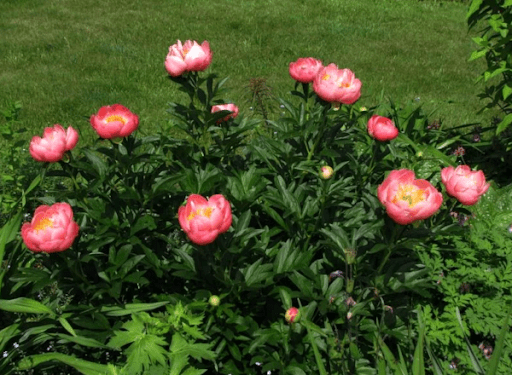
This pink-coral flower with a bright yellow center is an interspecific hybrid bred by Wissing. It has a cup-shaped head and is semi-double. The bushes are vigorous yet compact, with flower stalks reaching up to 110 centimeters. One of the most popular hybrids in the coral group, the Sunset peony has won numerous awards for its beauty, low maintenance, and ease of care.
Supreme
The mid-early Supreme hybrid is considered a rare variety. The salmon-pink flowers have a distinct coral hue, accented by a yellow center. At the end of flowering, the petals acquire a yellow-beige hue with a pearlescent sheen. This tall bush requires no support and remains attractive until autumn.
Topeka
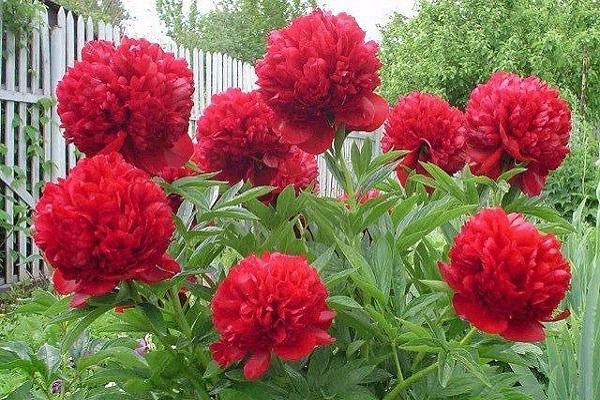
These lush, double, bomb-shaped peonies bloom in reddish-pink, gradually fading to a coral hue. The diameter is 17 centimeters. The bush is short (70 centimeters) with delicate, dark foliage. An added bonus is the light, subtle musky scent.
Fay
Semi-double flowers with large, loose petals. The bud color is coral pink, and the petals barely fade in the sun, maintaining their brightness throughout the blooming period. The Fay variety produces up to three buds per stem, and the flowers are especially beautiful on a mature plant.
Charm
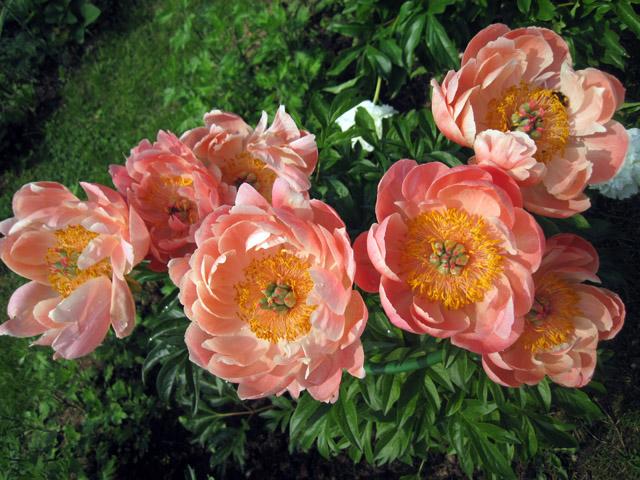
Coral Charm lives up to its name—cup-shaped, semi-double flowers with wide, coral-hued petals are delightful. The petal tips gradually lighten, and the center becomes increasingly vibrant. The bloom ends in milky tones.
The bush is strewn with buds of different colors, which look colorful against the background of dark green tapering leaves.
En gold
A vibrant hybrid with a simple flower shape, petals grow in two rows. Coral-orange, shimmering petals surround glittering gold stamens. The flower resembles a thicket, does not fade, and retains its contrasting color throughout its bloom. The bush is tall and sturdy, requiring no staking.
Rules of agricultural technology and plant care
Coral peonies are long-lived, growing in the same location for 20 years or more without losing their decorative appeal. Flowering begins in the second or third year; on mature plants, the flowers are larger, more vibrant, and more true to their cultivar.
Features of agricultural technology:
- a bush grown for flowering does not need replanting;
- To obtain planting material regularly, peonies are replanted every 3-4 years.
The peony's long lifespan makes site selection and soil preparation particularly important. Care will ensure comfortable conditions, foliage growth, and abundant bud formation.
Step-by-step procedure for planting a peony
Perennial peonies are best planted in sunny locations with some afternoon shade. Avoid planting them near houses and other buildings. Plants with a robust crown and root system can compete with peonies, robbing them of light and nutrients. Protect the bushes from drafts.
Experienced gardeners recommend preparing the soil a year before planting. This requires deep tilling, adding humus, nitrogen, potassium, and phosphorus fertilizers. Depending on the climate, planting is done in late August or early September.
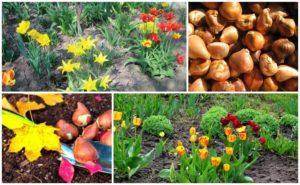
Advice: Before planting, inspect the seedling - cut off dead and damaged areas, treat the wounds with a solution of potassium permanganate, and soak in growth stimulants (Kornevin, Heteroauxin).
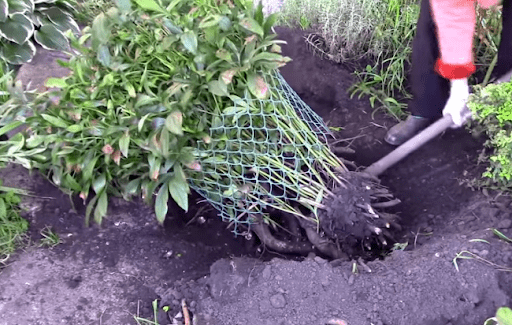
How to plant correctly:
- We prepare a hole 50-60 centimeters in size in all directions.
- The bottom of the hole is loosened to the depth of a shovel, and a drainage layer (10-15 centimeters) is added.
- Fill half or a third of the potting soil with a nutrient-rich mixture of humus, soil, and peat. Add superphosphate and potassium chloride. In acidic soils (pH less than 6.5), add bone meal.
- Place the seedling vertically or at a slight angle on the added soil layer, ensuring the buds are in the ground. Carefully spread the roots. It's important to position the peony correctly in the hole: in heavy soil, the buds should be buried 4-5 centimeters deep, and in light soil, 5-6 centimeters deep. If the peony is planted too deeply or too insufficiently, it will not bloom and will be damaged by frost.
- Fill the hole with nutritious soil and level the seedling (raise or lower it as needed, remembering to plant it 4-6 centimeters deep). Compact the soil with your palms.
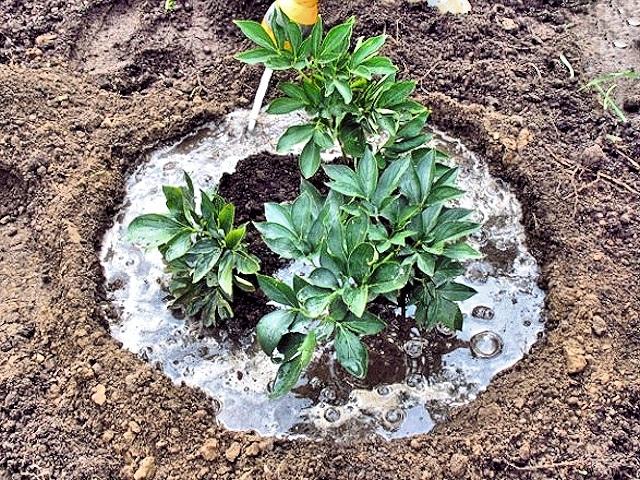
- Make a circle for watering, carefully pour in 5-10 liters of water, depending on the moisture content of the soil.
If the soil has settled, add more on top. Mulch with organic matter to a depth of 10 centimeters. Water a few liters every 5-6 days.
Watering and fertilizing the flower
Bushes require abundant watering at the beginning of bud formation, during flowering, and during the renewal bud formation period in July. Peonies should be watered once a week with warm water, using 8-10 liters per mature plant, if the weather is dry. During rainy periods, water less frequently and in smaller amounts.
Mulching and loosening
The area around the peonies is regularly loosened to ensure oxygen access and protect the roots from rot. After loosening, the root zone is covered with a layer of sawdust and pine needles to retain moisture and protect from overheating.
Trimming
Coral peonies require several types of pruning:
- The remaining flower heads are cut off when they have completely shed their petals and begun to dry out. The protruding, dry tops spoil the decorative appearance of a lush, green bush. Remember that coral hybrids do not reproduce by seed; there's no need to wait for the capsule to ripen.
- During the summer season, peonies are regularly inspected, and damaged and broken stems are removed. This will protect the plant from the spread of diseases and pests. Cut stems and foliage are removed from the area.
The bush should wither naturally. During the summer-fall growing season after flowering, it accumulates strength for the following year. The bush is cut back to the ground (leaving 2-3 centimeters) in winter, when the stems turn yellow and dry out, and frost approaches.

Preventive treatment
Peonies suffer from various types of rot when overwatered. This can be detected by wilting stems and spots on foliage and flowers. Rhizome rot is more difficult to detect. In spring and fall, treat the soil preventatively with Bordeaux mixture and fungicide solutions.
During rainy seasons, a Gliocladin tablet is lightly buried in the soil near the peony to combat fungus in the soil, and the bush is sprayed with biofungicide solutions (Gamair, Alirin-B). If pests appear in the area, the peony is treated with insecticides.
Preparing for winter
Part of pre-winter preparation is pruning the bush. This is done before frost. Coral hybrids exhibit high frost resistance; in most cases, mulching the soil during the winter is sufficient. The following plants require protection:
- young bushes planted this season;
- weakened plants that grew and flowered poorly, suffered from diseases or pests.
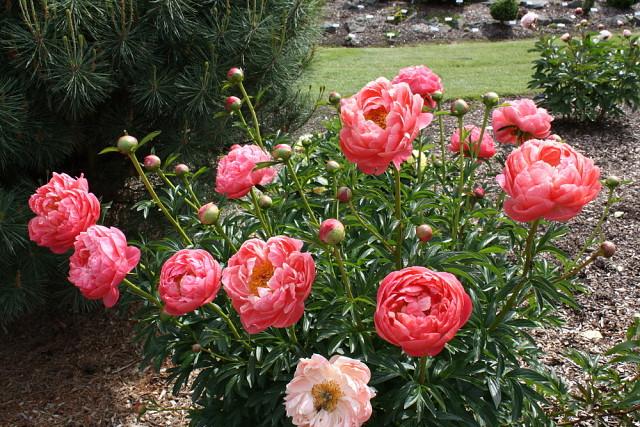
After mulching, cover the bushes with boxes or spruce branches. The covering material should be removed in early spring, once the threat of severe frost has passed.
What to do if the peony does not bloom?
Let's look at the most common mistakes in planting and caring for peonies that prevent the plant from blooming:
- an unfavorable planting location (shade, more powerful plants, buildings, high groundwater levels are located nearby) – replanting is required;
- the old bush has exhausted its life resource – divide and plant again;
- incorrect division - too few roots for the growth of greenery and buds;
- too deep or too shallow planting – dig up the bush and replant;
- the buds were damaged by frost – you will have to wait until next year;
- excessive use of nitrogen fertilizers - the bush is growing green mass, but there are no buds - fertilize with potassium and phosphorus fertilizers;
- poor care (lack of fertilizer, weak watering) in the previous year – the peony did not have enough strength to form buds;
- The green part was cut off too early, the bush did not stock up on nutrients.
Peonies also do not produce buds if the soil is highly acidic (requires a pH greater than 6) or if the bush is damaged by fungal infections.
Methods of reproduction
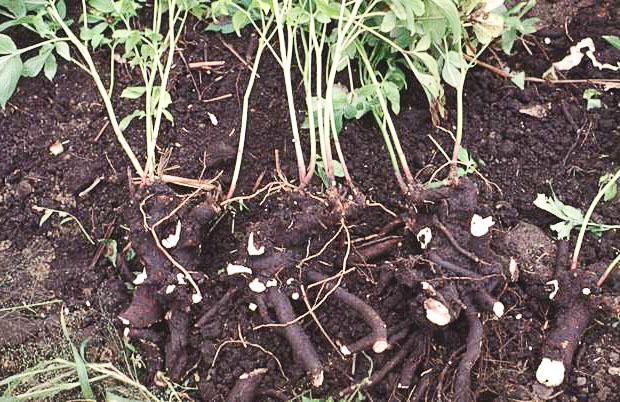
Coral peonies are not propagated by seed. The most accessible and reliable vegetative method is division. Peonies are ready for propagation at 4-5 years of age. Division instructions:
- time – early spring before vegetation, early autumn (late August-September);
- the bush is dug up, freed from soil, and allowed to lie down to make it easier to divide;
- the hard rhizome is sawed with a hacksaw, forming divisions with 2-3 buds;
- The cuts are rubbed with charcoal, and the seedling is disinfected with a solution of potassium permanganate.
Plant in prepared holes and water. If planting in spring and during warm weather, shade from the sun. Peony lovers recommend propagating the bush in the fall, after the summer heat has passed. The most difficult part is dividing the tough root; it's kept for a day to make it easier to cut.
Important: Small rhizome divisions are more viable than larger ones. The peony grows faster and develops a strong root system.
Gardeners' reviews
Coral peony varieties consistently delight gardeners. Growing these hybrids is easy, even for inexperienced gardeners. Key tips from gardener reviews:
- The brightness of the coral color is affected by the acidity of the soil; the pH should be maintained at 6.5-7;
- if the bush is shaded for part of the day, the coral hue lasts longer and the buds fade more slowly;
- Pay attention to the varieties En Gold, Fairy, Magic - the flowers remain coral until they fade.
Everyone notes the ease of care and rapid growth of the bushes. Owners of coral peonies generously share their flowers with neighbors, as the rhizomes are easy to propagate.
Coral peonies add a special charm to gardens with their vibrant, cheerful blooms. Planting and propagating these varieties is no more difficult than classic burgundy and pink varieties. Coral varieties can be grown in any region; they easily tolerate both heat and cold. The bushes with their delicate foliage delight the eye until autumn, adding greenery and beauty to the garden after flowering.
Related posts:
 Descriptions and characteristics of all varieties of peonies, varieties and names of the best
 Planting and caring for tree peonies: the best varieties and growing mistakes
 TOP 20 Itoh Peony Varieties and Their Characteristics, Planting and Care Guidelines
 Description of the hybrid peony variety Bartzella, planting and care instructions
 The best time for transplanting peonies, schemes and technology of implementation
 The medicinal properties and contraindications of the peony and its composition
 Winter preparation guidelines for peonies by region, timing, and care
 Timing of planting and care of peonies in open ground, growing rules