
- Characteristics and description of Ito-peonies
- The best varieties of Ito hybrids
- Barzella
- Border Charm
- Watermelon Wine
- Garden Treasure
- Joanna Marlene
- Jubilee
- Julia Rose
- Yellow Crown
- Kelly's Memory
- Copper Kettle
- Lollipop
- Magical Mystery Tour
- Oriental Gold
- Pastel Splendor
- Scarlet Heaven
- Scrumdidleumptious
- Hillary
- Unique
- Features of cultivation
- By root cuttings
- Seeds
- Necessary care for the crop
- Watering and fertilizing
- Mulching and loosening the soil
- Pest and disease control
- Transfer
- Trimming
- Preparing for the winter period
- Propagation of Itoh peonies
- What to do if the plant does not bloom?
Peonies are majestic and beautiful flowers familiar to every gardener. The newest peony variety is the Itoh hybrid, named after its creator, who spent his entire life crossing herbaceous and tree varieties. The results of his work were impressive. A special category has been designated for Itoh hybrids in the floral classification system.
Characteristics and description of Ito-peonies
Japanese breeder Ito conducted over 1,200 crosses before achieving his desired result. The primary goal of these crosses was to produce large-flowered, yellow peonies. Unable to achieve this by combining garden varieties, Ito began combining herbaceous and tree varieties using his own unique genetic technique. The herbaceous and tree varieties combined the best qualities in the Ito hybrids.
Itoh peonies are strong, beautiful plants with sturdy stems that grow up to 100 centimeters. Characteristics of Itoh peonies:
- the presence of large buds that reach 20 centimeters in diameter;
- the petals are painted in rich, deep pastel colors;
- the ability to bloom for a long time and abundantly;
- the presence of a dense herbaceous stem, the branching of which is structured;
- the stem does not require garter;
- increased winter-hardiness qualities.
Information! One of the differences between Itoh peonies and their herbaceous relatives is their faint fragrance.
The best varieties of Ito hybrids
Yellow peonies are considered the best Itoh peonies, as this is the color the creator sought. Later, other varieties with interesting shades were developed. Among the best varieties, chameleons hold a special place, capable of producing multicolored buds on a single bush.
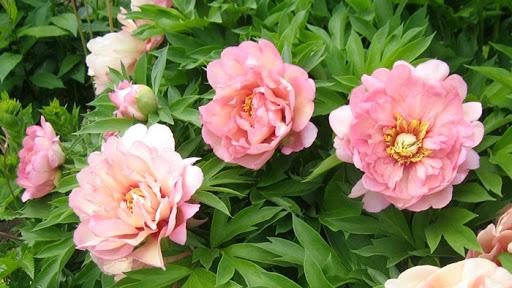
Breeders warn of a characteristic of Itoh hybrids that can be misleading for novice gardeners. During the first few years after planting, peonies produce buds with muted, unsaturated hues, unlike those stated on the packaging. After the third year of flowering, the colors become deeper, more vibrant, and more unique.
Barzella
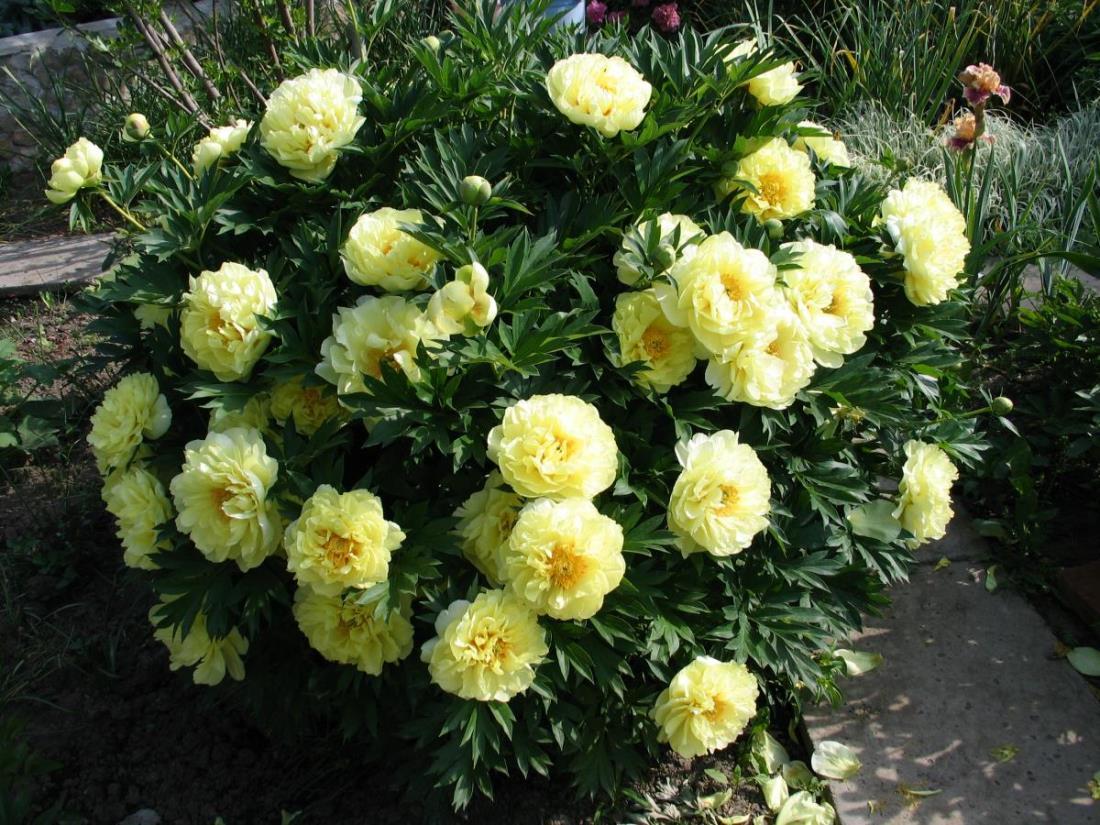
The first variety of Ito hybrids. Bartsella bushes reach 1 meter, with buds that have a persistent lemon-yellow hue and are slightly double. A distinct red flash can be seen in the center of each petal.
Border Charm
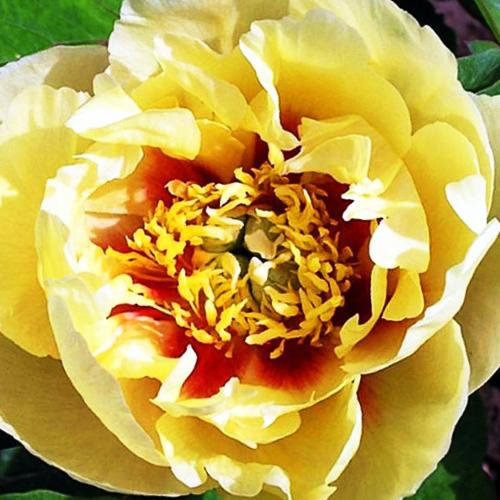
Border Charm is based on the Barzella variety. The red spot in the center is more pronounced than on the previous variety. Differences from the parent variety:
- early flowering;
- semi-double;
- The height of the bush is up to 50 centimeters.
Watermelon Wine
This variety is distinguished by its simple flower shape, tall bush (up to 85 centimeters), and petal shades (red, scarlet, and burgundy). Watermelon was created in the second half of 1999 and has a distinct floral fragrance.
Garden Treasure
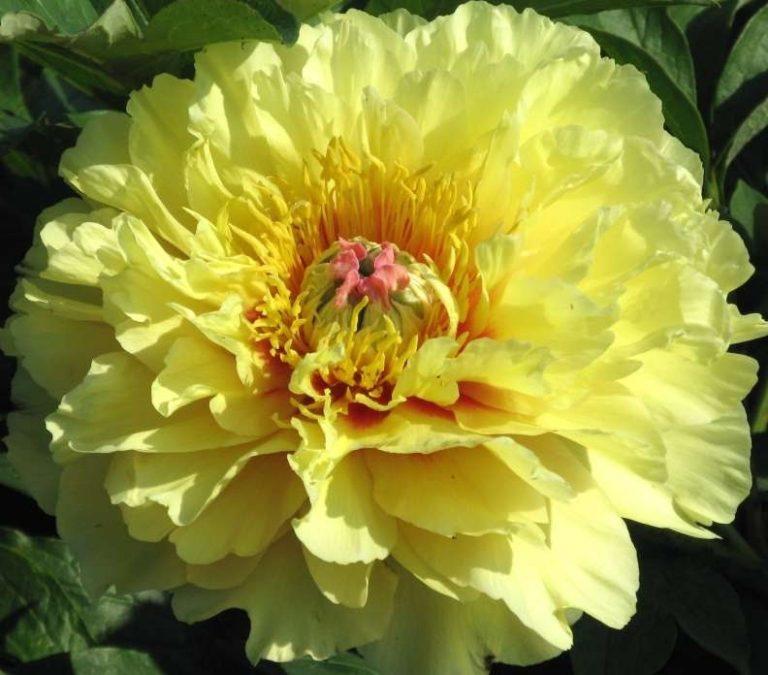
The stem reaches 1 meter in height. The flower type is highly double. Up to 50 yellow buds can bloom simultaneously on a single bush. Blooming is described as late but profuse.
Joanna Marlene
The stem is tall and dense. The petals change color throughout the flowering period, from golden yellow to peach. The buds are semi-double.
Jubilee
A bright red, double-flowered ruby hybrid with a late blooming season. The bush grows up to 1 meter tall, with flowers up to 20 centimeters in diameter.
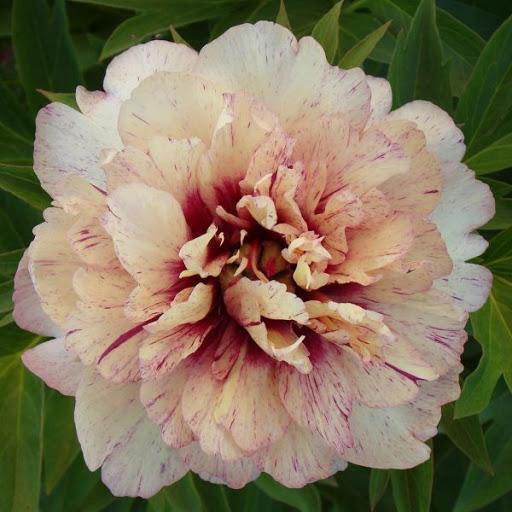
Julia Rose
A variety with an exceptionally beautiful petal hue. The pink-peach color is enhanced by a dark red spot in the center. Julia Rose blooms later than related varieties, but ensures abundant blooms and dense plantings.
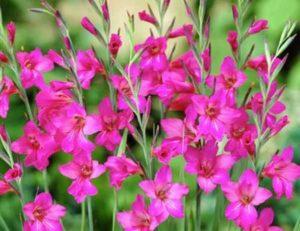
Yellow Crown
A late-blooming variety with low bushes, reaching 50-60 centimeters. The flower is a double variety, with petals a rich lemon yellow. The diameter is 15-17 centimeters.
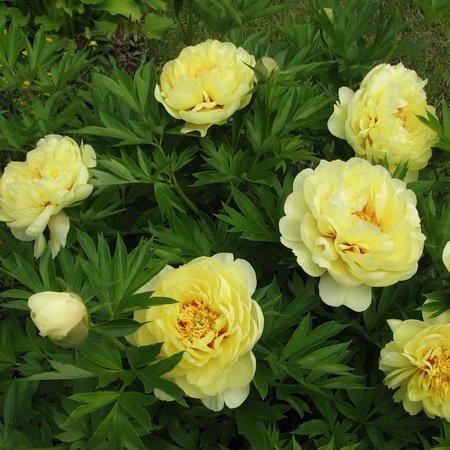
Kelly's Memory
Creamy-yellow buds are edged with a red-pink stripe. This makes the coloring unique and inimitable. From a distance, the bushes look like tea roses. Height varies from 50 to 80 centimeters.
Copper Kettle
Deep, dark green leaves form on the stem. The petals have a unique copper hue, combining red, yellow, and pink-orange undertones.
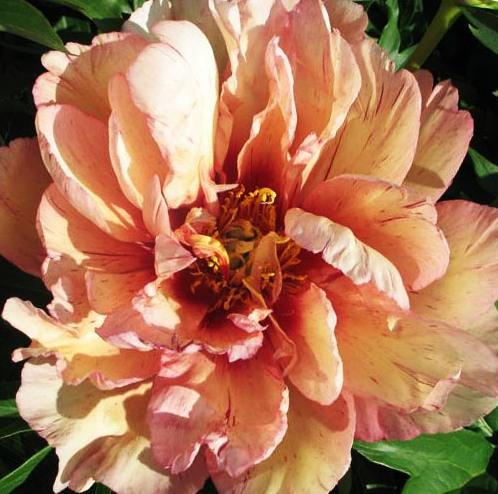
Lollipop
The yellow, double flower with red stripes is the cultivar's signature feature. The bush grows up to 70 centimeters and exhibits increased frost resistance.
Magical Mystery Tour
A magical peony whose petals change color throughout the blooming season. Initially, they are creamy yellow with lilac accents, then gradually become a uniform pink. The bush grows up to 70 centimeters.
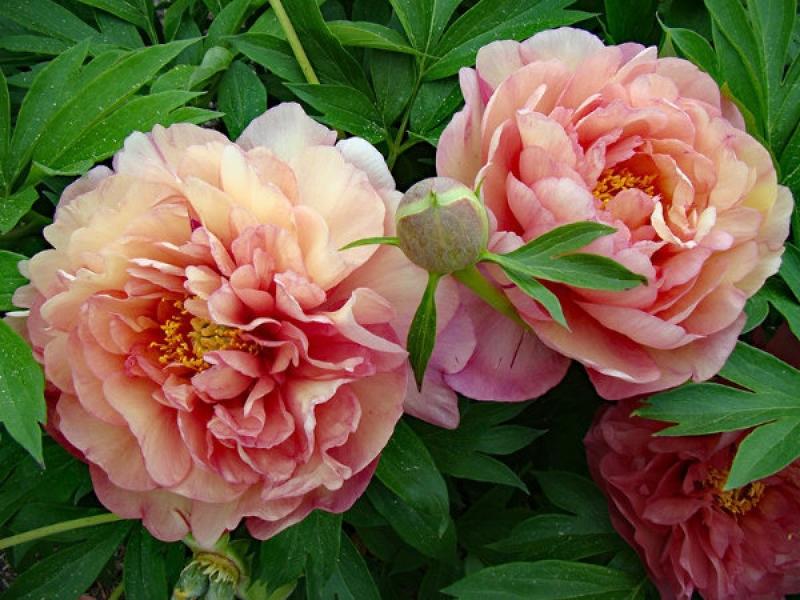
Oriental Gold
An exclusive variety whose flowers take on a rich straw-yellow hue. The bushes grow up to 90 centimeters. Planting this variety promises prolonged, moderately abundant blooms.
Pastel Splendor
The single, non-double flower grows up to 20 centimeters in diameter. The petals change color during the budding period, from yellow-cream to pink. The bushes grow up to 80 centimeters.
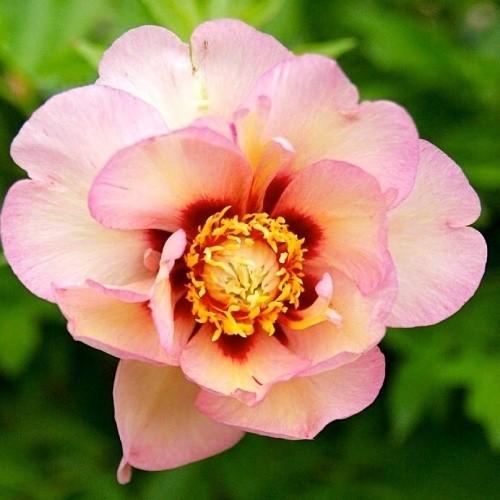
Scarlet Heaven
Bright red flowers form on stems that reach 70 centimeters in height. The leaves always remain a rich green, resist rain, and provide complete soil coverage.
Scrumdidleumptious
A hybrid with pink petals and stems up to 70 centimeters tall. The bud diameter reaches 18-20 centimeters.
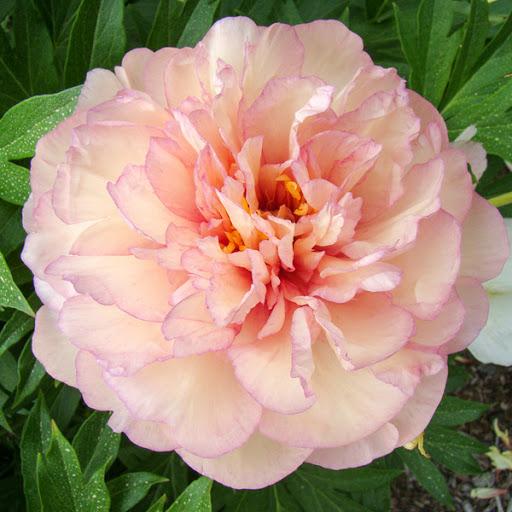
Hillary
Hilary is a chameleon-like hybrid. A single plant can produce buds in shades of pink, yellow, and cream. The stems are dense and tall, with alternate dark green leaves developing on each stem.
Unique
The flowers of this variety are distinguished by the brightness of their burgundy petals. The diameter reaches a maximum of 25 centimeters. The stem height is 75-80 centimeters.
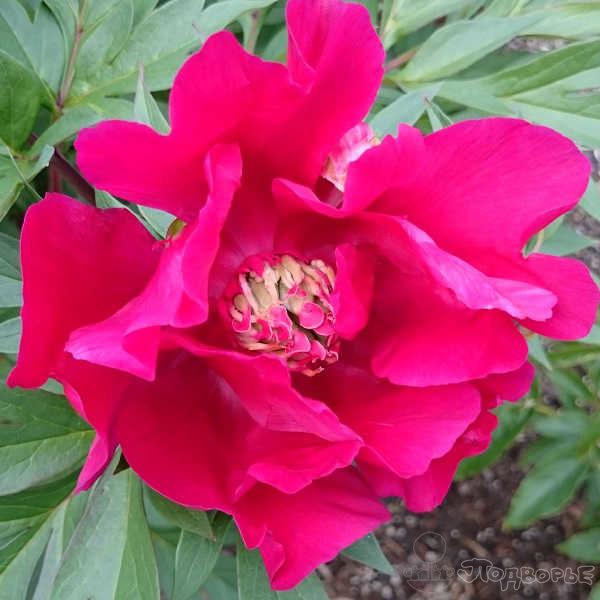
Features of cultivation
Itoh hybrids are easy-to-grow, frost-hardy varieties that can be grown by even the most inexperienced gardener. They are a delight to the eye, complement mixed borders, and are also used to create monochromatic flowerbeds.
By root cuttings
The first question facing gardeners who decide to grow Itoh hybrid peony varieties concerns how to plant them. Root cuttings are a method of propagating hybrids in which a portion of the rhizome, with a single root and a growth bud, is used for planting.
Note: For root cuttings, use the remaining rhizome parts after dividing the bush.
Cuttings begin in July-August. After cuttings are removed from the main rootstock, they must be disinfected by soaking them for a long time in a manganese solution. The dried cuttings are then rolled in charcoal to form a crust on the root. This helps protect the plant from soil-borne infections.
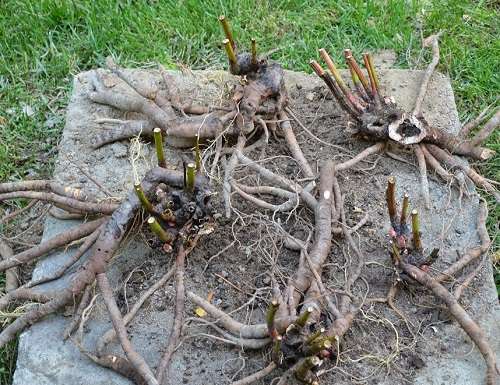
After treatment, the root cuttings are planted in loose, nutritious soil. Rooted cuttings should be provided with additional shade to prevent damage from direct sunlight. After two seasons, the rooted cuttings are transplanted to their permanent growing location.
Seeds
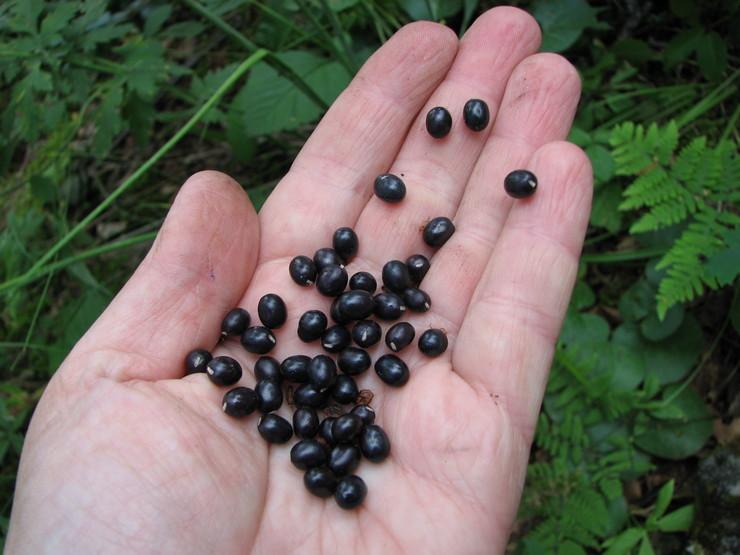
Common herbaceous peonies are planted from seeds, despite the time-consuming cultivation process. As for Itoh hybrids, their seeds are difficult to find. Furthermore, planting from seed does not guarantee that the flower bed will produce the exact flower stated on the package. When planted from seed, petal color may change. At each stage of growth, the bush undergoes irreversible changes.
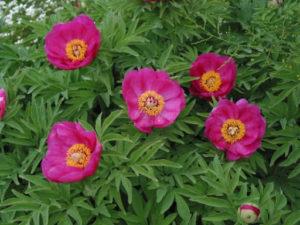
When planting from seeds, the greenhouse seedling method is used. The seedlings are first grown to 15-20 centimeters, then planted in open ground. It can take 2-3 years for the seedlings to mature.
Necessary care for the crop
Planting and growing Ito hybrids requires constant monitoring of the plant's condition. Failure to follow proper care can lead to death or the development of disease.
Watering and fertilizing
Watering is an important part of care. In spring, plants are watered with a potassium permanganate solution to disinfect the soil. Then, a watering schedule is established. During the period of active growth and flowering, the bushes require a constant supply of moisture. Each bush is watered weekly in a specially dug furrow a few centimeters from the main stem. Each mature bush will require 1-2 buckets of warm water. The soil around the plant must be kept moist due to the structure of the root system.

Once the bush begins to bloom, watering is reduced. After flowering, a new stage begins, during which the soil must be kept constantly moist. Following this rule determines the formation of buds the following season.
Top dressing is divided into several stages:
- Spring. Watering with a solution of potassium permanganate.
- Summer. Before flowering, apply superphosphate and potassium sulfate.
- Monthly. Application of mineral foliar mixtures.
- Pre-winter. Fertilizing with mineral compounds.
Mulching and loosening the soil
Peonies don't tolerate weeds growing near their stems. Their root system, located away from the main stem, requires plenty of space; they can't share it with other plants. Loosening the soil solves the weed problem while also oxygenating the soil, making it looser and lighter.
Mulching peonies solves several problems:
- protects against weeds;
- retains moisture;
- keeps you warm;
- helps protect against diseases and pest infestations.
Important! Use pine bark, needles, or freshly cut grass for mulch. If the grass begins to actively rot, the mulch layer must be replaced.
Pest and disease control
Tight, unopened buds often attract various pests. Aphids, rose chafers, and thrips are just a few of the peony's predators. They can be controlled with common insecticides or tried-and-true folk remedies.

Peony bushes are especially beloved by ants. The sweet syrup secreted by the unopened buds attracts the ants, who settle all over the flower. One method of control is to pour boiling water over the anthill located near the bush.
Caution! Florists recommend treating peony bushes for pests in advance. Foliar treatment, which involves spraying with various infusions and solutions, is effective.
Preventive measures taken in spring and autumn protect against diseases.
Transfer
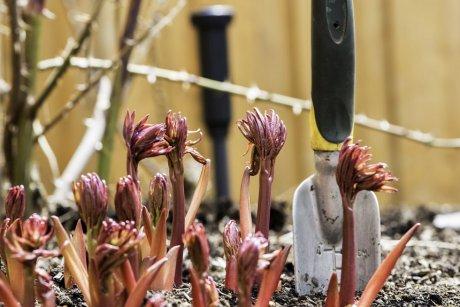
The best time to plant or replant a peony bush is the second half of August or the first half of September. During this time, the plants are dormant, so all procedures will proceed smoothly. You can adjust the timing as you see fit, but it's important to adhere to the key requirement: the cuttings must root before the onset of frost.
Trimming
Pruning is only done after the buds have successfully formed after flowering. If pruning is done too early, the bush will not be able to form buds the following season. Itoh hybrids are usually pruned only in the third year after their first flowering. The bush is cut back to 15-20 centimeters, then mulched and covered for the winter. As for removing faded buds, this should be done promptly. Removing faded flowers will stimulate further flowering.
Preparing for the winter period
Mulching is considered the primary technique for preparing Itoh peonies for winter. The soil is covered so that the bush's roots, which are located almost horizontally, are covered by a 10-centimeter-thick layer of mulch. The mulch should be a soil mixture that will not alter the pH level.

In winter, despite the frost resistance of Itoh varieties, it's necessary to additionally cover the bushes with non-woven material or special gardening materials. This is especially true for young peony bushes that haven't been pruned.

Propagation of Itoh peonies
The classic method for propagating Itoh peonies is by dividing the bush. This method helps preserve the varietal characteristics and reduces the time spent growing the cuttings.
Peony rhizomes are a collection of long underground shoots. Each shoot produces renewal buds, which are essential for peony growth. These underground shoots spread almost horizontally, forming a system of adventitious rootlets responsible for nutrition and water absorption.
To divide a growing bush, the rhizome is carefully dug out of the soil, starting in the second half of August. The rhizomes are dried, then division begins. Each part should have at least one bud and several appendages.
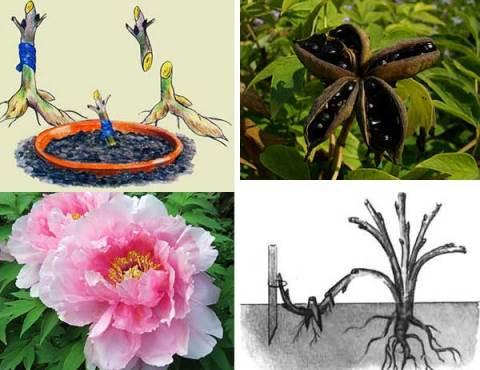
Division is done with a sharp garden knife, carefully cutting the root with short, jerky movements. The resulting divisions are left in the open air for 2-3 days to dry. Then, proceed to planting or, if necessary, store the divisions in sand or moss for longer storage.
What to do if the plant does not bloom?
The result of all this work and the fulfillment of all expectations is the abundant flowering of the bush. Often, novice gardeners find that, even when following basic rules, the peony fails to form buds, remaining a simple green bush all summer.
Reasons why a peony does not bloom:
- Inappropriate planting location. The ideal option is to plant the peony bush in an open, sunny spot. Waterlogging, close groundwater flow, constant shade, and insufficient sunlight are all possible causes of bud failure.
- Plant age. The root system of hybrid bushes only becomes sufficiently strong in the second year, so you shouldn't expect flowering from a newly planted bush.
- Misalignment of plant parts. This occurs when the root part has grown extensively, but few buds have formed. This disproportion prevents the upper part from blooming and producing buds.
- Frequent repotting and division. This option involves owners repotting the bush several times unnecessarily. The adaptation periods overlap, preventing the bush from properly establishing roots and causing stress.
- Excess nitrogen. If the soil receives excessive amounts of nitrogen-containing fertilizers, the rhizomes, which absorb the nutrients, signal the stem to increase green mass. This process disrupts the natural growth cycle and inhibits bud formation.
- Early pre-winter pruning. This is a problem for novice gardeners. They try to follow all the instructions, but begin pruning too early, before the buds that determine the next season's flower buds have formed.
If the bush is slow to bloom, it's necessary to carefully collect and analyze information about the flower's existence over the past six months. Identifying the cause helps quickly correct the situation and achieve the long-awaited, luxurious blooms of the Ito hybrid.
Related posts:
 Descriptions and characteristics of all varieties of peonies, varieties and names of the best
 Timing of planting and care of peonies in open ground, growing rules
 Top 11 Coral Peony Varieties and How to Grow Them
 The best eggplant varieties for growing in a polycarbonate greenhouse: planting and care
 Winter preparation guidelines for peonies by region, timing, and care
 Planting and caring for tree peonies: the best varieties and growing mistakes
 The best grape varieties for growing in the Urals, planting and care rules in summer
 Top 15 Korean Chrysanthemum Varieties, Planting and Care in the Open Ground