
- Selection and general description of the Sarah Bernhardt variety
- Characteristics of the flower
- Types and variations
- Red Sarah Bernhardt
- White
- Unique
- Pros and cons of using in landscapes
- Planting and caring for peonies in open ground
- Preparing the site and planting material
- Timing and planting patterns for peonies
- Fertilizing and watering
- Loosening and mulching the soil
- Shelter from drafts
- Trimming
- Transfer
- Preparing for winter
- Preventive treatments
- Pests
- Diseases
- How to propagate a crop
- Gardeners' reviews of the Sarah Bernhardt variety
Peony bushes often adorn garden plots and private home yards. These flowers bloom in the first half of summer and become the focal point of landscape design. Among the many varieties of this plant, gardeners often choose the Sarah Bernhardt peony. Its main distinguishing feature is its long flowering period, but proper care is essential for this.
Selection and general description of the Sarah Bernhardt variety
Although the Sarah Bernhardt peony was bred over a century ago—in 1906—it remains popular and sought after among gardeners. It was created by renowned French breeder P. L. Lemoy, who named his creation after the famous actress Sarah Bernhardt. The Sarah Bernhardt is a winner of the Royal Horticultural Society Award for Best Outdoor Peony.
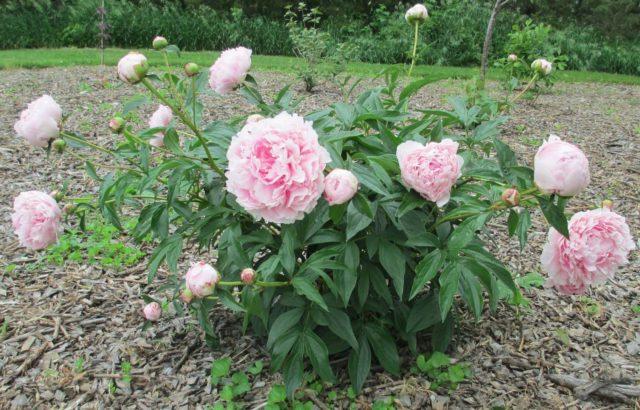
The milky-flowered peony Sarah Bernhardt is a herbaceous perennial. Its leaves change color in autumn and then fall. Its stems grow up to 80 cm tall, strong and erect. The flower stalks are strong, capable of supporting the weight of the buds without sagging.
The root system consists of tuberous rootlets and a few thin shoots. The leaf blades are dark green, with clearly visible veins.
The following features of the variety are worth noting:
- Average resistance to diseases and pests.
- High winter hardiness (up to -40 degrees).
- Long-term preservation of marketable appearance.
- Possibility of growing without support.
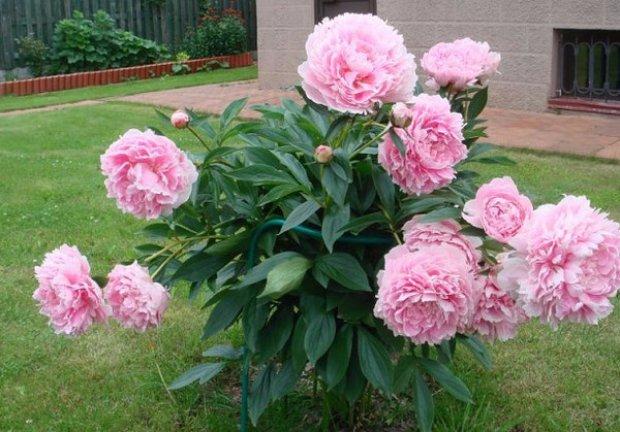
Characteristics of the flower
The milky-flowered peony is a mid-late flowering variety. With proper care, it blooms for up to 25 days. If a tuber with 3-4 renewal buds was planted, the first buds will appear in the second or third year of cultivation. The flowers exude a spicy, rich fragrance.
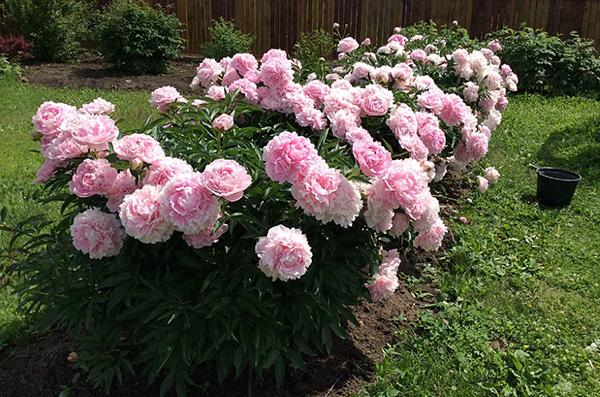
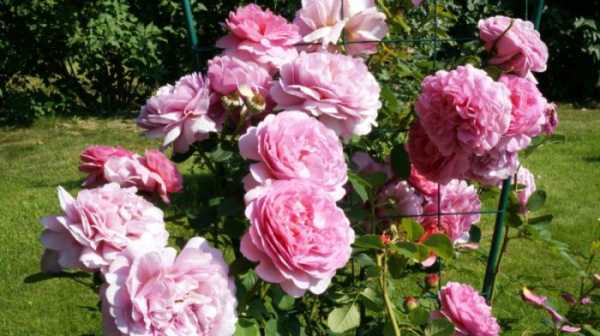
This herbaceous perennial is characterized by large buds, reaching 20 cm in diameter. They have a densely double structure and petals of a soft pink hue with a distinct silvery edge. The Sarah Bernhardt peony is distinguished by its bud hue, which varies from pinkish-lilac to raspberry-purple, depending on the climate of the growing region. The advantage of these flowers is that they do not fall off after rain and remain fresh when cut for up to 15 days.
Types and variations
Over the years, several varieties of the Sarah Bernhardt peony have been developed from the parent variety. They differ from each other in bud shape and petal color.
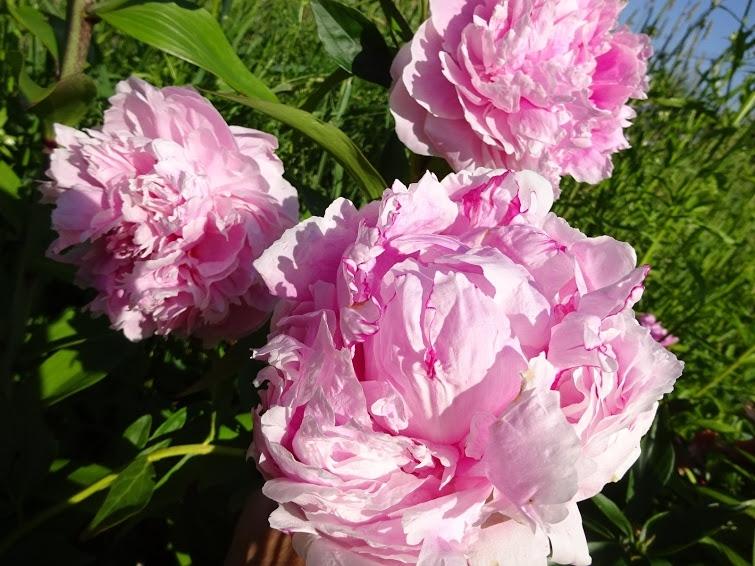
Red Sarah Bernhardt
This peony boasts a purple-red coloring, but its buds are smaller than its parent variety, measuring 15 cm in diameter. The bush reaches a height of up to 85 cm. During flowering, the buds emit a pleasant, sweet, but not overpowering, scent. The peony's leaves are a rich, dark green. The Red Sarah Bernard variety is a late-blooming plant. It looks equally impressive in flowerbeds and as a cut flower in vases.
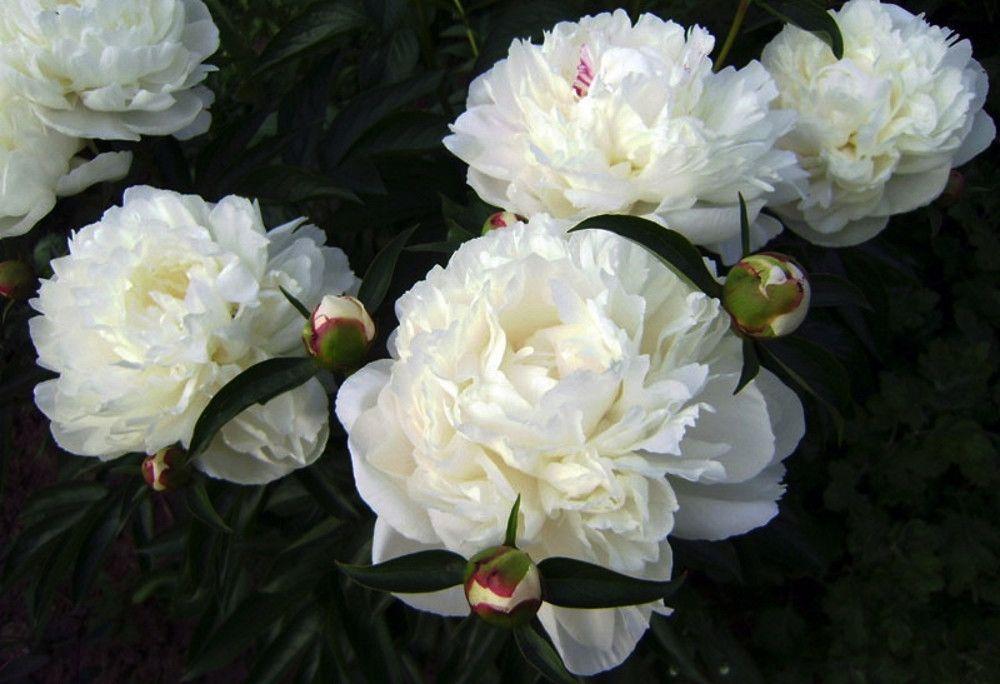
White
The lush, snow-white blooms of this variety are what attract gardeners. White Sarah Bernhardt blooms late, lasting up to four weeks. Each stem produces two to three buds, emitting a faint, sweet aroma. The bush grows to 70-75 cm in height. The snow-white peonies are especially striking when cut.
Unique
A new, striking variety, based on Sarah Bernhardt. Its petals are powdery pink, with distinctive red highlights. The dark green foliage contrasts with the buds. This variety blooms late. Its fragrance is sweet and rich. The bush grows up to 95 cm in height.
Pros and cons of using in landscapes
Like any ornamental plant, the Sarah Bernhardt peony has its advantages and disadvantages. The benefits of using it in landscape design include:
- Late flowering period - when other varieties have already finished blooming, Sarah Bernhardt is just beginning to delight with its buds.
- High winter hardiness of the root system.
- Possibility of growing without support.
- Spectacular appearance of large buds.
The following are noted as disadvantages:
- Average resistance to common crop diseases.
- Requires regular watering.
Planting and caring for peonies in open ground
To ensure the bush grows lushly and remains disease-free, it's important to select the right site and prepare it. Further care for peonies isn't particularly difficult—regular watering, fertilizing, and preventative treatments are all the plant needs.
Preparing the site and planting material
Peonies are sun-loving plants, so shaded areas are not suitable for planting them, as they won't thrive there. Light partial shade in the middle of the day is acceptable; it will protect the petals from the scorching sun.
It's not recommended to plant peonies in marshy areas, as excessive moisture can lead to root rot and the development of fungal diseases. Clay and sandy soil is preferred, and it should be slightly acidic. It's recommended to add some organic matter, such as humus, to loose soil to improve its properties.
When planting peonies, keep a distance of at least 100 cm between them, as they will begin to compete for nutrients as they grow. Keep peonies about 1 meter away from fences and building walls to prevent rainwater from damaging the petals.
To avoid variety mismatch, purchase planting material only from certified retailers. Before planting, soak the plant roots in a highly concentrated solution of potassium permanganate for half an hour, then dry them and sprinkle with wood ash.
Timing and planting patterns for peonies
It is recommended to plant peonies either at the end of summer or at the beginning of autumn; over the winter, the rhizomes will adapt to the new location and begin active growth in the spring.

Planting operations are carried out according to the following algorithm:
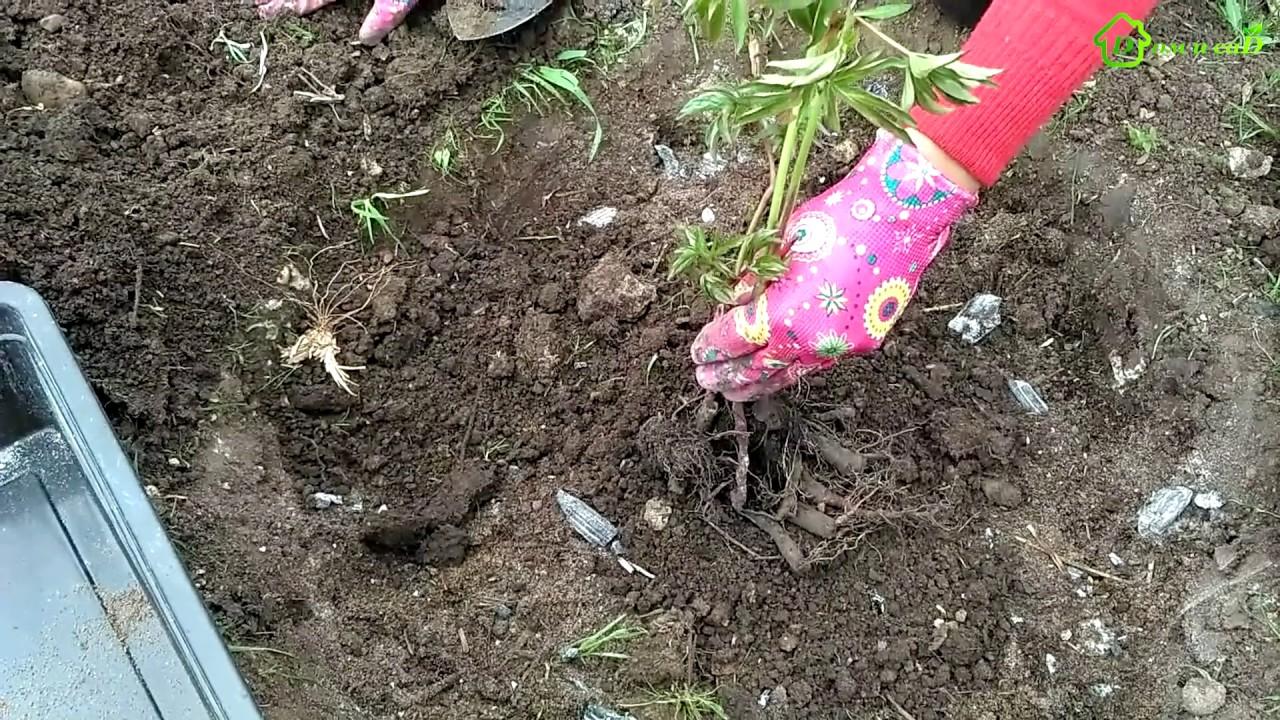
- Holes are dug about 80 cm deep, and a thin layer of sand drainage is placed on the bottom.
- Organic fertilizer is placed on top of the sand.
- The bushes are placed on this layer, deepening the buds by 5 cm.
- Fill with remaining soil and irrigate.
- It is recommended to mulch the soil around the peonies so that the bushes can better survive the winter period.
Fertilizing and watering
Nutrient additions begin in the second year after planting. Then, fertilize the plants three times per season:
- For the first time, a complex mineral fertilizer is used.
- The second time, when buds are forming, peonies are fed with diluted bird droppings.
- With the arrival of autumn, superphosphate diluted in water is added.
Allowing the soil around peonies to dry out negatively impacts bud formation, but excessive moisture is also harmful. Water with settled water approximately every seven days. About three buckets of water are used per plant.

Loosening and mulching the soil
After each watering, the soil around the peonies is carefully loosened to avoid damaging the root system. Weeds are also removed to prevent them from robbing the plants of nutrients. Experienced gardeners mulch the area around the tree trunks, eliminating the need for regular weeding.
Shelter from drafts
To prevent peony bushes from breaking under the force of the wind, tall shrubs are planted nearby or the plants are placed near the walls of buildings and fences.
Trimming
Leaf pruning is done in the fall, in preparation for winter. Failure to do so can result in pathogens and insects colonizing the foliage. Stems are shortened almost to ground level, making it easier to cover the plants for the winter.

Transfer
If you need to move a peony bush to a new location, carefully dig around it on all sides. Then, use a pitchfork to loosen it and lift it out of the soil. Wash away all the soil from the roots and leave the bush in the open air for 6-8 hours. After this, plant it in its new location and water it thoroughly. Repotting should only be done in August.
Preparing for winter
In regions with cold winters, peonies of this variety require additional protection. After pruning and applying the final fertilizer, apply a layer of organic mulch. In the Urals and Siberia, additional covering with lutrasil is recommended to protect the buds from freezing.
Preventive treatments
Prevention is an integral part of plant care.
Pests
The most dangerous insects for peony bushes are aphids, nematodes, thrips, and ants. As a preventative measure, treat the bushes with insecticides such as Aktara or Actellic in the spring. Fallen leaves and diseased plants should also be removed promptly.
Diseases
The most common diseases affecting peonies include gray mold, ring spot, and rust. As a preventative measure, spray the soil around peonies with Bordeaux mixture in early spring. Garlic infusion can also be used.
How to propagate a crop
To grow Sarah Bernhardt peonies in your garden, use the following methods:
- Division of rhizome.
- Growing from seeds.
The latter method is quite labor-intensive and time-consuming. Gardeners generally use the rhizome division method.
Gardeners' reviews of the Sarah Bernhardt variety
Marina Vladislavovna Topolevskaya, 54: "Sarah Bernhardt is my favorite variety in my garden. Its stunningly beautiful buds are a true highlight of the flowerbed. I haven't encountered any diseases, but aphids once settled on the leaves. I sprayed them twice with Aktara, and the pests disappeared."
Related posts:
 Descriptions and characteristics of all varieties of peonies, varieties and names of the best
 Description of the hybrid peony variety Bartzella, planting and care instructions
 Description and characteristics of the Khozayushka potato variety, planting and care instructions
 Description of the Galahad grape variety, planting and care rules
 Description and characteristics of the Streifling apple tree, planting and care instructions
 Description and characteristics of the Calgary daffodil variety, planting and care instructions
 Description and characteristics of the Avalon daffodil variety, planting and care instructions
 Description of the Rocambole garlic variety and the features of its planting, cultivation and care