
- The history of the Calgary variety
- Characteristics of narcissus and flowering features
- Examples of use in the garden
- Specifics of planting and caring for the plant
- Preparatory work
- Timing and technology of planting bulbs
- Watering and fertilizing Calgary
- Loosening the soil
- Trimming
- Protection from harmful insects
- Disease prevention
- Preparing for winter
- How to propagate a flower – step-by-step instructions
- Reviews of the variety
Double daffodils attract gardeners with their unusual appearance. The Calgary daffodil is distinguished by its delicate white color. Its airy bud resembles a small peony. Its advantages include frost resistance and a long flowering period. Calgary is suitable for cutting and used in garden decoration. Its cultivation technique is no different from the usual care for hybrid daffodils.
The history of the Calgary variety
Double daffodils are the first hybrids to appear by chance and have been known since the 19th century. The Dutch have always led the world in breeding. The Calgary variety was developed in 2005 in the Netherlands. Its creator is named Van der Wyk.
Characteristics of narcissus and flowering features
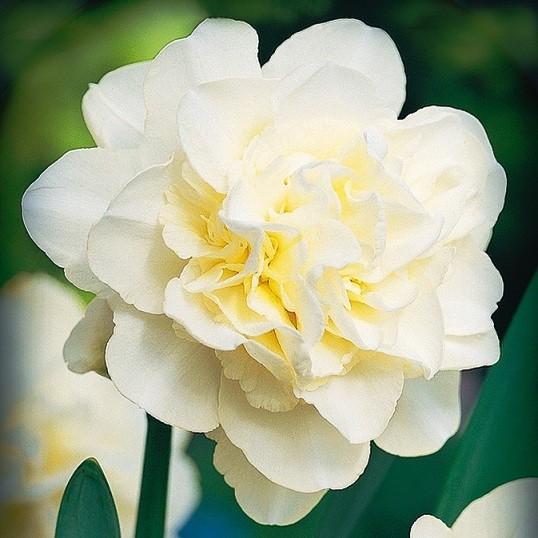
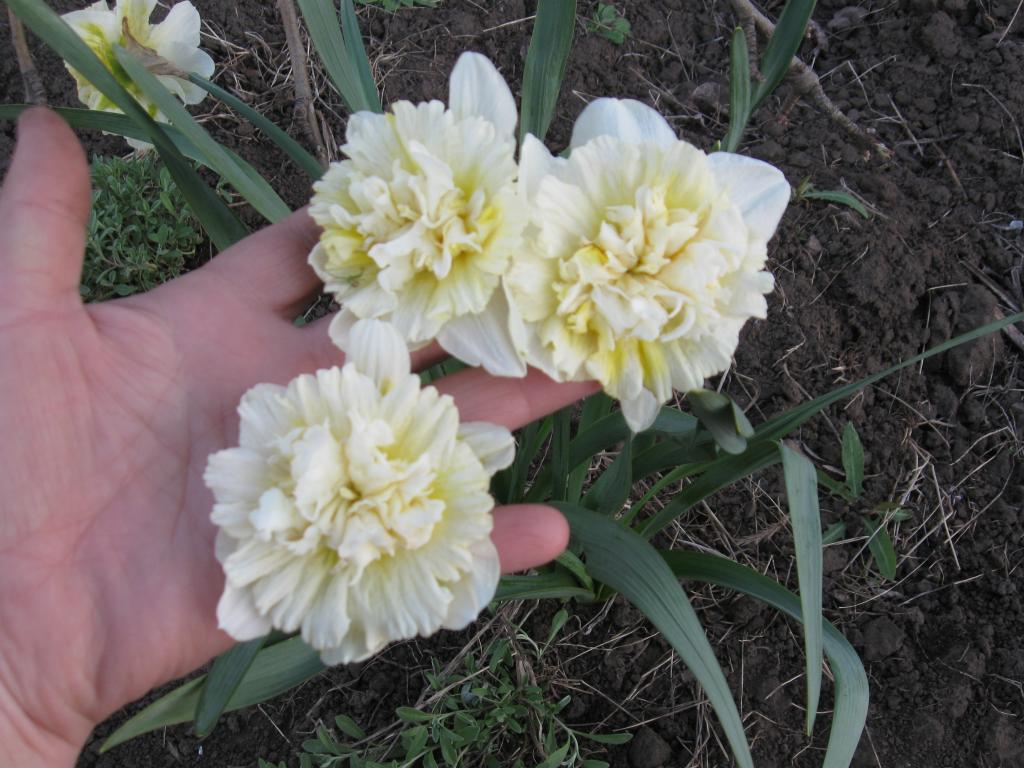
External characteristics of the variety:
- peduncle length - 40 centimeters;
- 2 buds on one flower stalk;
- flower diameter - 10 centimeters;
- basal leaves are lanceolate, dense, green with a bluish tint;
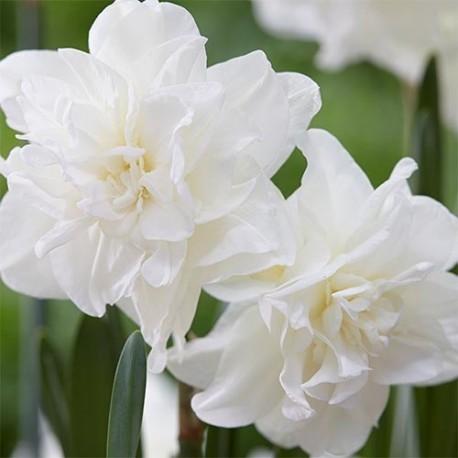
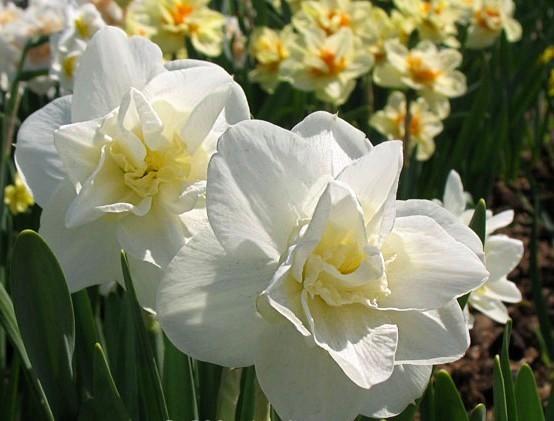
- petals are white with a greenish tint, corrugated;
- The bulbs are large, more than 4 centimeters in diameter.
Yellow stamens in the center of a lush bud create the illusion of an inner glow.
Properties of daffodils:
- resistant to the climate of the central and northern regions, withstand frost of -35 degrees;
- light-loving;
- suitable for cutting;
- bloom profusely.
The Calgary double daffodil blooms in May for 10 days. The flower exudes a pleasant, lingering fragrance.
Examples of use in the garden
Flowers that go well with Calgary white daffodils:
- muscari;
- tulips;
- pelargonium;
- primrose;
- snowdrop.
The double variety is planted in groups of 7-10 flowers or in rows in borders. Geometric and patterned flowerbeds are created using white daffodils and other flowers. Using stakes and string, the area is divided into zones and filled with seeds. The result is floral patterns.
Specifics of planting and caring for the plant
The Calgary variety requires an open site with maximum sunlight. However, it's important to maintain soil moisture during cultivation. Dry soil will cause the bulbs to dry out, which will negatively impact plant growth.
Preparatory work
The area for daffodils is selected and prepared 2-3 weeks before planting.
Requirements for the place:
- flat surface;
- bright daylight;
- the location of groundwater is deeper than a meter from the earth's surface;
- the soil is loamy, sandy loam, neutral acidity.
Site preparation:
- The soil is dug over with compost and nitrophosphate. 60 grams of mineral fertilizer per square meter is required;
- digging depth - 15 centimeters;
- holes are dug at a distance of 15 centimeters;
- the depth of the holes is twice the length and width of the bulbs;
- A drainage layer of pebbles and expanded clay is placed at the bottom of the holes.

The excavated soil is mixed with wood ash - 20 grams for each hole.
Timing and technology of planting bulbs
The time to plant daffodils comes twice a year: in spring, from mid- to late March, and in autumn, from mid-September. Late spring planting begins in early April, and autumn planting begins in October. The main factors to consider are soil temperature and weather. The soil should warm to 10 degrees Celsius and remain stable for a month.
How to plant bulbs:
- a mound of soil mixed with ash is poured into the hole on top of the drainage layer;
- place the onion on top with the bottom down;
- sprinkled to the top with earth.
The planting is watered and mulched with hay.

Watering and fertilizing Calgary
The watering schedule is adjusted individually, depending on the rate of moisture evaporation. To check the soil's moisture level, rub a pinch of soil between your palms. If it crumbles into fine sand grains, the plants need watering.
If only the top layer has dried out, but the deeper soil is still damp, you should wait with watering.
The soil should be adequately moist during the budding period and after flowering. During this time, daffodils absorb a lot of nutrients to ensure abundant blooms and prepare the bulbs for the next growing season. Watering is combined with fertilizing, as liquid fertilizers are more easily absorbed by the bulbs. Daffodils are fertilized three times during their development:
- during stem growth;
- during the budding period;
- after flowering.

To fertilize, dissolve 5 grams each of sodium, superphosphate, and potassium in 10 liters of water. For the second application, reduce the sodium amount to 2 grams. After flowering, water the daffodils until the stems dry out. Then stop watering.
Loosening the soil
The soil around daffodils is loosened the day after watering to prevent standing water. Use a fine-toothed garden rake for loosening the soil. Push it to a depth of 5-8 centimeters, being careful not to damage the roots. The soil is loosened after the above-ground portions of the plants have died back.

Trimming
Plants grown from seeds lack varietal characteristics, so gardeners are more interested in the bulb. To prevent the bulb from wasting energy on fruit and instead store it for flowering and forming offspring, the buds are pruned before the seed pods form. The leaves and stems are left on. The upper portion of the plant should gradually die back naturally. Only a completely dry stem can be cut.

Protection from harmful insects
Pests of daffodils:
- aphid;
- narcissus fly;
- nematodes;
- spider mite;
- slugs.
Aphids and spider mites migrate to flowers from infested shrubs. Therefore, the main preventative measure is comprehensive garden care. A sign of narcissus fly infestation is soft bulbs. To flush out the larvae, place them in cold water. Plants with slow growth should be dug up immediately.
To prevent nematode infestation, soak bulbs in water heated to 60 degrees Celsius for 30 minutes. Boiling is suitable for young, unsprouted bulbs.
Disease prevention
With high humidity in the atmosphere and soil, daffodils are susceptible to fungal diseases:
- powdery mildew;
- gray mold;
- spotting.
The fungus spreads from the soil to the bulbs and spreads throughout the plant. Prevention begins at the stage of planting material selection and site preparation:
- soft, deformed, unevenly colored babies are rejected;
- calcine the soil after infected plants;
- Warm up the daughter bulbs in water or formaldehyde solution at +60 degrees.
Formaldehyde destroys roots, so it is used before the growing season begins.
Preparing for winter
Calgary daffodil bulbs remain viable after a hard frost, but they need to be protected from excess moisture. If winters in the region are harsh but dry, the bulbs should not be covered. If heavy precipitation and unstable temperatures occur during the winter, cover the bulbs with agrotextile. The soil under the spunbond will remain dry and will not freeze. As temperatures rise and snow melts, the bulbs may rot. Inconsistent weather is common in March. The daffodil plot can be covered with agrotextile for the first month of spring. During damp winters, it is recommended to store the daffodils.
The storage method is suitable for both adult bulbs and baby bulbs:
- the dug-up specimens are cleaned of husks and washed in cool running water;
- inspect for damage;
- immersed in a solution of manganese and fungicide;
- dry in the shade;
- prepare flat wooden pallets or cardboard sheets and cover them with thick cotton fabric;
- Place the bulbs in one layer with an interval of 3-5 millimeters.
Storage temperature is 8-10°C. Trays are placed in a cellar, on a balcony, or in the attic. The acceptable humidity level is 65%. Bulbs are also stored in paper bags mixed with sawdust. The bags are placed on the bottom shelf or door of the refrigerator.
How to propagate a flower – step-by-step instructions
Calgary daffodils are propagated by dividing the bulbs. Signs of the formation of offspring include increased foliage and less abundant flowering. These changes can be noticed in the plant's fourth year.
Division is carried out after the stem has dried out, but before it falls off:
- dig up the bulb;
- round mature babies are easily separated from the base;
- Flat young daughter bulbs are left or carefully broken off. The damp break at the base and daughter bulb is sprinkled with ash. Dry breaks do not need to be treated;
- After separation, they are kept in a solution of fungicide or manganese and dried in the shade;
- immediately planted in a prepared area or put away for storage.
The mother bulbs are buried back in their old location or transplanted to new beds.
Reviews of the variety
Gardeners praise the flower's appearance. The delicate white color of the Calgary flower evokes images of creamy ice cream, crystal clear water, and poplar fluff.
Gardeners use white daffodils as a backdrop for vibrant spring flowers. The toxic substance in their bulbs repels rodents. Therefore, double daffodils are planted along the edges of garden beds to protect garden and vegetable crops from pests.
Related posts:
 Planting and caring for daffodils in open ground, the best time and growing rules
 Description and characteristics of the Dick Wilden daffodil variety, planting and care instructions
 When and when can daffodils be repotted? Step-by-step instructions and care.
 Description and characteristics of the Ice King daffodil variety, planting and care instructions
 Description and characteristics of the Cheerfulness daffodil variety, planting and care instructions
 Description and characteristics of the Pink Charm daffodil variety, planting and care instructions
 Characteristics and descriptions of the most beautiful types of daffodils, names of the best varieties
 Description and characteristics of the Golden Ducat daffodil variety, planting and care instructions