
- Selection and description of the Chanterelle variety
- Features of daffodil flowering
- Examples of use in landscape design
- Planting and caring for the flower
- Preparatory stage
- Timing and schemes for planting bulbs
- Watering and fertilizing
- Soil care
- Trimming
- Protection from insects and diseases
- Preparing for winter
- Reproduction methods
- Gardeners' reviews of the Chanterelle daffodil
Daffodils are bright little suns that bring joy after the long winter months. They are easy to care for and pair well with many other plants. The Chanterelle daffodil is one of the most beautiful varieties. Its lemon-yellow blooms decorate the garden for two weeks. Below is information on planting and caring for this flower, propagation methods, and examples of its use in landscape design.
Selection and description of the Chanterelle variety
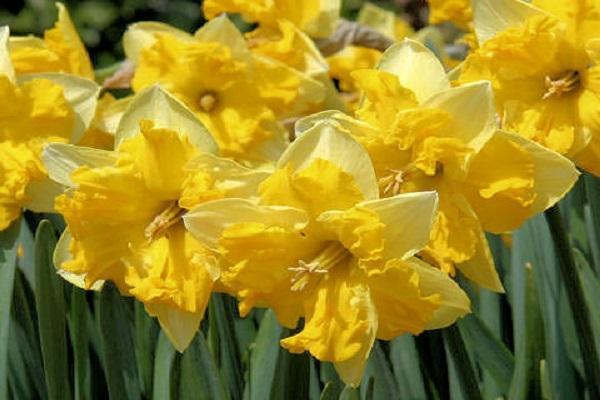
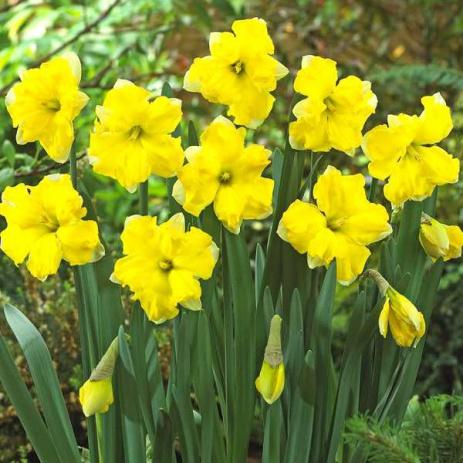
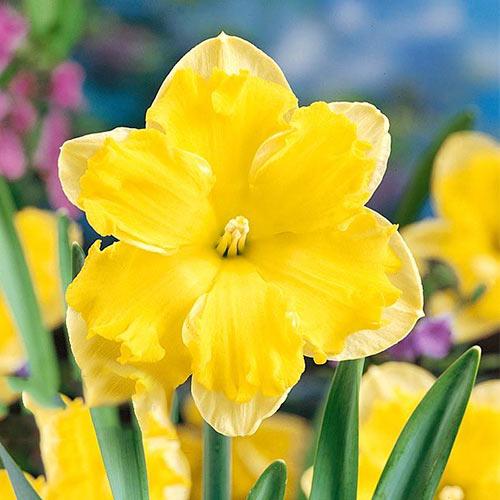
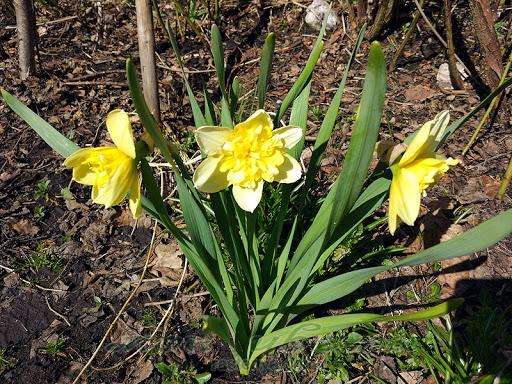
The narcissus was bred by Dutch specialists in 1962. This beautiful plant quickly became a favorite among gardeners. The Chantarelle hybrid grows 30-45 centimeters tall. The leaves are narrow and lanceolate. When open, the bud measures 7-10 centimeters in diameter. The crown is bright yellow, and the petals are lemon-colored.
Additional information: Translated from French, "chanterelle" means "chanterelle" (mushroom).
Features of daffodil flowering
The buds open in late April or early May. Flowering lasts for two weeks. During this period, the bushes emit a delicate fragrance. For vibrant blooms, plant the plant in a sunny location. Buds will also open in partial shade, but the decorative effect will be diminished.
For daffodils to bloom, they must undergo stratification. To do this, the bulbs are planted in the fall. Over the winter, the plants will undergo this process naturally. If daffodils are purchased in late fall, the bulbs are placed in the vegetable compartment of the refrigerator for two months. In the spring, they are planted in the ground as early as possible.
Examples of use in landscape design
Narcissus Chanterelle makes a beautiful addition to any home garden. It's planted in a small group against a backdrop of green grass or low-growing, ornamental foliage. Daffodils look beautiful in a mixed border with other bulbous plants. They can also be planted around the trunks of trees and shrubs, along garden paths, or in rock gardens.
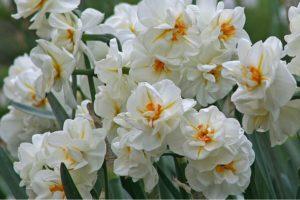
After daffodils bloom, you may be left with a bare, unkempt area. To prevent this, some gardeners recommend sowing annuals in the flowerbed in late fall. Once the bulbs dry out, the area will be adorned with flowering annuals.
Planting and caring for the flower
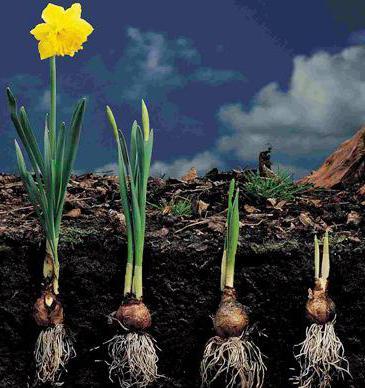
To ensure daffodils continue to delight the eye with their decorative appearance for a long time, gardeners must properly prepare them. They are best planted after legumes. Tomatoes, cucumbers, and grains are also good predecessors. The planting depth should be three times the height of the bulbs.
Preparatory stage
The bulbs are sorted, setting aside any that show any damage. The planting material is placed in a potassium permanganate solution for 30 minutes. Damaged bulbs can be salvaged by cutting out the damaged parts, then placing the remaining healthy portions in a disinfectant solution.
Choose a sunny, water-free site for planting daffodils. Otherwise, the bulbs may freeze in winter or rot in summer. Remove a 30-centimeter layer of soil from the area. Then, add a 5-centimeter layer of sand to the bottom. Fill the remaining space with fertile soil.
Timing and schemes for planting bulbs
Daffodils are planted outdoors in the fall. Follow these steps:
- dig furrows or holes 10-20 centimeters deep at a distance of 10-12 centimeters;
- plant the bulbs;
- lightly watered;
- cover with soil.
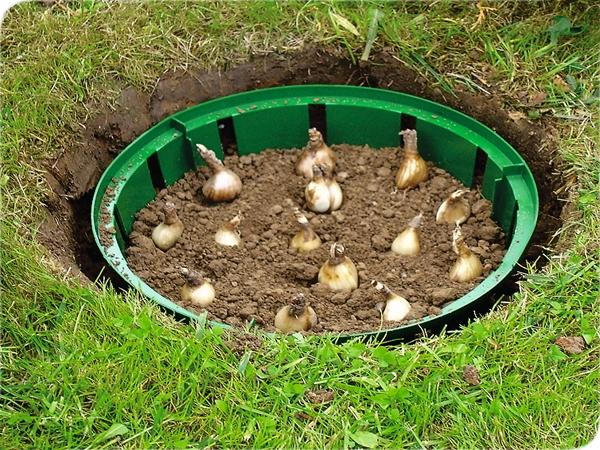
The planting site is sprinkled with peat or humus. The mulch will retain moisture and prevent the bulbs from freezing in winter.
Watering and fertilizing
Water daffodils at the base, avoiding overhead irrigation. This procedure is performed after the top layer of soil has dried. Use warm, settled water. Water even after the buds have dried. In early spring, when the leaves begin to emerge, apply the first fertilizer. Use a complex mineral fertilizer. Fertilize daffodils again during budding with phosphorus and potassium. The same mixture is used during flowering.
Important! Nitrogen fertilizers should only be applied in early spring. Otherwise, bulbous plants may not bloom this season.
Soil care
After watering, the soil around the daffodils is loosened. This procedure prevents a crust from forming on the soil surface. This loosening allows air and moisture to easily penetrate deep into the soil.
Weeds are kept from becoming overgrown in the flowerbed. They steal nutrients and sunlight from the daffodils. Weeds are pulled by hand. Mechanical weeding can damage the delicate leaves and flower stalks.
Trimming
Flower stalks with dried buds are cut off. Leave the leaves to dry and droop on their own. The flowerbed's decorative appeal is slightly diminished, but the bulb gains strength to form a flower stalk next season. The only reason to prune prematurely is if the bushes are infested with diseases or pests.
Protection from insects and diseases
Narcissus Chanterelle has a strong immune system. It can be attacked by pathogens and pests under unfavorable growing conditions. Therefore, proper agricultural practices are essential when growing this plant.
Overwatering increases the risk of bulb rot. To prevent this, add sand to the planting hole. This mineral will prevent moisture from stagnating at the base of the root system. Affected bulbs are dug up and removed. Daffodils can be susceptible to onion and narcissus flies, hoverflies, and spider mites. Insecticides are used to control these harmful insects. This procedure should be performed in dry, windless weather.
Preparing for winter
Narcissus Chantarelle tolerates cold well. However, if winter is expected to be light on snow, the flowerbed should be insulated. To do this, cover it with a layer of mulch consisting of compost or humus. Insulating the area is especially important when replanting in the fall.
Reproduction methods
Narcissus Chanterelle is propagated vegetatively. This procedure is performed every 4-5 years. During this period, the mother plant grows, the flower stalks become shorter, and the buds become smaller. This means it's time to plant the bulbs.
Propagation begins after the above-ground portion of the plants has dried. The bush is carefully dug around on all sides, and the bulbs are removed. The planting material is separated into fractions. Large bulbs are planted directly into prepared holes. They are cared for: watered, the soil is loosened, and surrounding weeds are removed.
Small bulbs are cleaned of soil and dried. They are then stored in a cool, dry place. In the fall, the bulbs are planted in a separate bed. These plants will bloom only after 2-3 years.
Please note! Seeds are not used to propagate hybrid daffodils.
Gardeners' reviews of the Chanterelle daffodil
Bulbous plants are a beautiful addition to spring flowerbeds. One such example is the Chanterelle daffodil. Gardeners describe it as an easy-to-grow plant that brightens up their gardens in April or early May.
Svetlana, Nizhny Novgorod: "I planted Shanterel at my dacha a few years ago. The first year, it didn't bloom. The bulbs were probably too small and unripe. Now, for several seasons now, I've been enjoying the beautiful blooms of daffodils. The bushes have grown well, and I'll probably plant them again this fall."
Natalia, Moscow Region: "I love yellow, so I bought the Chanterelle daffodil. It didn't disappoint: I've been admiring the lemon-yellow blooms for two weeks. The delicate fragrance emanating from the plants was a pleasant bonus. The bushes don't require any special care. I water them a few times a season and fertilize them in the spring. They overwinter without cover."
Related posts:
 Description and characteristics of the Apricot Whirl daffodil, planting and care
 Description and characteristics of the Obdam double daffodil, planting and care
 Description and characteristics of the Ice King daffodil variety, planting and care instructions
 Description and characteristics of the Abba double daffodils, planting and care
 Description and characteristics of the Dick Wilden daffodil variety, planting and care instructions
 Description and characteristics of the Minnow daffodil variety, planting and care instructions
 Description and characteristics of the Calgary daffodil variety, planting and care instructions
 Description and characteristics of the Mount Hood daffodil, planting and care instructions