
- Selection and characteristics of the Mount Hood variety
- Positive and negative aspects of the variety
- Planting and caring for daffodils
- Choosing bulbs
- Preparing the landing site
- Planting dates and patterns
- Watering and fertilizing
- Loosening and weeding the soil
- Pruning and care after flowering
- Treatments against diseases and insects
- Breeding methods
- Difficulties in growing
- Examples of use in landscape design
- Gardeners' reviews
Ornamental daffodils are among the first flowers to grace flowerbeds, garden paths, and delight gardeners. The delicate Mount Hood daffodil is considered an easy-to-grow plant. However, standard gardening practices are essential when growing daffodils. Water the plants regularly, apply fertilizer promptly, and replant bulbs or bushes every 2-3 years.
Selection and characteristics of the Mount Hood variety
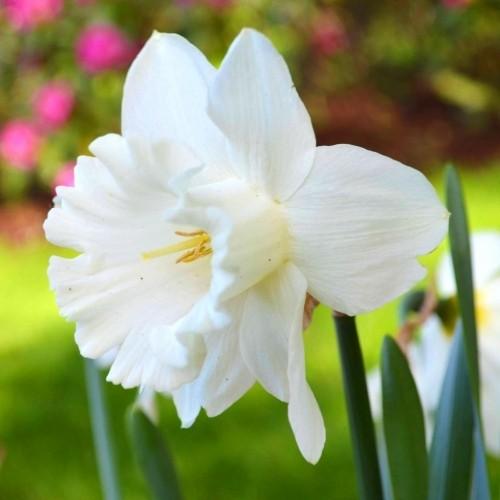
This is one of the best early-blooming daffodils from the trumpet group. Flowers grow 40-50 cm tall. The plant produces a single stem, on which a slightly fragrant flower, 8-10 cm in diameter, hangs horizontally. Mount Hood blooms in mid-spring and makes a wonderful addition to rock gardens, rock gardens, and traditional flower beds.
Positive and negative aspects of the variety
Like any plant, Mount Hood daffodil has its advantages and disadvantages. The main advantages of this variety are:
- the plant grows well in different conditions (in the sun and in the shade);
- suitable for cutting and making bouquets;
- long flowering period (about three weeks).
The advantage of this variety is that Mount Hood looks great in flowerbeds with other flowers (tulips, violets, hyacinths). The plant's shortcomings must also be considered. Early germination can result in seedlings freezing in the event of late frosts. The variety is susceptible to diseases such as fusarium wilt and bacterial rot.
Planting and caring for daffodils
Plants are planted on level surfaces. Slightly elevated areas are ideal, as the bulbs rot if exposed to excess moisture.

Choosing bulbs
The easiest way to assess the quality of planting material is by its appearance. Healthy bulbs have golden or brownish, dry, tightly adherent scales. A sign of a high-quality bulb is the absence of plaque, damage, or spots; it feels firm, dense, and odorless. The base is undamaged and dry.
Preparing the landing site
The basic steps to prepare a site for planting include removing weeds and roots, loosening the soil, and applying fertilizer. If the soil is heavy, add sand during digging (20 kg per square meter). Sandy soil is enriched with humus and clay (1.5 kg per square meter of flowerbed).
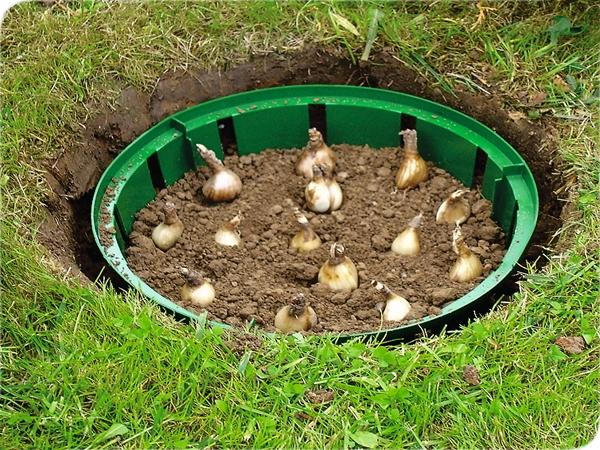
Tip! Organic fertilizers are added to the soil 3 months before planting the bulbs.
Planting dates and patterns
Mount Hood daffodils are planted in the fall, as the bulbs take root and form flower buds during the fall and winter. To ensure the plant takes root safely and survives the winter, the planting material is planted in September.
The distance between the holes is kept at 15-20 cm, although flowers arranged in small groups look picturesque and elegant.
Watering and fertilizing
Daffodils are moisture-loving plants, so 1.5-2 buckets of water are applied per square meter of soil. Mineral fertilizers are added during watering. Fertilize the plants four times per season. During the germination, budding, and flowering stages, apply nitrophoska (60-70 g per square meter of soil). After flowering, fertilize the soil one last time, using a potassium-phosphorus mixture.

Loosening and weeding the soil
To maintain soil moisture and prevent weed growth, loosen the soil after watering. Avoid deep tilling to avoid damaging the bulbs.
Pruning and care after flowering
Once Mount Hood has finished blooming, the flower stalks are carefully cut back. The green mass of the bushes is left to grow—the leaves provide the bulbs with nutrients. The leaves are removed once they are completely dry. To protect the bulbs from winter freezing, the bed is mulched with dry leaves, grass, peat, or agrofibre.
Treatments against diseases and insects
Narcissus plantings are susceptible to mosaic rot, and the bulbs can also be affected by bacterial rot. The most common pests are the narcissus fly, nematodes, and spider mites. To prevent disease, soft or rotten bulbs are burned. Preventative measures for planting material include soaking the bulbs in a formaldehyde solution for 10 minutes.
Breeding methods
The most practical and common method of propagating flowers is separating daughter bulbs from the mother bulb (the bulb produces offspring in the second year). If daffodils have grown extensively, after flowering, the bushes are carefully dug up, the bulbs are divided, and the individual bulbs are planted in prepared holes.
Difficulties in growing
In addition to diseases and pests, gardeners face the problem of lack of blooms. This can have several causes: poor lighting in cloudy weather, insufficient or stagnant moisture, high bulb height, or excessive soil acidity.
Examples of use in landscape design
Mount Hood daffodil is a vibrant flower, so dense rows of it can be used to decorate borders along garden paths. The elegant white flowers make a beautiful addition to areas near ponds. In landscape design, daffodils look good in combination with other flowers: muscari, tulips, hyacinths, crocuses, primroses.
Gardeners' reviews
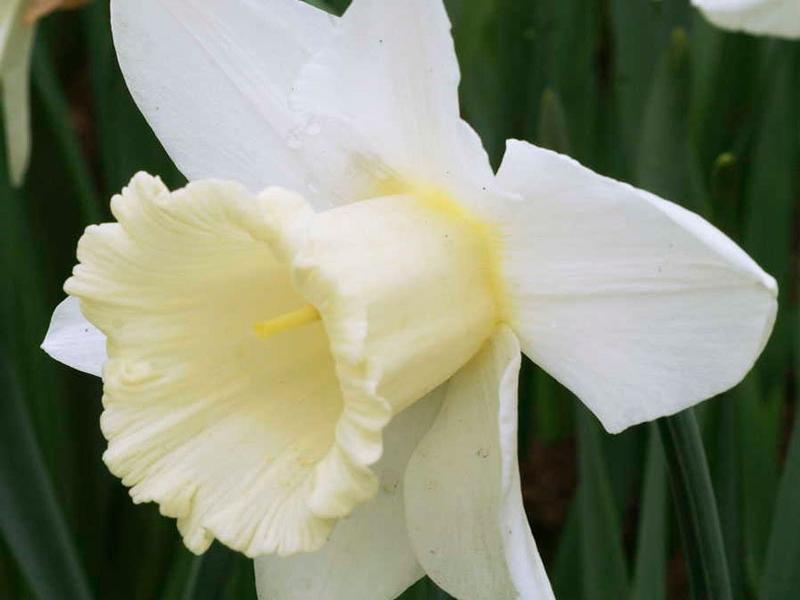
Svetlana Gerasimenko, Belgorod: "This large and delicate daffodil makes a stunning addition to a flowerbed. The flower is a pale lemon color rather than white. It pairs beautifully with bright red and yellow tulips."
Irina Novikova, Lipetsk: "A charming flower. Narcissus Mount Hood was the first to appear in my collection of early varieties. It hasn't disappointed for several seasons—the stem grows tall, bearing a large flower. A surprising feature of this variety is that as the flower opens, the stem changes color: from deep yellow to pearly white."
Related posts:
 Planting and caring for daffodils in open ground, the best time and growing rules
 Description of shallot varieties, cultivation and care, when to harvest
 When and how to plant tulips in the Urals in autumn and care for them outdoors
 Description and characteristics of the Dick Wilden daffodil variety, planting and care instructions
 When is the best time to plant tulips in open ground? Timeframes by region and rules.
 Description and characteristics of the Ice King daffodil variety, planting and care instructions
 Description of the best varieties of onions, planting and care in open ground
 Characteristics and descriptions of the most beautiful types of daffodils, names of the best varieties