
- Characteristics and description of the culture
- Bush
- Features of flowering
- Application in landscape design
- Landing
- Preparatory work
- Timing and planting patterns for bulbs
- Narcissus Care Tips by Dick Wilden
- Watering mode
- Fertilizer
- Protection from insects and diseases
- Transfer
- Preparing for the winter period
- Methods of reproduction
- Reviews of the variety
Daffodils are found naturally in Europe and Asia. This noble flower of the Amaryllis family has become a subject of study for breeders. This has resulted in the development of hybrid varieties intended exclusively for garden or hanging cultivation. The Dick Wilden daffodil variety is a bulbous perennial, bred in 1962. It belongs to the large-crowned double daffodils. Its main characteristics are winter hardiness and early flowering.
Characteristics and description of the culture
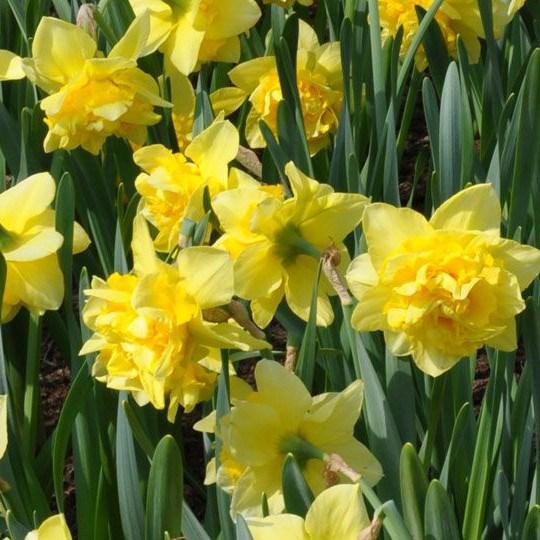
The botanical name of this variety is Narcissus Dick Wilden. The stem's appearance is typical of all species: a sturdy flower stalk surrounded by elongated basal leaves. At the top of the stem, a bud forms, consisting of six large petals and a lush corolla. The flower exudes a noticeable but unobtrusive fragrance. The plant produces large bulbs with a diameter of 4 centimeters or more. Their circumference is 12-14 centimeters.
Bush
This daffodil variety produces long, rounded basal leaves, 6-8 centimeters wide, green with a yellow tint. They are gathered into rosettes. The flowering stem is leafless. The plant grows 35-45 centimeters tall.
Features of flowering
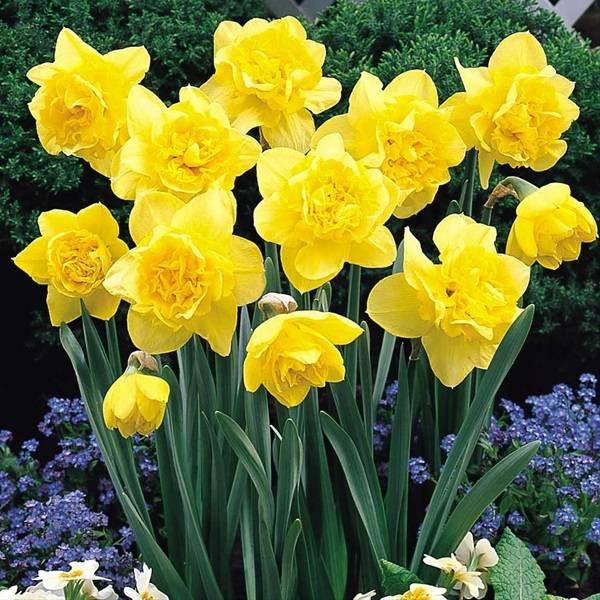
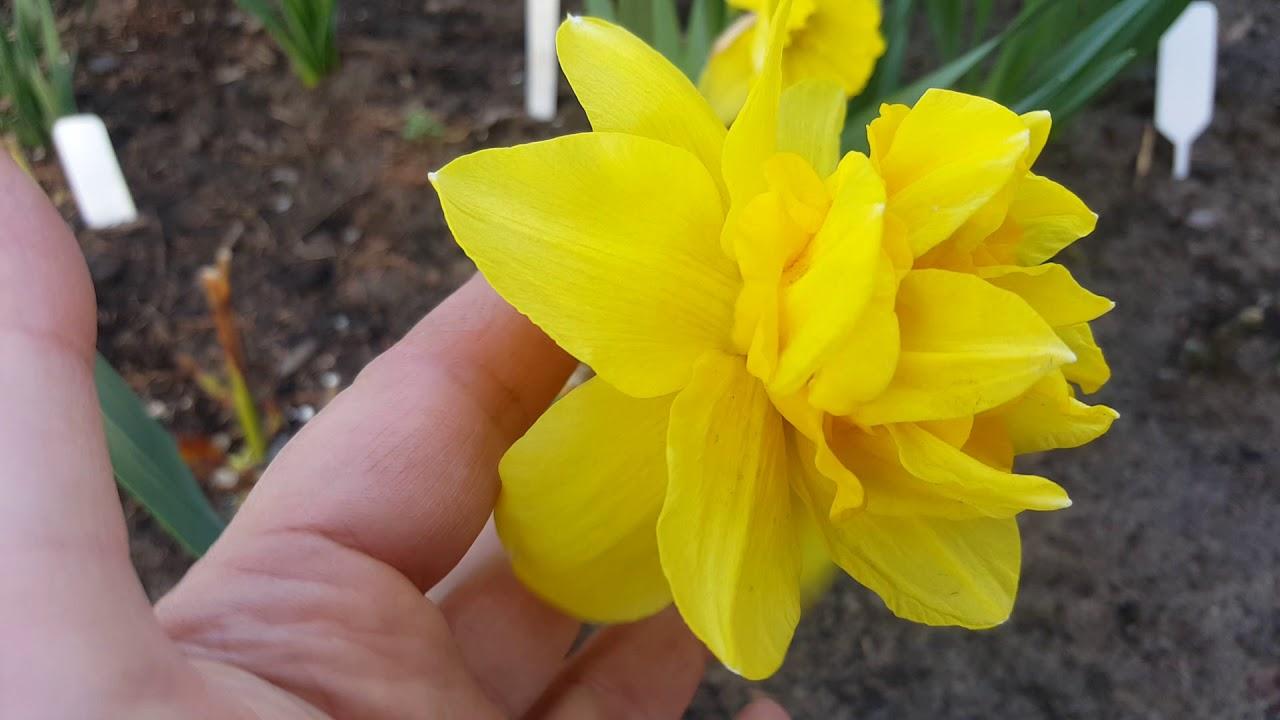
The Dick Wilden variety blooms from early March to July. The daffodil blooms when snow still lies on the ground but is already melting. Large yellow buds stand out beautifully against the white backdrop. The diameter of the open bud is 15 centimeters. The wide, double flower head is a shade darker. The heavy flower bends its stems and may droop to the ground after rain. However, the buds always point upward.
Dick Wilden tolerates shade better than tulips. However, in low sun conditions, the flowers open only halfway. The petals retain a bright yellow color throughout the entire flowering period. At the end, the fruits form—elongated capsules or achenes consisting of three segments.
Application in landscape design
Large yellow daffodils, 'Dick Wilden,' are planted in garden arrangements. Bright buds in pots brighten the veranda. The plant blooms early and tolerates frost well. Therefore, yellow double daffodils adorn the garden from early spring. The flowers are suitable for arrangements of all shapes:
- flower beds;
- flower beds;
- intershrub groups.
Daffodils will decorate the shore of an artificial pond. Cut flowers stay fresh for a long time in a vase. Due to the short stem, this variety is not suitable for mixed bouquets. The large buds stand out brightly in an alpine garden.

Yellow Dick Wilden is combined with contrasting colors:
- blue hyacinth;
- pink scilla;
- purple tulip.
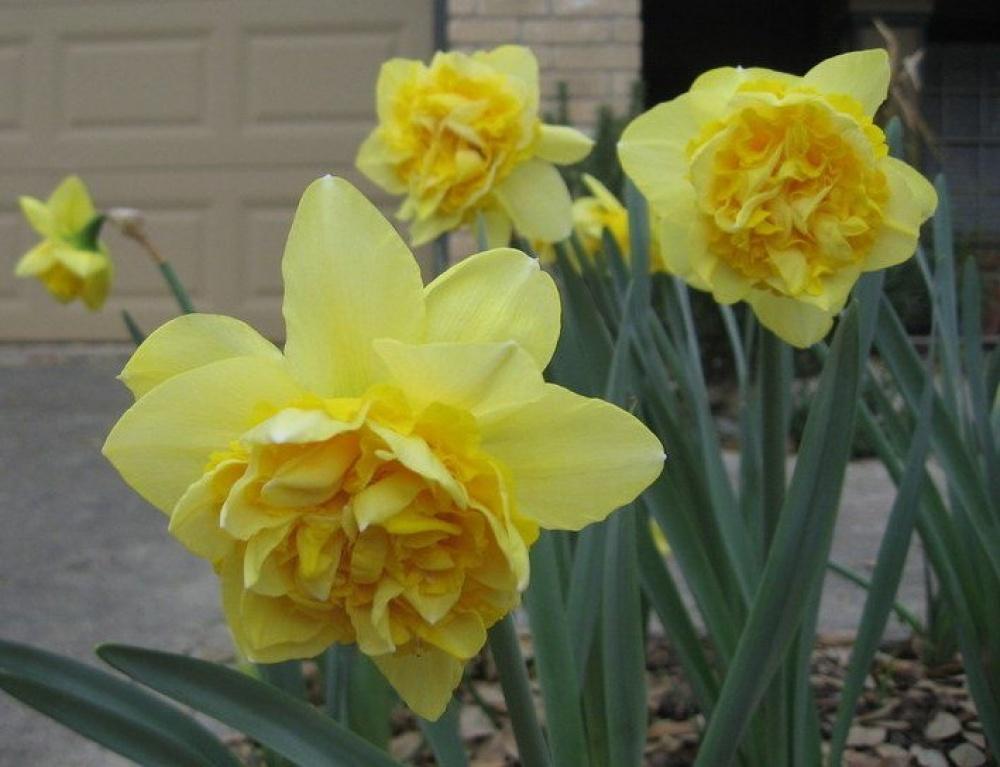
Daffodils with large buds are planted in groups of 7-10 plants. The Dick Wilden variety grows well in the shade of trees and in open spaces, making it a popular choice for decorating city parks and squares.
Landing
Large Dick Wilden daffodil bulbs should be planted at a distance from each other to allow room for the lush tops. The flowers are also sensitive to moisture, so they require adequate drainage.
Preparatory work
The area for daffodils is prepared two weeks before planting:
- dig up the soil with sand and nitrophosphate at the rate of 60 grams per square meter;
- for each bulb, dig a separate hole, twice as big in width and height;
- Drainage from river sand is poured onto the bottom and 50 grams of wood ash are added.
Young bulbs are separated after the plants have flowered and prepared for storage:
- washed from soil;
- kept in a manganese solution;
- dry in the shade.
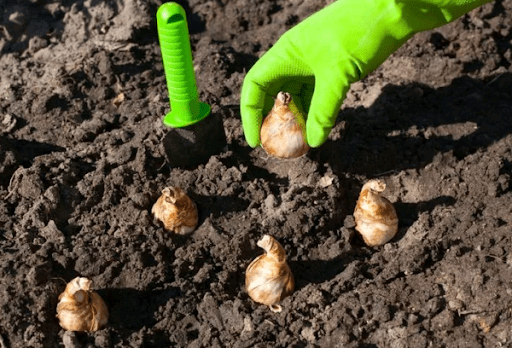
Before planting, the bulbs are kept in a solution that stimulates root growth.
Timing and planting patterns for bulbs
Dick Wilden is a winter-hardy variety, so the optimal time for planting is September. The bulbs will have time to root before frost. With the first warmth, sprouts and flowers will appear. Bulbs that have overwintered in storage are planted in late March.
Daffodils are planted in a row. The planting holes for the bulbs are 15-20 centimeters deep. The distance between plants is 10-12 centimeters. If the bed is permanent, the distance between bulbs is increased. For "temporary" daffodils, they are planted at closer intervals.
Narcissus Care Tips by Dick Wilden
The variety requires regular watering, mineral fertilizers and timely replanting.
Watering mode
Bulbs require a moist environment for normal development. Therefore, the soil should be moist but not soggy. During drought, plants will require additional watering. In dry soil, the bulbs dry out, followed by the stems. Daffodils are watered as the soil dries out. Flowers planted in a sunny area require more frequent watering. Mulching will slow moisture evaporation. After watering, the soil should be loosened to a depth of no more than 3 centimeters.
Fertilizer
Narcissus Dick Wilden are fed three times during the growing season:
- when stems appear;
- during bud formation;
- after flowering.
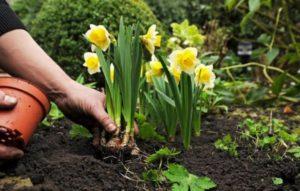
To fertilize daffodils, use a mixture of sodium, phosphorus, and potassium. In the spring, mix two parts sodium with one part each of phosphorus and potassium. During bud formation, reduce the sodium content by half and increase the phosphorus and potassium content. After flowering, mix sodium, potassium, and phosphorus in a ratio of 1:1.5:1.5.
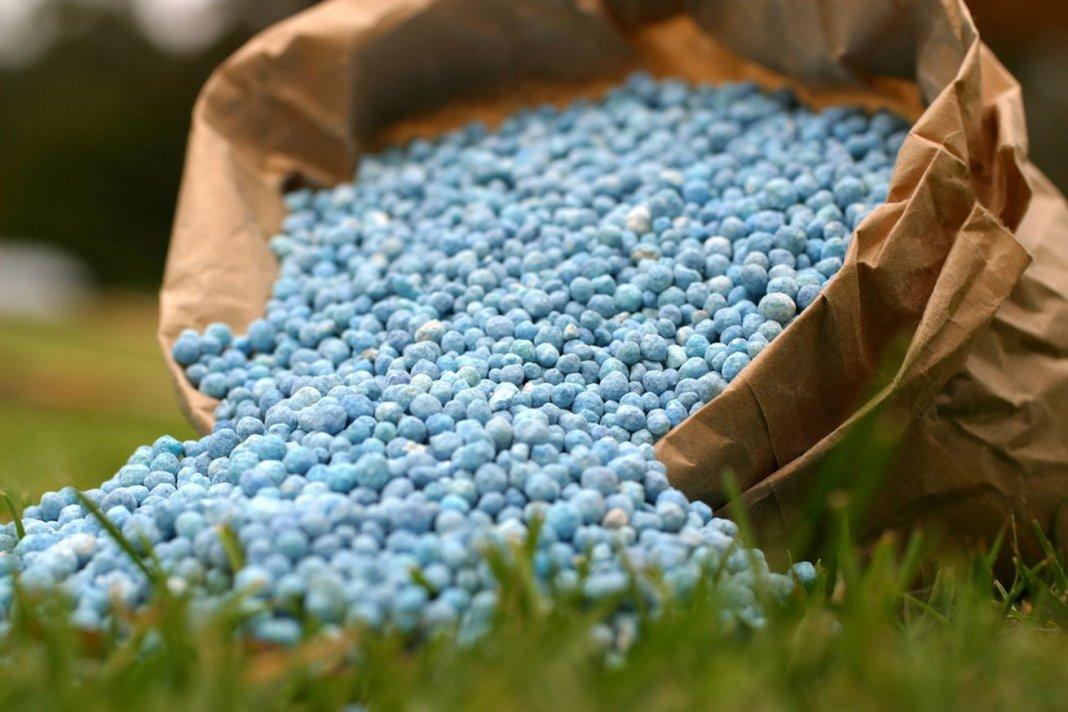
Fertilizers are dissolved in water for irrigation. During stem growth, compost is also added to the moist soil. However, fresh manure should not be used for fertilizing.
Protection from insects and diseases
Narcissus Dick Wilden are susceptible to fungal diseases of the bulbs:
- penicillosis;
- fusarium;
- gray rot.
Diseases develop due to overwatering of the soil. Infected bulblets also develop poorly. Therefore, when purchasing and storing planting material, discard damaged specimens: those with spots, cracks, softness to the touch, or uneven color. To prevent diseases, bulblets are soaked in a pale pink solution of potassium permanganate. Diseased plants are dug up and treated with fungicides.
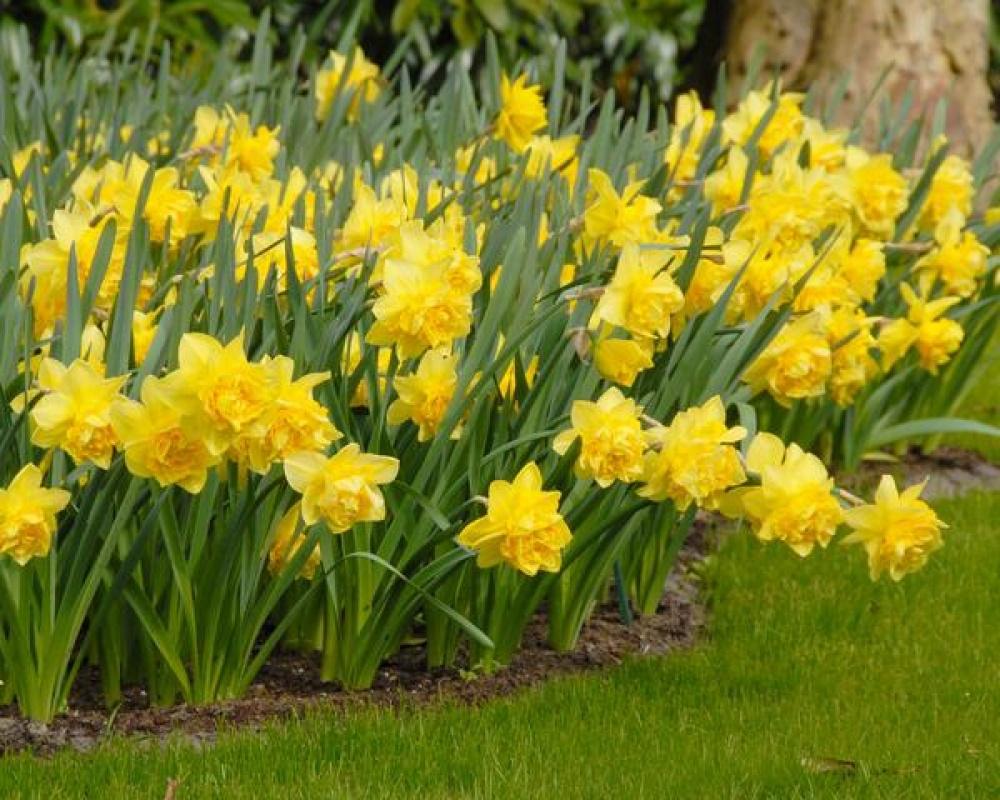
Pests of daffodils:
- spider mite;
- nematodes;
- aphid;
- slugs;
- onion root mite;
- narcissus fly.
Insects also attack flowers due to excessive humidity and insufficient light in the area, or they migrate from nearby neglected shrubs. To protect daffodils from pests, water the beds moderately and monitor the health of neighboring plants.
Transfer
Perennials overwinter in the ground and grow in the same place for up to five years. During this time, daffodils produce numerous stems. The buds become smaller due to lack of nutrition. The bulb nests absorb the nutrients. Larger flowers indicate that the bulbs are time to divide and replant. Dick Wilden daffodils are replanted after the stems have dried out—in mid-July.
- the bulbs are dug up;
- remove the remains of the above-ground part of the plant;
- inspected and cleaned of scales;
- small daughter bulbs are separated from the main large bulb;
- they are put away for storage until September or immediately planted in a new location.
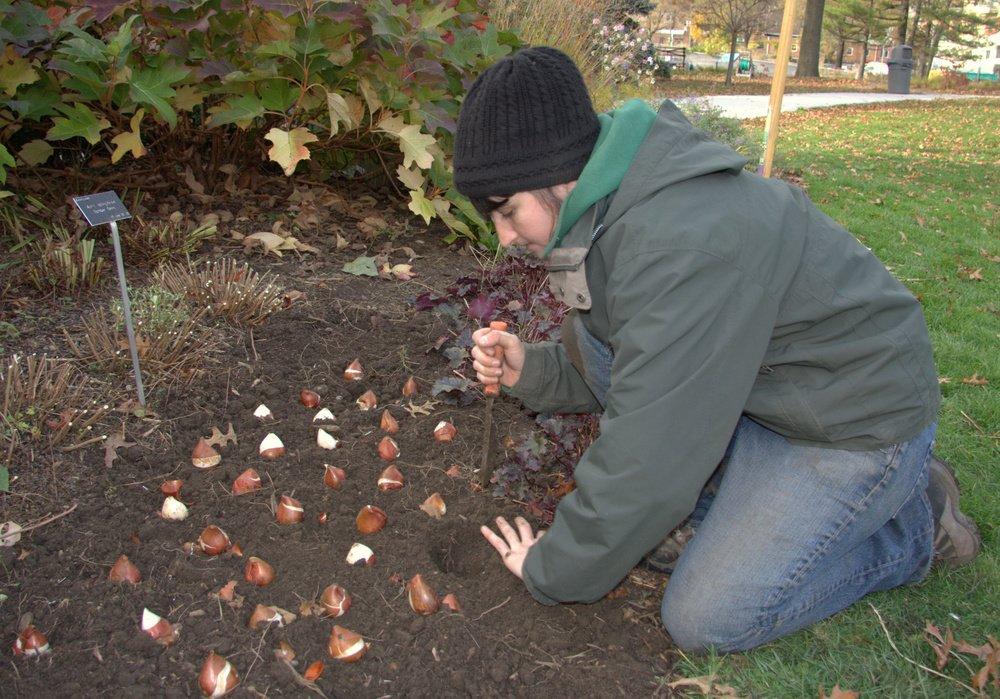
Old bulbs can be planted in the same area. If the daughter bulbs are difficult to separate, gently wiggle them until they break off. Sprinkle the broken area with wood ash.
Preparing for the winter period
After flowering, daffodils are watered as usual. By September, the above-ground portion of the plant gradually dies back. Watering is gradually reduced, but the soil should not remain dry. The buds are cut off before the seed pods form. The stems are left to wilt naturally, as this is the period during which the bulb accumulates nutrients for the next season.
After the stems fall and with the first cold snap, stop watering. Cover the soil with dry leaves or agrotextile. This will protect the bulbs from temperature and humidity fluctuations. If winter precipitation is low, mulching may be omitted.
The bulbs are also stored for the winter: they are washed and dried first, then laid out on flat trays lined with natural fabric or paper, spaced apart. The bulbs are stored at a temperature of 10 degrees Celsius, with a humidity of 60-70 percent, and planted in early spring.
Methods of reproduction
The Dick Wilden daffodil variety is propagated exclusively by bulbs. The offspring emerge from under the parent scales or from a common base. To divide the cluster, wait until flowering has finished. After the stem has withered, dig up the rhizome and separate the offspring, leaving the roots attached to the main bulb. These roots are essential for the natural completion of the growing season.
The daughter bulblets are washed in water, soaked in a potassium permanganate solution, and allowed to dry. After this, they are ready for planting or storage.
Propagating daffodils from seed is not suitable for the garden, as the flower is first grown in a pot. The bulb takes three years to form before it can be planted in the ground. Flowers grown from seed do not retain their varietal characteristics.
Reviews of the variety
Gardeners agree that this variety is easy to care for. They are especially pleased with the plant's early and long flowering period.
Problems with heavy buds haven't always been a problem in practice. The Dick Wilden variety can withstand rain and hail. The stems remain upright even in strong winds. Some gardeners still recommend staking the plant in case of heavy rain.
Narcissus Dick Wilden is a favorite among gardeners. Its appearance has earned it the title of a favorite among large, double yellow flowers.
Related posts:
 Planting and caring for daffodils in open ground, the best time and growing rules
 When and when can daffodils be repotted? Step-by-step instructions and care.
 Description and characteristics of the Calgary daffodil variety, planting and care instructions
 Description and characteristics of the Ice King daffodil variety, planting and care instructions
 Description and characteristics of the Cheerfulness daffodil variety, planting and care instructions
 Description and characteristics of the Pink Charm daffodil variety, planting and care instructions
 Description and characteristics of the Golden Ducat daffodil variety, planting and care instructions
 Description and characteristics of the Minnow daffodil variety, planting and care instructions