
- Description of the Ice King variety
- Characteristics of the bush
- Features of flowering
- Advantages of using in landscape design
- Landing
- Site selection and preparation
- Preparing planting material
- Planting plans and dates
- Further care
- Watering and fertilizing
- Loosening the soil
- Protection from insects and diseases
- Transfer
- Shelter for the winter
- Reproduction
- Seeds
- By dividing the bush
- Children
- Onion fragments
- Gardeners' reviews of the variety
Daffodils are among the first to bloom in the spring to brighten up a home's garden. Experts have developed numerous varieties, and breeding efforts are still ongoing. One of the most beautiful varieties is the daffodil Ice King. The bushes create a vibrant yellow-and-white splash in a spring flowerbed. Below are plant characteristics, planting, care, propagation, and landscape design information.
Description of the Ice King variety
Narcissus Ice King belongs to the double-flowered group. It is a hybrid created by Dutch breeders.
Characteristics of the bush
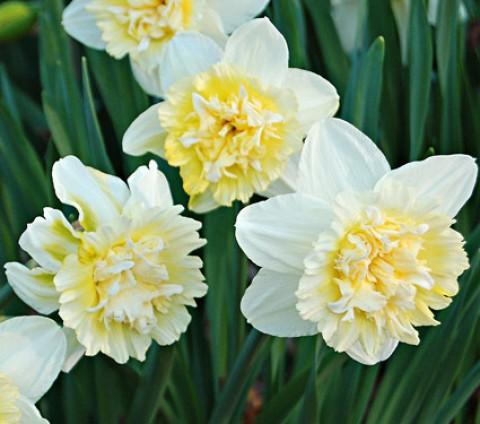
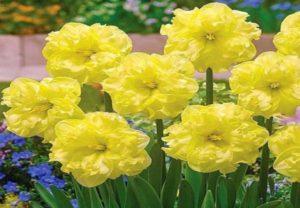
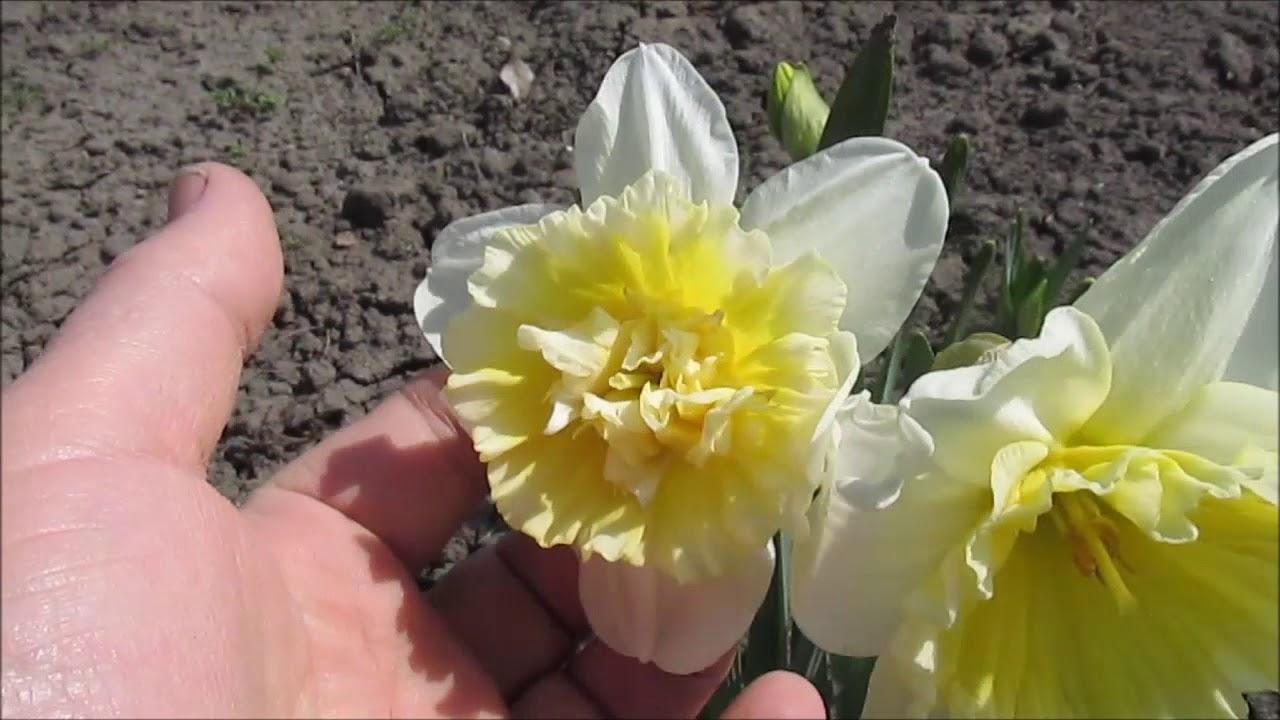
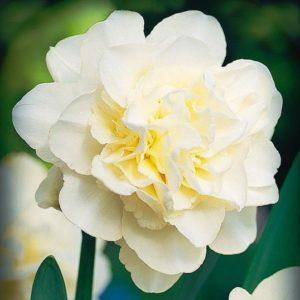
Plants reach a height of 35-45 centimeters. The leaves are narrow and lanceolate. Large flowers reach a diameter of 10-13 centimeters. The crown is yellow and corrugated. The petals are creamy white. As they fade, they become creamy.
In temperate climates, Ice King daffodils survive the winter well without protection. The plants have good immunity and are rarely affected by diseases and pests. They require little special care.
Features of flowering
Double buds begin to open in late April. Blooming lasts 2-3 weeks. Creamy white flowers gradually turn creamy. Daffodils bloom only when planted in the fall. If the bulbs are planted in the spring, the bushes will only grow foliage this year.
Important! Bulbous plants require stratification to flower. Only after 2-2.5 months at a temperature of 1-2°C will buds begin to form in the spring.
Advantages of using in landscape design
Ice King daffodils are planted in groups in flowerbeds, along garden paths, or in rock gardens. They can be planted in the foreground of trees and shrubs. In spring, most plants are just putting on new foliage, making the area unsightly. Daffodils can be planted between them. They will provide a striking, eye-catching foliage. After 2-3 weeks, when the Ice King flowers have finished blooming, the crowns of the perennials will close, concealing any bare spots.
Landing
To ensure daffodils continue to delight you with their blooms year after year, you need to carefully select your planting material. If the bulbs are diseased, they can infect the soil with pathogens, and through the soil, other plants.
Site selection and preparation
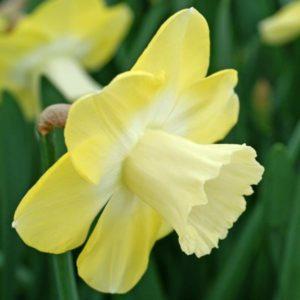
Choose a sunny, well-ventilated planting site. In these conditions, flowering will begin earlier, but wilting will also occur more quickly. Ice King can also be planted in partial shade. This will result in longer flowering. Prepare the planting site in late summer. Dig the soil to the depth of a spade. Add compost and rotted manure. If the soil is heavy and clayey, add sand. Leave the site as is until autumn.
Preparing planting material
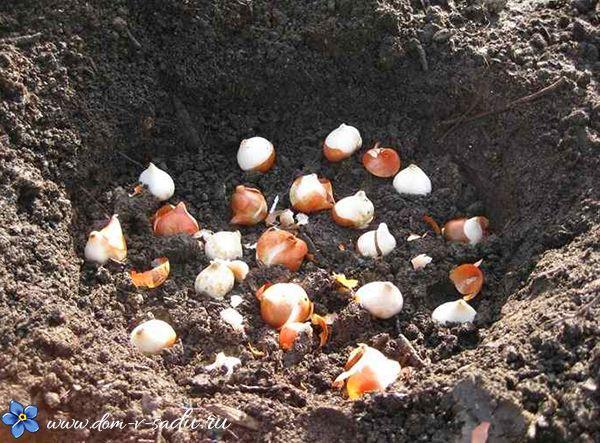
Bulbs are purchased in late August or early September. They should be firm to the touch, with a smooth, dry base. Healthy bulbs should be free of spots, dents, plaque, or mold.
Before planting, the planting material is treated with a disinfectant, especially if there is mechanical damage. This will prevent the spread of pathogenic microorganisms. The bulb is placed in a potassium permanganate solution for 30 minutes.
Planting plans and dates
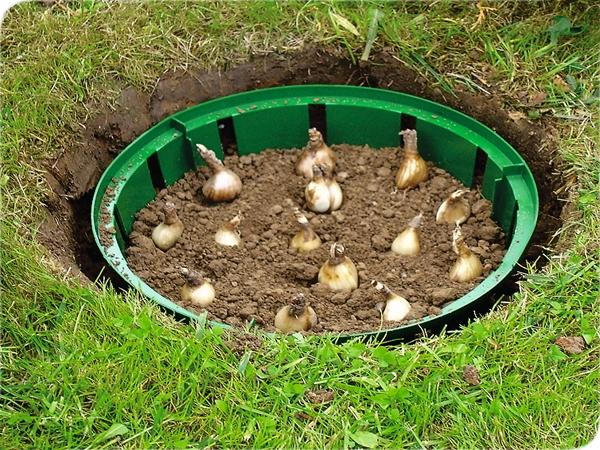
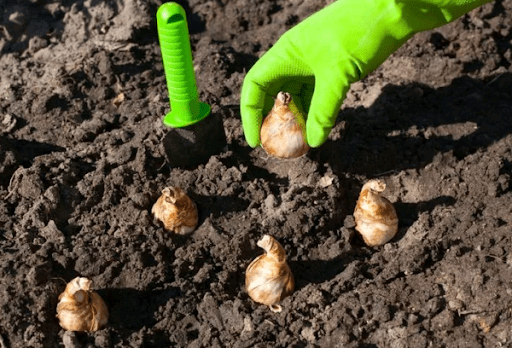
Daffodils are planted in the ground in the fall. There is no specific time. The planting period depends on weather conditions. If it is too warm, the bulbs will begin to grow, which will negatively impact spring flowering. Therefore, daffodils are planted after the first frosts arrive. The planting depth of Ice King bulbs depends on their size. The larger the bulbs, the larger the hole you need to dig. Therefore, the hole depth varies between 9-15 centimeters.
Planting daffodils is done as follows:
- dig holes at a distance of 15-20 centimeters;
- a small layer of sand is poured onto the bottom as drainage;
- plant the bulbs and cover them with soil;
- watered.
The area is mulched with straw, sawdust, and peat. Mulching prevents rapid moisture evaporation.
Further care
Ice King daffodils require regular watering, fertilizing, and loosening of the soil. Faded buds should be removed. To protect against diseases and pests, the bushes are treated with special preparations.
Watering and fertilizing
Water the plants as needed. Allow the top layer of soil to dry out between waterings. If the winter was light on snow, water in early spring. Without sufficient moisture, daffodil bushes and buds will grow small. Avoid standing water, otherwise the bulbs may rot. Fertilize daffodils several times throughout the season. The first application of nutrients is in early spring, as soon as the leaves emerge. Use a complex mineral fertilizer for ornamental flowering plants.
When flower stalks appear, apply a potassium-phosphorus fertilizer. The same nutrients are used during flowering. After the buds dry, the bulb continues to develop. Therefore, the area is covered with organic mulch. As it decomposes, it will act as an additional fertilizer.

Please note! Do not trim the foliage of daffodils after flowering, as the bulb receives nutrients through the above-ground portion.
Loosening the soil
A few days after watering, loosen the soil around the plants. This is necessary to prevent crust formation, which prevents air from reaching the bulb. Furthermore, loose soil retains moisture better.
Protection from insects and diseases
Like all plants, daffodils are susceptible to disease and pest infestations. If improperly stored or planted in contaminated soil, the bulbs can become infected with fungus. Affected parts are removed, and the remaining fragments are treated with a fungicide. If the disease has affected most of the bulb, it is destroyed. Insecticides are used against harmful insects.
Transfer
Each year, the bulb grows more and more offspring around itself. The bush becomes denser. The root system and the aboveground part begin to compete for nutrients, sunlight, and soil moisture. The flowers become smaller and more inconspicuous.
Furthermore, pathogenic microorganisms and harmful insects develop more quickly in dense plantings. Therefore, daffodils are repotted every 4-5 years. After flowering, the bush is dug up and divided. They are replanted immediately into prepared holes, without allowing the root system to dry out.
Shelter for the winter
In temperate climates, the Ice King daffodil can overwinter without cover. In regions with harsher climates, mulch is applied with the onset of cold weather. This can include straw, sawdust, or peat.
Reproduction
A gardener can propagate narcissus in a plot in several ways: by seeds, dividing the bush, using bulb fragments, or cuttings.
Seeds
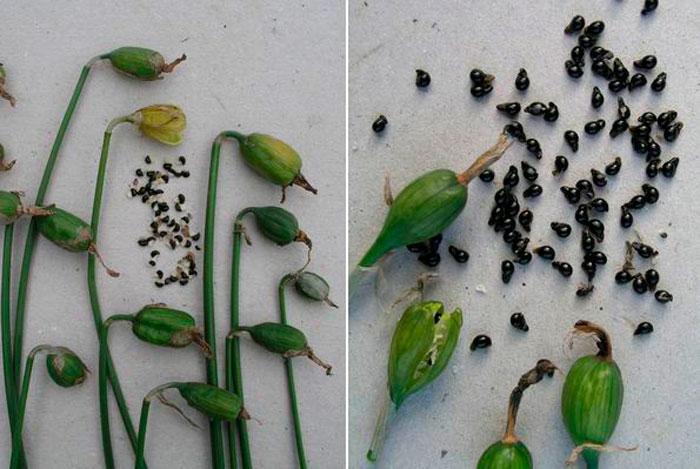
This method is rarely used due to its labor-intensive nature. Furthermore, not all parental characteristics may be preserved. Seeds are sown in a container. Once sprouted, the seedlings are nurtured and then transplanted into individual containers. The bulbs must be large enough by the time they are planted outdoors. Otherwise, they may not survive the freezing winter.
By dividing the bush
Once the bush has grown, it is divided into sections. This procedure is performed every 4-5 years. If this is not done, the flowers become smaller and the bushes lose their decorative appeal. The bulbs are dug up after the buds begin to dry out. Without allowing the root system to dry out, the daffodils are planted in prepared holes.
Children
You can encourage a bulb to divide. To do this, dig it up, dry it, and cut it not too deeply. Then place it in a cool room. In the fall, plant the bulb and its resulting shoots in the ground. After a year, separate them and plant them separately.
Onion fragments
The mature bulb is divided into paired pieces, soaked in a disinfectant solution, and dried. The pieces are placed in a bag with vermiculite and kept at 21°C. Young bulblets will soon form on the scales. These are separated and planted in pots. Once the bulblets have grown, they are planted in the garden.
Important! Cut the bulbs with a sharp, disinfected instrument. Place the separated parts in a potassium permanganate solution for 30-40 minutes.
Gardeners' reviews of the variety
Gardeners describe the Ice King daffodil as an unpretentious, fragrant, and incredibly beautiful plant.
Larisa, Moscow region: "I bought six Ice King daffodil bulbs and planted them in the fall. I was already admiring their beautiful blooms in the spring. The bushes don't require any special care: I watered them as needed and fertilized them a few times throughout the season. When I placed the cut flowers in a vase, the room was filled with their fragrance."
Olga Petrovna, Crimea: "I have several varieties of daffodils growing in my flowerbed. But Ice King is a particular favorite. The buds are fragrant and large, about 10 centimeters in diameter. The most important thing in caring for them is not to remove the foliage immediately after flowering. Otherwise, the bulbs will not receive enough nutrients, and the blooms will be poorer the following year."
Related posts:
 Description and rules for growing the Red Ice cinquefoil variety, planting and care
 Planting and caring for daffodils in open ground, the best time and growing rules
 Description and characteristics of the Ice Follies daffodil variety, planting and care instructions
 Description and characteristics of the Dick Wilden daffodil variety, planting and care instructions
 When and when can daffodils be repotted? Step-by-step instructions and care.
 Characteristics and descriptions of the most beautiful types of daffodils, names of the best varieties
 Description and characteristics of the Calgary daffodil variety, planting and care instructions
 Description and characteristics of the Cheerfulness daffodil variety, planting and care instructions