
- Selection and description of the Ice Follis variety
- Negative and positive qualities of a narcissist
- Examples of use in landscape design
- Planting and care
- Site selection and preparation
- Planting dates and patterns
- Watering
- Regularity of flower fertilization
- Flowering and care after
- Protection from insects and diseases
- Transfer
- How do Ice Follies reproduce?
- Potential difficulties when growing
- Reviews of the variety
Gardeners try to decorate their gardens from the first days of spring. Among the most popular primroses, daffodils are among the most popular. Their low maintenance and low-maintenance nature makes them suitable for even inexperienced gardeners. The Ice Follis daffodil looks beautiful not only in flowerbeds but also as a cut flower, retaining its decorative appearance for a long time in a vase.
Selection and description of the Ice Follis variety
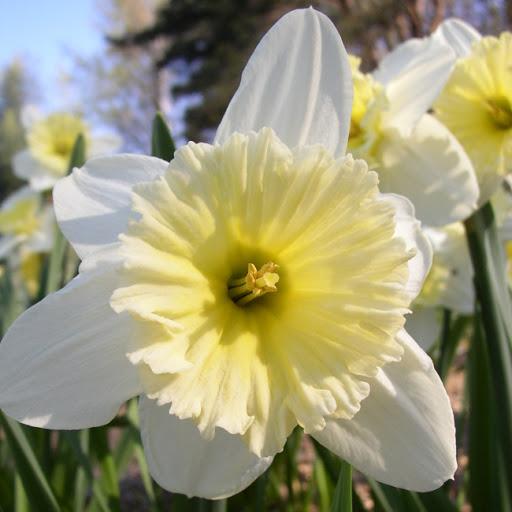
The Ice Follies variety was developed by Dutch breeders. It belongs to the large-crowned varieties. The Ice Follies daffodil reaches a maximum height of 35 cm, so it can be grown in containers on windowsills if desired.
The edges of the large, corrugated crown are white, and the petals are the same shade. The flower diameter ranges from 6-7 cm. The base of the crown is bright yellow at the beginning of flowering, later changing to a creamy hue.
The Ice Follis daffodil blooms in early April, at which time the flowers emit a subtle, barely perceptible and pleasant aroma.
Cut flowers last a long time in a vase without losing their decorative appearance. This variety of narcissus has strong immunity to common plant diseases.
Negative and positive qualities of a narcissist
Like any variety, Ice Follis has its advantages and disadvantages. It's worth considering these before purchasing planting material. The advantages of narcissus include:
- Simple propagation by bulbs.
- Spectacular appearance of buds and early flowering.
- An unobtrusive aroma that does not cause dizziness.
- Strong immunity to fungal and other diseases typical for daffodils.
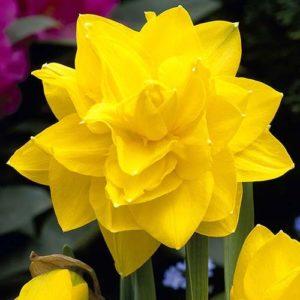
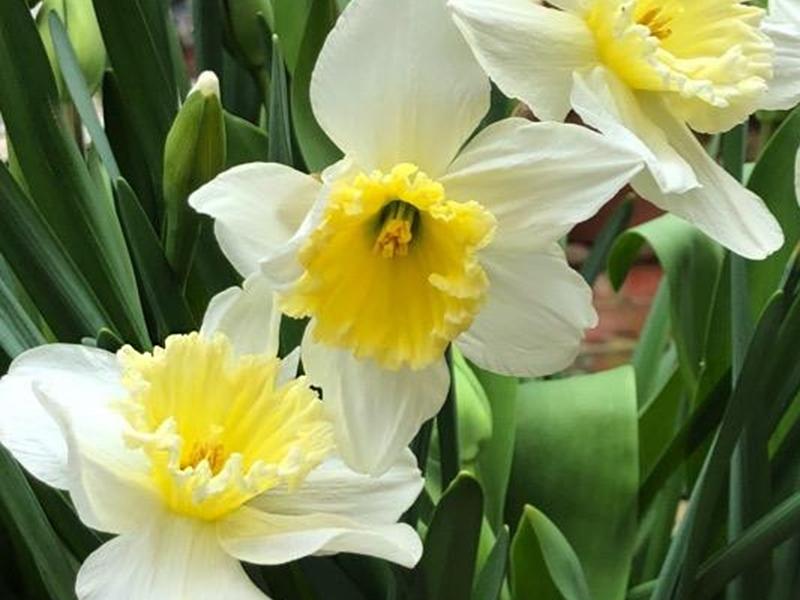
One of the downsides is that after the flowering period ends, the flowerbed looks empty, so it is recommended to plant it together with other, later flowering plants.
Examples of use in landscape design
This variety of daffodil is used not only to decorate garden plots but also for forcing indoors. In open ground, Ice Follis blends harmoniously with other bulbous plants and looks organic in solitary plantings. Daffodils are also used to decorate the space around trees. They also look spectacular when planted alongside green ferns.
Planting and care
Before planting, prepare a suitable site for the daffodils and purchase high-quality bulbs. Subsequent flower care consists of watering, fertilizing, and disease and pest prevention.

Site selection and preparation
A site with full sun for most of the day is ideal for growing this variety. Narcissus does not tolerate cold northern winds and drafts, so take this into account when choosing a site. Loamy soil, with a little compost added, is considered suitable for normal daffodil development. When planting, follow crop rotation rules—avoid planting Ice Follies in flowerbeds previously occupied by other bulbous plants.
At the beginning of summer, the area in the selected plot is dug up, removing weed roots and adding nutrients.
Planting dates and patterns
It's recommended to begin planting daffodil bulbs in early fall. Plan your planting so that there's at least a month before the first cold snap. They undergo natural stratification in the soil and begin growing with the first warm days of spring. If you weren't able to plant daffodils in the fall, postpone the process until early spring, after storing the bulbs in the refrigerator for several weeks.
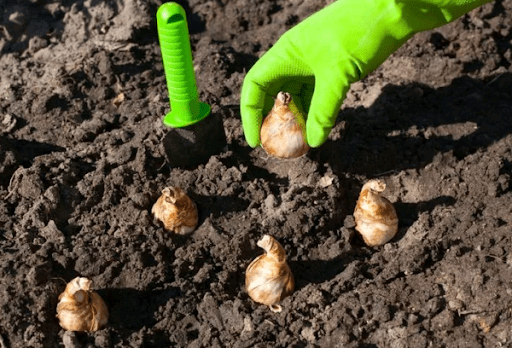
The landing is carried out according to the following instructions:
- The area prepared for daffodils is leveled with a rake.
- Dig small holes, keeping a distance of 12-15 cm between them.
- A layer of river sand is poured into the bottom of each hole, which will act as drainage and prevent moisture from stagnating near the bulbs.
- The planting material is installed and covered with a layer of fertile soil (deepened to the height of 3 bulbs).
- The last stage is irrigation and laying a layer of mulch.
Watering
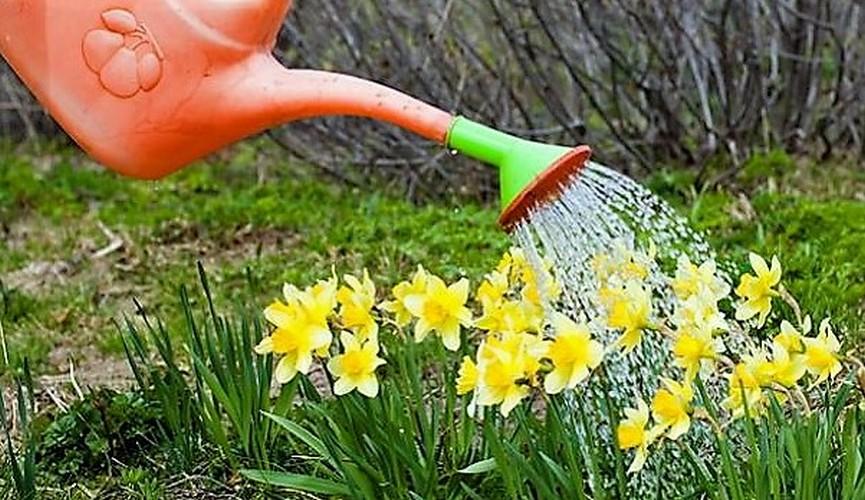
Water sparingly, but do not allow the flowers to sit in dry soil. Watering is especially important during flowering and before winter preparation. Use approximately 20 liters of warm water per square meter. If it rains frequently, avoid watering, as excessive humidity can cause bulb rot.
Regularity of flower fertilization
Regular fertilization helps grow daffodils with large, beautiful buds. Fertilizing is done in three stages:
- The first time – after the sprouts appear, use a complete mineral fertilizer.
- During the period of bud formation, daffodils are fertilized with the same composition.
- After the flowering period is over, fertilizers containing potassium and phosphorus are added.
Flowering and care after
During the active flowering period, ensure the plants have sufficient moisture and nutrients. After wilting, the buds are immediately cut off to preserve the decorative appearance of the flowerbed.
Protection from insects and diseases
Despite its strong immunity, this variety of daffodil is susceptible to disease if not properly cared for. At the first sign of fungal diseases, the bulbs are dug up and treated with fungicides. Insects are controlled with insecticidal acaricides.
Transfer
Daffodils grow in the same spot for five years. If you need to move the flowers to a new location, carefully dig the bulbs out of the ground in the fall and transfer them to another flowerbed.
How do Ice Follies reproduce?
Narcissus can be propagated in two ways: by seed and by cuttings. The first method is rarely used by amateur gardeners due to its labor-intensive nature. The second method uses small bulblets that form around the main bulb. These are carefully separated and replanted in new locations.
Potential difficulties when growing
If agricultural practices are not followed, flower growers face problems such as bulb rot, lack of abundant flowering and large buds, and slow growth of daffodils.
Reviews of the variety
Galina Vasilyevna, 45, Samara: "I've been growing this variety at my dacha for four years now. I'm delighted by the large buds that brighten up the garden with the arrival of spring. I treated the bulbs with a fungicide before planting, so I haven't encountered any diseases."
Zhanna Alexandrovna, 59, Lipki: "I planted the Ice Follies variety for the first time last fall, and by spring I was delighted with the beautiful, large flowers. The flowers don't require any special care; the main thing is to add nutrients and water them regularly."
Related posts:
 Description and rules for growing the Red Ice cinquefoil variety, planting and care
 Description and characteristics of the Ice King daffodil variety, planting and care instructions
 Characteristics and descriptions of the most beautiful types of daffodils, names of the best varieties
 Descriptions of the best and most beautiful varieties of daffodils, ratings and selection tips
 The best grape varieties for growing in the Urals, planting and care rules in summer
 Description of the Bryanochka cherry variety, planting and care instructions
 Description of the 23 best pear varieties for the middle zone, planting and care rules
 How to propagate and grow peas, cultivation technology, and care in open ground