
A member of the Amaryllis family, the narcissus is one of the first to bloom after a long, cold winter. It's undemanding when it comes to growing conditions. All varieties of these beautiful narcissus are classified into 12 groups, distinguished by bud shape, petal color, and flowering time. Before purchasing planting material, familiarize yourself with the description and characteristics to ensure the plant has the necessary conditions for full development.
Daffodil varieties: description and cultivation features
Over the course of daffodil cultivation, breeders have developed over 35,000 beautiful varieties and hybrids of this flower. Therefore, gardeners generally have no difficulty choosing the right variety.
Yellow-flowered
Another name for the yellow-budded narcissus is false narcissus. Its main distribution areas are Italy and France. In the wild, the plant thrives in the Caucasus.
Among the general characteristics inherent in all varieties and hybrids of this group, the following are distinguished:
- Dwarfism. Flowers typically do not exceed 30 cm in height.
- The bulbs are no more than 5 cm in diameter.
- Dark green color of leaves.
- Single flowers, about 4 cm in diameter.
Among the most popular varieties grown by home gardeners are:
- A creation of Dutch breeders, this vibrant yellow bloom blooms in May and looks great both in flowerbeds and as a cut flower.
- An early-blooming variety, it's easy to grow. Large yellow buds have a white crown.
- Belongs to the double daffodil group. The flowers reach 7 cm in diameter. They exude a light, unobtrusive fragrance and delight with their decorative appearance for about 10 days.
Whites
Daffodils with white buds appeared as early as the 15th century. They are native to the Iberian islands. The stems of this variety are covered with thin green leaves. These varieties thrive in both sun and shade, as well as acidic soil. White daffodils bloom in late May and delight gardeners for 7-9 days, while the plants exude a refined fragrance.
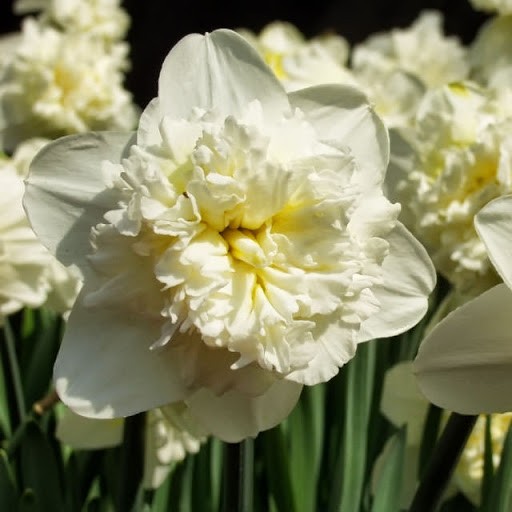
Among the most popular varieties:
- White Medal. This daffodil grows to 35 cm tall, with buds up to 15 cm in diameter. It thrives in moderately moist soil and is suitable for hardiness zones 3-4.
- White Lion. A double variety, it has creamy white petals. This variety blooms in late April, producing buds approximately 10 cm in diameter. The plant grows to a height of no more than 45 cm, making it suitable for cutting and flowerbed decoration.
- This daffodil grows to a height of 35 cm, with flowers no larger than 15 cm in diameter. To thrive, it requires full daylight and moderately moist soil.
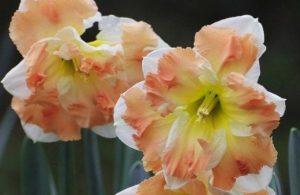
Pink
Flowers with pink buds first appeared in Italy in the late 15th century. Narcissus's long stems are graceful and reach 45 cm. Compared to other varieties, the green leaves are wider.
The color of the buds is not completely pink, this shade is found in the crown, but the petals are white.
A rich and pleasant aroma permeates the entire garden during flowering. Experienced gardeners recommend digging up pink daffodil bulbs and storing them in a basement during the winter, as the flowers are frost-sensitive.
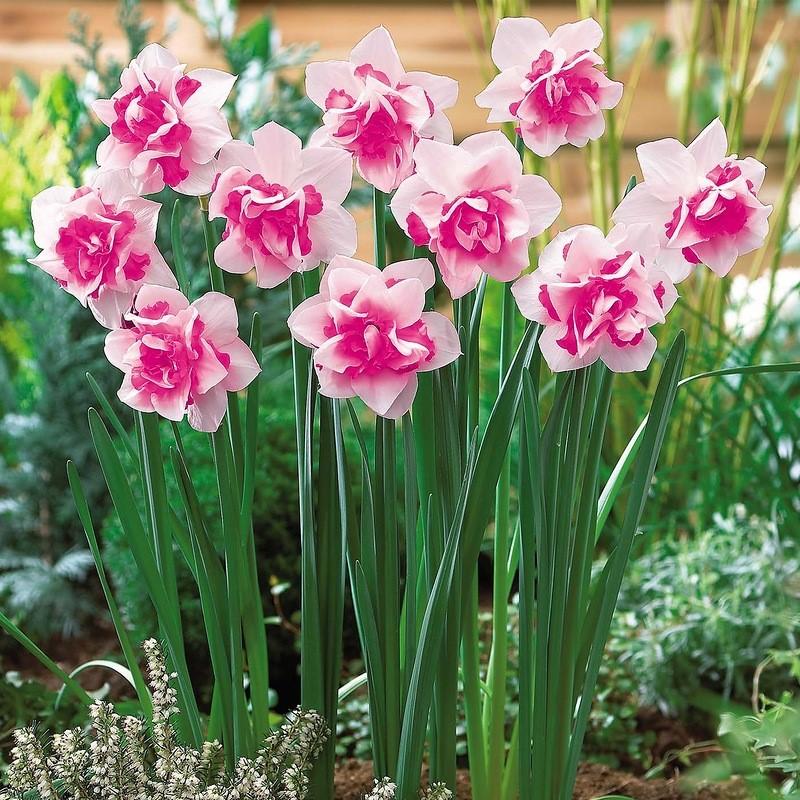
The most spectacular varieties include the following:
- Apricot Whirl. A double-flowered variety, it requires partial shade to grow, as the petals will fade in bright sunlight. One of the earliest blooming varieties, it has a lingering fragrance.
- Rosy Sunrise. It has a pink crown and white petals. It begins blooming in late April, exuding a pleasant, subtle fragrance. It reaches 35 cm in height and blends beautifully with other flowers in flowerbeds.
- Rosy Cloud. This variety is suitable for flowerbeds and cut flowers, characterized by white petals and a pink crown. The daffodil grows to 35 cm in height. It blooms in late April and has a pleasant, delicate scent.
Poetic daffodils
Common characteristics of varieties belonging to this group include:
- Height within 30-40 cm.
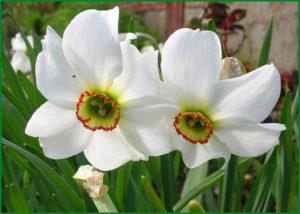
- Yellow or white perianth and corona with an orange edge.
- Late flowering period.
- A single flower on a stem.
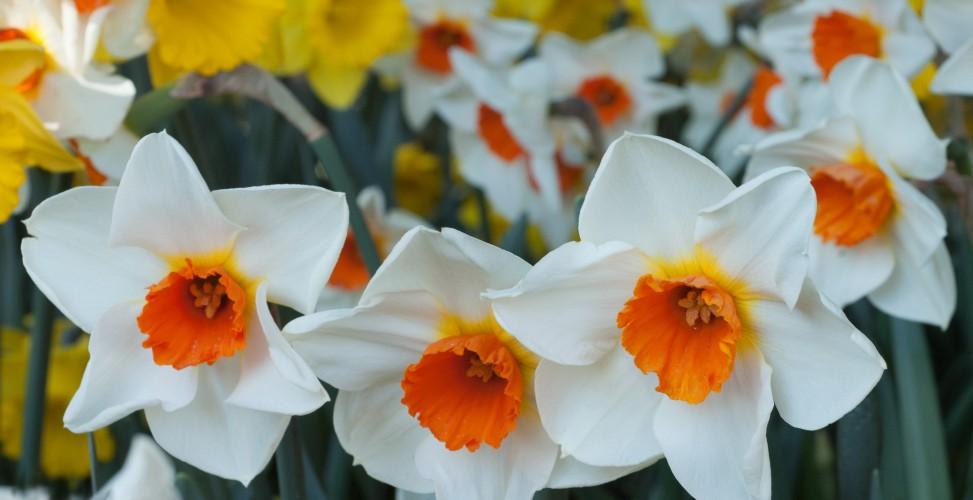
Such varieties are few in number and rarely grown by domestic gardeners. Among them, two options can be distinguished:
- Actae, which has a golden-yellow crown with a bright red edge and a snow-white perianth.
- Pheasant's eye, characterized by a yellow-orange crown.
Split-crown
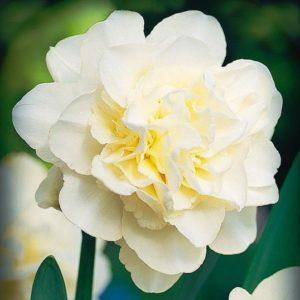
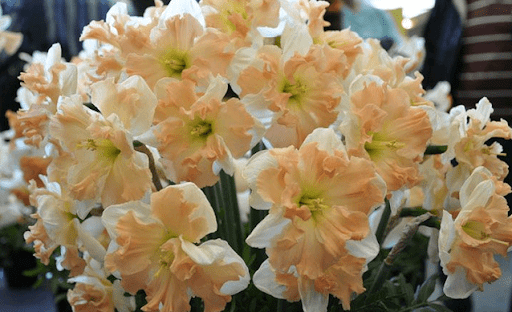
A distinctive feature of this group is its interesting and striking appearance. The crown has a unique shape, with several shades combined in a single flower. These daffodils are somewhat reminiscent of orchids. The flower stalk grows to a maximum of 40 cm in height and is strong and sturdy. Thanks to their large and decorative crown, these varieties are often used for cut flowers. The pleasant and delicate fragrance does not cause dizziness.
The most popular varieties include:
- Split Corona Orangery, which perfectly combines a fiery orange corona with a white perianth. Since it's only one-third open, it creates the illusion of double petals. The blooming period is long, beginning in early April, and the buds reach 10 cm in diameter.
- Lemon Beauty blooms for 20 days. The 10-cm-diameter buds feature milky-white perianths and a white corona. Yellow stripes run down the center of each petal. This variety thrives in any soil, except for very waterlogged areas.
Terry varieties
Varieties in this group come in two types. Some have only a double crown, while others also have a double perianth. A single stem bears one or more buds. These varieties are relatively easy to maintain, root quickly, and are suitable for both garden decoration and cut flowers.
Among the most famous varieties:
- Yellow Cheerfulness. This multi-flowered variety boasts a creamy yellow hue and a pleasant fragrance. Its flowering period is long, beginning in late April. Narcissus is used to create striking bouquets.
- Ice King. A sun-loving variety characterized by high winter hardiness. The buds are creamy in color, up to 15 cm in diameter. Blooming is early and long-lasting—up to two weeks. Ice King daffodils have a pleasant, subtle scent.
- Rip van Winkle. Reaching no more than 20 cm in height, it has a pleasant fragrance. This variety is undemanding regarding soil composition, and its bulbs easily survive winter frosts in the ground. It is used for alpine gardens or rock gardens.
Jonquils
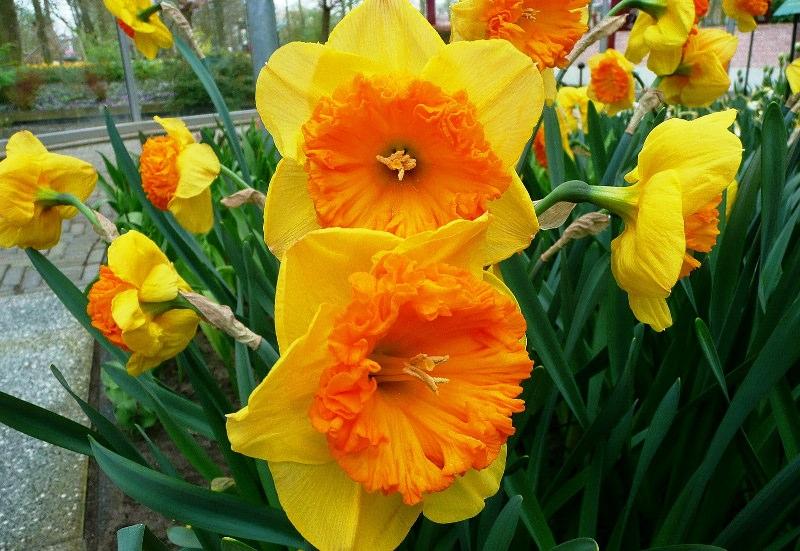
All varieties in this group are distinguished by their high heat-loving nature. Due to the high concentration of essential oils in their flowers, they are used in cosmetics. Up to six flowers are found on a single stem. The plants grow to a height of no more than 40 cm.
The most famous varieties of jonquil daffodils are:
- Baby Moon. This daffodil grows to a height of 30 to 40 cm. Its petals are yellow. It requires full sunlight and moderate moisture. Otherwise, it is considered an easy-to-grow variety.
- Susie. A multi-flowered daffodil with yellow, pointed petals and a fiery red crown. This variety grows to a height of no more than 35 cm. Flowering begins in late April and continues until early May.
- Sun Disc. This variety's single yellow flowers turn creamy as they bloom. This daffodil reaches a height of just 20 cm.
Triandrus
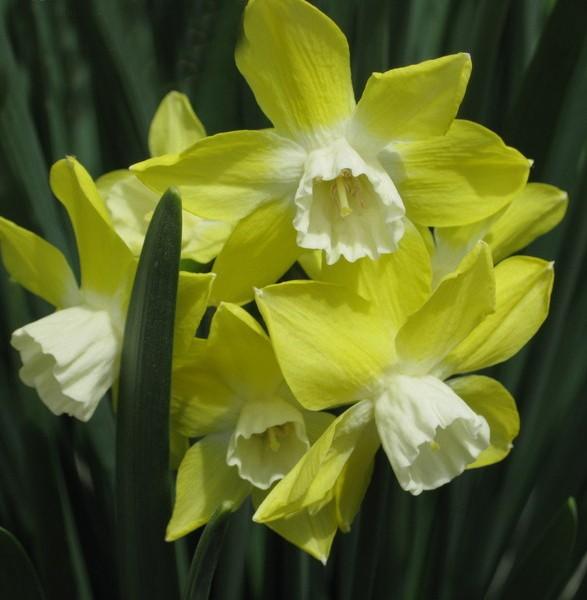
This group includes miniature varieties with a small, cup-shaped crown. The narcissus tube is long and rather narrow. The buds, located on a low stem, have a drooping appearance, and inflorescences range from 2 to 6. Triandrus varieties are not particularly winter-hardy, so they are not suitable for northern regions.
The most frequently planted ones include:
- Tresemble, with white petals and a height of 30 cm.
- Liberty Bells, with a lemon-yellow cylindrical crown and perianths of the same shade.
- Havera with a delicate aroma and graceful flowers.
Cyclamenoides
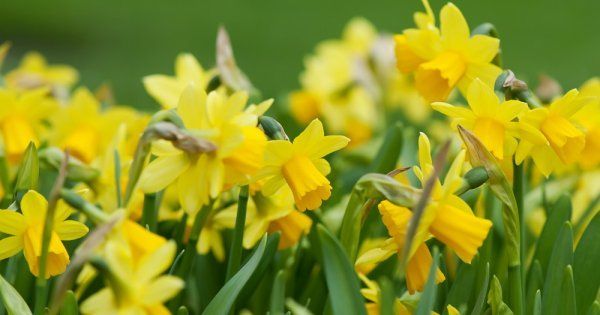
All varieties in this group have a single flower per stem. Cyclamen-like daffodils grow no more than 20 cm tall and are characterized by early flowering. The crown is narrow, tube-shaped, and the buds are drooping. They are used in flower beds and mixed borders; they are not suitable for cutting.
The most famous varieties:
- February Silver, with creamy white petals.
- Peping Dol, with large, bright yellow flowers.
- Garden Princess, with a yellow crown.
Large-crowned
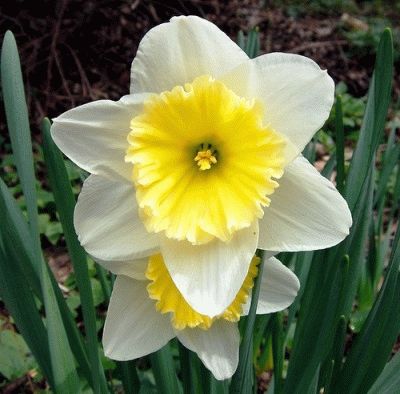
A distinctive feature of this group is the size of the crowns, which exceed 12 cm in diameter. They produce a single flower stalk, approximately 50 cm tall. Large-flowered daffodils are particularly popular with gardeners due to their decorative qualities.
The most famous varieties are:
- Ice Follies, with a yellow crown, used for forcing.
- Professor Einstein, with pearly white perianths and a bright red corona.
- Flower Record, which has a yellow crown and white perianths.
Small-crowned
The crown of these varieties does not exceed one-third of the perianth, and the inflorescences range from 5 to 8 cm in diameter. They are an ideal choice for beginning gardeners, as they require little attention and thrive in any climate. They are used both for cutting and for decorating flowerbeds.
Famous small-crowned daffodils:
- Burma, with yellow flowers with an orange crown.
- La Reint, with an orange crown edged with red.
- Queen of Marquis, with lemon-yellow crown and white perianths.
Tazette or tazette-like
Representatives of this group have a cup-shaped crown, which is significantly shorter than the perianth lobes.
Popular varieties:
- St. Agnes, with a bright orange crown and white petals.
- Trevitian, with yellow flowers.
Wild varieties
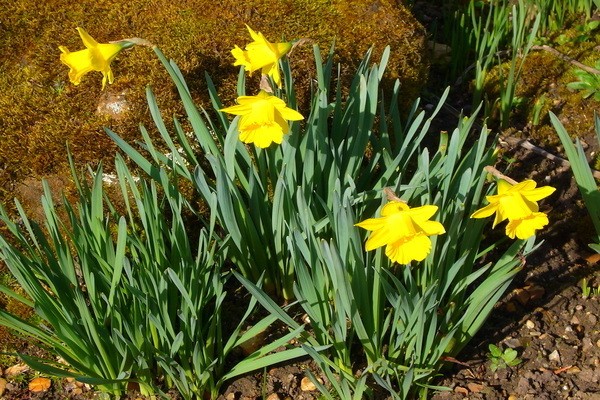
This group includes natural hybrids and all species of daffodils. Many are distinguished by their increased winter hardiness and decorative appearance. Among the most famous are Johnston's daffodil and the scented daffodil.
Rating of the most spectacular varieties of daffodils
The most beautiful varieties, according to gardeners, include the following:
- Crackington (Crackington).
- Diversity.
- Mount Hood.
- Pink Champagne.
- Orange.
- Precocious.
- Rosy Cloud.
- Spellbinder.
- Taurus.
Tips for choosing
Before purchasing daffodil planting material, determine the purpose of growing the plant and study its climate and care requirements. Purchase bulbs only from specialized retailers.
Related posts:
 Characteristics and descriptions of the most beautiful types of daffodils, names of the best varieties
 Planting and caring for daffodils in open ground, the best time and growing rules
 Description and characteristics of the Irene Copeland daffodil variety, planting and care instructions
 Description and characteristics of Sweet Pomponette daffodils, planting and care
 Description and characteristics of the Kum Laud narcissus variety, planting and care instructions
 When and when can daffodils be repotted? Step-by-step instructions and care.
 Description and characteristics of the Cheerfulness daffodil variety, planting and care instructions
 Description and characteristics of the British Gamble daffodil, planting and care