
- History of selection
- What's special about the British Gamble variety?
- Application in landscape design
- Growing daffodils: rules and nuances
- Preparatory stage
- Timing and schemes for planting bulbs
- Regularity of watering
- Top dressing
- Soil care
- Pruning and preparation for winter
- Prevention and treatment
- Diseases
- Insects
- Methods of reproduction
- Gardeners' reviews
Daffodils are among the most popular early bloomers, found in virtually every garden. This popularity is due to their low maintenance, decorative appearance, and wide variety, allowing you to choose the perfect one to suit your taste. The British Gamble daffodil is an early-blooming variety, delighting with its first buds as early as April.
History of selection
Gardeners around the world first learned about this daffodil variety in 2013, at a show in Holland, but the creator remains unknown. In 2017, the variety was registered in the garden daffodil registry by a Dutch company. Despite its relatively recent development, it has gained popularity and is grown by gardeners in many countries.
What's special about the British Gamble variety?
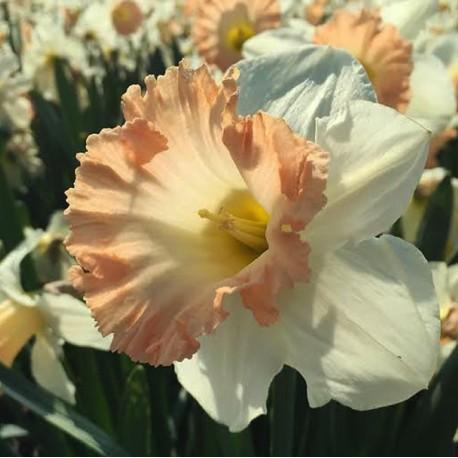
This Dutch-bred daffodil belongs to the group of tubular varieties. Since the plant grows to a height of no more than 30 cm, it is grown not only outdoors but also indoors for cutting. A sturdy stem bears a single, large flower—up to 15 cm in diameter—and a large, tubular crown, which is 3-4 cm high.
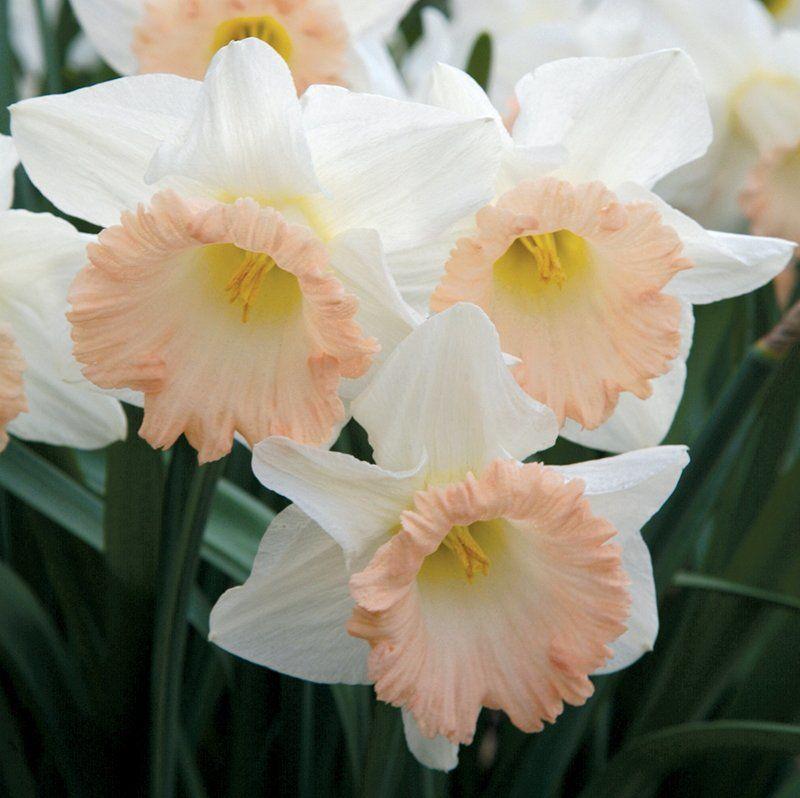
The petals of the British Gamble variety are white, with a pinkish edge around the large crown. This daffodil prefers well-lit areas, so consider this when choosing a location for a flowerbed. Thanks to its increased winter hardiness, this Dutch-bred variety easily tolerates cold weather without requiring special shelter.
Application in landscape design
The British Gamble daffodil is versatile in landscape design. It looks unique in the foreground of a flowerbed when paired with other primroses. Low-growing daffodils are planted along paths, around gazebos, in rock gardens, and in mixed borders.
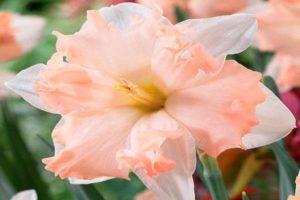
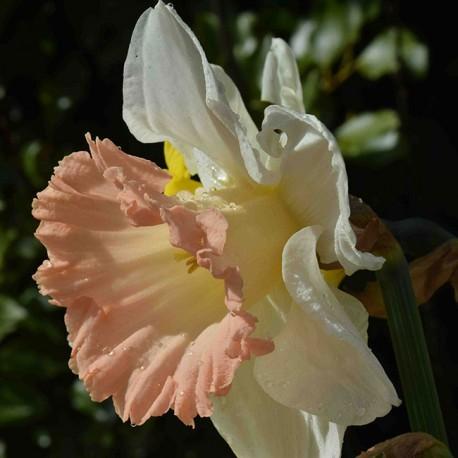
However, it is important to remember that flowering ends in mid-May, and you will have to plant other plants in this place so that the flowerbed does not look empty.
Growing daffodils: rules and nuances
Before planting daffodils, consider the variety's site requirements. This, along with the quality of the planting material, determines not only the health of the flowers but also the beauty of the buds.
Preparatory stage
A site with full sun in the morning and light shade in the afternoon is ideal for planting this variety of daffodils. It's also important to keep in mind that the daffodil bed shouldn't be located in drafts, and the plants don't tolerate cold northerly winds, which can spoil their decorative appearance. Fertile loam with a neutral pH is considered the best soil for growing daffodils. If the soil is alkaline, add dolomite flour. Acidic soils can be improved with wood ash.
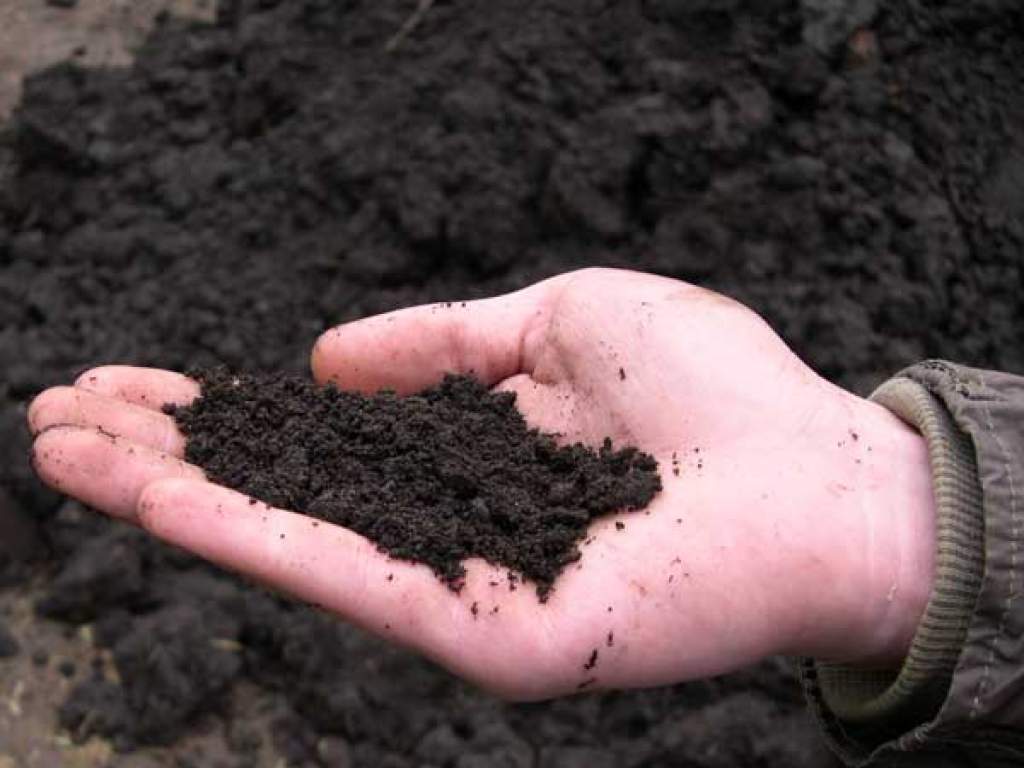
Flowerbed preparation begins in June. The area is dug over, removing weeds and adding nutrients. Compost or humus is the best fertilizer. Fresh manure is not recommended, as it can spread bulb diseases.
Planting material is purchased only at specialized retail outlets; bulbs in gardening stores correspond to the variety and undergo preventative treatment against diseases.
When purchasing, make sure the bulbs show no signs of pest damage. Immediately before planting, soak the bulbs in a solution of any fungicide for half an hour.
Timing and schemes for planting bulbs
Specific planting times vary by region. Typically, this is from late August to early November (for southern regions).
The planting process itself is divided into several stages:
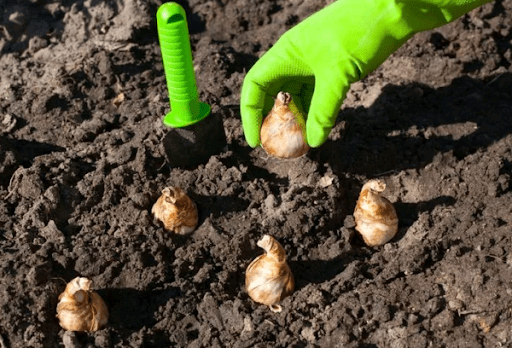
- Dig holes in the prepared flowerbed, keeping a distance of 20 cm between them. If daffodils are planted too densely, the bulbs will not have enough space to fully develop and grow.
- A small layer of sand is poured into the bottom of each hole, which will act as a drainage system and prevent moisture from lingering near the bulbs.
- Place the bulbs on the sand and deepen them a little, then sprinkle fertile soil on top.
- Water the plantings generously and, if desired, lay down a layer of mulch.
Regularity of watering
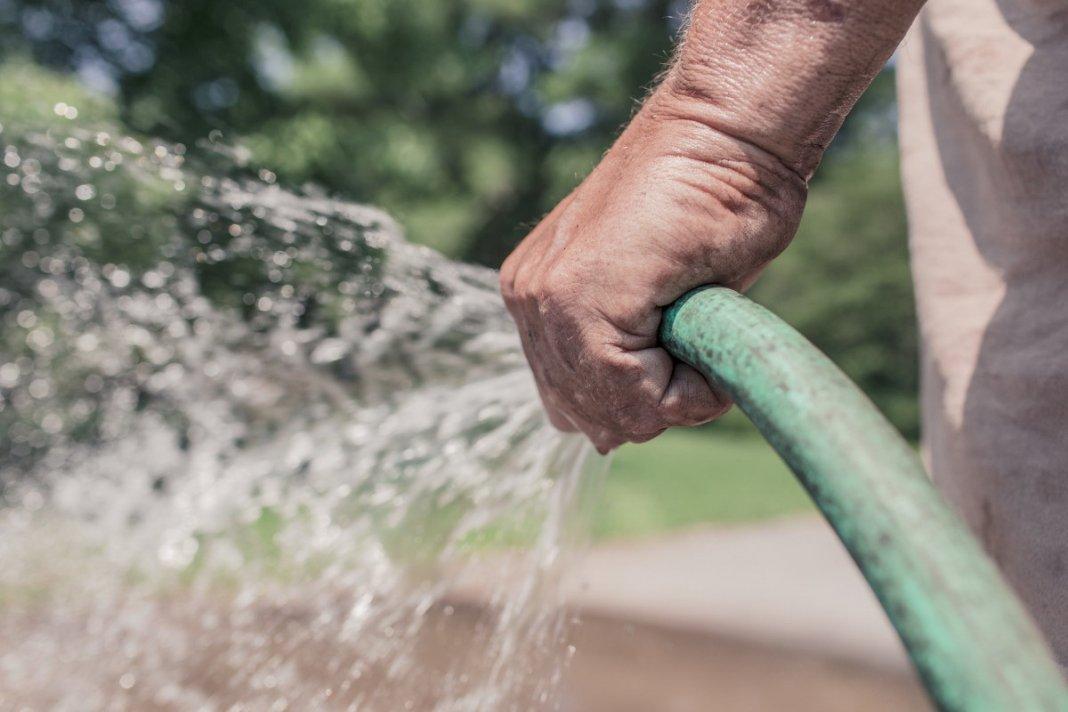
The frequency of watering depends on the weather and the daffodil's growing season. Flowers require the most moisture during bud formation and flowering. However, it's important not to overwater daffodils, as moisture is detrimental to the bulbs and can cause fungal diseases.
On average, daffodils are watered once a week, using up to 20 liters of warm, settled water per square meter. If it rains frequently, the frequency of watering is adjusted depending on the weather.
Top dressing
Daffodils are fertilized three times during the growing season. It's important not to neglect this procedure, otherwise you won't be able to grow flowers with large buds. Fertilize the plants according to the following schedule:
- As soon as the first shoots appear in the spring, a complete mineral fertilizer is applied.
- At the time of bud formation and during the flowering period, the same composition is used.
- After the buds have faded, use a composition containing potassium and phosphorus.
Soil care
If a layer of mulch is placed around the daffodils, soil care is simplified. Otherwise, the soil should be loosened after each watering, but not too deeply to avoid damaging the bulbs. Weeding should also be done simultaneously with loosening.
Pruning and preparation for winter
After the buds have faded, they are carefully cut from the plant. The foliage is also trimmed, leaving no more than 5 cm above the soil surface. Before the onset of cold weather, mulch is applied over the daffodils, and if winters in the region are cold, an additional layer of dry hay or sawdust is added.
Prevention and treatment
With regular prevention, diseases and insects rarely affect daffodils.
Diseases
Fusarium wilt and gray mold are considered the most dangerous diseases for flowers. In the former case, the base of the bulb is initially affected, and then the wilt spreads to the stems. In the latter case, a gray coating with black spots forms on the leaves. To prevent these diseases, bulbs are soaked in a fungicide before planting, and in the spring, as soon as the first shoots appear, they are treated with Bordeaux mixture.
Insects
Pests that sometimes affect daffodils (narcissus fly, nematode) are controlled using insectoacaricidal compounds.
Methods of reproduction
To propagate the variety in your own garden, use the small bulblets that form around the main bulb. These are carefully separated and planted in a new area.
Gardeners' reviews
Tatyana Semyonovna Orlova, 55: "I recently purchased bulbs of this variety. I really like the daffodils; the buds are lush and look beautiful in a flowerbed against the greenery."
Lidiya Alekseevna Morozova, 35: "An excellent variety; we haven't encountered any problems during the entire time we've been growing it. I did treat the bulbs with Maxim before planting, though."
Related posts:
 Characteristics and descriptions of the most beautiful types of daffodils, names of the best varieties
 Planting and caring for daffodils in open ground, the best time and growing rules
 When and when can daffodils be repotted? Step-by-step instructions and care.
 Description and characteristics of the Dick Wilden daffodil variety, planting and care instructions
 Descriptions of the best and most beautiful varieties of daffodils, ratings and selection tips
 Description and characteristics of the Cheerfulness daffodil variety, planting and care instructions
 Description and characteristics of the Calgary daffodil variety, planting and care instructions
 Description and characteristics of the Kum Laud narcissus variety, planting and care instructions