
- Selection and characteristics of the Irene Copeland variety
- All about flowering
- Pros and cons of using in garden design
- Planting and caring for daffodils
- Choosing bulbs
- Site preparation
- Timing and technology of planting seedlings
- Watering and fertilizing
- Soil care
- Trimming
- Protection from insects and diseases
- Methods of reproduction
- Gardeners' reviews of the variety
Daffodils, which bloom with the arrival of warm spring days, are especially popular among amateur gardeners and landscape designers. These flowers are undemanding in terms of growing conditions, require little time to care for, and offer a wide variety of varieties and hybrids. The Irene Copeland daffodil is a striking example of this group, often chosen by gardeners for planting in their gardens.
Selection and characteristics of the Irene Copeland variety
The Irene Copiland daffodil variety is a double-flowered variety. This perennial plant from the Amaryllis family can delight the eye for up to five years in one location without replanting. The daffodil grows to a height of no more than 45 cm. The stems are covered in rich green foliage. Because the daffodil buds are large, the stems cannot hold upright and bend under the weight of the flowers. The multilayered narcissus was developed by Dutch breeders. Because this variety has a sufficient winter hardiness level (3-4), it easily tolerates winter cold in open ground.
All about flowering
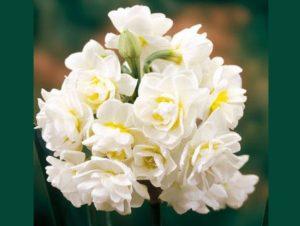
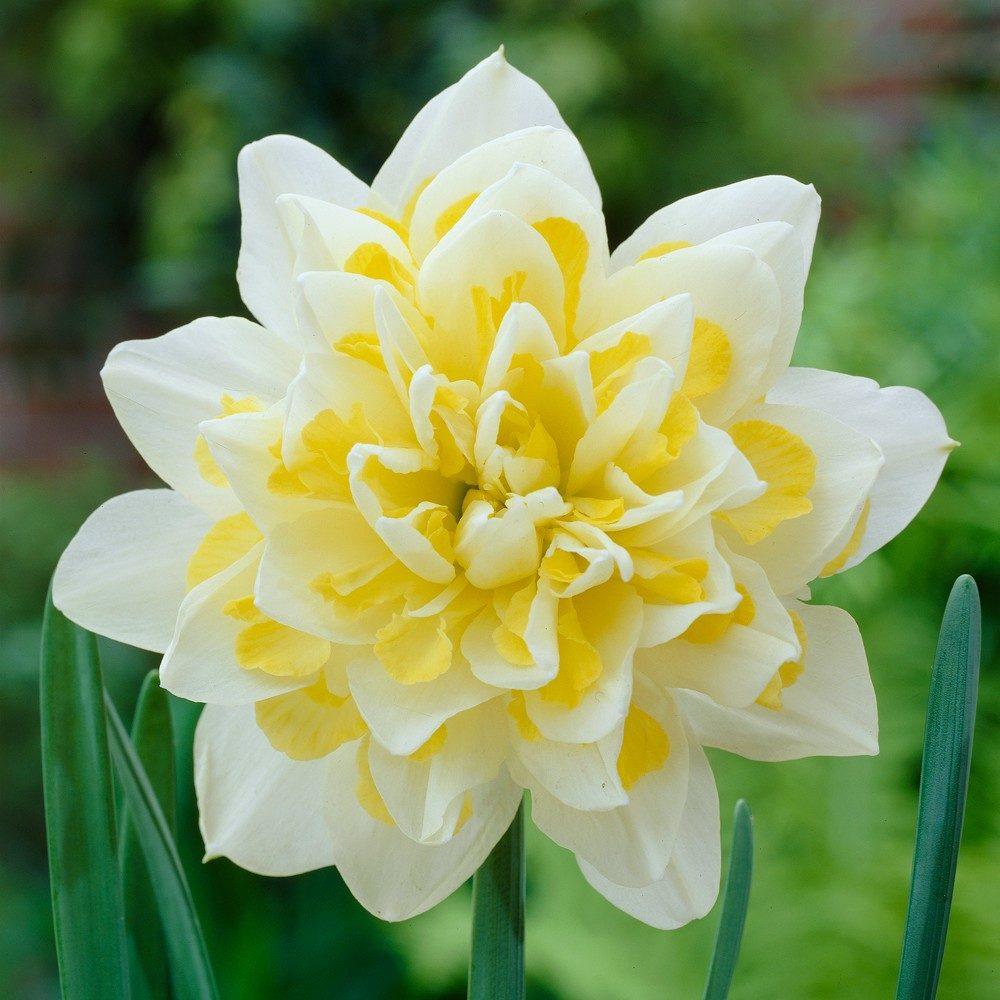
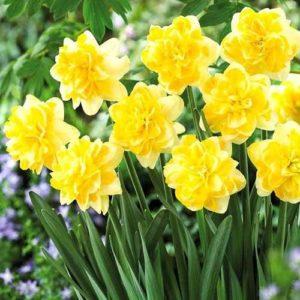
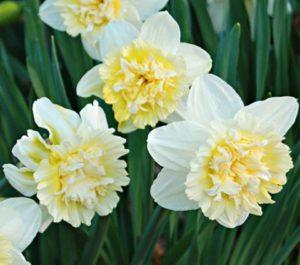
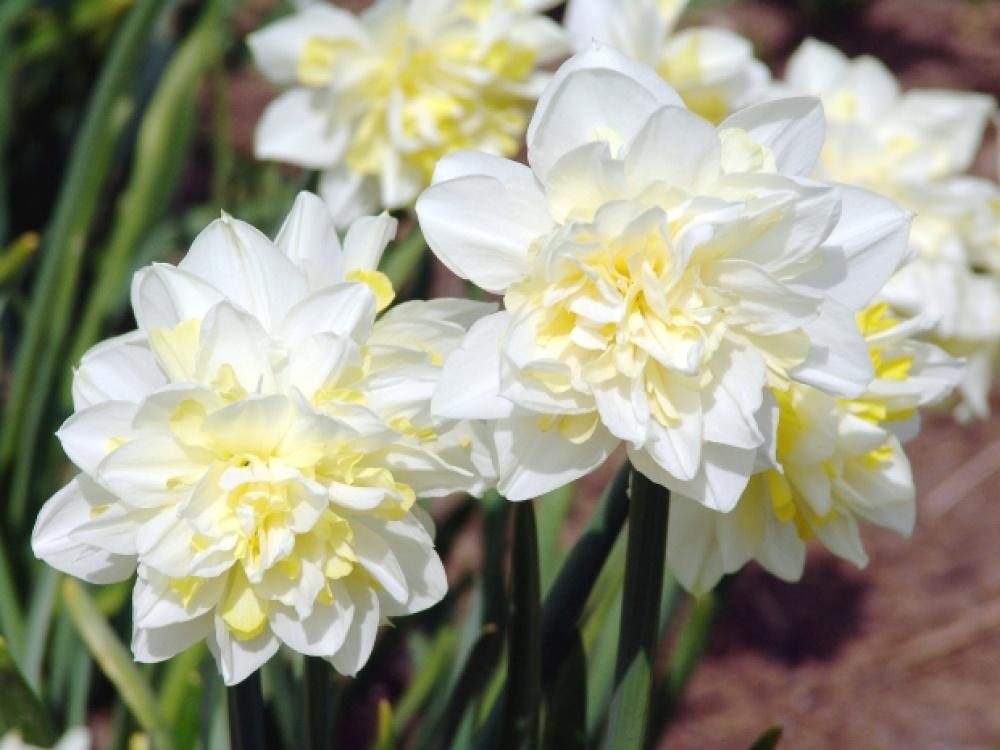
The flowering period of this Dutch variety begins in late April and continues until mid-May. The multi-layered flowers of the Irene Copeland variety are up to 10 cm in diameter and resemble large dahlias. The petals of the buds are white and rich lemon, contrasting sharply against the green foliage. The crown of this narcissus variety is weakly developed, and the petals are arranged in layers.
Pros and cons of using in garden design
The only drawback to using this variety of daffodil in landscape design is its short flowering period. The flowers look spectacular when combined with other primroses, but they are equally decorative when used as standalone accents. Dutch daffodils are planted in rockeries and alpine gardens; they look best in the foreground of flower arrangements.
Planting and caring for daffodils
To ensure healthy daffodils grow and delight with large, showy buds, you need to carefully prepare the site and bulbs. Caring for the flowers is straightforward, making the Irene Copeland variety a popular choice for beginning gardeners.
Choosing bulbs
The health of daffodils directly depends on the quality of their planting material, so it's important to choose it responsibly. It's recommended to purchase Dutch bulbs only from specialized retailers. If you buy planting material at a spontaneous market, there's no guarantee you'll get the variety you're looking for.
When choosing daffodil bulbs, pay attention to the following criteria:
- Absence of traces of disease and damage on planting material.
- The bulbs have a uniform color and are intact.
Site preparation
Preparing a site for planting daffodils begins with choosing a suitable location. The area should receive full sun throughout the day, with light afternoon shade acceptable at best. Planting daffodils in a shaded area will prevent the gardener from enjoying a full, decorative bloom. Planting daffodils in close proximity to buildings, fences, and tall trees is also not recommended, as the shadows they cast will interfere with the primroses' proper development.
The site for growing the Irene Copeland variety should be protected from cold northern winds and drafts, which can spoil the appearance of the flowers. Soil for daffodils should be neutral to slightly acidic. Alkaline soil can be improved by adding wood ash. Fertile soil is ideal for growing daffodils; it promotes abundant and lush flowering, but sandy soil is not recommended, as the bulbs can freeze in the winter cold. The soil should be well-drained and well-ventilated; standing water around the bulbs can promote fungal diseases.
Preparing the area for planting daffodils begins in the first month of summer. The soil is dug, weeds are removed, and the necessary nutrients are added. Humus or compost is preferred as fertilizer. Avoid using fresh organic matter, as it will damage the daffodil bulbs.
Timing and technology of planting seedlings
The best time to plant daffodil bulbs is considered to be the first months of autumn, but at least 30 days before the first frost. If planting isn't possible during this time, postpone the work until spring. However, it's important not to delay planting, as this will result in the first blooms not occurring for at least two years.
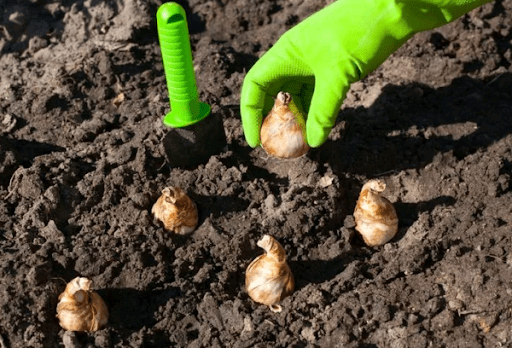
To strengthen the bulbs' immunity to cold and disease, they are first kept at low temperatures—the refrigerator (door or vegetable drawer) works well for this. Experienced gardeners note that this procedure also promotes the formation of larger petals, which is especially valuable for double-flowered varieties.
It is recommended to carry out planting work according to the following step-by-step instructions:
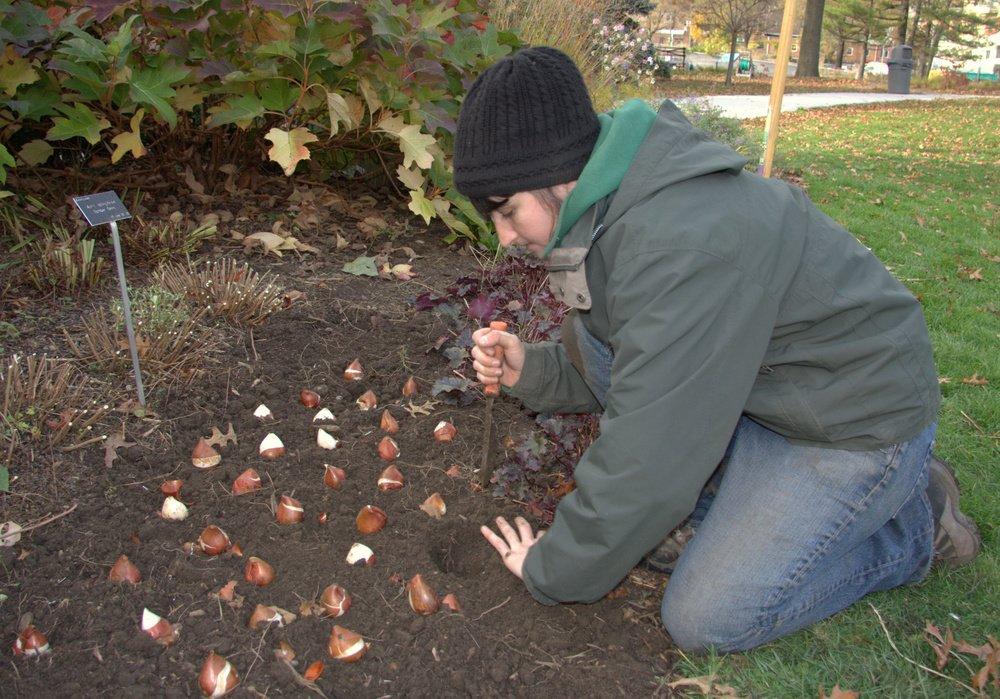
- Dig holes for the bulbs 10-15 cm apart. Their depth depends on the size of the planting material; the bulb should be planted 15-20 cm deep.
- A drainage system consisting of sand and two tablespoons of wood ash is arranged at the bottom.
- The soil at the planting site is abundantly moistened.
- The bulbs are planted at the recommended depth.
- Sprinkle the remaining fertile soil on top and apply a layer of mulch. Dry sawdust or mown grass are used for this.
Watering and fertilizing
Daffodil beds should be watered regularly. However, it's important to remember that flowers should be kept dry, as well as overwatered, as this can promote fungal diseases. Use approximately 20 liters of warm, settled water per square meter. Watering should be done either early in the morning or after sunset to prevent sun exposure from burning the petals and leaves.
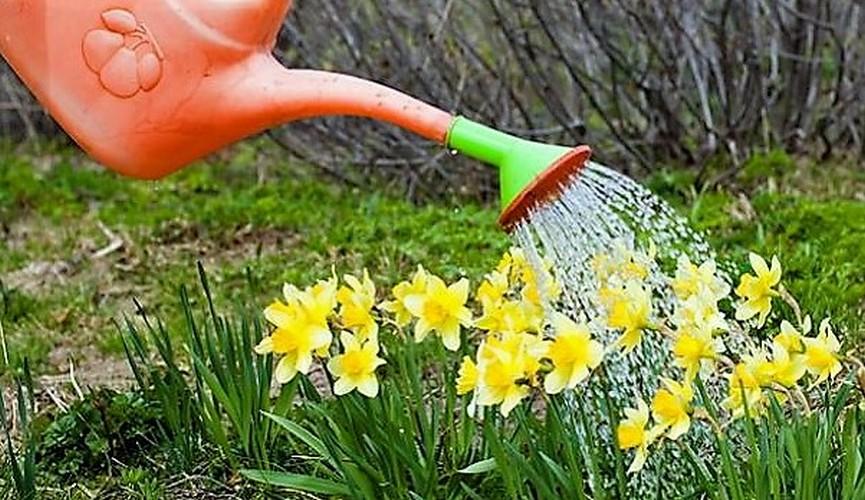
Without nutrient supplementation, daffodils with large buds will not grow, so fertilizer is applied three times during the growing season. Fertilizing is carried out according to the following schedule:
- As soon as the first shoots appear in the spring, use a complete mineral fertilizer at a rate of 30 grams per 1 square meter.
- The same fertilizer is applied when daffodil buds begin to form, but 20 grams are used.
- The third time, nutrients are added after the flowering period ends. Phosphorus and potassium are used as fertilizers in a 2:1 ratio.
Soil care
After each watering, the soil around the daffodils is loosened slightly, removing weeds and oxygenating the soil. If a layer of mulch is applied, weeding and loosening the soil are unnecessary.
Trimming
Flower buds are removed immediately after wilting to prevent them from spoiling the flowerbed's decorative appearance. Stems are trimmed after flowering, leaving no more than 5-10 cm above ground.
Protection from insects and diseases
Diseases affect plants only if proper agricultural care is not followed. Viral diseases, such as ringspot and mosaic, are considered the most dangerous. There is no cure, so affected flowers are immediately dug up and destroyed outside the plot to prevent infecting other plants.
To prevent fungal diseases, bulbs are soaked in a solution of any fungicide for half an hour before planting, and after the first shoots appear, the daffodils are treated with Bordeaux mixture.
To combat insect pests, acaricidal preparations are used; if there are only a few of them, they are collected by hand.
Methods of reproduction
Propagating daffodils from seed is rarely practiced by amateur gardeners due to its labor-intensive nature and low efficiency. Daughter bulblets, which eventually form around the mother bulb, are used for propagation.
Gardeners' reviews of the variety
Anna Grigoryevna, 58: "I'm very pleased with the Dutch variety. We haven't encountered any diseases, and the buds are colorful and large."
Maria Alexandrovna, 39: "On a friend's advice, I planted these daffodils in my garden. They're easy to care for: we water, fertilize, and prevent disease. I really like the large, double daffodil buds."
Related posts:
 Characteristics and descriptions of the most beautiful types of daffodils, names of the best varieties
 Descriptions of the best and most beautiful varieties of daffodils, ratings and selection tips
 Description and characteristics of the Avalon daffodil variety, planting and care instructions
 Description and characteristics of the Erlichir narcissus variety, planting and growing rules
 Description and characteristics of the Ice Follies daffodil variety, planting and care instructions
 Planting and caring for daffodils in open ground, the best time and growing rules
 Description and characteristics of the Waltz daffodil variety, planting and growing rules
 Description and characteristics of the Cheerfulness daffodil variety, planting and care instructions