
- Characteristics of the Erlicheer variety
- Selection and cultivation regions
- Examples of use in landscape design
- Growing daffodils
- Site preparation
- Choosing bulbs
- Planting dates and patterns
- Watering and loosening the soil
- Regularity of watering
- How to fertilize the Erlichir narcissus?
- Protection from pests and diseases
- Preparing for winter
- Methods of reproduction
- Gardeners' reviews of the variety
One of the most striking representatives of the Amaryllis family, the narcissus, is a frequent guest in the gardens of Russian gardeners. Its popularity is no coincidence—the plant is easy to maintain, has many varieties and hybrids, and is one of the first to bloom in spring. The Erlichir narcissus belongs to the tazetta varieties and delights with its long blooming period and long-lasting fresh appearance when cut.
Characteristics of the Erlicheer variety
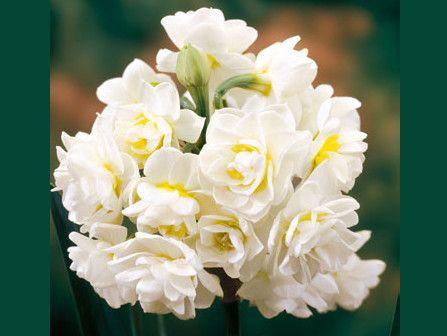
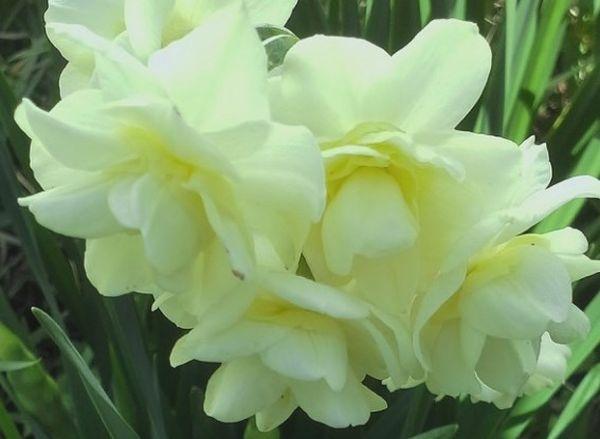
An unusual multi-flowered variety, the Erlisher daffodil, is popular in both the CIS and European gardens. It is characterized by its undemanding growing conditions and quickly adapts to new locations. The daffodil bloom period begins in late March and lasts until early May, although this can vary depending on the growing region. The blooming period lasts approximately three weeks. Narcissus shoots reach a height of 50 cm, producing approximately 20 buds.
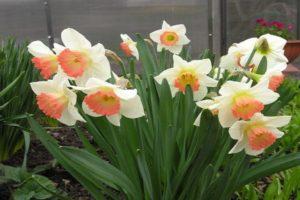
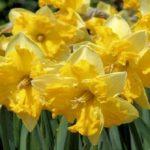
The flowers are small—only 3-4 cm in diameter. The petals are bright yellow at the base, while the rest is snow-white. The buds resemble a double rose in shape and have numerous petals.
Selection and cultivation regions
Despite the plant's winter hardiness, in northern regions it is preferable to grow it in a greenhouse. In hardiness zones 3-4, narcissus tolerates cold weather well, provided additional shelter is provided.
Gardeners first became aware of the Erlichir variety in 1934; it was developed by French breeders.
Examples of use in landscape design
This narcissus variety is grown not only in open ground flowerbeds, but also on apartment windowsills and as a decoration for balconies and loggias. It looks harmonious when paired with similarly multi-flowered members of the family or with deep red tulip varieties.

Growing daffodils
To ensure the Erliche narcissus variety is pleasing to the eye, select a suitable location for the flower before starting cultivation and carry out all work according to the recommended instructions.
Site preparation
Prepare the area for planting daffodils a month in advance. To do this, dig the soil to a depth of approximately 30 cm and simultaneously add compost. Fertilize the soil with a complete mineral fertilizer, using 40 grams per square meter. Weed roots are immediately removed to prevent them from robbing the bulbs of nutrients. After this, allow the soil to settle before planting.
Choosing bulbs
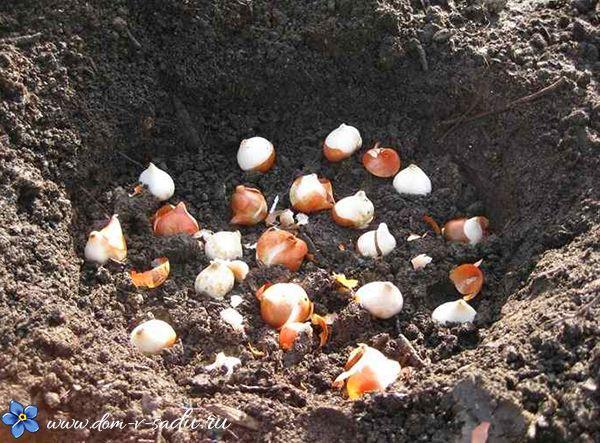
The quality of planting material is carefully considered and purchased only from specialized retailers. The decorative appearance and health of daffodils depend on this.
You shouldn't buy bulbs:
- Those that have already developed a sprout.
- Which are surrounded by numerous small specimens.
- Dug up with roots and stems during flowering.
The bottom of the bulb should be clean and intact, and the necks should be dense and smooth.
Planting dates and patterns
Narcissus bulbs are planted in the fall, during September and October. These timings may vary slightly depending on climate conditions in each region.
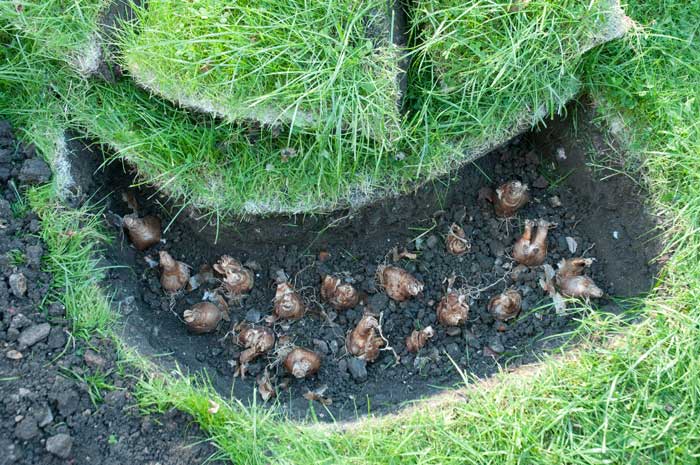
Work on planting daffodils is carried out according to the following algorithm:
- The purchased planting material is kept in a solution of potassium permanganate or Fundazol for 15 minutes, then dried in the open air.
- If the soil in the area is heavy, the bulbs are planted 5 cm deep; in light soils, 15 cm deep, but no more, otherwise the gardener will not see abundant flowering.
- The distance between plants is maintained within 15-20 cm.
- Cover the top with a layer of mulch, and closer to winter, sprinkle dry leaves on top.
- The plantings are watered generously.
Watering and loosening the soil
After each watering, gently loosen the soil around the daffodils. This procedure allows the soil to oxygenate and prevents weeds from growing. Use clean, settled water for irrigation; it should be warm.
Regularity of watering
This daffodil variety is a moisture-loving plant; if it lacks moisture, the buds will be small and the blooms sparse. On average, watering is done twice every seven days, but if there is sufficient natural rainfall, reduce watering to once every 10 days.
Tip! Water daffodils not only before but also during flowering. After the buds fade and until autumn, the plant also requires additional moisture.
How to fertilize the Erlichir narcissus?
In spring, as soon as the first daffodil shoots emerge from the soil, begin adding nutrients. To do this, take ammonium nitrate and mix it with potassium in a 2:1 ratio. During bud formation, apply the next fertilizer, which should contain phosphorus and potassium.
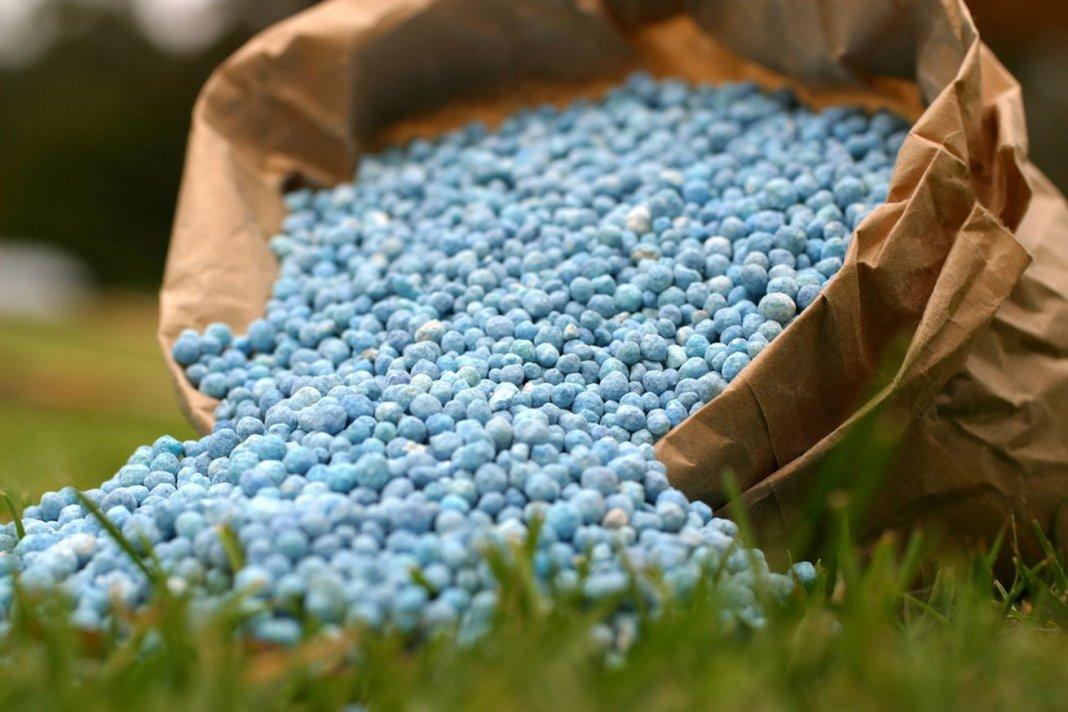
After flowering is complete, apply a fertilizer containing superphosphate and potassium nitrate. These components are essential for nourishing the bulbs and ensuring abundant flowering the following season.
Protection from pests and diseases
With regular preventative care, daffodils are rarely affected by diseases and insect pests. In areas with high humidity and poor ventilation, fusarium rot can affect the plants. Onion hoverflies, nematodes, and slugs also favor the flowers.
As preventative measures, treatment with the following preparations is used:
- Insecticides – until bud formation.
- After the flowering period is over, use any copper-containing preparation, for example HOM.
They also follow a watering regime for daffodils and remove weeds from the area in a timely manner.
Preparing for winter
Before the onset of cold weather, cover trimmed daffodils with a layer of organic mulch. If winters in the region are cold, add another layer of dried leaves on top.
Methods of reproduction
To propagate Erlichir narcissus in your garden, use the offshoots that form around the mother bulb. Seed propagation is also used, collecting material from the capsules that form after the buds have faded. However, this method is labor-intensive and doesn't always produce flowers with the same characteristics, so it's used more by breeders than by ordinary gardeners.
Gardeners' reviews of the variety
Maryana Vasilyevna Toropova, 47, Volgograd: "I bought this variety on the advice of a friend who's been growing it in her garden for a long time. It blooms long and profusely, but we always fertilize it."
Nadezhda Ivanovna Muromtseva, 60, Pskov: "I love gardening. I bought the Erlichir variety for my collection. I'm happy with the flowers; they don't require much care and are disease-resistant."
Related posts:
 Characteristics and descriptions of the most beautiful types of daffodils, names of the best varieties
 Description and characteristics of the Apricot Whirl daffodil, planting and care
 Description and characteristics of the Obdam double daffodil, planting and care
 Description and characteristics of the Waltz daffodil variety, planting and growing rules
 Description and characteristics of the Delnasho daffodil variety, planting and care instructions
 Description and characteristics of the Avalon daffodil variety, planting and care instructions
 Description and characteristics of the Chanterelle daffodil variety, planting and care
 Description and characteristics of the Minnow daffodil variety, planting and care instructions