
- History of the variety's appearance
- Description and characteristics of the Walz variety
- Examples in landscape design
- Planting and caring for the plant
- Preparing the bulbs and planting site
- Planting dates and patterns
- Irrigation mode
- Top dressing
- Weeding
- Protection from pests and diseases
- Wintering
- Reproduction methods
- Potential difficulties when growing
- Gardeners' reviews of the Waltz daffodil
Among spring flowers, delighting gardeners with the first warm days, daffodils are among the most popular. Thanks to the efforts of breeders, today's market offers a wide variety, offering a selection that suits bloom time, bud color, and growing conditions. The Waltz daffodil is an easy-to-grow plant with excellent decorative qualities.
History of the variety's appearance
Thanks to Dutch breeders, gardeners around the world have developed numerous beautiful daffodil varieties, one of which is 'Waltz.' This new variety was developed through experiments by botanists.
Description and characteristics of the Walz variety
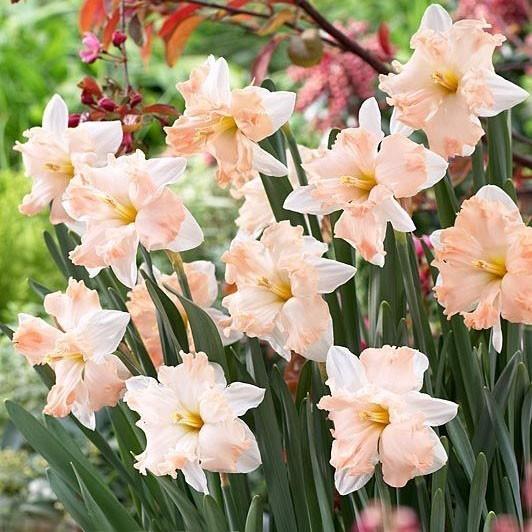
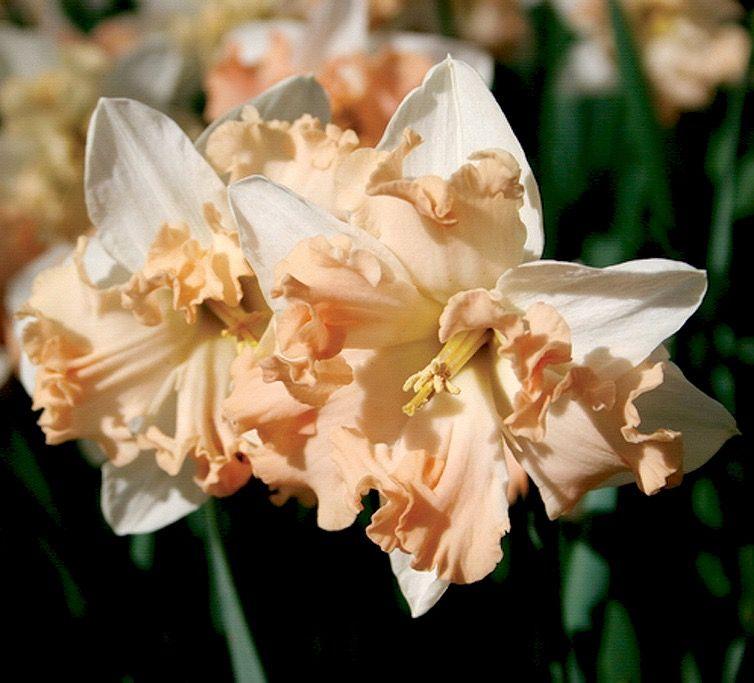
The Waltz daffodil belongs to the split-crown orchid variety. The plant's flowering period begins in mid-April, but in northern regions, this period shifts to early May.
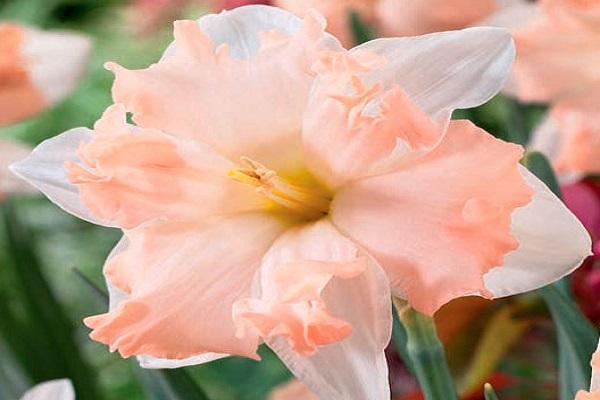
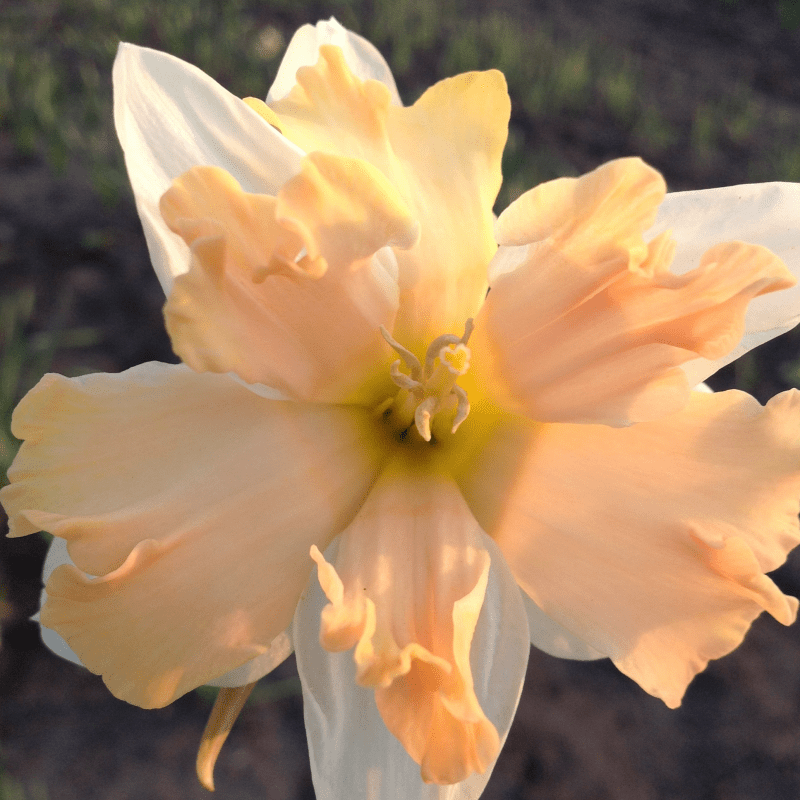
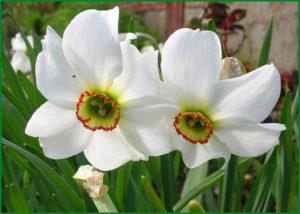
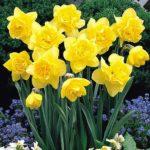
The daffodil stem is strong and long, growing up to 45 cm in height. The deep green leaves are long and narrow, densely clinging to the main stem. A single bud forms on the stem, no more than 10 cm in diameter. When the bud opens, the gardener can admire a multi-layered flower with a voluminous center. It almost covers the outer petals and is bright yellow. The petals of the daffodil are creamy.
After the flower opens, within two days the center turns a rich apricot, and the outer petals turn a snow-white hue. After a few more days, the entire daffodil becomes white.
Examples in landscape design
Thanks to its attractive appearance, the Waltz narcissus is used by both amateur gardeners and professional designers to decorate garden plots, alleys and squares.
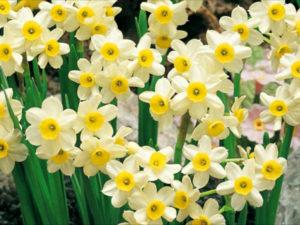
Varieties of use of the variety:
- In flowerbeds, in combination with other primroses.
- For decorating borders, paths and spaces around gazebos.
- On alpine hills and in mixed borders.
Planting and caring for the plant
Adherence to planting and care guidelines determines not only the health of daffodils but also the duration and beauty of their blooms. There are no difficulties with this work; the main thing is to follow the recommendations of experienced gardeners.
Preparing the bulbs and planting site
Before planting, prepare the daffodil bulbs and the growing site. It's recommended to choose a site that receives light partial shade during the day. It's also important that the growing area be protected from drafts and cold winds.
In the spring, begin preparing the plot for fall planting of the bulbs. It's important that the soil contains all the necessary micronutrients, as daffodils are grown in the same spot for up to five years.
The site is prepared according to the following algorithm:
- Dig over the selected area, removing weed roots. Mix the soil with an equal amount of compost. If the soil is sandy, add additional clay and peat. Highly acidic soil is mixed with a small amount of lime.
- About 3 weeks before planting, the soil in the area is slightly loosened and mineral fertilizers are added to the soil.
- Dig holes no more than 50 cm deep, placing a drainage layer of fine gravel and sand at the bottom, and top with fertile soil. Water the holes generously.
Experienced gardeners recommend growing daffodils in areas where cereals or legumes were previously grown.
When choosing narcissus bulbs, Waltz pays attention to the following points:
- No damage, no signs of fungal diseases.
- Appearance of the bulbs: They should be firm and compact, and the neck and base should be dry.
- Peel the onion skin. It should be golden brown and free of spots.
Before planting, the planting material is treated with fungicidal preparations to prevent infection by fungal diseases.
Planting dates and patterns
Narcissus bulbs should be planted in the fall, keeping in mind that about a month and a half should pass before the first frost. This allows the bulbs to fully root and absorb the nutrients needed for a successful winter. Spring planting of daffodils is recommended only in regions with mild winters.
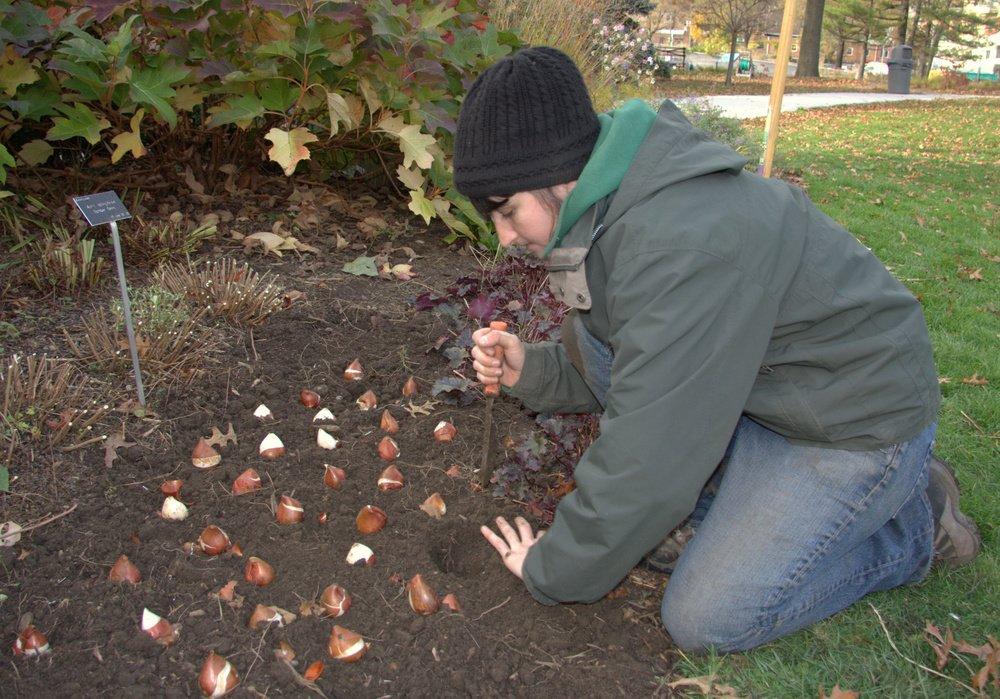
Waltz daffodils are planted according to the following scheme:
- Maintain a distance of 12-15 cm between bulbs, and leave a space of 20-30 cm between rows.
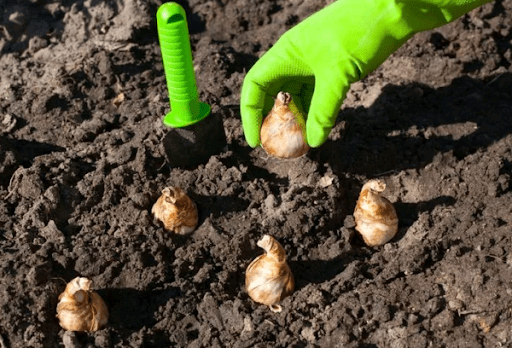
- Place the daffodil in a pre-prepared hole and deepen it by 8-10 cm.
- Sprinkle with fertile soil on top and water generously.
Irrigation mode
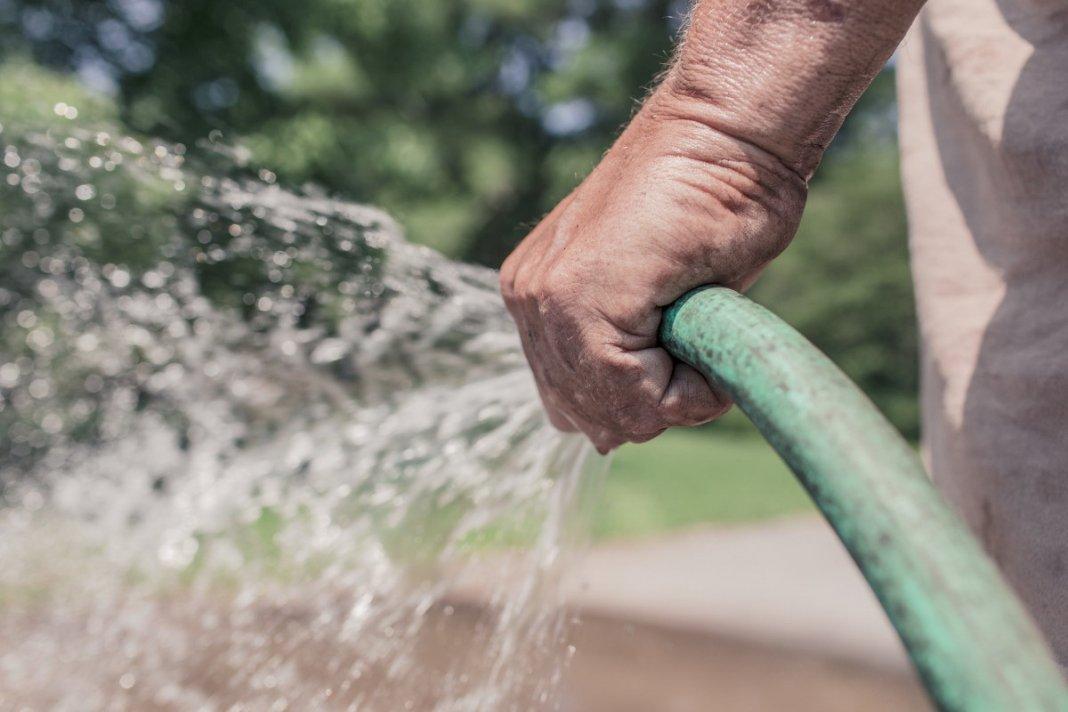
During the active growth period in early spring, daffodils are saturated with moisture from melting snow, so water only as needed if the soil is dry. During bud formation and flowering, Waltz daffodils should be watered regularly, at least once a week. After flowering, continue watering the plants, as the bulbs need moisture before preparing for winter.
Top dressing
In the first days of spring, when the vegetative process begins, daffodils require fertilizers with a high nitrogen content. The second and third feedings are carried out before and during flowering, using mineral complexes.
Weeding
Since daffodils' roots are close to the soil surface, weeds steal nutrients from them, stunting their growth. It's recommended to combine weeding with loosening the soil to oxygenate the soil. This procedure should be performed after each watering.
Protection from pests and diseases
The first preventative treatment against diseases is carried out before planting the bulbs. Subsequently, if necessary, fungicides or acaricides are used to control pests. With proper agricultural practices, flowers are rarely affected by diseases; viral and fungal diseases are considered the most dangerous.
Wintering
To successfully overwinter the bulbs, simply apply a layer of organic mulch over the soil. If winters are cold in your region, additional insulation can be provided with spunbond or another material.
Reproduction methods
The simplest and most effective method of propagating Waltz daffodils is vegetative propagation. Over time, offspring form around the mother bulb, which are then planted separately in flowerbeds. Seed propagation is more often used by breeders for experimental purposes, as there is no guarantee of producing plants that retain all the characteristics of the mother variety.
Potential difficulties when growing
Growing this variety doesn't present any particular difficulties if you follow the planting and care guidelines. The main problems include slow growth, loss of ornamental value, and wilting. The main causes are a lack of preventative care and improper spacing between flowers when planting.
Gardeners' reviews of the Waltz daffodil
Galina Pavlovna Voronenko, 45: "I'm very pleased with the variety I chose. The buds look beautiful in the flowerbeds in the spring."
Olga Vyacheslavovna Morshina, 38: "I'm especially pleased with the variety's decorative qualities and the fact that the buds change color during flowering. I haven't encountered any particular problems growing it; I carry out preventative treatments and apply nutritional supplements on time."
Related posts:
 Characteristics and descriptions of the most beautiful types of daffodils, names of the best varieties
 Planting and caring for daffodils in open ground, the best time and growing rules
 Description and characteristics of the Avalon daffodil variety, planting and care instructions
 Description and characteristics of the Pink Charm daffodil variety, planting and care instructions
 Description and characteristics of the Irene Copeland daffodil variety, planting and care instructions
 Description and characteristics of the Cheerfulness daffodil variety, planting and care instructions
 Description and characteristics of the Dick Wilden daffodil variety, planting and care instructions
 Description and characteristics of the Minnow daffodil variety, planting and care instructions