
- What causes the diversity of daffodils?
- Varieties and characteristics of plants
- Bulbocodium hybrids
- Wild growing
- Jonquil-shaped
- Cyclamenoides
- Triandrus
- Fine-crowned
- Large-crowned
- Split-crowned
- Tubular
- Multi-flowered
- Terry
- The best varieties, according to gardeners
- Ice King
- Ballad
- Henry Irving
- Golden Medal
- Dutch Master
- Little Jam
- Madame de Graf
- Mount Hood
- Milner
- Musical Hall
- Perekokus
- Pink Champagne
- Priamble
- Replit
- Spellbinder
- Waist
- Taurus
- One on one
- Texas
Members of the Amaryllis family, daffodils are perennials that are among the first to bloom in flowerbeds in spring, brightening up garden plots. Breeders have developed approximately 25,000 varieties of this flower, divided into 13 groups. Among the many types of daffodils, every lover of these ornamental plants can find a specimen to suit their taste and climate.
What causes the diversity of daffodils?
To systematize the vast number of daffodil varieties, the Unified International Classification of Horticultural Crops was created. The register includes 13 species, 12 of which were created by breeders, while the 13th includes natural species and forms.
Most of the work on developing new varieties and hybrids of this flower is carried out abroad, in countries such as the United States and Great Britain. A visit to the annual daffodil exhibition in London will make clear the purpose of such classification. It features varieties with different petal colors, suitable for a wide range of applications, and bulbs of oval, round, or elongated shapes.
Due to the fact that daffodil planting material is inexpensive and the flower itself is characterized by its unpretentiousness, gardeners allocate a place in almost every plot and flowerbed for planting this ornamental plant.
Varieties and characteristics of plants
Each of the groups, according to the international classification, has its own special features and characteristics by which they are distinguished from each other.
Bulbocodium hybrids
Daffodils in this group have short stems, no more than 15 cm tall. They bear a single flower, each with a distinctive bell-shaped crown. The bracts are usually very small. The petals are white or yellow. Because of their shape, these daffodils are also called crinolines, due to their resemblance to a skirt worn on a hoop.
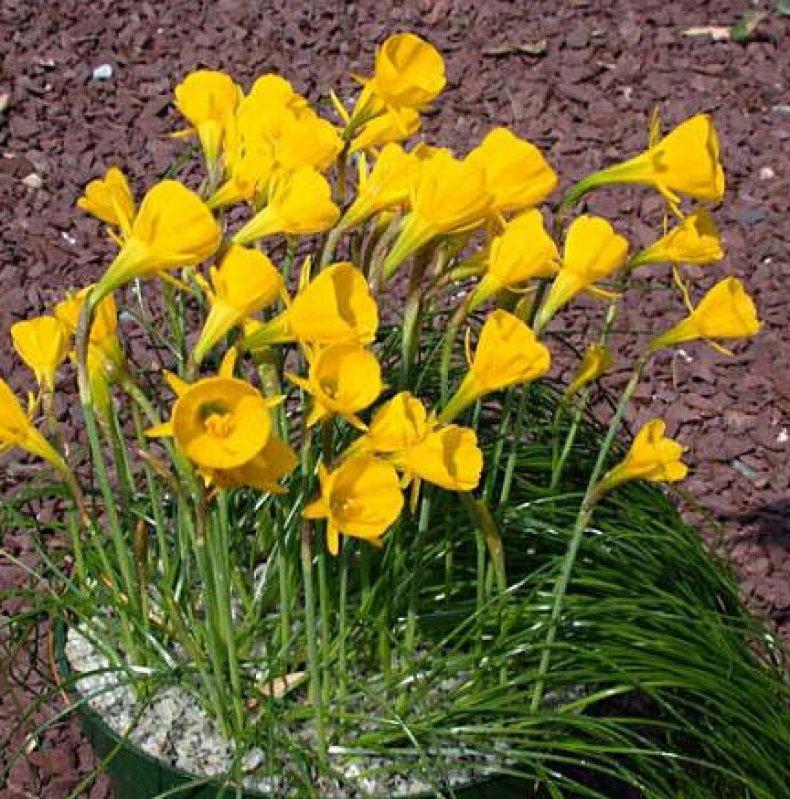
This species of daffodil is particularly popular in Australia, where breeding efforts are actively underway to develop new varieties. Bulbocodium hybrids are ideal for pot forcing. In temperate climates, they can also be grown outdoors; however, reliable winter protection is required, as the plants are sensitive to low temperatures.
Wild growing
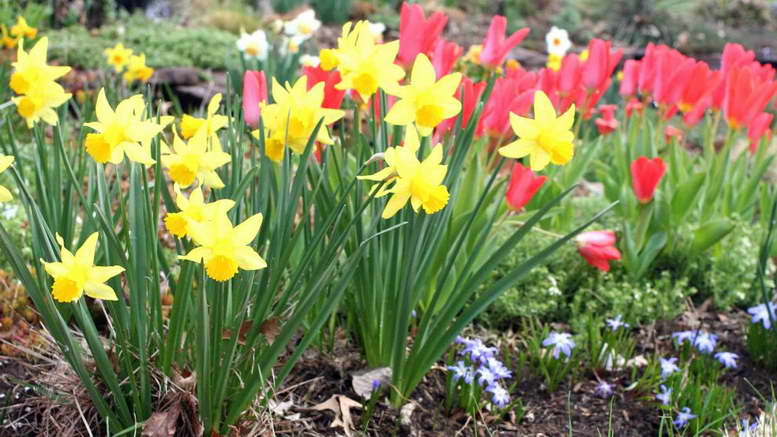
Daffodils of this group are quite rare in Russian gardens. The mild Mediterranean climate provides ideal growing conditions. In the wild, they grow in groups, sometimes even in entire fields. The narrow-leaved narcissus is listed as an endangered species in the Red Book. You can admire the blooms of these ornamental plants in the Transcarpathian region, near the city of Khust, where an entire valley of daffodils exists. The flowering period occurs in May. The petals of the wild flower are pale yellow, cream, or white, and the height does not exceed 50 cm.
Jonquil-shaped
The cup-shaped crown is the characteristic that distinguishes daffodils in this group from other varieties. It is wider than it is long. Up to eight buds form on a single stem. The backward-curving, wide-open bracts and thin, flexible leaves are another distinctive feature. The stem is quite tall and robust—about 50 cm.
Jonquil-shaped daffodils have a persistent and pleasant aroma, and their oils are used in perfumery. All members of this species are susceptible to harsh, frosty winters, so they are only grown outdoors by gardeners in southern regions. Narcissus petals are yellow or white.
Cyclamenoides
The group got its name from the flower's resemblance to cyclamen. A single bud forms on a single stem, no longer than 20 cm. The flower's crown is narrow and long, and the perianths are strongly reflexed. The petals of the cyclamen-like narcissus are orange, white, or yellow, depending on the variety.
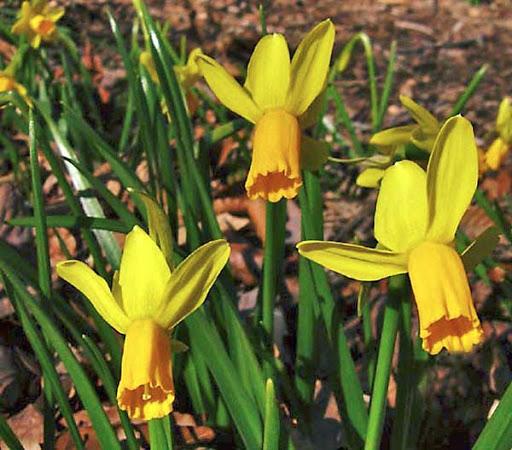
All varieties in this group are characterized by early flowering and are ideal for planting in mixed borders and rock gardens. They look harmonious when combined with other spring-blooming flowers.

Triandrus
The flower stalk of triandrus daffodils is short, about 25 cm. Two or more buds form on each stem, with petals colored yellow, soft gold, or white. The crown is small and goblet-shaped. Hybrid varieties of this group bloom early—in late April—and pair well with other bulbous flowers. However, triandrus daffodils have relatively low frost resistance, making them unsuitable for planting in northern regions.
Fine-crowned
The crown of varieties in this group is short—no more than two-thirds the length of the perianth—and the inflorescences are about 5-8 cm in diameter. Only one bud forms on each peduncle. Daffodils come in shades of orange, white, or pink.
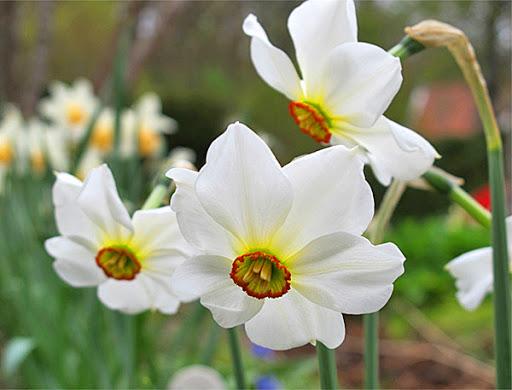
All varieties of small-crowned daffodils are renowned for their undemanding growing conditions, so they are planted both in gardens, open areas, and for forcing indoors. Flowering occurs in late May or early June.
Large-crowned
Perhaps the most spectacular and beautiful daffodil varieties belong to this group. The corona and perianth shades vary widely, from pure white to orange-red. The inflorescence diameter is the largest of all plant species, reaching up to 12 cm. The tubular peduncle is strong and robust, reaching up to 50 cm in height. The edges of the corona can be corrugated or wavy, or slightly curved back.
Despite the impressive size of the large-crowned varieties, they have a rather small bulb - only about 3 cm in diameter.
Split-crowned
The flowers of these ornamental plants are exceptionally beautiful and have a perfect, rounded shape. The crown of the narcissus is characterized by a noticeable split, which gives the entire group its name. This feature creates the visual effect of a second row of petals. In reality, there is only one row; the free petals are simply fused together only at the base of the crown.
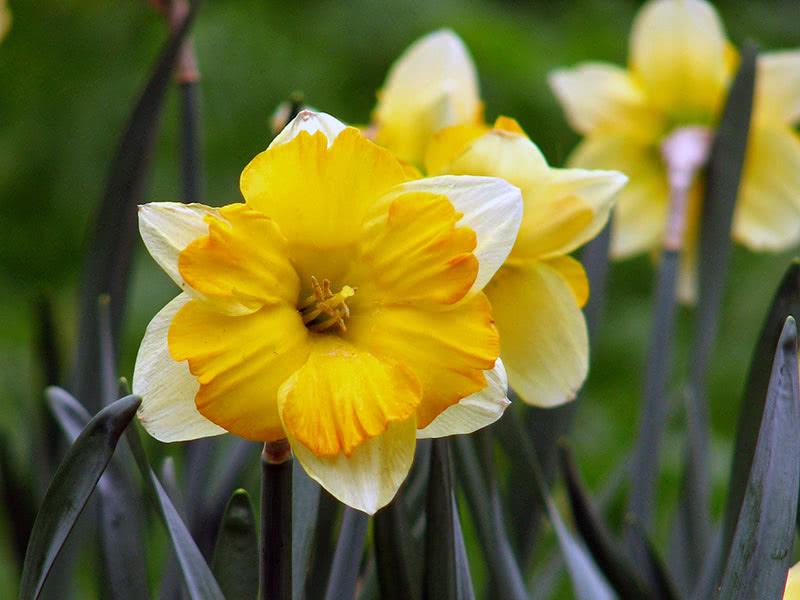
A long, sturdy stem produces only a single bud, no more than 11 cm in diameter. The flowers come in a variety of shades—yellow, white, or pink. If you plan to grow one of the varieties in this group, keep in mind that the plant will need some insulation during the winter. Also, plant daffodils in open, sunny areas, as shade reduces their decorative value. Daffodils with a crown are versatile—they are suitable for forcing indoors and growing in outdoor flowerbeds, and they also make attractive cut flowers.
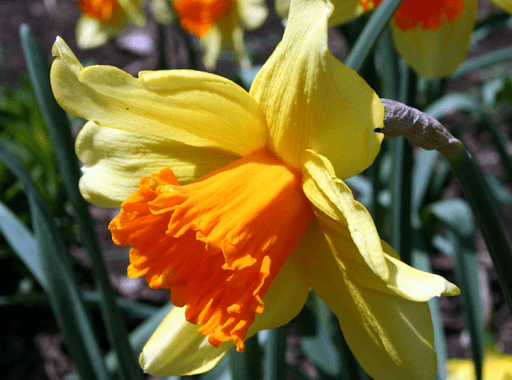
Tubular
The crown, which is the same length as the petals, gives the species its name, as the shape of these daffodils resembles a gramophone tube. A single bud, 7 to 13 cm in diameter, appears on a tall, robust stem in spring.
The flower's tube and petals are white, orange, or yellow. Trumpet daffodils are an ideal choice for gardens in regions with variable weather. These varieties are characterized by moderate frost resistance and are undemanding of soil conditions. Indoors, they are used to decorate the room with their buds during the winter.
Multi-flowered
As the group name suggests, daffodils have many flowers, forming a distinctive cap of eight or more buds. This characteristic makes a single flower stalk appear like a full bouquet. The buds range in color from white to apricot.
All varieties in this group have a light and pleasant fragrance. The flowers thrive in light partial shade, but are not frost-hardy enough for growing in northern regions. Multi-flowered daffodils are rarely affected by diseases and insect pests.
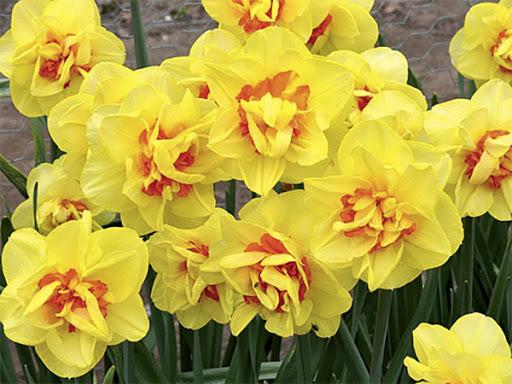
Terry
Varieties in this group differ from traditional daffodils due to their double corona and perianth. One or more buds form on a single stem. The blooms can be single- or two-toned, ranging in color from pink to white to orange.
The main drawback of varieties in this group is stem drooping under heavy rain, which can't withstand large, wet flowers. They are used for planting outdoors and for forcing indoors.
The best varieties, according to gardeners
Since daffodils have been used in landscape design for quite some time, gardeners have identified the best and most beautiful varieties. Each has its own characteristics and care requirements, which must be considered before planting.
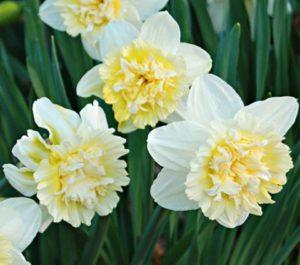
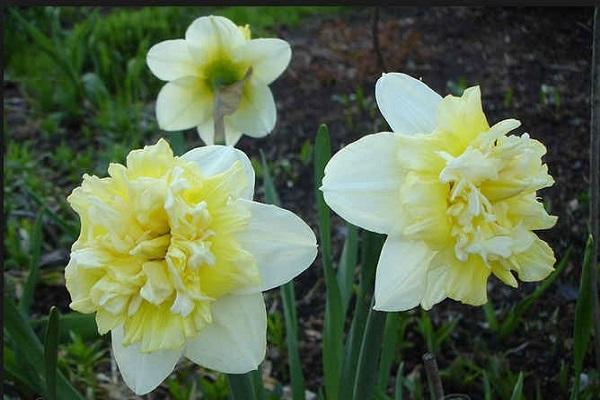
Ice King
Characteristics of the Ice King variety:
- Belongs to the group of double daffodils.
- Bred in Holland in 1984.
- The crown is cup-shaped, large, about 6 cm in diameter.
- In the first days after flowering begins, the crown is colored a rich yellow tone, then the entire flower becomes white-cream.
- The height of the peduncle does not exceed 40 cm.
- The flowering period lasts 14 days in May.
- The diameter of one bud is 10 cm.
Ballad
Description of Narcissus Ballad:
- Belongs to the group of tubular varieties.
- The diameter of a single flower on a peduncle is about 8 cm.
- The peduncle is strong and tall.
- Suitable for decorating a plot and for winter forcing.
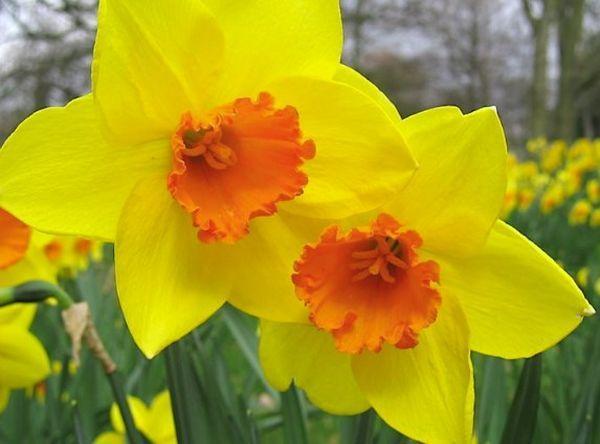
Henry Irving
The characteristics of this narcissus variety include:
- Belonging to the tubular group.
- Yellow color of perianth and crown.
- The height of the stem is 70 cm.
- Early flowering period.
- Deep planting requirement.
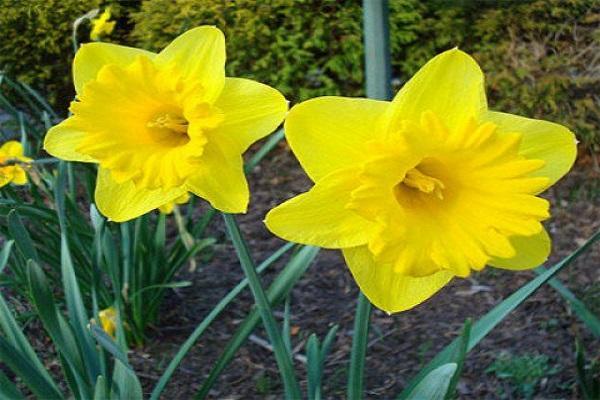
Golden Medal
The variety is distinguished by the following characteristics:
- Belonging to terry varieties.
- Pleasant and subtle aroma.
- Terry structure of the crown.
- Bright yellow color of the buds.
Dutch Master
Characteristics of a Dutch Master narcissist:
- Belongs to the class of tubular species.
- The height of the peduncle is within 50 cm.
- The diameter of the buds is 8 cm.
- It has high frost resistance.
- Requires full lighting when growing.
- It has a distinct aroma.
- The color of the buds is rich yellow.
- Early flowering period, which occurs at the end of March or beginning of April.
- Ideal for cutting.
- The flowering period lasts about 3 weeks.
Little Jam
The characteristics of the variety include:
- Belongs to the class of trumpet daffodils.
- Compact dimensions, not exceeding 15 cm in height.
- The diameter of the buds ranges from 4 to 5 cm.
- Rich lemon-yellow shade of petals.
- Lighting requirements.
- Average level of winter hardiness.
- Flowering period: up to 2 weeks.
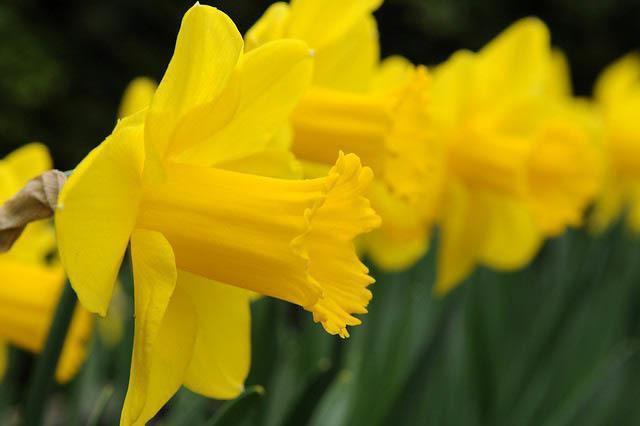
Madame de Graf
Distinctive features of the variety include:
- Belongs to the class of trumpet daffodils.
- White color of flowers.
- Large bud sizes.
- Can be grown both in a flowerbed and for forcing in an apartment.
Mount Hood
The single-flowered crown daffodil is used for garden arrangements and makes a beautiful cut flower. Its distinctive features include:
- Long flowering period, which begins in April.
- High resistance to diseases and undemanding to growing conditions.
- Tolerance to all types of soil.
- The diameter of the flowers is about 9-10 cm.
- Plant height is 40 cm.
- Delicate cream color of buds.
Milner
The Milner daffodil belongs to the class of tubular plants. Its delicate cream-colored buds look stunning in bouquets. However, this variety can also be grown as a garden ornament; simply select a well-lit location and insulate it before winter frosts.
Narcissus Milner has an average resistance to diseases; with proper agricultural care, the flower is rarely attacked by insect pests.
Musical Hall
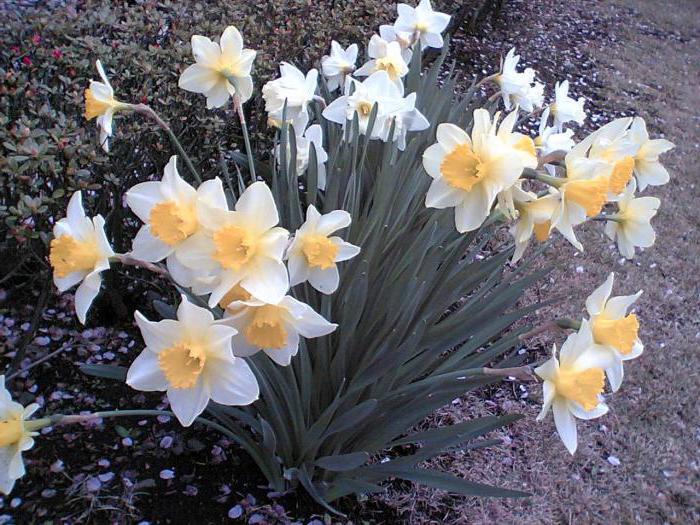
This daffodil variety is also a trumpet variety. However, it is bicolored—the perianths are white, while the tubes are a bright yellow. The plant is easy to care for and requires little time. It thrives in sunny, open areas, but can also grow in partial shade. The decorative qualities of its flowers make them ideal for cut flowers.
Perekokus
According to classification, this daffodil variety is classified as a large-crowned variety. Its characteristics are as follows:
- The plant is medium-sized, not exceeding 45 cm in height.
- The crown is pink in color, which distinguishes the flower from other representatives of the group.
- The edges of the dark petals are corrugated.
- The flowering period begins in May and lasts about two weeks.
- Suitable for decorating gardens and creating bouquets.
- Not used for sale as it does not transport well.
Pink Champagne
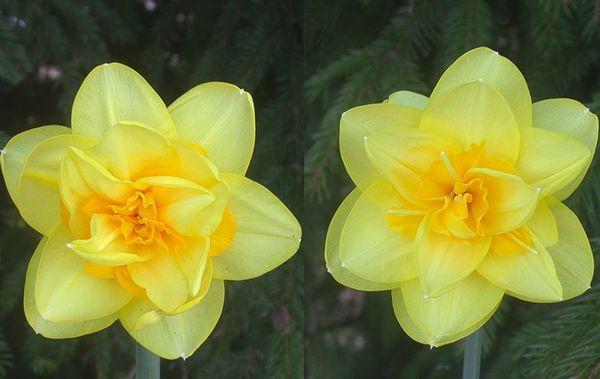
The distinctive features of the Pink Champagne variety are:
- Belongs to the group of double daffodils.
- Small height - maximum 40 cm.
- Average flowering period – decorates the garden plot from the first days of May.
- Two-tone coloration consisting of pink and white tones.
- It is used for decorating the area, planted in flowerbeds and mixborders.

Priamble
The 'Priemble' variety is classified as a tubular daffodil. Its distinctive features include white petals with a greenish tint. The bright yellow crown has a ruffled edge. The 'Priemble' daffodil blooms in late April.
One of the variety's drawbacks is its weak immunity to infectious diseases. It is not suitable for cultivation in regions with cold winters.
Replit
Narcissus Replit belongs to the double-flowered group and has fairly large buds. It grows vigorously, reaching a height of 50 cm. Broad, rich green leaves are located close to the inflorescence. The petals of the buds have a delicate pinkish hue, and the crown of the Replit narcissus is peach-toned.
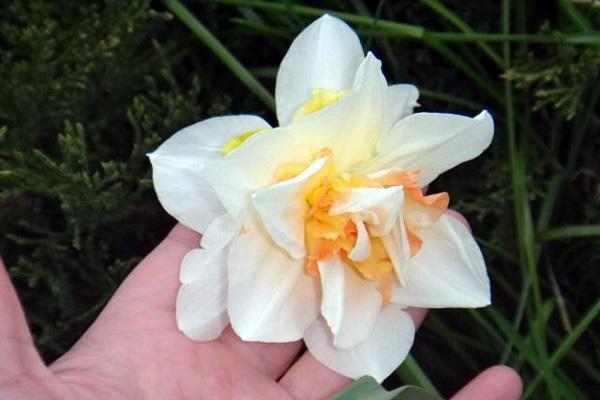
This variety tolerates dry summer days and thrives in light shade. All it needs for a long, three-week bloom is regular watering and fertilizing. It looks equally impressive planted individually or in groups in a flowerbed.
Spellbinder
A member of the trumpet daffodil group, the Spellbinder variety begins blooming in late April. It is a medium-sized plant, reaching no more than 45 cm in height. The medium-sized, pleasing yellow buds remain on the stems for two weeks. The center is paler. An interesting feature of this variety is that the intensity of the hue depends on weather conditions and can vary slightly. In rare cases, the petals become almost white.
Waist
An early-blooming daffodil belonging to the Triandrus family. The flowering period begins in late March. The flower stalks reach no more than 40 cm in height. Gardeners appreciate the Thalia variety for its long flowering period, which typically lasts until mid-April. The white flowers are small, and the foliage is richly green. Its compact appearance makes it ideal for group plantings, and it can even be used in the foreground of a composition.
Taurus
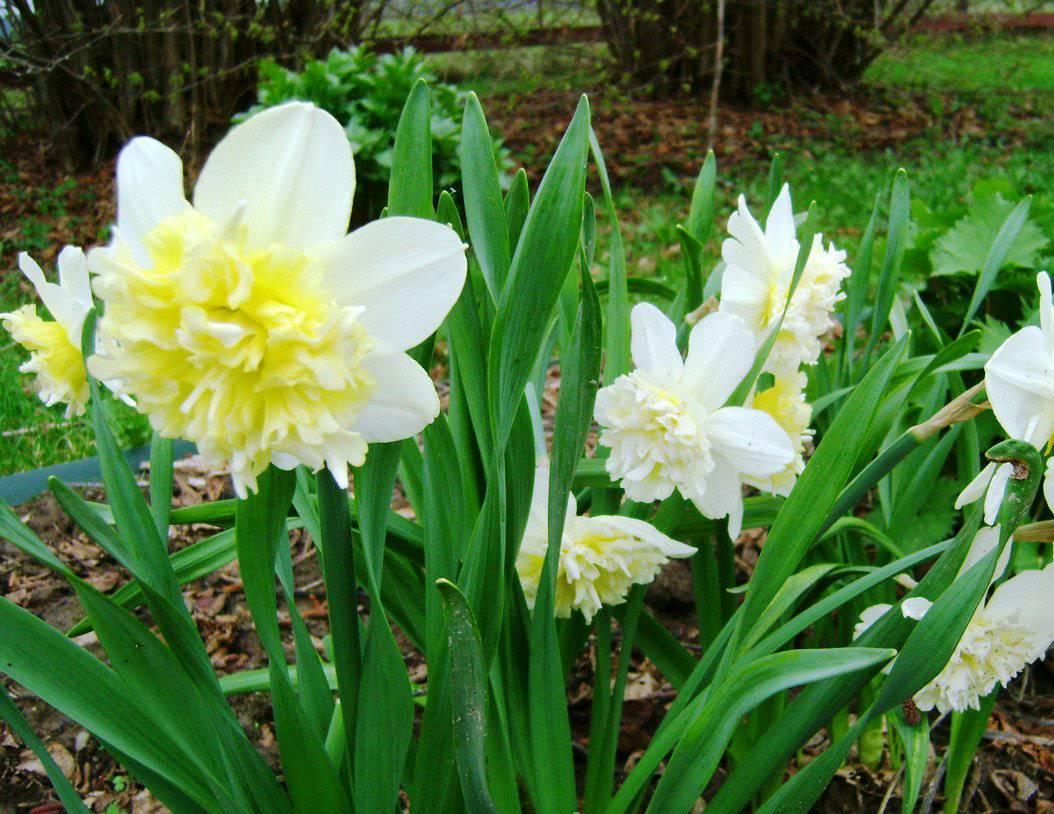
Narcissus Taurus belongs to the large-crowned varieties. The attractive buds somewhat resemble lilies. A medium-sized bud rests on a tall (up to 50 cm) stem. The daffodil crown is a rich yellow hue, while the petals themselves are white. It belongs to the mid-range group in terms of flowering time, delighting gardeners with its decorative appearance from late April.
Due to the variety's reputation for strong, vigorous flower stems, it is often grown commercially. Narcissus Taurus is also used in group plantings, mixed borders, and rock gardens.
One on one
The narcissus variety "Tete-a-Tete" belongs to the cyclamen group. It is one of the oldest varieties, bred in the 16th century and imported from Germany. The medium-sized bud is borne on a short stem—up to 30 cm. The petals are slightly raised and a rich yellow.
The variety's flowering period begins in early May, accompanied by a delicate fragrance that permeates the garden. This daffodil requires regular moisture and slows its growth in dry areas. It's not very hardy in frosty winters, so experienced gardeners recommend digging up the bulbs and storing them in a cellar until spring.
Texas
According to plant classification, it belongs to the double-flowered group of daffodils. Texas is distinguished by its large, yellow-hued buds. Early-blooming daffodils fill your garden with their fragrance from late March onward. The plant grows up to 50 cm in height.
Related posts:
 Descriptions of the best and most beautiful varieties of daffodils, ratings and selection tips
 Planting and caring for daffodils in open ground, the best time and growing rules
 Description and characteristics of the Irene Copeland daffodil variety, planting and care instructions
 Description and characteristics of the Cheerfulness daffodil variety, planting and care instructions
 When and when can daffodils be repotted? Step-by-step instructions and care.
 Description and characteristics of the Dick Wilden daffodil variety, planting and care instructions
 Description and characteristics of the Avalon daffodil variety, planting and care instructions
 Description and characteristics of the Waltz daffodil variety, planting and growing rules