
- Selection and characteristics of the daffodil Sweet Pomponette
- Varieties of the variety and flowering characteristics
- Examples in landscape design
- Planting and caring for daffodils in the garden
- Preparing the bulbs and the area
- Timing and technology of planting
- Watering and fertilizing the flower
- Loosening the soil
- Preventive treatments
- From insects
- From diseases
- Pruning and preparation for winter
- Methods of reproduction
- Gardeners' reviews of the variety
Double daffodils are a group of cultivars with diverse characteristics. Varietal differences include the doubleness of the corolla (perianth, crown, and entire corolla), petal length and shape, and color range. Sweet Pomponette daffodils have a short history: they were developed a few years ago. The exquisite decorativeness of their flowers and delicate fragrance have made these daffodils a favorite among other subspecies.
Selection and characteristics of the daffodil Sweet Pomponette
The history of daffodil breeding spans over 400 years. In England, the daffodil is the national flower. America, England, and the Netherlands are leading the way in developing new daffodil varieties. The Sweet Pomponette variety was developed in 2013 by Dutch breeders. According to the classification of the International Register of All Varieties, maintained by the Royal Horticultural Society of Great Britain, Sweet Pomponette is included in Class 4 – "Double." A common characteristic of all double daffodils is the number of petals greater than six. The popularity rating of daffodils in this class is 15% compared to the other 12 classes.
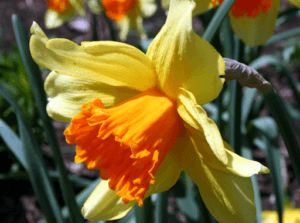
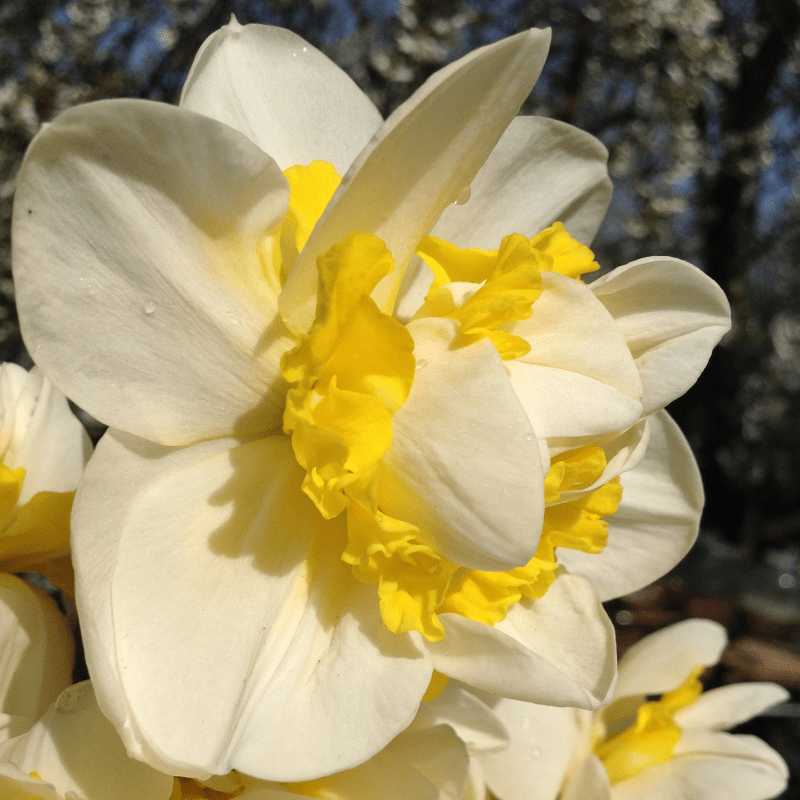
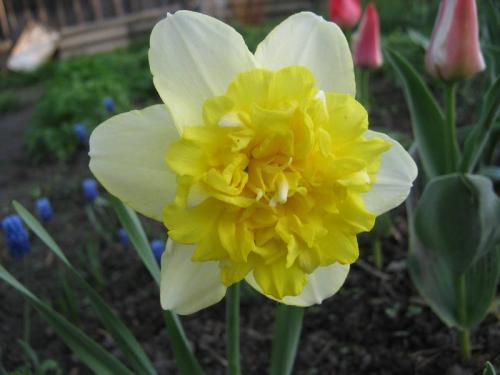
Sweet Pomponette has a double perianth and a double corona, slightly smaller in size than the perianth. A single, two-colored corolla, 10 to 14 centimeters in size, adorns a slender, leafless stem. The plant grows to a height of 25 to 60 centimeters (depending on the climate zone). The basal leaves are narrow and bright green.
Sweet Pomponette blooms from April to May. The growing season continues until late August in the underground part of the daffodil. The bulb forms the rudiment of a new flower, accumulating nutrients for its spring growth. This variety can be grown in regions with moderately low winter temperatures and extremely dry summer air. Its decorative and biological qualities make this double daffodil suitable for cutting, forcing, and as a component of landscape design.
Varieties of the variety and flowering characteristics
Sweet Pomponette has two varieties, also bred in the Netherlands:
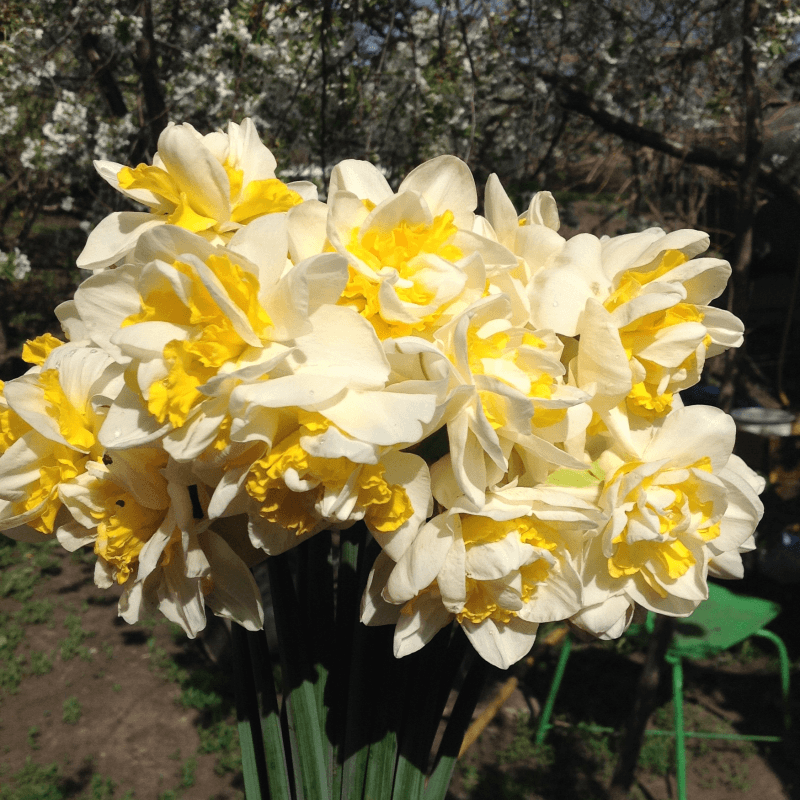
- Sweet Ocean. The flower stalk is 30 to 40 centimeters tall. Snow-white petals alternate with orange crowns. Blooms in May.
- Sweet Pomponette. Light yellow flowers up to 15 centimeters in diameter crown a slender stem, 30 to 45 centimeters tall. The first buds appear in late April or early May.
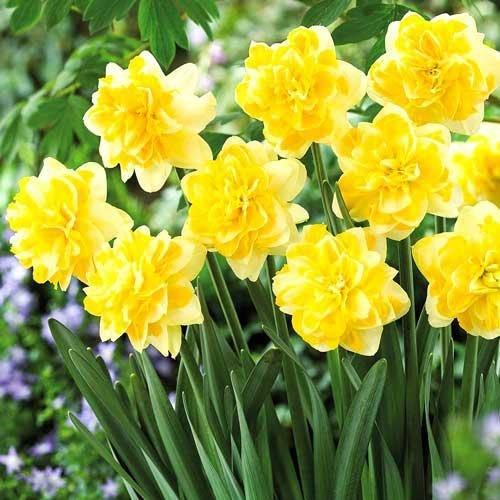
The flowering period for both subspecies does not exceed 3 weeks.
Examples in landscape design
Double Sweet Pomponette daffodils are used in group plantings next to perennials that bloom throughout the summer or have decorative foliage. Beginning in early June, the daffodils' leaves begin to turn yellow, which diminishes the decorative value of the arrangement.
By this time, perennial flowers planted close to daffodils will have grown leaves and the first buds will appear, hiding the dying parts of the plants.
Planting and caring for daffodils in the garden
Sweet Pomponette daffodils require a sunny or partially shaded, wind-free location for optimal growth. Strong winds, especially during rain, or constant drafts will break the slender stems supporting the lush "diadem." Daffodils will not thrive in areas that become waterlogged during rainfall or where the groundwater level is high (over half a meter) due to bulb rot.
Preparing the bulbs and the area
The bulbs are dug up in late August. The bulblets are separated. They are washed and dried in a warm, ventilated area for at least two weeks. If drying nets are not available, the bulbs are turned occasionally to prevent rot. Until spring, the planting material is stored at a temperature of at least 18 degrees Celsius and 80% humidity. Before planting, the bulbs are inspected, and any with damage, signs of mold, or rot are discarded. Antifungal treatment will serve as a preventative measure against plant diseases.
When growing daffodils, it's important to maintain the soil's chemical and mechanical properties. Bulbous plants require a certain soil density to ensure proper development of their underground roots. Loam soils are most suitable. Compost, humus, and mineral fertilizers are added to enrich the soil with nutrients. In sandy loam soils, peat and rotted manure are added during tilling. Clay soils can be structured by adding river sand, peat moss, and humus. Acidic soils can be alkalized with chalk or dolomite dust.
Timing and technology of planting
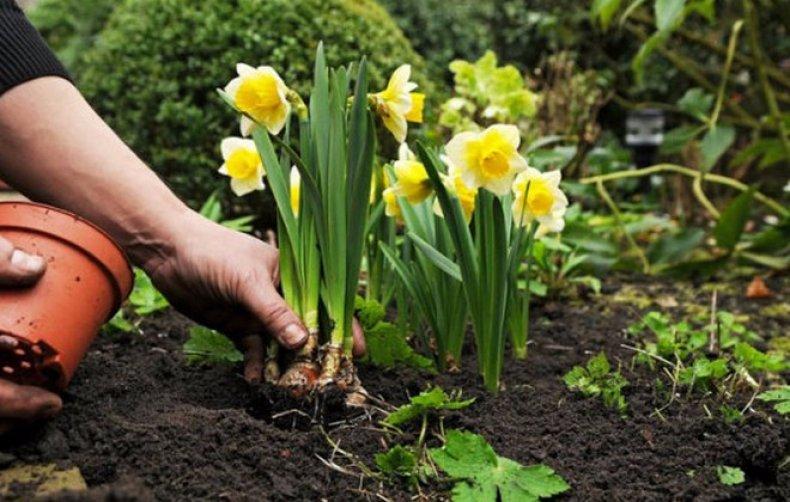
Planting begins in September or early April. Daffodil bulbs must have time to root before the cold weather sets in and the soil freezes. The exact planting time depends on the climate where daffodils are grown. If daffodils overwinter without rooting, they will not bloom in the spring.
The size of the planting hole should be determined based on the size of the bulb and the soil density. The hole should be twice the diameter of the bulb, with a depth of 17 to 10 centimeters. It is not recommended to plant daffodils closer than 7 centimeters apart. At this distance, they bloom more uniformly and for a longer period. A larger distance will result in a larger bulb.
Watering and fertilizing the flower
The variety does not require constant soil moisture, with the exception of three periods:
- bulbs - immediately after planting in the ground;
- plants - during color development;
- bulbs - at the end of the growing season (August).
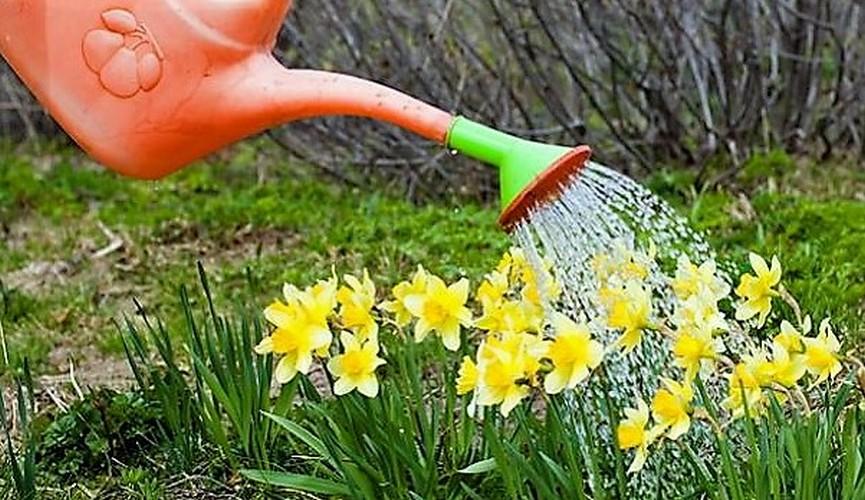
Fertilize during flowering and bulb formation with complex mineral fertilizers. Fertilization is combined with watering during dry weather.
Loosening the soil
Narcissus does not tolerate the proximity of weeds and requires soil aeration throughout the spring and summer period.
Preventive treatments
The type of processing depends on the purpose.
From insects
The main pests of daffodils are nematodes (root, bulb, and stem) and the narcissus fly. Replanting healthy bulbs to another location can prevent daffodil worms. Insecticides are used against flies.
From diseases
Bulbous plants suffer from a fungal infection that occurs in rainy and cool weather. Symptoms of bulb damage include premature yellowing of leaves, deformation and underdevelopment of stems, and small buds. When removing the bulbs from the ground, traces of mycelium or rot are visible.
Pre-sowing treatment of bulbs with a manganese solution and Fundazol increases resistance to gray mold and fusarium wilt. There are no preventative measures against viral infection (mosaic). Infected plants are removed and destroyed.
Pruning and preparation for winter
By the end of June, the above-ground portion of the plant dies back, turning yellow and drying out. The remaining stems and leaves are removed with pruning shears or garden shears. The pruning is done at ground level, leaving no stump. The soil is carefully leveled, gently touching the area where the flower stalk emerges to avoid disturbing the bulb's position.
In regions with mild winters, protective covering is not required. The bulbs can withstand temperatures down to -20°C. In colder periods, a protective layer of peat (5 centimeters), hay, or spruce branches should be used. A 10-centimeter layer of snow will reliably protect against freezing at temperatures down to -25°C.
Methods of reproduction
Daffodils are propagated from bulbs, cuttings, and seeds. Bulbs and cuttings can be transplanted to a new location two weeks after removal from the ground or in the spring. Seeds are planted immediately after ripening.
Gardeners' reviews of the variety
Lyudmila, Saratov: "I planted Sweet Pomponette three years ago. The flowers are very beautiful. The yellow globes on the slender stems look very touching. You need to plant barrier plants next to the daffodils to protect them from gusts of wind. The cultivation techniques for our climate haven't been developed. I use general information about growing bulbous plants."
Svetlana, Krasnodar: "A very decorative variety. It looks beautiful in the garden. In hot weather, it's essential to water it before sunset. I determine the watering interval visually. The next morning, I loosen the soil to prevent crusting. When the soil dries out, I water again."
Related posts:
 Description and technology of growing the Crimson Sweet watermelon variety
 Characteristics and descriptions of the most beautiful types of daffodils, names of the best varieties
 Planting and caring for daffodils in open ground, the best time and growing rules
 Descriptions of the best and most beautiful varieties of daffodils, ratings and selection tips
 Description of Sweet Cherry F1 tomato fruits and rules for growing tomatoes
 Description and characteristics of the Cheerfulness daffodil variety, planting and care instructions
 Descriptions of hosta species and the top 25 most beautiful varieties, growing rules
 Description and characteristics of the Irene Copeland daffodil variety, planting and care instructions