
- The history of the Kum Laud variety
- Characteristics and features of flowering
- Examples of use in garden design
- Planting and caring for the plant
- Preparatory work
- Timing and schemes for planting bulbs
- Watering and fertilizing
- Loosening the soil
- Trimming
- Protection from pests and diseases
- Preparing for the winter period
- Methods of reproduction
- Gardeners' reviews of the crop
Elegant daffodils are an essential part of any spring garden. Along with other primroses, they are planted in flowerbeds by almost all Russian gardeners. The Kum Laud daffodil is a double-flowered variety, making it easy to grow even for a novice gardener. The key is to follow proper gardening practices, implement disease prevention, and apply fertilizer promptly.
The history of the Kum Laud variety
Narcissus Cam Laud is a Dutch-bred variety, first mentioned in 1975. It became popular in the CIS at the end of the last century. Gardeners in the southern and central regions grow it outdoors, while in northern regions, it is planted only in hotbeds or greenhouses.
Characteristics and features of flowering
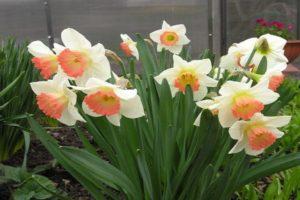
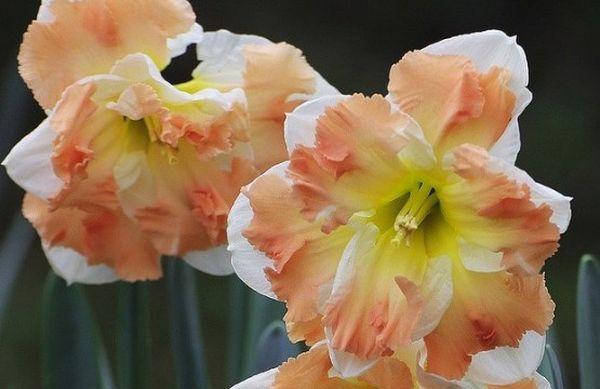
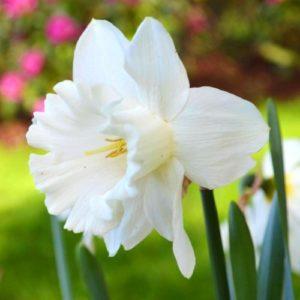
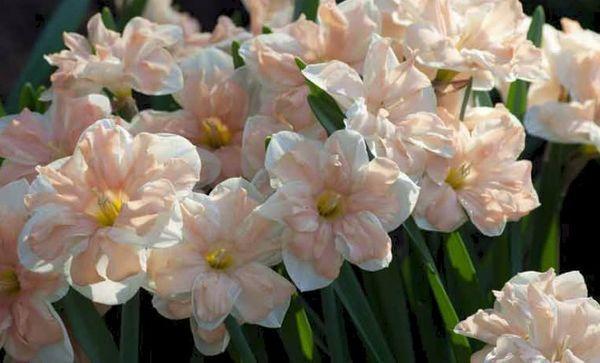
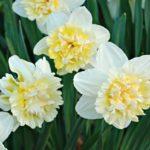
The variety's name translates from Latin as "with distinction." Indeed, narcissus has its own distinctive features and is difficult to confuse with other varieties. The flower's petals are creamy. The perianth segments are wide and apricot-colored. The crown has a corrugated edge and an orange tint.
The Cum Laude variety blooms in mid-April and lasts for about three weeks. These daffodils grow to a height of no more than 40 cm, making them suitable for growing not only in open ground flowerbeds but also as container plants in apartments. Cum Laude buds measure 8-9 cm in diameter. The foliage is a rich green.
Examples of use in garden design
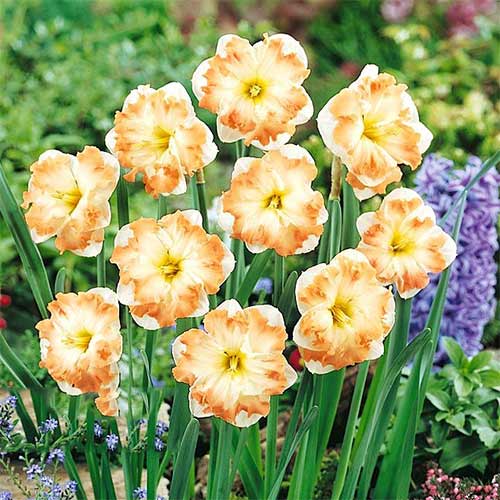
Thanks to its early flowering, the Kum Laud daffodil is used for landscaping before other flowers have begun their vegetative growth. This variety is primarily used for planting in flower beds and mixed borders. Daffodils look stunning when paired with red tulips and asters.
Planting and caring for the plant
The health and decorative appearance of daffodils depend directly on the correct selection and preparation of a growing site. Growing this variety is straightforward; all it requires is regular watering, fertilization, and treatment against diseases and pests. Since daffodils are moderately winter-hardy, they should be carefully covered when cold weather arrives.
Preparatory work
For planting daffodil bulbs, choose a sunny location, or at most, light partial shade. If the flowers don't receive enough sunlight, their development will be slowed and the flowering period will be shortened. The site shouldn't be located in a low-lying area where meltwater accumulates in the spring. This leads to bulb rot and the development of fungal diseases. When choosing a location, also keep in mind that daffodils react negatively to drafts and cold winds, which spoil the decorative appearance of the plants.
Fertile, neutral-reaction loams with good drainage are preferred for growing daffodils. Prepare the soil in June. Dig the soil to a depth of 30 cm and add nutrients. Fresh organic matter should be added a year before planting; otherwise, manure will burn the daffodil bulbs. Dig the soil again immediately before planting.
The bulbs are also prepared before being planted in the ground. They are inspected for damage and signs of disease. Afterwards, high-quality bulbs are soaked in any fungicide for half an hour and then lightly air-dried.
Timing and schemes for planting bulbs
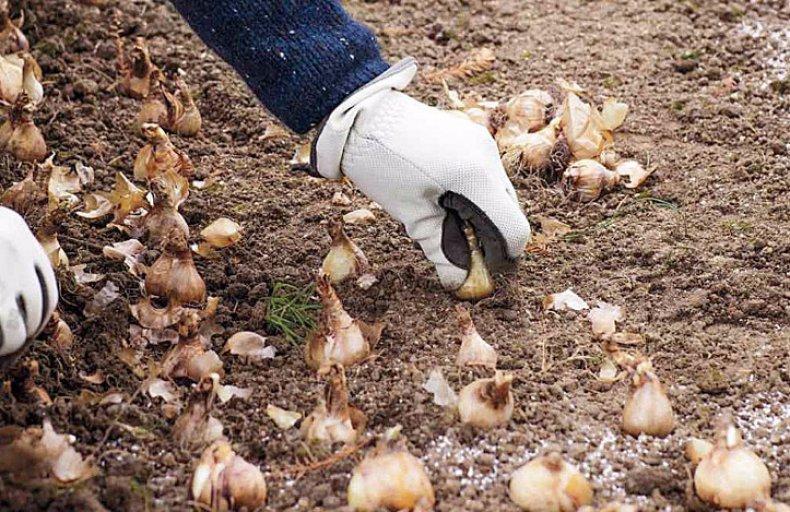
It's recommended to plant the bulbs from late August through October. If you plan to grow the flowers in a greenhouse, the timing is irrelevant; you can plant them at any time. The Kum Laud variety is planted according to the following schedule:
- Rows are made at a distance of 20 cm from each other, and holes 15 cm deep are dug in them. A distance of 15-17 cm is maintained between the holes.
- Add a little sand to the bottom to act as a drainage layer. This will prevent water from pooling around the bulbs.
- The bulbs are planted and covered with fertile soil.
- The plantings are moistened and a layer of mulch is laid on top.
Watering and fertilizing
Daffodils require ample watering during bud formation and throughout flowering. Use warm, settled water once a week. Use approximately 20 liters of water per square meter.
When there are prolonged rains, daffodils do not need additional watering; excess moisture leads to rotting of the bulbs.
By adding nutrients, you can grow daffodils with large buds and prolong the flowering period. Fertilize the plants according to the following algorithm:
- As soon as the first shoots appear above the soil surface, use a complete mineral fertilizer.
- This composition is used at the time of bud formation and flowering.
- As soon as flowering ends, use compositions containing phosphorus and potassium.
It is important to remember that fresh manure should not be used to feed daffodils – it causes diseases and damages the flower bulbs.

Loosening the soil
If there's no mulch around the daffodils, loosen the soil and remove weeds after each watering or rainfall. This should be done carefully, as the bulbs are close to the soil surface and easily damaged.
If you don't want to constantly loosen the soil and fight weeds, use organic mulch. The layer should be changed monthly.
Trimming
As soon as the buds fade, they are immediately cut from the stems to prevent them from spoiling the flowerbed's decorative appearance. The stems are cut so that no more than 7 cm remains above the soil surface.
Protection from pests and diseases
The best defense against pests and diseases is timely prevention. Treating bulbs with a fungicide before planting reduces the risk of fungal diseases. After the first shoots emerge, it is recommended to spray them with Bordeaux mixture. After flowering, daffodils are treated with a copper sulfate solution.
Unfortunately, viral diseases cannot be cured, so affected flowers are immediately dug up and destroyed away from the site to prevent the infection from spreading to other plants.
Preparing for the winter period
Before the first frost, apply a new layer of organic mulch around the daffodils. To prevent frost damage, add a 10-centimeter layer of dry leaves on top.
Methods of reproduction
Propagation by seed is labor-intensive and time-consuming, so it's rarely used by amateur gardeners. With this method, daffodils don't bloom until five years later. The easiest way to obtain new specimens is to separate offspring from the main bulb and plant them in separate plots.
Gardeners' reviews of the crop
Lidiya Semenovna Volkova, 49: "I've been growing this variety in my garden for seven years now. In all that time, the daffodils have never been sick, although I do regularly perform preventative maintenance."
Olga Vyacheslavovna Smirnova, 36: "I really like daffodil buds; they look great in a flowerbed with other primroses. Propagation is easy, so there's no need to buy planting material from a store."
Related posts:
 Characteristics and descriptions of the most beautiful types of daffodils, names of the best varieties
 Planting and caring for daffodils in open ground, the best time and growing rules
 When and when can daffodils be repotted? Step-by-step instructions and care.
 Description and characteristics of the Dick Wilden daffodil variety, planting and care instructions
 Description and characteristics of the Cheerfulness daffodil variety, planting and care instructions
 Description and characteristics of the Calgary daffodil variety, planting and care instructions
 Descriptions of the best and most beautiful varieties of daffodils, ratings and selection tips
 Description and characteristics of the Ice King daffodil variety, planting and care instructions