
- Selection and description of the variety Sunny Side Up
- Pros and cons
- Examples of use in the garden and flower beds
- Planting and care
- Selecting bulbs and preparing the soil
- Timing and schemes for planting bulbs
- Irrigation
- What to feed - the best fertilizers for lush flowering
- Mulching and loosening
- Pruning rules
- Preparing the plant for winter
- Diseases and pests – how to treat?
- Flower propagation
- Gardeners' reviews of daffodils
With the arrival of spring, daffodils are among the first to grace a gardener's eyes. Among early bloomers, these flowers are the most popular among home gardeners. This is no surprise—they are easy to grow, grow in one spot for a long time without replanting, and require little attention. The Sunny Side Up daffodil resembles orchids in appearance and belongs to the large-crowned varieties.
Selection and description of the variety Sunny Side Up
This variety of perennial bulbous plant was developed by Dutch breeders. Sunny Side Up daffodil differs from other members of its family due to its unusual, orchid-like appearance.
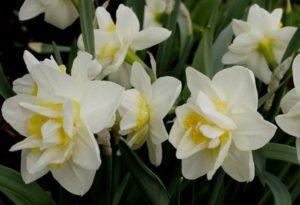
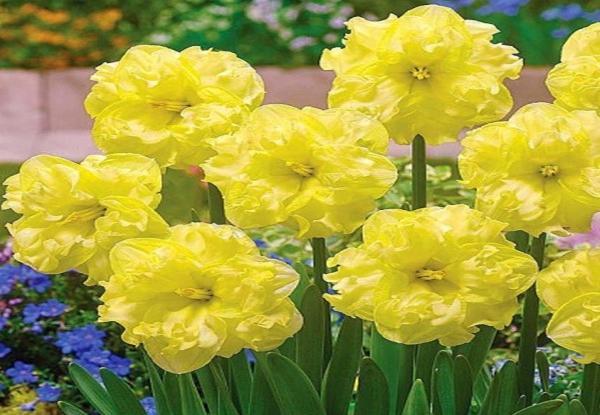
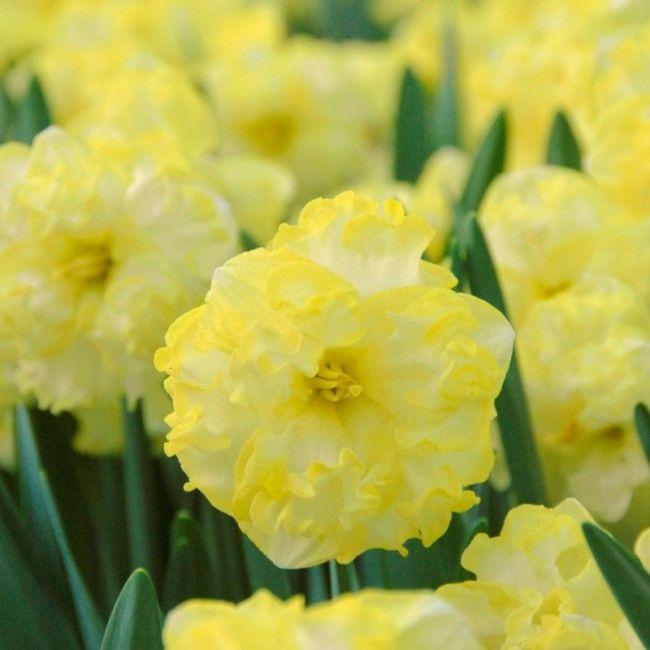
The flower produces 3 or 4 elongated, basal leaf blades. The peduncle is strong and erect, reaching up to 45 cm in height, with a single flower forming at the apex. Narcissus buds are approximately 10 cm in diameter. The petals are lemon-yellow. The large, corrugated crown is dissected and edged with a bright yellow hue. After flowering, a seed capsule forms in place of the buds.
As soon as the sun warms up, leaves emerge to the surface, followed by stems.
Pros and cons
The advantages of this daffodil variety include its decorative buds, early flowering, and low maintenance. With minimal care and disease prevention, it will grow in one location for about five years without replanting, delighting you with its beauty year after year.
The only drawback noted by gardeners is that the leaves cannot be trimmed after flowering. They are left to wilt on their own, which spoils the decorative appearance of the flowerbed.
Examples of use in the garden and flower beds
Thanks to its unusual appearance and beauty, the Sunny Side Up daffodil is popular with both landscape designers and amateur gardeners. It's planted along paths and borders, used to decorate rock gardens and mixed borders, and placed at the foreground of flowerbeds.
In addition, this variety of narcissus looks great when cut and stays fresh for a long time.
Planting and care
The planting algorithm and agricultural care for this variety are not complicated, so even a novice flower lover can handle the job.
Selecting bulbs and preparing the soil
Purchase planting material only from specialized retailers, where sellers can provide a certificate of conformity for the variety. Ensure that the bulbs are free of rot and other signs of disease, as well as any signs of insect damage.
A site with full sun throughout the day is ideal for Sunny Side Up daffodils. Light partial shade is acceptable at best. In areas without full sun, the buds form small and inconspicuous, and the plant is prone to disease. Fertile, neutral soil is preferred. The growing area is dug over in June and fertilized if necessary. Before planting, the soil is loosened again, shallowly.
Timing and schemes for planting bulbs
The best time to plant bulbs is considered to be the last days of August and throughout September. This allows the bulbs to take root before the first frosts arrive, and in the spring, the daffodils will delight you with their first blooms. Spring planting is only possible in southern regions.
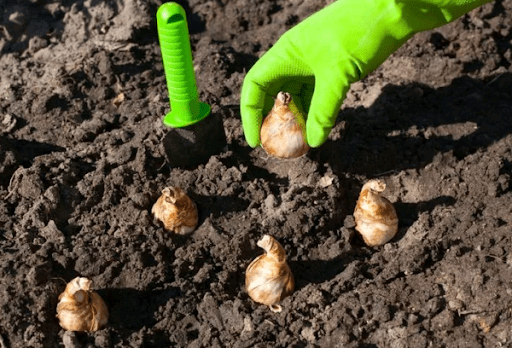
Planting operations are carried out according to the following algorithm:
- Dig holes about 20 cm deep, leaving 15 cm between them. If the soil in the chosen area is heavy, make the holes 2-3 cm shallower.
- A small layer of wood ash is placed at the bottom of each hole and an onion is placed on top.
- Sprinkle the remaining fertile soil on top, compact it a little and water the planted plants.
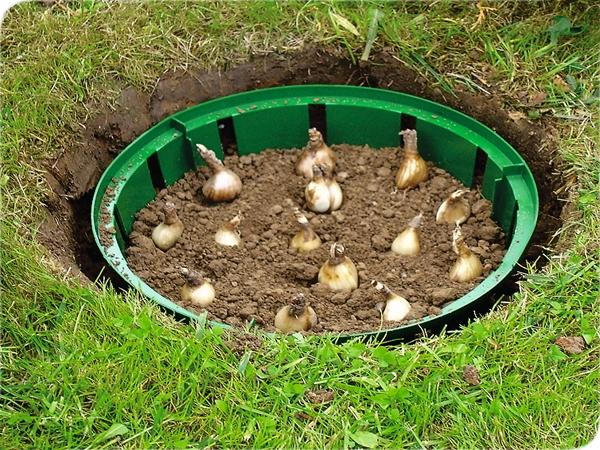
Experienced gardeners recommend laying a layer of mulch made of organic materials on top.
Irrigation
Daffodils need the most water during the foliage and bud formation period. Avoid allowing the soil to dry out, but standing water can also be detrimental to the bulbs.
On average, 20 liters of warm water are used per square meter of plantings; irrigation continues until the leaf blades have completely withered.
What to feed - the best fertilizers for lush flowering
Fertilization is essential for the formation of large buds. Fertilizing is done according to the following algorithm:
- Fertilizers containing nitrogen are applied when the first leaves appear after winter.
- Fertilizers with increased potassium content are recommended during bud formation.
- Complete complex fertilizer is used during the flowering period.
- Complexes containing phosphorus are added at the end of the flowering period.
Mulching and loosening
After each watering or rainfall, loosen the soil around the plants to a shallow depth to avoid damaging the bulbs. If you don't want to do this regularly, apply a layer of mulch around the flowers—it prevents moisture evaporation and weeds from growing through.
Pruning rules
After flowering, only the buds are carefully removed from the plants. Leaves should wilt on their own, so pruning should only begin in midsummer.
Preparing the plant for winter
To protect daffodils from winter cold, a 10-centimeter layer of organic mulch is laid down before the onset of the cold.
Diseases and pests – how to treat?
The most common flower disease is fusarium, which attacks the bulbs. If the leaves turn yellow and begin to die, the daffodil should be dug up and removed from the garden. Gray mold is treated with Fundazol.

Among insects, the large narcissus fly and the onion root mite pose a threat. Insectoacaricides such as Aktara and Actellic are used to control these pests.
To prevent diseases and pests, soak the bulbs in any fungicide for half an hour before planting. When the first leaves appear, treat the flowers with copper-containing preparations to prevent the development of fungal diseases.
Flower propagation
The only way to propagate daffodils available to amateurs is from the small bulbs that form around the mother bulb. These are separated and transplanted to a new flowerbed. Seed propagation does not guarantee a daffodil with the same characteristics as the parent bulb.
Gardeners' reviews of daffodils
Nadezhda Aleksandrovna Melekhova, 49: “I’ve been growing daffodils at my dacha for a long time now, and Sunny Side Up has become one of my favorites thanks to its large, orchid-like buds.”
Related posts:
 Characteristics and descriptions of the most beautiful types of daffodils, names of the best varieties
 Planting and caring for daffodils in open ground, the best time and growing rules
 Description and characteristics of the Dick Wilden daffodil variety, planting and care instructions
 When and when can daffodils be repotted? Step-by-step instructions and care.
 Description and characteristics of the Cheerfulness daffodil variety, planting and care instructions
 Description and characteristics of the Pink Charm daffodil variety, planting and care instructions
 Description and characteristics of the Calgary daffodil variety, planting and care instructions
 Description and characteristics of the Kum Laud narcissus variety, planting and care instructions