
- Plant selection and characteristics
- Features of flowering
- Examples of use in garden design
- Growing and caring for White Lion daffodil
- Preparatory stage
- Timing and schemes for planting bulbs
- Watering
- Fertilizer
- Loosening and weeding
- Protection from pests and diseases
- Wintering
- Breeding methods
- Reviews of the variety
In their gardens, summer residents grow not only vegetables and fruits but also flowers. Daffodils remain among the most popular primroses, delighting the eye with the arrival of spring. These plants are easy to grow and require little time for care. The key is to choose the right planting site and follow the recommendations of experienced gardeners. The White Lion daffodil is a member of the double-flowered group and one of the most sought-after among gardeners.
Plant selection and characteristics
Translated from English, the variety's name means "White Lion" and was developed by Dutch breeders. It was first introduced to gardeners in 1949, and its originator is Graaff-Gerharda. In the former Soviet Union, the White Lion variety became widespread in the 1970s and remains popular despite the emergence of new daffodil varieties.
The stems of the White Lion daffodil grow to no more than 45 cm tall, with long, strong, blue-green leaves. This variety boasts increased frost resistance and strong immunity to diseases and insect pests.
Features of flowering
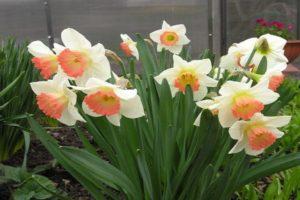
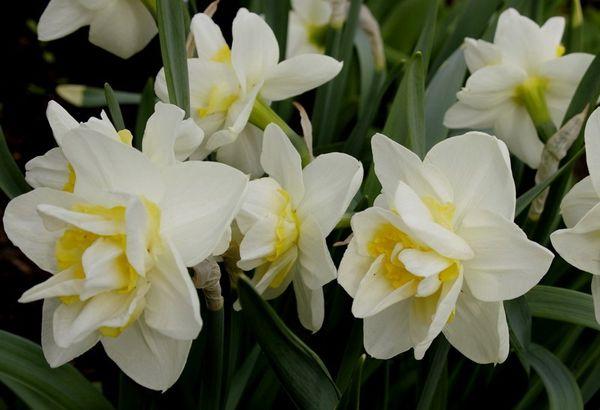
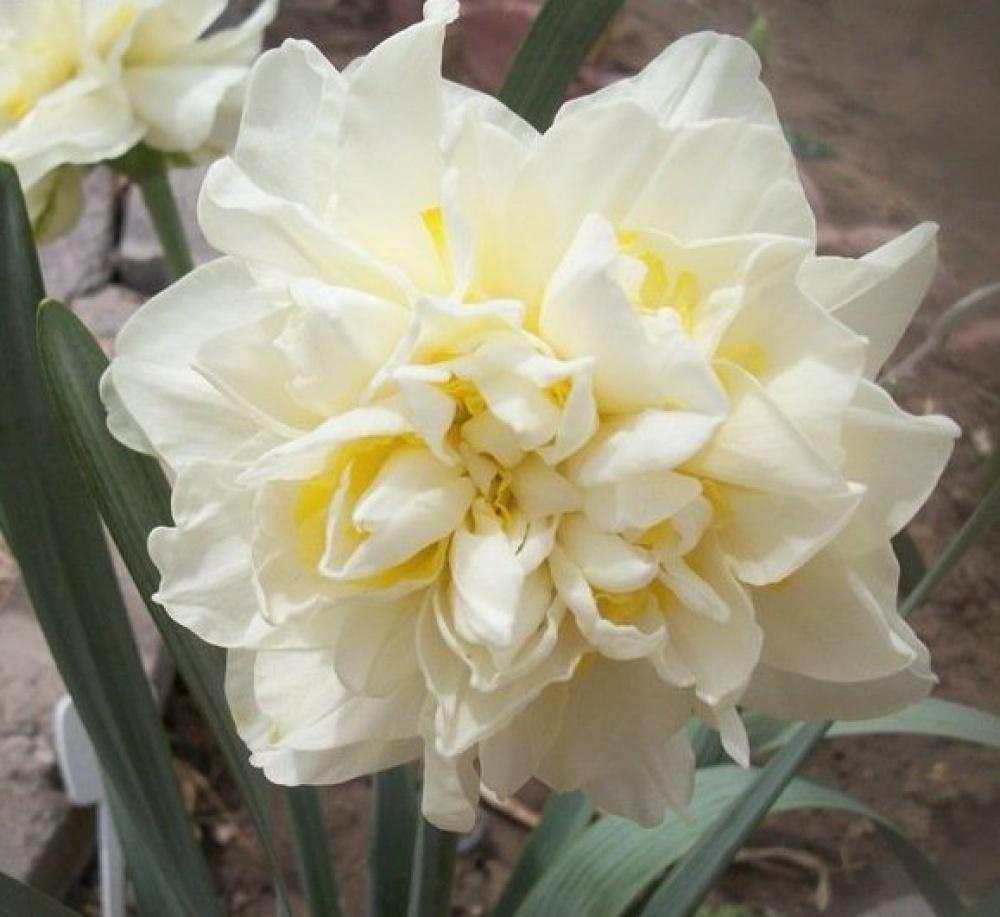
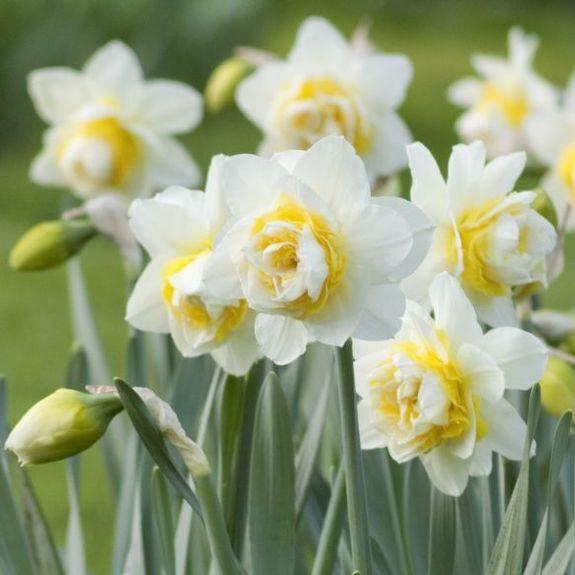
White Lion lives up to its name, with large, striking, and snow-white buds. The center of the flower is yellowish. The petals are curved, somewhat reminiscent of a lion's mane. White Lion flowers range in diameter from 8 to 10 cm.
This narcissus variety is mid-blooming, with the first buds appearing in May. The blooming period lasts two weeks. During this time, the flowers emit a light, pleasant fragrance that is gentle on the respiratory tract, making them ideal for cutting and bouquets. They remain fresh for a long time in a vase.
Examples of use in garden design
Thanks to its high decorative qualities, the White Lion daffodil is widely used as a garden decoration. It looks equally impressive planted alone or in combination with other spring flowers.
Several options for using the variety:
- For planting in rockeries and alpine hills.
- In the design of garden paths and borders.
- In the company of red tulips and hyacinths.
- Against the background of green bushes.
Growing and caring for White Lion daffodil
Growing White Lion daffodils isn't particularly difficult; even a beginner can handle the planting and care process. The key is choosing the right site, preparing the soil and bulbs, and following the planting schedule. Important aspects of proper care include timely watering, regular fertilization, and preventative treatments against diseases and pests.
Preparatory stage
Dutch daffodils should be planted in locations protected from strong winds and exposed to sunlight for most of the day. Light partial shade is acceptable at best. If planted in the shade, the daffodils will develop small buds and be prone to disease.

Loose, well-drained soil is preferred. Daffodils thrive in soil with a neutral pH. Planting in low-lying areas is not recommended, as water that accumulates there after snowmelt will cause the bulbs to rot. A month before planting, dig the area, adding 15 grams of sand and the same amount of compost per square meter.
It is strictly forbidden to use fresh manure, it will burn the bulbs and cause the development of diseases.
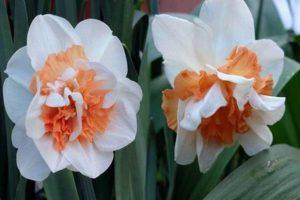
Before planting, inspect the bulbs and discard any damaged by disease or insects. As a preventative measure, soak the planting material in a weak potassium permanganate solution or any fungicide for half an hour.
Timing and schemes for planting bulbs
Planting of daffodil bulbs begins in August and continues until the end of September, so that the flowers can take root in their new location before the first serious cold weather sets in.
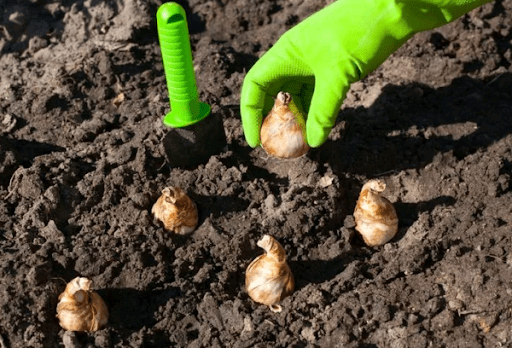
The planting of the material is carried out according to the following algorithm:
- The soil is loosened to the depth of half a shovel 2 weeks before the expected planting.
- Dig holes 15 cm deep, the optimal distance between bulbs is 10 cm.
- A small layer of sand or wood ash is poured into the bottom of each hole; this material serves as drainage and absorbs excess moisture.
- Place the bulbs in the middle of the hole and cover with the remaining soil.
- Water the plantings generously and apply a layer of organic mulch on top. This will prevent the bulbs from freezing over the winter.
Watering
Narcissus require watering most during bud formation and flowering. The duration of flowering depends on the regularity of watering. Water twice a week with warm, settled water. If it rains for a long time, stop watering, as excess moisture is harmful to the bulbs. In hot and dry weather, on the other hand, increase the frequency of watering.

Fertilizer
Fertilizing ensures large buds and long flowering. Apply nutrients according to the following schedule:
- As soon as the first shoots appear above the ground, a complete mineral fertilizer is applied.
- The second time, plants are fed at the budding stage, using fertilizers with increased nitrogen and potassium content.
- During the flowering period, compositions containing potassium and phosphorus are used.
- After flowering, phosphorus-potassium fertilizer is applied again.
Loosening and weeding
Loosen the soil around the daffodils after each watering or rainfall, removing any weeds that rob the flowers of their nutrients. Do this carefully to avoid damaging the bulbs.

Protection from pests and diseases
Timely weeding and removal of fallen leaves from the area are the main preventative measures against insect pests. The most common disease is fusarium, which attacks the bulbs. If the first symptoms are noticed—yellowing of leaf tips—the bulbs are dug up, the damaged areas are trimmed, and treated with a fungicide.

In the case of viral diseases such as ringspot or mosaic, daffodils are dug up and destroyed to prevent them from infecting other plants in the area. To prevent disease, spray the seedlings with a fungicide; Fitoverm, for example, has proven effective.
Wintering
To preserve the bulbs during the winter, a 10-centimeter layer of mulch made from humus or dried hay is placed on top of the trimmed daffodils.
Breeding methods
The easiest and most effective way to propagate this variety of daffodils in your garden is vegetatively. In the second year, offspring form around the mother bulb, which are carefully separated and planted in new flowerbeds. This is done when the leaf blades have partially yellowed after flowering.
Reviews of the variety
Polina Vasilyevna Nikolova, 43: "I've been growing the White Lion variety at my dacha for five years now. I really like the buds—large and pleasantly fragrant. We always fertilize them, otherwise the flowers turn out small. We've never encountered any diseases, but we do perform preventative treatments in the spring."
Related posts:
 Description of shallot varieties, cultivation and care, when to harvest
 When is the best time to plant tulips in open ground? Timeframes by region and rules.
 Planting and caring for daffodils in open ground, the best time and growing rules
 When and how to plant tulips in the Urals in autumn and care for them outdoors
 Description and characteristics of the Dick Wilden daffodil variety, planting and care instructions
 Description of the best varieties of onions, planting and care in open ground
 Description and characteristics of the Ice King daffodil variety, planting and care instructions
 When is the best time to plant tulips in the Moscow region in autumn? Timing and care instructions.