
- Selection and characteristics of the variety
- Examples in landscape design
- The Pros and Cons of Sir Winston Churchill's Narcissus
- Planting and care
- Preparing the bulbs and the area
- Planting dates and patterns
- Watering
- Fertilizer
- Weeding
- Protection from pests and diseases
- Plant wintering
- Breeding methods
- Gardeners' reviews of the variety
Daffodils are among the most popular primroses, adorning gardeners' plots with the arrival of the first warm days. Thanks to the efforts of breeders, every gardener can now choose a variety or hybrid suited to their specific climate and tastes. The Sir Winston Churchill daffodil is a double-flowered flower that is easy to grow.
Selection and characteristics of the variety
The Sir Winston Churchill daffodil is a Dutch-bred variety. It was added to the International Register of Garden Plants in 1946, but remains popular to this day due to its distinctive ornamental qualities. Speelman and Sons is considered the originator of this daffodil variety.
Sir Winston Churchill is a mid-season variety. The first buds open in late April. Flowering continues until the end of May, which is one of the cultivar's advantages.
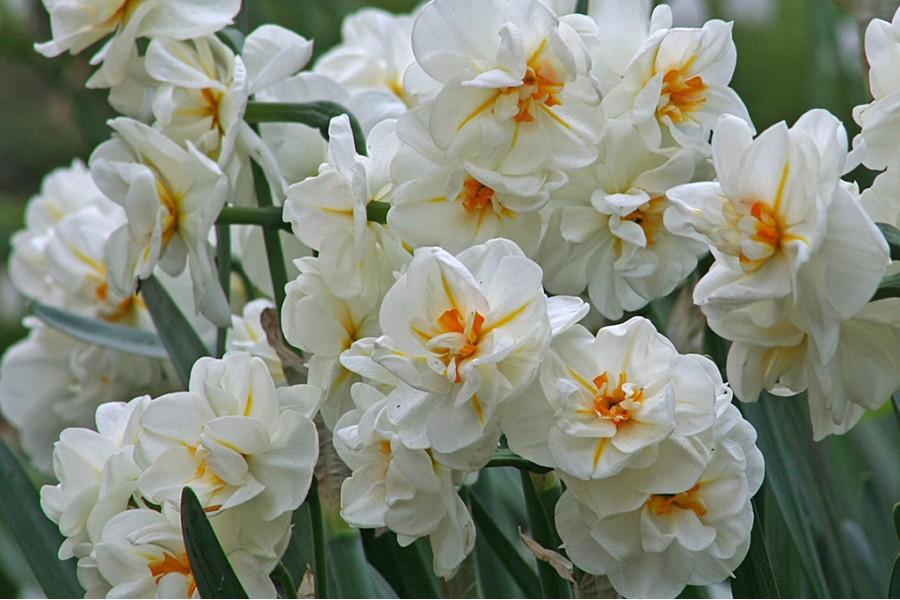
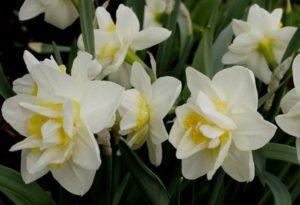
Narcissus stems grow to a maximum height of 65 cm, and the buds are quite large, measuring about 6 cm in diameter. Each stem produces up to four buds with a double tube. The leaves are straight and blue-green.
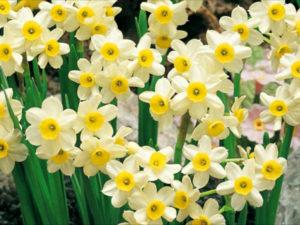
Narcissus petals are creamy white with a slight orange tint. The flower's center is red, and the crown is split and double. During flowering, daffodils exude a light and pleasant fragrance. The Sir Winston Churchill variety is also used for cut flowers, as the flowers stay fresh in a vase for a long time.
Examples in landscape design
In garden decoration, Dutch daffodils are used in the following variations:
- In mixed plantings in flower beds.
- For decorating borders.
- For lawn decoration.
- In mixborders and flower beds.
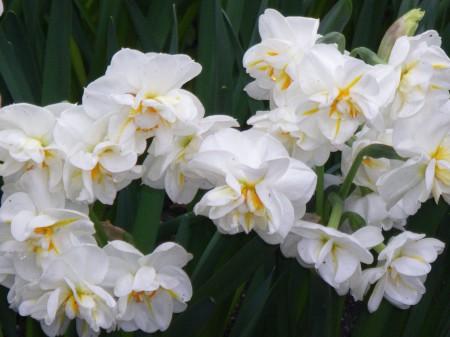
Narcissus Sir Winston Churchill looks equally impressive both in mono-compositions and in combination with other primroses.
The Pros and Cons of Sir Winston Churchill's Narcissus
Like every variety of daffodil, Sir Winston Churchill has its advantages and disadvantages.
The advantages of growing include:
- Long flowering period (up to a month).
- Large beautiful buds.
- Possibility of using flowers for cutting.
- Unpretentiousness and high winter hardiness.
The following are noted as disadvantages:
- Susceptibility to diseases such as fusarium.
- Inability to reproduce by seeds.
Planting and care
Planting begins with preparing the site and bulbs. Further care for daffodils consists of watering, fertilizing, loosening the soil, and preparing for winter.
Preparing the bulbs and the area
Lightly shaded areas are ideal for growing this variety of daffodils. The soil in the flowerbed should also be slightly alkaline and well-drained. The area should be protected from drafts and cold north winds. Till the soil in early summer and add nutrients as needed.
Before planting, inspect the bulbs and discard any that are rotted or diseased. Pre-treat the planting material with a fungicide.
Planting dates and patterns
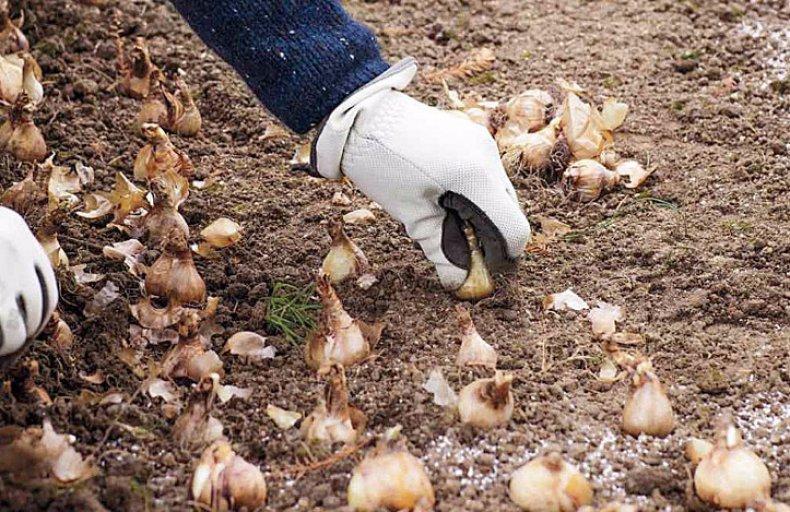
The best time to plant bulbs is considered to be from late August to the end of October. Spring planting is not recommended, as the first flowering will not occur until the following season.
Landing algorithm:
- Dig holes 15 cm deep, leaving a distance of 10 cm between them.
- A small layer of river sand is poured onto the bottom, which will act as drainage.
- Carefully place the bulb and deepen it slightly.
- Sprinkle the remaining fertile soil on top and compact it.
- Water generously and, if desired, apply a layer of organic mulch.
Watering
As soon as the first leaves emerge above ground, daffodils begin to be watered. The plants require the most moisture during bud formation and flowering. Approximately 20 liters of warm water are used per square meter of planting. The frequency of watering is adjusted depending on the weather. Dry crust formation should be avoided, but excessive moisture can also harm the flowers.

Fertilizer
The introduction of nutrients is carried out in four stages:
- In spring, when greenery appears, daffodils are fed with complexes containing an increased dose of nitrogen.
- As soon as the flower stalks have formed, compounds containing potassium are added.
- When the first buds appear, add a complex composition for flowering plants.
- The last time daffodils are fed is when they bloom. At this time, phosphorus- and potassium-based fertilizers are preferred.
Weeding
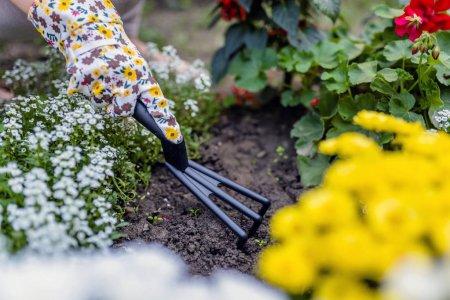
To prevent weeds from choking out daffodils and depriving them of nutrients, loosen the soil around the roots after each watering, simultaneously saturating the soil with oxygen. If you don't want to weed throughout the season, mulch can be placed around the flowers to discourage weed growth.
Protection from pests and diseases
The most common diseases of this variety are fusarium wilt and sclerotium rot. To prevent these diseases, spray the flowers preventively in early spring, before flowering. Use any fungicide, such as Maxim.
The most common insects found on daffodils are the narcissus fly and the bulb nematode. Insecticides are used to control them.
Plant wintering
Despite the variety's high frost resistance, it's best to cover it before the onset of cold weather. Spread a 10-cm layer of dry leaves over the plants.
Breeding methods
The only way to propagate this variety of daffodils in your garden is vegetatively. The offspring are separated from the mother bulb and planted in flowerbeds, initially covered with a layer of mulch.

Gardeners' reviews of the variety
Elena Vladimirovna Leskina, 38: "I've been growing this variety at my dacha for 10 years now. I haven't encountered any particular problems, but to get large buds, fertilizing is essential."
Related posts:
 Characteristics and descriptions of the most beautiful types of daffodils, names of the best varieties
 Planting and caring for daffodils in open ground, the best time and growing rules
 Description and characteristics of the Avalon daffodil variety, planting and care instructions
 Description and characteristics of the Irene Copeland daffodil variety, planting and care instructions
 Description and characteristics of the Pink Charm daffodil variety, planting and care instructions
 Description and characteristics of the Dick Wilden daffodil variety, planting and care instructions
 Description and characteristics of the Waltz daffodil variety, planting and growing rules
 Description and characteristics of the Cheerfulness daffodil variety, planting and care instructions