
- Columbine in landscape design
- Botanical characteristics of the plant
- Varieties and varietal diversity
- Goldenflower
- Hybrid
- Columbine
- Olympic
- Alpine
- Aquilegia skinnerii
- Canadian
- Features of planting columbine seeds
- Preparing the container and soil
- How to prepare seeds
- Timing and rules for sowing
- Spring transplanting of seedlings into open ground
- Necessary care for the flower
- Watering
- Top dressing
- Trimming
- Loosening the soil
- Preparing for winter
- Reproduction
- Seed collection
- Division by cuttings
- Bush division
- Problems of growing
Aquilegias don't require special care and thrive in the partial shade of other plants. This easy-to-grow flower, a member of the buttercup family, can be found in many gardens. It's commonly known as columbine or aquilegia. Let's look at how to grow aquilegia—planting and care guidelines, propagation considerations, and the challenges gardeners can expect.
Columbine in landscape design
Aquilegia is a friendly, companionable flower that pairs well with a variety of plants. To create a harmonious composition in a flowerbed, columbine is planted with delicate, small flowers similar in structure to columbine. Suitable companion plants for columbine include:
- globeflower;
- poppy;
- saxifrage;
- bell;
- carnation.
Aquilegia gently complements plants with tall, strong flower stalks – lupine, astilbe.
They look great when planted alongside shrubs. Choose woody plants with delicate foliage in the center, which will provide slight shade for the flowers. It's important to remember that in colder regions (the Urals and Siberia), columbine plantings require mulching for the winter.

Use in landscape design:
- decoration of alpine slides with low-growing species of columbine;
- as a border and along paths, at the edges of green lawns;
- in flower beds and mixborders – medium-sized varieties of columbine.
Flowers look touching on the banks of garden ponds, next to ground cover plants.
Note: Cut columbine quickly fades and is not suitable for bouquets. Dried flowers retain their vibrant color, making them ideal for ikebana arrangements.
Botanical characteristics of the plant
Aquilegia is a member of the genus of herbaceous plants in the Ranunculaceae family, native to the Northern Hemisphere. The above-ground portion of Aquilegia has a biennial cycle. In the first year, a bud forms at the base of the flowering portion by autumn, from which a rosette emerges. This rosette dies over the winter and usually dies in the spring. New leaves emerge from the base of the rosette, and a flower stalk emerges. The growing season lasts from May to September.
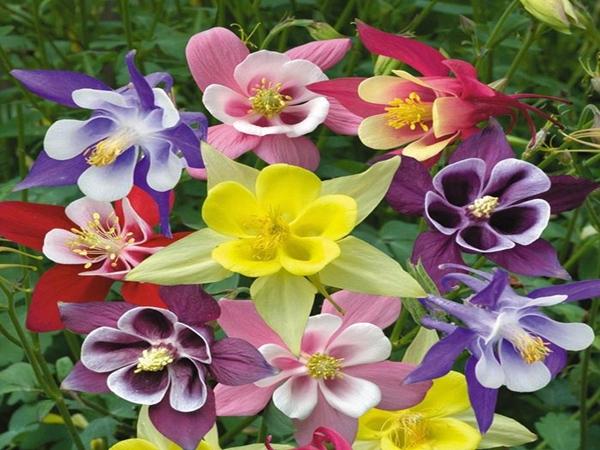
The bush grows to 30-40 centimeters, with flower stalks reaching 60-100 centimeters. The rosette-shaped, dissected leaves have long petioles, while the foliage on the stems is sessile. The flowers are solitary or gathered in inflorescences of various patterns. The petals come in a variety of colors—white, crimson, and blue. The buds are often bicolored. The corolla typically has straight or curved spurs. Spurless species are native to Asia.
Perennials usually bloom in the second year; by the fourth or fifth year, the bush becomes senescent and needs to be replanted. Seeds ripen in polyfolia and should be planted in the first year, as germination quickly declines.
Varieties and varietal diversity
There are about a hundred species found in the wild, of which 35 are cultivated. Ornamental cultivars and hybrids with tall stems and vibrant petals have been developed from these wild varieties. Some hybrid species bloom almost all summer.
Goldenflower
A native of North America, Aquilegia chrysantha has a distinct yellow coloration and elongated, straight spurs. It tolerates drought and winter frosts. It can grow in any region of Russia.

Hybrid
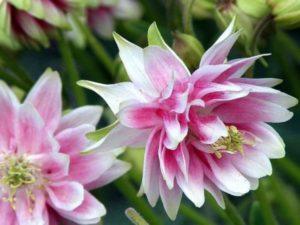
The hybrid columbine is a cross between Aquilegia vulgaris and American species of columbine. The bush grows to 0.5-1 meter tall, with a wide variety of flowers. Popular varieties include double-flowered varieties, those with spurs of varying shapes, and those without spurs. Most varieties have large flowers, up to 9 centimeters long.

Columbine
Columbine bushes grow to 60-70 centimeters and tolerate both shade and sun. They come in a wide range of colors.
Olympic
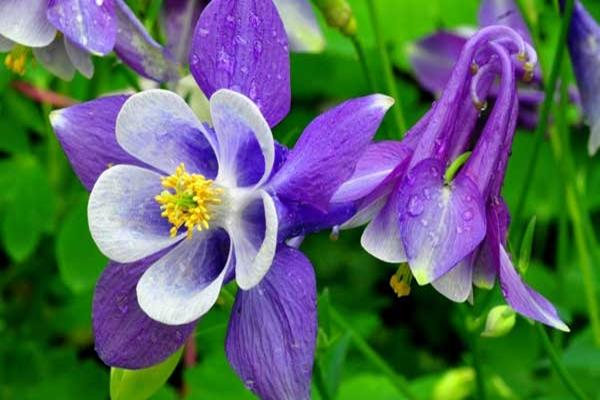
The flowers of the Olympic columbine grow up to 10 centimeters. The stem is distinctly pubescent, and the petals are light blue. The flower's native region is the Caucasus and Iran. It blooms for about a month, beginning in mid-May.

Alpine
A delicate columbine, 30-80 centimeters tall, with buds in shades of blue. Small spurs are slightly curved. The flower is up to 8 centimeters in diameter. It blooms in late June.
Aquilegia skinnerii
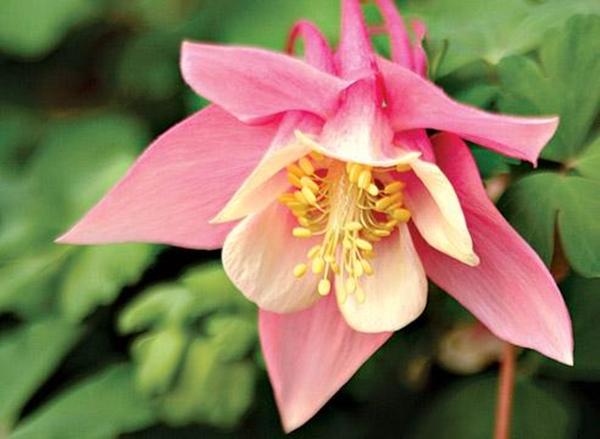
The flower has a bright yellow center framed by red-orange petals. The diameter is 4.5 centimeters, with straight spurs. Aquilegia skinneri thrives in shade; in full sun, it shrinks and wilts. There are winter-hardy varieties.
Canadian
The burgundy petals are refreshed by a hint of yellow in the center. Canadian columbine prefers shade and requires regular watering. The bush grows up to 60 centimeters tall, with flowers measuring 4.5 centimeters in diameter and straight spurs.
Features of planting columbine seeds
Most gardeners use seed planting to grow new commercial varieties and propagate columbines already growing in the garden. Freshly harvested seeds are sown directly into the soil in spring or fall. Many flower lovers also pre-plant seedlings, which helps prevent seed loss and creates more favorable conditions for germination and development.

Preparing the container and soil
Shallow seedling boxes are not suitable for columbine. Deep containers are used for planting to prevent the rapidly growing roots from bending in the container. The pots are disinfected and a drainage layer is laid down. The soil mixture for planting should be:
- humus;
- leaf soil;
- sand;
- turf.
All components are taken in equal parts. The soil is watered with a weak solution of potassium permanganate to disinfect it and then moistened.
How to prepare seeds
Aquilegia seeds are fussy, quickly losing their viability. When purchasing, choose the freshest seeds, no more than 1-2 years old. Homemade seeds, collected in late summer, are sprinkled with sifted soil and stored in the refrigerator over the winter.
In spring, remove the seeds from the soil mixture and rinse. When planting in spring, harden the purchased seedlings with cold temperatures: wrap the seeds in a damp cloth and refrigerate for 24 hours. Before planting, soak them in growth stimulants such as Zircon, Epin-Extra, or Ecogel to enhance germination.

Timing and rules for sowing
At home, columbine seedlings are planted in March to allow the young shoots to establish themselves before June. Carefully spread the seeds over the moistened soil. Then, pour the soil through a sieve to a depth of 3 millimeters. Gently compact the soil with your fingertips to prevent the seeds from being exposed. Lightly moisten the surface with a spray bottle.
Cover the containers with dark cloth and place them in a room with a temperature of 16-18°C. Seedlings appear after 8-14 days. If sown in a common container, the columbine seedlings are pricked out when two leaves have grown.
Spring sowing of seeds is carried out in the ground in May, after the danger of frost has passed. In this case, hardening off the seeds is essential. When sowing in the ground in the fall (October), stratification is not required.
Spring transplanting of seedlings into open ground
Most columbine varieties and hybrids do not tolerate full sun. For planting, choose a site with partial shade—under trees with sparse canopies or shrubs. Aquilegia can be planted near a fence or building. Young columbine seedlings are moved from houses to open ground in early June for further growth, where they will spend the summer gaining strength.
To plant aquilegia in a permanent location, follow the following scheme:
- deadline – at the end of August or next spring;
- planting density – 10-15 plants per square meter;
- distance – 25 centimeters for low-growing flowers, 40 centimeters for tall plants.
Before planting, the selected area is dug to the depth of a spade, and the soil is mixed with compost. Deep holes are dug for planting the seedlings. Aquilegia seedlings are removed from their containers with a lump of soil and placed into the hole.
Necessary care for the flower
Aquilegia is easy to care for; it's not a demanding plant. Moderate watering, loosening the soil, and 2-3 fertilizings will ensure abundant flowering. In winter, it will require additional soil amendments and mulching.

Watering
A powerful, well-developed root system makes columbine undemanding when it comes to moisture. Water the bushes as the top layer of soil dries out, and more frequently during drought. Columbine prefers surface irrigation; a sprinkler system can be used.
Top dressing
Aquilegias that are supported with fertilizer bloom abundantly and lushly, grow taller, and tolerate frost better. Organic and mineral fertilizers are used to fertilize the flowers:
- The first feeding is at the beginning of the vigorous growing season (May). Apply a liter of manure diluted in water under the roots.
- Second. Early June – during flowering. Urea, nitrophoska solution (nitrogen-phosphorus-potassium fertilizer) according to the instructions.
- Third. After flowering has finished and the flower stalks have dried out, it's time for autumn. Superphosphate, potassium sulfate.
Fertilizer is carefully applied to the roots, being careful not to get it on the green parts or flowers. Flowering stimulants can be used during bud formation.

Trimming
No shaping of the columbine bush is required. To preserve the decorative appearance of the flowers and avoid crowding the plantings, the stems with dried heads are cut off after flowering. This will prevent seeds from forming and maturing and will prevent self-seeding.
Loosening the soil
To improve growth, loosen the soil around the bushes after watering, removing weeds and excess plants that have emerged from discarded seeds. Enriching the soil with oxygen provides additional nutrition to the roots, resulting in more flowers. Weed control protects the columbine from fungal diseases and pests that thrive in the undergrowth.

Preparing for winter
Pre-winter care for the flower involves cutting off any remaining green parts and mulching the bed. The powerful root doesn't grow only downwards; in older plants, the underground portion gradually begins to emerge. The upper part of the rhizome, with its growing points, remains unprotected. Before winter, add soil and cover the pruned columbines with mulch. The organic matter will act as fertilizer for the columbine in the spring.
Reproduction
Aquilegia can be propagated by seed or vegetatively. This perennial plant doesn't have a long lifespan; after 4-5 years, the bush needs to be renewed. If you want to preserve a valuable variety or hybrid, aquilegia is propagated by division or cuttings.
Take a look Also
Seed collection
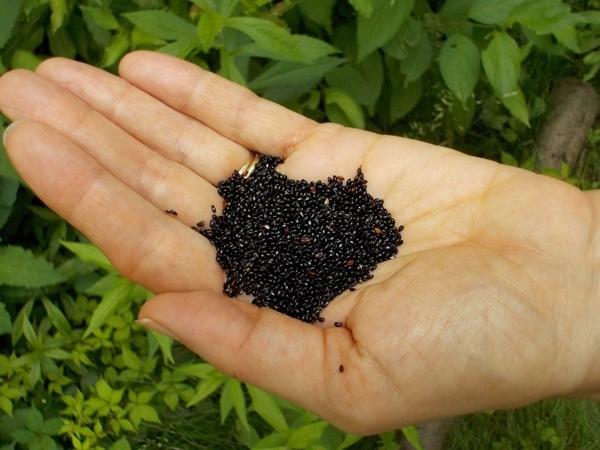
To collect seeds, faded flower stalks are allowed to form capsules. When the capsules begin to turn yellow and dry out, they are loosely tied with gauze to prevent the small seeds from spilling onto the ground as they ripen. The dried capsules are cut off, and the seeds are shelled.
Important: Seeds have a high germination rate in the first year, and columbine plants form a dense mat. It's best to plant the seeds this fall or the following spring, storing them in the refrigerator over the winter.
Division by cuttings
The flower can be propagated by separating young cuttings. The stem growing from the bud is cut off in April, along with the heel. The base is treated with Kornevin to stimulate root growth. Place the cuttings in a sandy substrate, cover the seedling with a plastic bottle during cold weather, and keep it moist. Rooting takes over a month. When the columbine shows signs of active growth, move the plant to its permanent location.
Bush division
Owners of older plants (4-5 years old) decide to divide their bushes when the flower is disintegrating, producing few buds, or when they want to preserve a valuable variety or hybrid. The best time for division is early spring and late summer, when vegetation has not yet begun or is just finishing. Gardeners should remember that divisions take root with difficulty and are susceptible to disease for a long time.
Carefully dig up the bush, shaking off the soil to expose the roots. Using a sharp, clean knife, divide the rhizome into sections, ensuring each cutting has at least two buds. Plant in holes with prepared soil. Water and provide shade. Fertilize once the columbine has established itself and begun to grow.

Problems of growing
Shade-loving columbines suffer from a preference for cool temperatures and an aversion to bright sunlight. In shaded areas, flowers often suffer from fungal diseases:
- Powdery mildew is a whitish coating on leaves that looks like dust;
- gray mold - gray spots, fluffy coating;
- white rot – pieces of white plaque, discoloration of greenery, wateriness;
- Rust – brown-orange spots on green leaves, drying out of foliage.
Copper sulfate, colloidal sulfur, and fungicides are used to treat flowers. The most dangerous pests are aphids, nematodes, and spider mites. Insecticides (Actellic, Fitoverm) are used to control them.
Aquilegia grows and reproduces successfully without much effort on the part of the gardener, making it ideal for those who don't have much time to spend on flowerbed maintenance. With a little effort, you can enjoy the abundant, long-lasting blooms of this delicate columbine, admiring the graceful, elegantly shaped heads of vibrant hues.
Related posts:
 Rules for planting and caring for terry columbine, the best varieties and cultivation secrets
 How to prepare aquilegia for winter, whether to prune, and choosing a covering material
 The best eggplant varieties for growing in a polycarbonate greenhouse: planting and care
 Description and properties of the 50 best varieties of asparagus beans, benefits and harms
 Carrot care guidelines for outdoor cultivation to ensure a good harvest
 Is it possible to soak treated cucumber seeds before planting and how to do it correctly?
 Top 15 Korean Chrysanthemum Varieties, Planting and Care in the Open Ground
 The best cucumber varieties for open ground in the Moscow region and their cultivation