
Chicory, a herbaceous plant in the Asteraceae family, is renowned for its health benefits. Its roots are used to make healthy "coffee," medicinal infusions, and the leaves are added to salads. Beekeepers use the plant as a honey plant. Cultivated chicory varieties, which came to Russia from the Mediterranean, have attracted the interest of domestic gardeners. Inconspicuous blue flowers on tall, thin stems are increasingly seen in gardens.
General description of the plant
Common chicory is a perennial plant; leaf chicory varieties are grown for two years. The characteristic feature of this plant is a robust root up to 60 cm long. The stem is rough, green to the touch, erect, and tall. Under favorable conditions, it can reach over 1 m in length. The serrated leaves growing at the base are larger than the mid-stemmed and lanceolate leaves located closer to the top.
The blue or white flowers, either solitary or clustered, are short-lived. But after the ray-shaped petals fall, other buds open. Flowering continues throughout all three summer months, extending into September. The achene, formed from the ovary, contains small seeds that, after ripening, are dispersed by the wind near the parent plant.
All varieties of chicory are bitter, which gives the taste a special piquancy.
Effect on the body
The health benefits of chicory are undeniable. This herbaceous plant is used in various forms. A drink made from the roots is consumed to improve digestive function. Decoctions are used to treat skin conditions and as a choleretic. Chicory leaves are rich in vitamins.
Despite all its advantages and benefits, the plant has a number of contraindications.
About the benefits
Chicory has diuretic, healing, antibacterial, and choleretic properties, which determines its inclusion in the complex therapy of the following diseases:
- cholecystitis, cirrhosis, hepatitis;
- urolithiasis, cystitis, nephritis;
- enteritis, colitis, dysbacteriosis;
- chronic fatigue syndrome;
- hyperhidrosis;
- furunculosis, eczema;
- arthrosis;
- gastritis with high acidity;
- hypertension.
Take a look Also

The plant's beneficial properties are due to its chemical composition and a special substance, inulin, which has the following effects on the body:
- lowers blood sugar levels in diabetics;
- activates bone tissue growth;
- regulates lipid metabolism, stimulating metabolism;
- removes toxins, slags, heavy metal salts;
- stimulates cardiac activity, treats arrhythmia;
- increases immune protection;
- improves liver health;
- helps to absorb calcium.
In addition to inulin, chicory is rich in ascorbic acid, carotene, and pectin. Minerals such as potassium, calcium, and iron are beneficial for heart and joint problems and anemia. A salad made from leafy greens provides the body with nutrients and helps pregnant women cope with morning sickness. A drink made from chicory suppresses appetite and eliminates excess fluid.
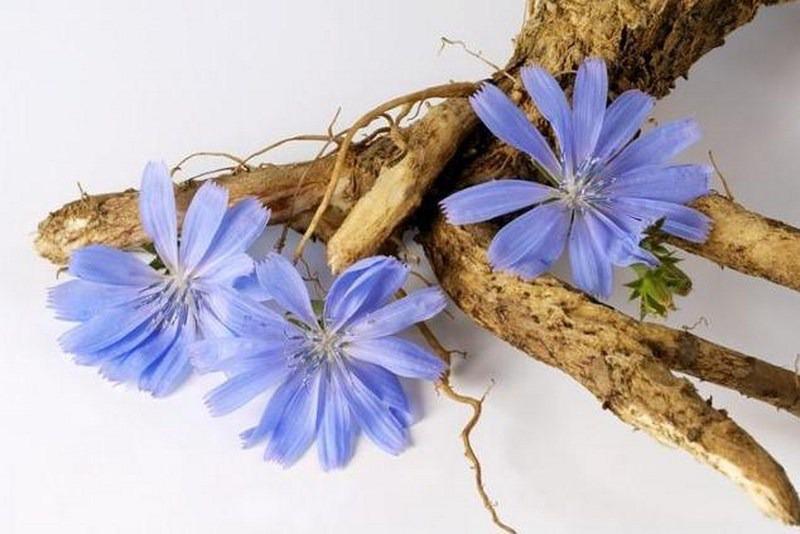 Nutritionists recommend drinking the drink on an empty stomach in its pure form without additives in the morning and evening.
Are there any contraindications?
Chicory is harmful to the body when consumed uncontrollably by healthy individuals and those with chronic systemic diseases. The plant provokes:
- exacerbation of varicose veins and hemorrhoids, as it dilates blood vessels:
- insomnia;
- lowering blood pressure in hypotension;
- allergic reactions to increased levels of ascorbic acid, Asteraceae pollen;
- kidney stone formation, gout, rheumatoid arthritis due to oxalate content;
- excess weight gain caused by increased appetite;
- cough in patients with pulmonary diseases;
- complications during exacerbation of gastritis.

Doctors do not recommend drinking chicory while taking antibiotics or including the product in the diet of children under three years of age.
Varieties of chicory
The root of common chicory, which grows as a weed, is used to make "coffee." Leafy lettuces, the best of which are endive, witloof, and red, are included in vitamin-rich salads and side dishes. These varieties are grown in gardens and in containers on windowsills.
Witloof salad
Witloof's spread across Europe began in Belgium, hence its other name, Belgian chicory. Due to its cold tolerance, it is planted in garden beds in early spring, along with other salad greens.
In the year of planting, the biennial plant produces a powerful white root vegetable up to 6 cm in diameter with a rosette of leaves, which are used for food after preliminary soaking.
From the overwintered root, the following year a stem grows, reaching 1.5 m, on which blue flowers bloom, collected in inflorescences-baskets.
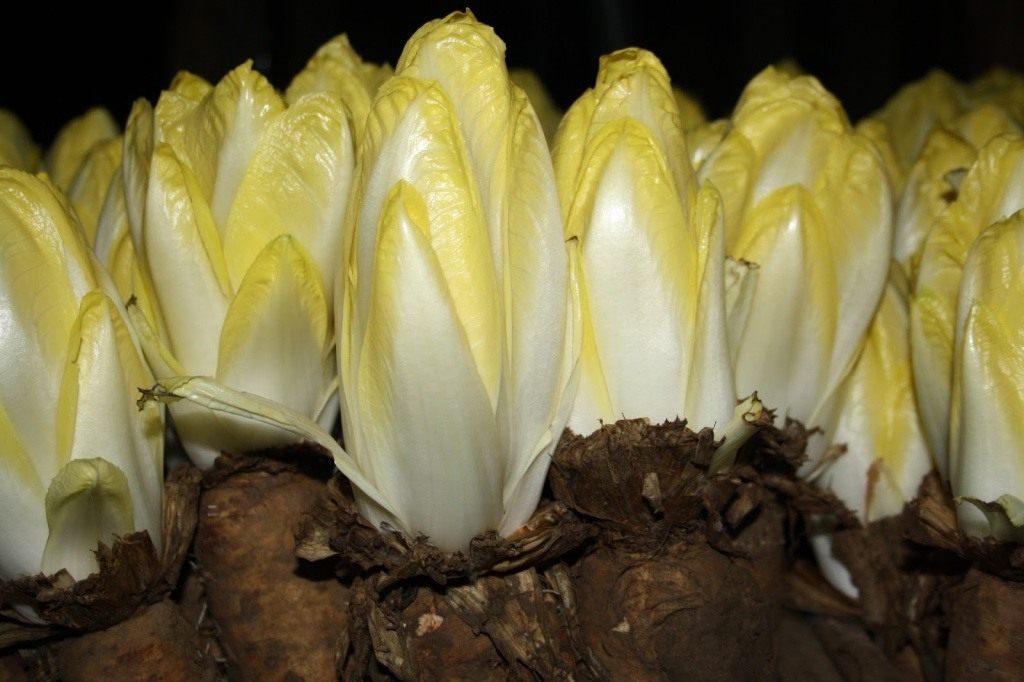
From the witloof root dug up in the fall, elongated small heads of cabbage of white color with a yellowish or green top are grown. Europeans value this variety for the opportunity to consume a vitamin-rich product throughout the winter.
Endive
This moisture-loving variety, which prefers humus-rich soils, resembles lettuce. Pale leaves, creamy, yellow, or green, form a rosette, forming loose heads. The root is woody, branched, and short. The leaves are 10 cm long, with a smooth, curly, and deeply dissected texture. The content of intybin gives lettuce its piquant, slightly bitter flavor.
Endive is most widespread in the Mediterranean. The leaves are used as wraps for roasting meat and fish, and added to soups, salads, and side dishes. The variety is planted in late spring and harvested in the fall. A month after harvesting the head, the root is planted in a container for forcing.
Red chicory
Red chicory, or radicchio, produces dense, spherical heads of dark red or burgundy color. The plant resembles white cabbage in appearance.
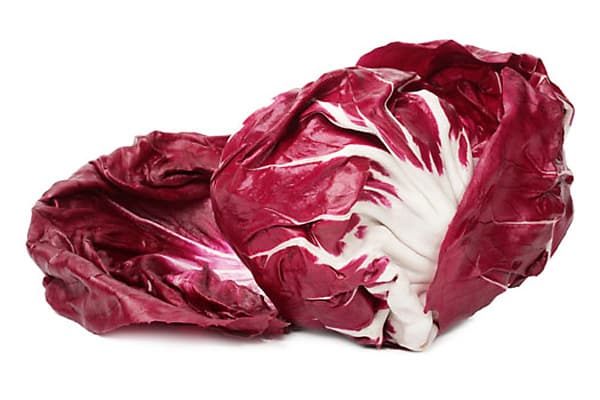
Italians, where this variety is a favorite, eat the leaves raw, preserving their nutrients, or roast them. Cooking changes the flavor of radicchio from nutty and bitter to spicy and sweet. Due to its low calorie content (20 kcal per 100 g), it is considered a dietary product. The plant uses an unusual cultivation method: it is grown in the dark, preventing photosynthesis. Due to its dense head, it retains its original appearance and flavor during storage for 14 days.
Ordinary
The highly branched stem of this herbaceous perennial grows up to 1.2 m. The root is large (4 cm in diameter) and long (150 cm). The leaves vary in shape depending on their position on the stem. The basal leaves are pinnate with serrated edges and tapering toward the base. The middle and upper leaves are lanceolate. Common chicory blooms delicate blue bisexual flowers from early June and continues to bloom until late August or early September. The achene, 3 mm long, has an irregular prismatic shape.

The plant grows wild as a weed in forest edges, fields, along roadsides, and in ravines. Choosing a chicory variety is a matter of taste, but any variety contains a complex of vitamins and minerals essential for the body, as well as inulin, which has numerous medicinal properties.
Related posts:
 How to properly harvest and dry chicory at home, harvesting rules
 Growing and caring for chicory in the garden, transplanting and propagation
 The beneficial properties and contraindications of chicory, what the flower helps with and how to take it
 The best eggplant varieties for growing in a polycarbonate greenhouse: planting and care
 Description and characteristics of the best seeds of pea varieties and types
 Description of 30 varieties and types of Muscat grapes, planting, cultivation and care
 Description and characteristics of the best varieties and types of irises
 Description of the Velika grape variety, cultivation and care tips