
Chicory is known as a coffee substitute. Among several chicory species, the cultivated variety, Chicory vulgaris, is used for this purpose. Before harvesting the chicory rhizome, it's important to ensure it's mature and has acquired its beneficial properties. Following the proper harvesting procedures will determine the taste of future beverages made from the collected material.
Chemical composition
There are over 8 species of wild chicory and 2 species of cultivated chicory. Common chicory is a perennial plant. Chicory rhizomes are used to obtain the raw material, which contains:
- coumarin;
- flavonoids;
- glycosides;
- tannins;
- residues of potassium salts;
- sucrose;
- vitamins;
- inulin.
Among the variety of vitamins, the content of ascorbic acid and niacin is particularly high. The mineral complex is rich not only in potassium salts, but also in phosphorus, copper, iron, and zinc.
Thanks to its unique chemical composition, chicory has become widely used as a raw material for culinary and medicinal purposes.
The beneficial and medicinal properties of chicory
Chicory is used to prepare topical remedies. It is also suitable for internal use due to its composition's several effects on the body.
| Drinks, decoctions, infusions | Lotions, compresses, rinses |
| Due to its inulin content, it increases the feeling of satiety, normalizes blood sugar levels, and increases the rate of metabolic processes, which has a positive effect on the overall health of the body. | It has bactericidal and anti-inflammatory properties, so it is often used as a compress to relieve the symptoms of suppuration. |
| Fiber stabilizes digestive processes, affects the condition of the intestines, accelerates the absorption of nutrients, as well as the removal of toxins and waste | Tannins and flavonoids improve hair structure and stimulate the growth of hair follicles. |
| Vitamins and minerals lead to strengthening of the body's defenses, a natural increase in immunity | The drying properties, as well as the anti-inflammatory effect, are used to treat skin diseases (eczema, dermatitis) |
| Due to its high iron content, it is indicated for various types of anemia – as a remedy for replenishing the deficiency of this element. | With regular rinsing, an infusion of roots or leaves helps with alopecia, this occurs due to the activation of the blood vessels located at the base of the hair follicles, their further stimulation |
| Due to its inulin content, chicory acts as a tonic substance, unlike caffeine, without stimulating the nervous system. | Tannins relieve inflammation and have a calming effect on minor burns or frostbite. |

The composition's complex of components, when taken orally on a regular basis, helps relieve swelling, as it has a gentle diuretic effect and removes excess fluid from the body.
Chicory is used by pregnant women as a substitute for coffee and tea, which have a stimulating effect on the nervous system.
The drink's invigorating properties positively impact overall well-being without causing nervous tension. Furthermore, the chicory-based drink helps prevent swelling, a common symptom during pregnancy.
Habitat
Chicory grows in temperate and tropical climates. It is common throughout the European part of the country and is found in the Caucasus and Siberia.
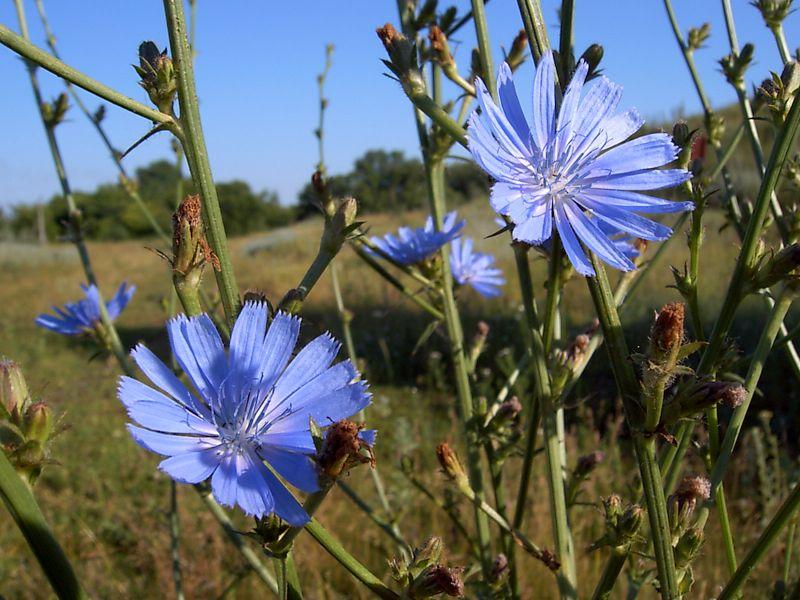
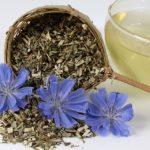
Because wild species can grow in any location with unrestricted sunlight, many call chicory a weed. Wild species are found in foothills, at forest edges, or along meadow margins. The plant rarely grows in marshy areas or ravines. It is recognized by its long stem and small blue or white flowers with ray-like petals.
Chicory is grown on special plantations where seeds are sown. Only the common and salad varieties are cultivated, and their origins are believed to be in the Mediterranean. It was there that chicory, a drink used as a coffee substitute, first appeared.
How and when to collect
Harvesting plant parts serves several purposes: the root portion is used to make drinks and medicines, while the aboveground portion is suitable for making infusions and decoctions. The timing of harvesting depends on the specific part being harvested:
- the aboveground part is collected during the flowering period: from July to August;
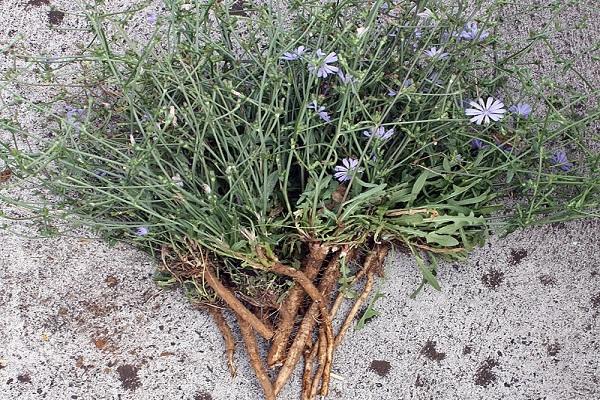
- The underground part is collected in spring or autumn, when the aboveground part has completely died off or has not yet begun to grow.

When collecting, certain rules are followed that increase the efficiency of collection and the safety of the material.
- Harvesting is carried out in the morning or early evening.
- They choose places away from roads, populated areas, and industrial facilities.
- The above-ground part of chicory is collected only if there is no precipitation, the leaves and stems are dry and undamaged.
- When collecting the above-ground part, select plants with fully opened buds.
- The roots are collected in cloudy, rainy weather when the soil is sufficiently moist.
- To collect rhizomes, a digging method is used, removing the remaining soil from the roots.
Warning! When collecting rhizomes, keep in mind that they can grow and extend to depths of more than 5-6 meters. If digging up the entire root is not possible, carefully cut it off at an acute angle.


Proper preparation of chicory
The long-term shelf life of the collected material depends on how it is prepared. Failure to adhere to proper storage conditions can result in the plants rotting, rendering them completely unusable.
How to dry chicory leaves
Medicinal decoctions and infusions are made from the leaf blades. They are taken orally according to a prescribed regimen or used as compresses and bandages. Fresh chicory leaves are rarely used; properly harvested and well-preserved material contains more beneficial substances. Chicory leaves are dried at home. They are dried in sheltered rooms, where stems and leaves are laid out on baking sheets lined with gauze or parchment paper.
Drying occurs with a light breeze, so the containers are placed where there is a slight draft. Direct sunlight can burn the leaves, so the canopies are specially shaded.

The material is regularly inspected and redistributed to ensure more uniform drying. In addition to the natural method, an electric dryer or oven can be used. Set the electric dryer to 45 degrees Celsius, while in an oven, dry the leaves at 60 degrees Celsius, in several passes.
Tip! When drying the leaves, be careful not to allow them to crumble or break. Readiness is determined by their elasticity: when squeezed, the leaves should return to their original shape and not crumble.
How to prepare flowers
Chicory flowers are dried only naturally. When preparing them for storage, they are checked for moisture between the buds, and any specimens infested with midges are discarded. The flowers are stored in natural bags and hung from the ceiling. The material is used to prepare decoctions for internal use for kidney, liver, and intestinal ailments.
Drying the rhizome for the winter
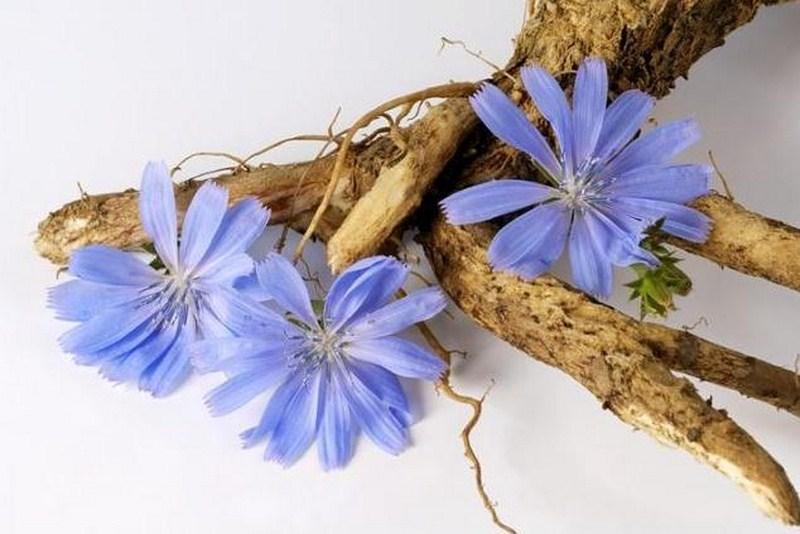
Chicory root takes about 2 to 3 weeks to dry. After harvesting, the roots are washed, cleaned of dirt, and put away for the first drying process. This involves simply drying the roots to remove moisture after washing.
The main preparation begins with cutting. The roots are cut into equal pieces, 3 to 5 centimeters in size. Larger roots are cut in half. The raw materials are laid out in a single layer on baking sheets or boards lined with clean cloth. They are dried for several hours daily in clear weather, then stored at nightfall.
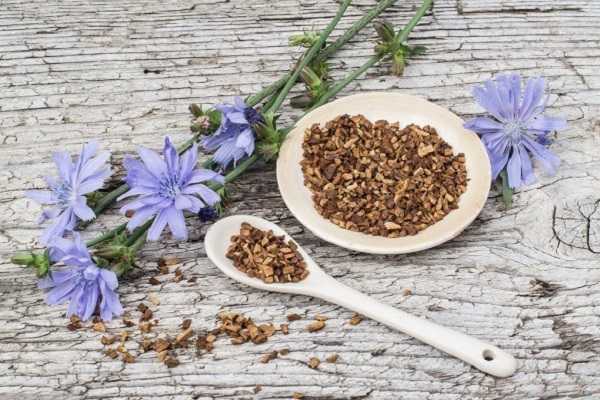
The roots are considered dried if they crack when broken, have a light yellow color when broken, and are dark brown in color. Chicory roots are stored in wooden boxes or linen bags at moderate humidity, away from moisture and light.

Further storage
The same preservation methods are chosen for all types of chicory preparations; the following are suitable for them:
- fabric bags made from natural materials;
- wooden boxes.
Another option for storing the rhizomes is to grind them into a powder. To do this, dry the roots in a frying pan until the particles darken and begin to release essential oils with a characteristic aroma similar to coffee. They are then cooled and ground using a blender or grinder. The powder is poured into tin jars and stored tightly sealed.

Making chicory coffee or tea
The benefits of chicory as a beverage are only mentioned if consumed regularly. A homemade drink can be consumed 1-2 times daily. Chicory can also be prepared in various ways, replacing coffee or tea. Add 10 grams of dried rhizome to 300 milliliters of water, boil for 5 minutes, then remove from heat and strain. This drink is usually diluted with milk or cream, adding sugar to taste.
One option is to prepare chicory with ginger and lemon. Add 20 grams of crushed ginger root and lemon zest to 1 liter of boiling water. Let the infusion steep for 10 hours. In the morning, add chicory to taste, simmer, strain, and drink with honey. This tea and coffee drink helps relieve cold symptoms and strengthen the body's defenses.
A tea drink is often made from dried chicory flowers. One tablespoon is poured into 250 milliliters of water, boiled for 5 minutes, then strained and drunk with sugar.
Related posts:
 Growing and caring for chicory in the garden, transplanting and propagation
 The beneficial properties and contraindications of chicory, what the flower helps with and how to take it
 Botanical description of chicory varieties and types, beneficial properties and contraindications
 The best eggplant varieties for growing in a polycarbonate greenhouse: planting and care
 Methods for planting and propagating cherries at home
 Is it possible to soak treated cucumber seeds before planting and how to do it correctly?
 How to properly dry winter garlic after digging and where to store it at home
 How and when to plant onions to get large bulbs