
- Reasons for the lack of flowering in clematis
- Improper care
- Lack of fertilizer
- Age of the bush
- Diseases and insect pests
- Other factors
- How to restore and stimulate clematis to bloom
- Relocation to a new location
- Introduction of specialized funds
- Two-time feeding
- Increasing the watering rate
- Trimming
- Preventive measures
Perennial clematis vines are the most popular vertical gardening option for Russian gardeners. The plant's main attraction is the numerous flowers that bloom with the arrival of summer. However, inexperienced gardeners often encounter one problem when growing clematis: the lack of abundant and long-lasting blooms. Therefore, it's worth understanding why clematis aren't blooming and how to solve this problem.
Reasons for the lack of flowering in clematis
A lack of abundant flowering in a perennial climbing vine can be caused by care errors, such as nutrient deficiencies, a lack of regular watering, and a lack of disease and pest control. However, a small number or complete absence of buds can also be a consequence of the plant's advanced age.
Improper care
A common mistake made by novice gardeners is failing to follow the watering schedule for clematis. Excess moisture damages the clematis's root system, slowing growth and flower bud formation. However, insufficient moisture also negatively impacts flowering. In hot weather, it is recommended to water clematis twice every 7 days.
One of the most important agricultural practices when growing clematis is pruning. Spring pruning helps extend the flowering period.
The soil around clematis is regularly loosened to provide oxygen to the root system, which promotes lush flowering. Weeding is also carried out simultaneously with loosening, removing the roots of weeds that are robbing the vines of nutrients.

Lack of fertilizer
Without fertilizing, gardeners won't experience abundant flowering. Fertilizers promote the formation of flower buds, which later develop into flower buds. Potassium fertilizers are essential during the flower formation stage; neglecting this procedure can result in no flowering at all, or buds forming only at the tips of the stems.
Age of the bush
A perennial vine grows in the same place for about 20 years, but the older the plant, the less profusely it blooms. If a gardener wants to preserve the variety, it's important to propagate the clematis in a timely manner. Old clematis plants grow poorly and rarely bloom.
Diseases and insect pests
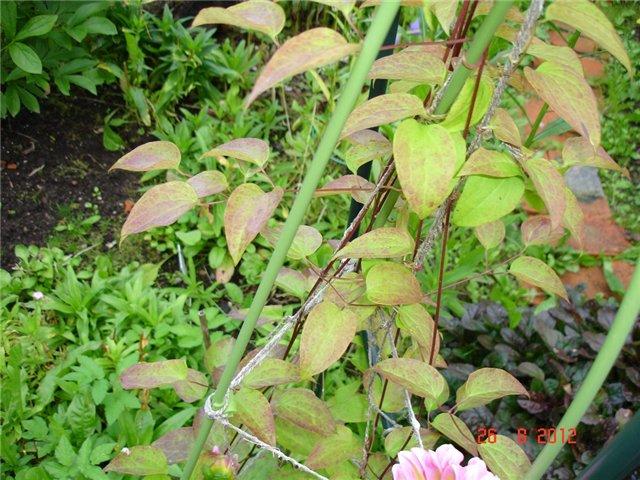
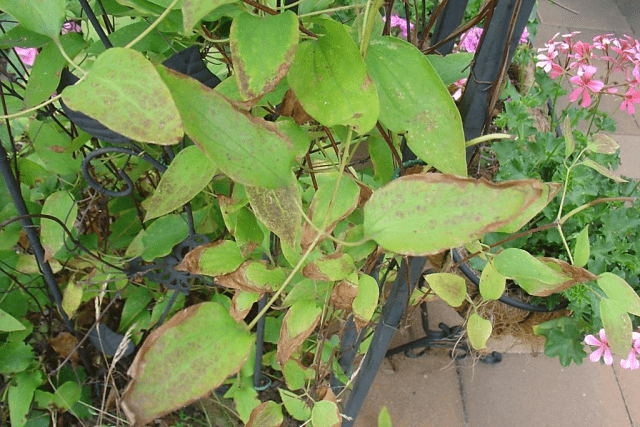
If you don't treat the plant preventatively, diseases will prevent vigorous and prolonged flowering, leading to the vine's death. Pests are also keen to feast on young flower buds, so insect control is essential.
Other factors
An incorrectly chosen planting location for clematis can also cause a lack of flowering. For full development, the plant requires sunlight; without it, flower buds will not form.
Another cause of the problem is unsuitable soil. A neutral, nutritious soil with good drainage is recommended. Insufficient planting distance between plants can also cause a lack of flowering, as this will leave insufficient room for the clematis root system to develop.
How to restore and stimulate clematis to bloom
If a gardener is experiencing a lack of blooms in their clematis, it's important to first analyze the cause and then address the issue. In most cases, replanting the plant or adjusting its care is sufficient to ensure the clematis will once again delight you with beautiful buds.
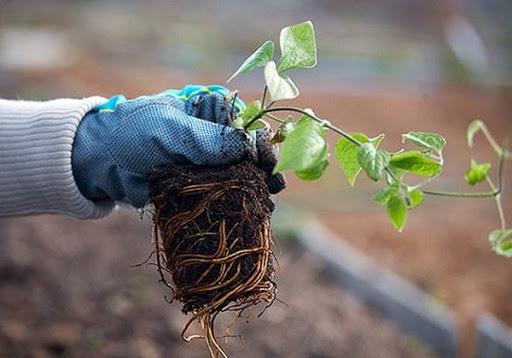
Relocation to a new location
The timing of replanting a perennial vine depends on the climate in the growing region. In most cases, early autumn is recommended. Spring replanting is also possible, but it will require significant time and effort to ensure the plant establishes in its new location.
When choosing a new area for growing clematis, pay attention to the following criteria:
- Placement close to building walls is not recommended, as rainwater running off roofs will damage the delicate petals of the plants and lead to root rot.
- The area should be protected from drafts and cold north winds.
- The root system of clematis reacts negatively to overheating, so low plants providing the necessary shade are immediately planted in the trunk circle.
- After planting, supports are installed nearby so that the vine has something to cling to with its petioles.
- If the soil is not fertile enough, add mineral fertilizers and compost during preparation. Fresh manure is not recommended, as it will burn the roots.
Introduction of specialized funds
This perennial vine responds positively to the application of special flowering stimulants. After their use, the petals become more vibrant in color and the buds themselves become larger. Stimulant treatments are carried out several times during the flowering period, using products such as "Epin" and "Zircon."
It is important to read the instructions for use before preparing the working solution to avoid harming the plants.
Two-time feeding
Nutrient complexes are the key to abundant and long-lasting blooms for clematis. Without fertilizer, buds form small, and flowering is short-lived. For perennial vines, it is recommended to use a schedule in which nutrients are applied twice a month, but in small doses.
The first feeding is done at the end of April, as soon as the shoots begin to grow. At this time, organic fertilizers such as bird droppings or mullein are beneficial for the plant. The former is dissolved at a rate of 1 tablespoon per 15 liters of water. The ratio of mullein is 1 tablespoon per 10 liters of water. The second feeding is done with saltpeter, diluting 1 teaspoon in a bucket of water.
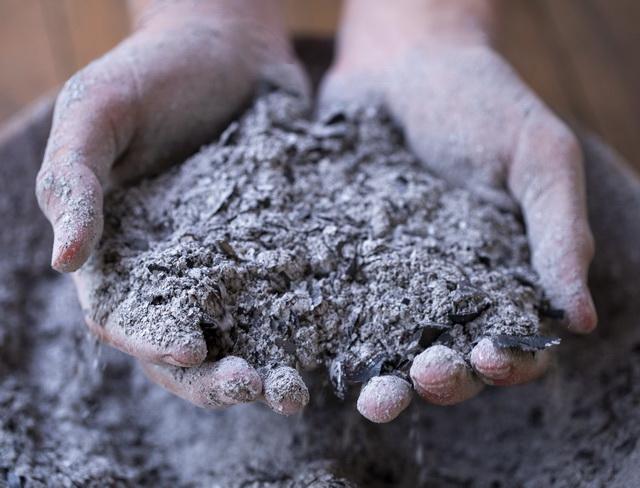
As soon as flowering begins, apply wood ash, potassium salt, and superphosphate. It's important not to pour the solutions directly at the roots; do so from a short distance.
Increasing the watering rate
Clematis are moisture-loving plants, and infrequent watering can cause them to fail to bloom. Water the vines twice a week, and increase the frequency during hot weather. Pour at least 3-4 buckets of water under each mature plant, ensuring the soil is moist to a depth of 70 cm.
Make a circular furrow 40 cm apart around the clematis and pour water into it. Pouring liquid directly into the center of the plant is not recommended. To prevent moisture from evaporating quickly, mulch the soil around the clematis with organic materials such as straw or hay.

Trimming
If pruning isn't done on time or at all, flowering will be sparse and may not occur at all. This procedure is carried out depending on the group to which the clematis belongs:
- The first group: all shoots are removed from their supporting structures before the first frost and pruned to a height of up to 1.5 meters. Diseased and broken branches are also completely removed.
- The second group - shoots are cut at a distance of 1 meter above the ground, also removing all weak and broken specimens.
- The third group - pruning is carried out at a distance of 15 cm from the ground level.
Preventive measures
Wilting is considered the most dangerous disease of clematis. Plants are also susceptible to other fungal diseases, such as rust, powdery mildew, fusarium, and gray mold. As a preventative measure, two treatments of the soil with fungicides are recommended. This is done in early spring and fall, before covering the clematis for the winter.
Of the insects, nematodes, spider mites, and aphids are particularly dangerous. Experienced gardeners recommend planting marigolds or calendula near the vine, as their pungent scent repel pests. The main prevention of diseases and insects is considered to be timely weeding and destruction of all plant debris outside the area.
Related posts:
 Description of clematis varieties, planting and care in open ground, and propagation methods
 The best varieties of clematis of the 3rd pruning group with descriptions and characteristics
 Description and characteristics of clematis varieties, recommendations for selection
 Description of the best varieties of Tangut clematis, planting, growing and care
 When to prune and cover clematis for the winter, preparation and autumn care
 Rules for propagating clematis by seeds at home, planting and care
 Description and characteristics of the clematis variety Kaiser, planting and care, pruning group
 Description of Jackman's clematis varieties and pruning group, cultivation and propagation