
- Botanical description
- Selection and cultivation regions
- Popular varieties
- Lambton Park
- Grace
- Bill McKenzie
- Golden Tiara
- Love Radar
- Aureolin
- Cultivation specifics: how to plant and care for
- Site and soil requirements
- Planting dates and patterns
- Watering and fertilizing
- Installation of the support
- Pruning group
- Loosening and mulching
- Winter protection
- What diseases: preventive and therapeutic treatments
- Wilt
- Root nematode
- Aphid
- Rust
- Gray rot
- Powdery mildew
- Methods of propagation of Clematis tangutica
- Seeds
- By cuttings
- Layering
Clematis tangutica differs from other clematis in its ability to bloom repeatedly. It is used to decorate arbors, hedges, or verandas in a garden. The appearance of this vine attracts gardeners. A single plant displays both open and unopened buds. Growing clematis is easy, even for beginners, and you can enjoy its beauty for a long time.
Botanical description
Clematis tangutica was created by crossing wild varieties. It has been cultivated since 1890, and its native land is Central Asia. In appearance, this species has many similarities with classic clematis, but there are also some differences:
- the length of the vines reaches 3 m;
- leaf blades are semi-oval, painted in light green color;
- the flowers look like bell-shaped inflorescences, and are colored in shades from light yellow to almost orange;
- The flower diameter ranges from 4 to 6.5 cm.
Each inflorescence consists of four petals. When fully open, they droop downwards. The flowering period of this plant lasts about two months, beginning in early summer. In southern regions, with proper care, repeated flowering is possible. This feature is not inherent in all varieties of Tangut clematis.
Today, both low-growing and tall-growing varieties are known. They are equally popular and have similar cultivation requirements. The only distinguishing feature is their suitability for specific landscape design purposes.
Selection and cultivation regions
Tangut clematis is the result of crossing wild species, the names of which are kept secret by breeders. The plant is not only grown in gardens but also grows in the wild. Its natural habitats include:
- Mongolia;
- Western China;
- South-East of Central Asia.
Cultivated vines are successfully grown in central and southern Russia. In northern regions, good winter insulation is required. Breeders continue to develop new clematis varieties with improved characteristics and excellent ornamental qualities.

Popular varieties
Clematis tangutica has a wide variety of cultivars. Some have become particularly popular among gardeners.
Lambton Park
A shrub-type variety that is the most popular. The vines reach 4 m in length, and the buds are approximately 5 cm in diameter. Clematis flowers are yellow, becoming very vibrant at the peak of flowering.
Grace
The plant reaches a maximum height of 3.5 m. The inflorescence diameter does not exceed 4 cm. The blooms are cream or beige in color.
Bill McKenzie
A vigorous clematis, its shoots reach 6 m in length. The drooping flowers do not fully open even at their peak. They are a soft yellow.

Golden Tiara
Another tall plant variety, with stems up to 6 m long. The maximum flower diameter is about 6 cm. At the very beginning of flowering, clematis buds resemble drooping bells, but with time they fully open. Their color is a rich yellow. Long stems, adorned with flowers, look beautiful on tall wooden supports. They are used to decorate gazebos, furnish terraces, and adorn front gates and arches.
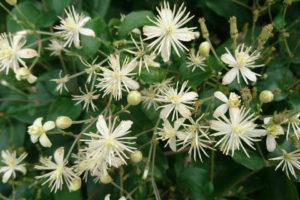
Love Radar
A very popular clematis, it's planted not only outdoors but also on balconies, arbors, and terraces. Its vines grow to no more than 3 meters. The flowers, resembling drooping lanterns, are yellow. Some gardeners call this variety "Locator" and use it to decorate hedges. The plant is easy to care for and requires little maintenance.
Aureolin
A Dutch-bred variety with stems no longer than 3 meters. Clematis blooms from early summer until the first frost. The flowers are bright yellow. This low-growing variety is suitable not only for arbor decoration but also for planting along borders. This variety is perfect for defining or enclosing a space.

Cultivation specifics: how to plant and care for
Caring for and growing clematis isn't difficult, even for novice gardeners. However, even this process has its own tricks and subtleties. The Tunguska variety is no exception, so it's important to familiarize yourself with the characteristics of these plants in advance to avoid serious mistakes later.
Site and soil requirements
The choice of planting location for clematis determines its future growth, development, and abundant flowering. Clematis prefer open, well-lit locations. Avoid planting them in low-lying areas or areas with a shallow water table. The plant should be protected from drafts, especially in winter. You can plant vines near or around trees with thick trunks.
When growing clematis, it's important to ensure they receive at least six hours of sunlight per day. If this isn't met, the buds will become smaller and flowering will be less abundant. The Tangut variety thrives in fertile, well-drained soil. Before planting, the soil is dug over and organic fertilizer is added. A drainage layer of expanded clay, broken brick, or vermiculite is added to the prepared hole.

Planting dates and patterns
Clematis are grown from seedlings. The seeds are sown so that the plants are 60 days old by the time they are planted. Typically, sowing time is mid-March, but this can vary depending on the region. Seedlings are planted in their permanent locations when the soil warms to 14–16°C.
Clematis are used to decorate hedges or arbors. Therefore, a distance of 1.5 meters between bushes is left. This space is sufficient for further growth. The planting hole for the young plant is dug large enough to accommodate a drainage layer. The size of the hole directly depends on the size of the root system of the seedlings.
When planting clematis, consider the region's climate and the need to prepare the plant for winter. Avoid planting them in drafty locations or choosing a layout that won't allow for future insulation.
Watering and fertilizing
Tangut clematis requires weekly watering. If the weather is hot and dry, the plant should be watered twice a week. Remember that the drainage layer protects the plants from excess moisture, but it's important to monitor the soil moisture regularly. Otherwise, the root system will rot. Use only warm, settled water. If the soil is highly acidic or its composition has changed, it's recommended to add lime to the water.


During the first year after planting, the seedling does not require additional fertilizing, provided sufficient organic fertilizer was added at planting. In the second year, nitrogen-containing fertilizers are added to the soil in the spring to encourage active growth of green mass. In the summer, fertilizers containing potassium and phosphorus should be applied.
If clematis foliage begins to turn yellow for no apparent reason, unscheduled fertilizing is required. During flowering, avoid adding organic matter to the area around the trunk, as it can interfere with root development.
Installation of the support
Clematis tangutica requires additional support to maintain its decorative qualities. Wooden fences are ideal for this purpose. A tree with a thick trunk can also be used as a support. During the first few months, the young shoots of the seedling are trained along the support, ensuring they are evenly distributed. If necessary, pinch off the top of the shoot to stop its growth.
Pruning group
The Tangut variety of clematis belongs to the third pruning group. This means that last year's shoots do not produce fruit, so they should be pruned in the fall or spring. This encourages abundant flowering in the coming season. To ensure regular formation of new buds during the flowering period, spent blooms should be removed immediately.

Loosening and mulching
The area around clematis trunks should be kept narrow. After heavy rainfall or watering, the soil should be loosened. Weeds that appear should also be removed. Mulching with decorative colored chips not only prevents excess moisture evaporation and weed growth but also adds beauty to the area. Other materials that can be used as mulch for clematis include:
- needles;
- mown grass;
- sawdust.
Winter protection
Before the onset of cold weather, Clematis tangutica is pruned. Young plants need to be covered with agrofibre or spruce branches. Mature bushes do not require additional insulation for the winter. If there is little or no snowfall, the root system can be protected by covering it with fallen leaves, hay, or straw.
When choosing a variety for your garden, carefully consider its frost resistance characteristics. Clematis tangutica is generally cold-hardy, but some varieties require additional protection in temperate climates. In northern regions, all varieties require adequate insulation during the cold season.

What diseases: preventive and therapeutic treatments
Clematis tangutica has good immunity to common diseases and is relatively unaffected by pests. However, under unfavorable conditions or severe violations of agricultural practices, the plant's defenses weaken, making it more vulnerable.
Wilt
This disease progresses slowly, making it virtually impossible to detect in its early stages. If clematis leaves are affected by verticillium wilt, the bush is completely destroyed to prevent the disease from spreading to neighboring plants. The soil is treated with disinfectants.
Root nematode
Small roundworms quickly spread along the main stems of clematis, destroying them, and ultimately killing the plant. Effective preventative measures include soil disinfection before planting and preventative spraying in early spring.

Aphid
At the very beginning of summer, aphids attack clematis, feeding on plant sap and laying eggs. These pests reproduce rapidly, so it is recommended to carry out treatment in several stages. The first treatment aims to kill the adults, and subsequent treatments target any remaining larvae.

Rust
The first sign of the disease is yellowing and leaf drop, followed by stem death. Rust is treatable only in its early stages. To prevent this, clematis is treated with special preparations. At later stages it is not possible to save the bush.
Gray rot
This disease primarily affects weakened clematis bushes. Initially, the root system rots, and then the stems and leaves become covered with a gray coating and rot. Preventative measures include moderate watering, timely application of complex fertilizers, and regular spraying.

Powdery mildew
This fungal disease attacks the root system of clematis, promoting rotting. Plant growth and development are significantly slowed. Stems and leaf blades become covered with a white coating, which forms droplets of moisture as it matures. To prevent powdery mildew, it's essential to constantly monitor soil moisture levels and carry out preventative treatments. If the first signs of the disease become noticeable, the stems should be treated with a soapy solution, and the soil should be disinfected with potassium permanganate.
Methods of propagation of Clematis tangutica
Gardeners know several proven methods for propagating tangut clematis on their own. Layering and cuttings are the most popular.
Seeds
Growing clematis from seed is a labor-intensive and time-consuming process, which is why gardeners rarely use this method. If no other option is available, prepare nutritious soil in advance and then sow the seeds under glass. The first shoots will appear within a week, after which the glass can be removed. As soon as the seedlings develop two true leaves, they are transplanted into individual pots.

By cuttings
Clematis cuttings for propagation are prepared in the fall. They will have time to root indoors over the winter, and when warmer weather arrives, they can be planted outdoors according to a pre-planned plan. Planting should only occur once the soil warms to 15°C and the threat of nighttime frost has passed.
Layering
Propagating clematis by layering is the simplest and most reliable method, accessible even to beginners. The most important aspect of this procedure is choosing the right cutting. Choose a vine with well-developed buds and cover it with soil. The soil around the rooted clematis should be kept slightly moist at all times. You can pre-treat the plant with a rooting stimulant. After some time, roots should form. In the fall, when the new plant begins to gain strength, separate it from the mother plant and transplant it to its permanent location. The young clematis will need to be well insulated for the winter.
If a new seedling hasn't yet gained sufficient strength, it's left to overwinter until spring, provided with additional cover and protection from wind and frost. Clematis roots well and reproduces quickly, so it's easy for a gardener to grow a whole hedge from a single bush.
Related posts:
 Description of the burning clematis, planting and care in open ground, propagation
 Description and pruning group of clematis President, cultivation and care
 Description and pruning group of clematis Rouge Cardinal, cultivation and propagation
 Description and characteristics of Manchurian clematis, cultivation techniques
 Description of clematis varieties, planting and care, propagation methods
 Description and characteristics of the clematis variety Kaiser, planting and care, pruning group
 Description and characteristics of the clematis variety Comtesse de Bouchaud, planting and care instructions
 How to propagate clematis at home: timing, methods, and technologies