
- Characteristics of the Comtesse de Bouchaud variety
- Advantages and disadvantages
- Use in landscape design
- Subtleties of planting
- Requirements for conditions and soil
- Site selection and preparation
- Timing and technology of planting seedlings
- Further care
- Watering
- Fertilizer
- Pruning and tying to supports
- Mulching the soil
- Pest and disease control
- Shelter for the winter
- Methods of reproduction
- Dividing the mother plant
- Layering method
- Cuttings
Clematis are among the most popular flower crops, with several thousand varieties of these beautiful vines known. Their long flowering period, abundant, and vibrant blooms captivate gardeners. The clematis variety "Comtesse de Bouchot" hasn't been overlooked among its beautiful cousins. Developed in France in the 19th century, the de Bouchot variety is renowned for its low maintenance, delicately vibrant flowers, attractiveness, and distinctive charm.
Characteristics of the Comtesse de Bouchaud variety
Frenchman F. Morel developed the 'Comtesse de Bouchaud' cultivar in the late 19th century, naming it after the Countess de Bouchaud. For many years, clematis adorned the flower gardens of aristocrats only, and was especially popular in Great Britain. Gradually, the plant spread throughout the world, as its exquisite beauty, combined with its ease of cultivation, won the hearts of gardeners.
With proper care, the 'Comtesse de Bouchaud' bush can live up to 20 years, delighting with lush annual blooms. Clematis belongs to the Jackmanii group and was created through interspecific crossing. This shrubby vine has increased frost resistance (zones 4-9, down to -35°C), making it suitable for cultivation in virtually all regions of the country.
Clematis de Bouchaud blooms on new shoots of the current year and belongs to pruning group 3. This group is cultivated throughout Russia, including Siberia.
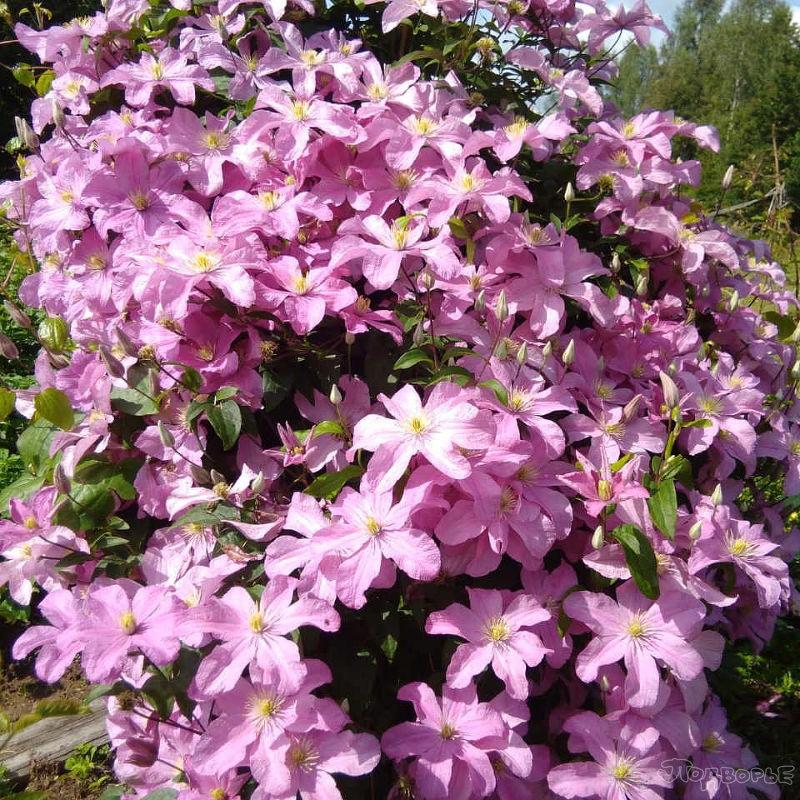
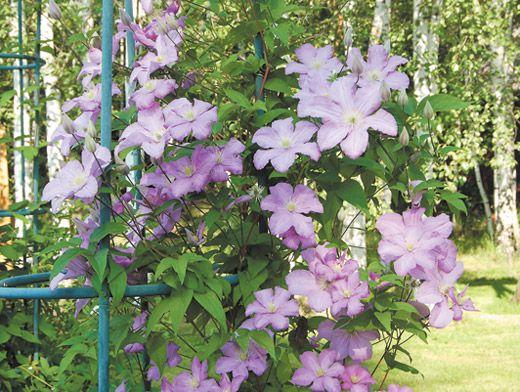
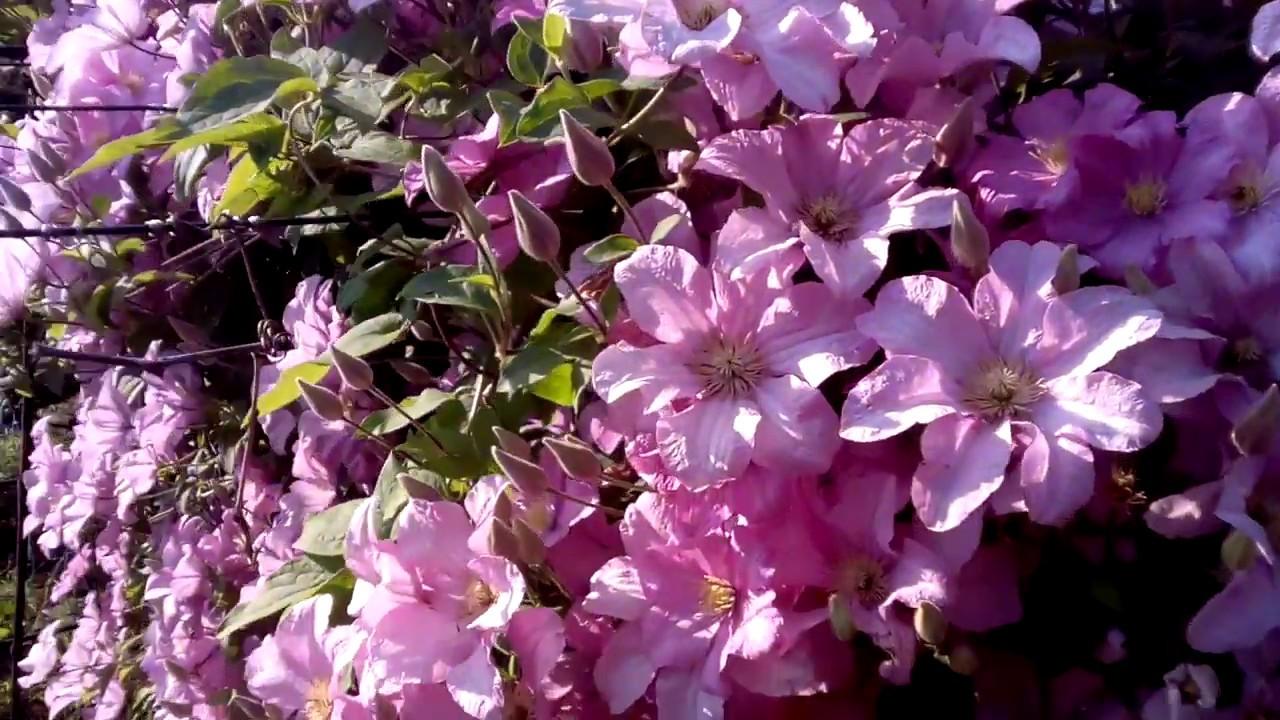
The vines grow up to 3-4 meters per year (in colder regions, 2-3 meters). The de Bouchaud variety blooms profusely from June-July to September. The flowers are lilac-pink, lilac-purple, and 10-15 centimeters in diameter. The petals are delicate, slightly ruffled at the edges, slightly curved downward, with subtle veins of a brighter hue.
The anthers are creamy yellow, clearly contrasting with the petals. The leaves are rich green, grouped in groups of five, and have a pointed, elliptical shape. The bush retains its decorative appearance all summer long, and the foliage does not fade. The highly decorative flowers and foliage, one of the longest flowering periods of any clematis variety, and the brightness and expressiveness of its buds have made Comtesse de Bouchaud a beloved garden plant worldwide.
Advantages and disadvantages
Clematis de Bouchaud has remained popular for decades, remaining in demand among the wide variety of clematis varieties. Advantages of the Comtesse de Bouchaud:
- Flowers and foliage do not fade in the sun and retain their original brightness of color until they fade.
- High frost resistance, can be grown in any region.
- The bush quickly grows shoots in the sun and in the shade.
- Long lifespan and abundant annual flowering.
- The plant feels great in containers.
- A unique feature is that the buds grow along the entire length of the shoot – from the ground to the top.
Clematis is hardy, undemanding, and resistant to cold and pests. Its drawbacks include intolerance to stagnant water. In low-lying areas with high groundwater levels and acidic soils, the plant becomes susceptible to disease, buds fail to form or become smaller, and fungal diseases often develop.

Use in landscape design
Fast-growing de Bouchaud vines are used to landscape arched arbors, fences, and house walls. Gardeners construct special supports for the bush to create unique landscapes.
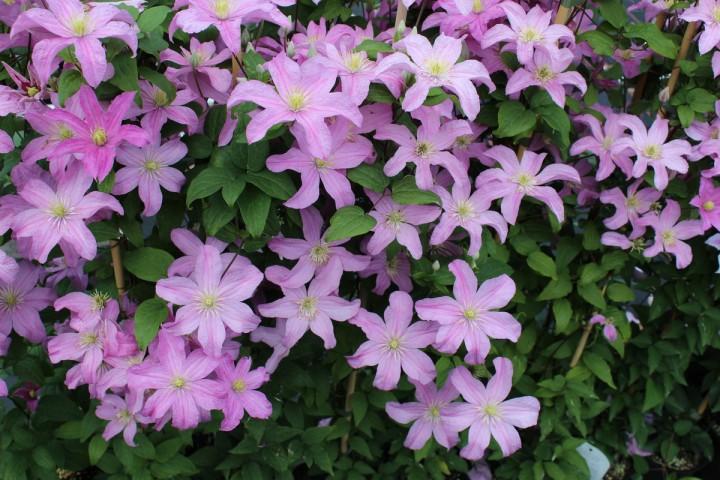
Pink-purple bushes look exquisite when paired with other clematis varieties (white, burgundy, red). Planting Comtesse de Bouchot in containers allows the flowers to be transported, creating arrangements near seating areas and verandas. Clematis are planted near rose bushes, conifers, or other vines, such as lemongrass and honeysuckle. De Bouchot bushes are used to conceal unsightly trunks of dead trees or unsightly building walls.
Subtleties of planting
Planting clematis de Bouchaud requires special attention. With proper care, the bush will live a long time, so it's important to select and prepare a suitable site to ensure the plant thrives and displays its best qualities, including longevity. Clematis bushes branch profusely and require adequate space to thrive. Other plants should be planted at least a meter away from each other.
Requirements for conditions and soil
Clematis de Bouchaud thrives in full sun and tolerates light shade. Protect the bush from drafts and cold winds, which will negatively impact its decorative qualities. When planting near buildings that create dense shade, choose a south-facing location to ensure the clematis receives full sun for most of the day.
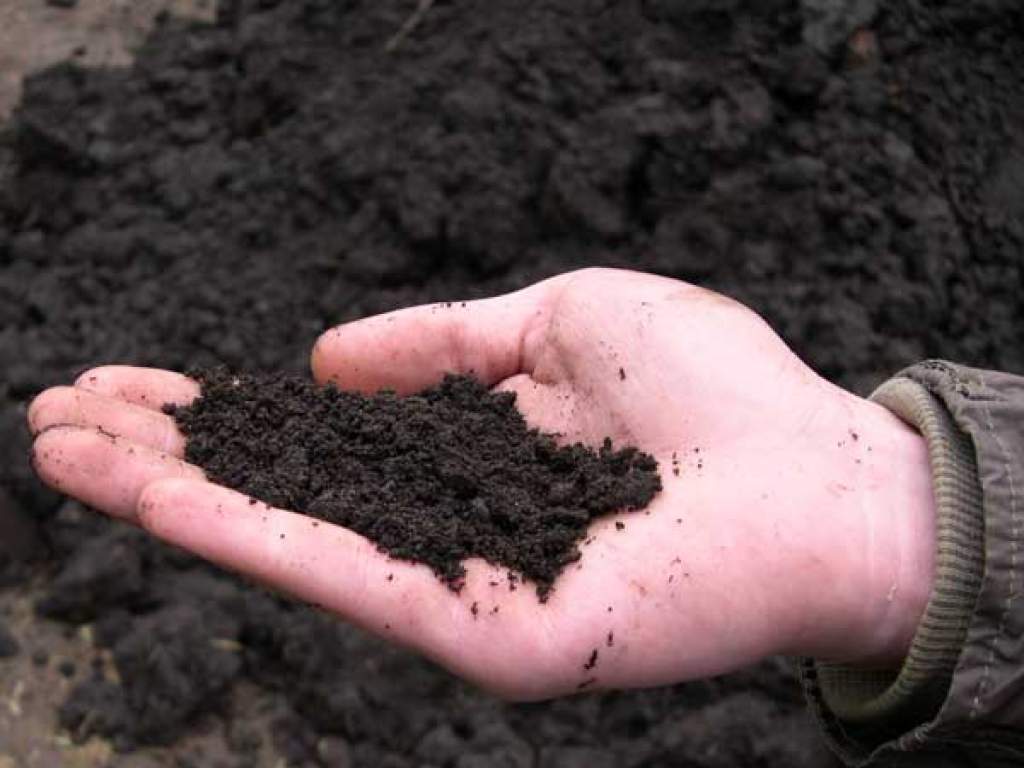
Clematis does not tolerate excess water, preferring light, well-drained soils. Acidic soils should be treated with lime beforehand to deacidify the soil before planting.
Important: When planting, you need to prepare a support in advance for fast-growing vines.
Site selection and preparation
Rules for choosing and preparing a site for planting clematis:
- exclude lowlands with high groundwater levels and frequently standing puddles;
- 50 centimeters are kept away from buildings to prevent rain from falling on the bush;
- the area should be naturally ventilated, excess water should dry in the sun;
- For clematis, make a low mound - 7-15 centimeters, thus ensuring water drainage.
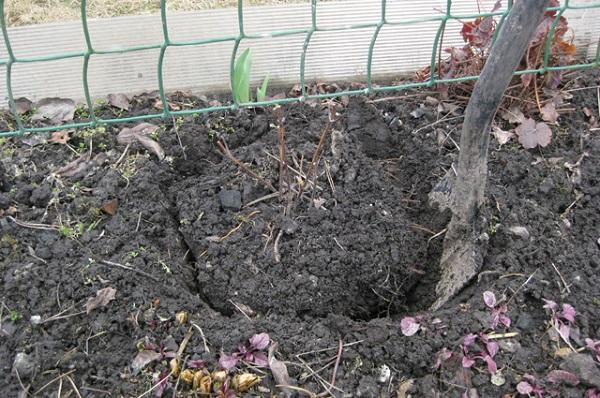
Once a site has been selected, prepare the planting hole. It's best to do this 2-3 weeks before planting to allow the soil to settle and any added fertilizers and additives to take effect. Dig a hole 60 centimeters deep, wide, and long. Place 10-15 centimeters of drainage material underneath—broken brick, coarse sand, vermiculite, or charcoal.
Timing and technology of planting seedlings
Clematis de Bouchaud is planted in spring or fall. Each planting time has its advantages and disadvantages:
- Spring. More time for rooting. Potential early heat waves make it difficult for plants to establish.
- Autumn. It's important to time the planting time correctly—1-2 months before the cold weather sets in—so the clematis has time to root, establish itself, and survive the winter without freezing.
Seedlings from pots with their roots covered in soil take root best. They can be planted at any time (even in summer). Seedlings with five or more healthy, strong roots and one or two buds are considered viable. Clematis are planted 7-12 centimeters deep, with the growing points buried in the soil. The plant is buried in a hole, below the soil surface. The soil removed from the hole is replaced at planting with a mixture of humus, peat, fertile soil, dolomite, and sand.

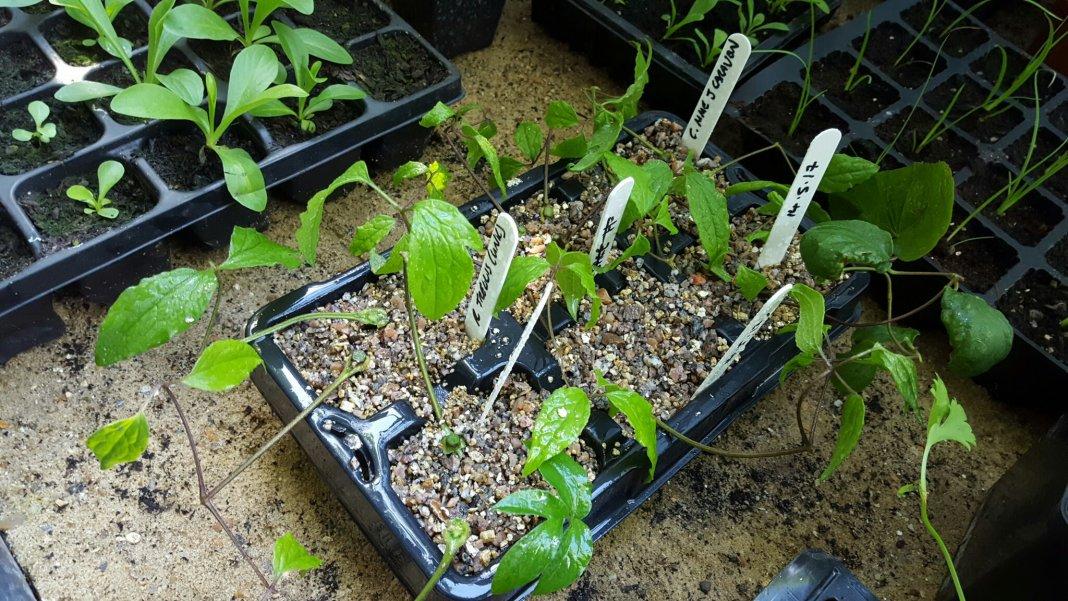
Important: the soil is covered with a layer of mulch, which will retain moisture, shade from the hot rays of the sun, and cool the roots of the clematis.
Further care
With careful care, clematis de Bouchaud will delight you with a lush blanket of flowers throughout the summer season. If you don't water it enough or don't feed it, the flowers will become smaller, the number of buds will be small, and the shoots will be weak and short.
Watering
In regions with hot summers, bushes are watered 2-3 times a week. Watering should be generous, as clematis has a deep, deep root system. Avoid standing water; in humid summers, reduce the frequency of watering to 1-2 times. When the top layer of soil has dried out, loosen the soil to prevent moisture loss at the roots. In the evening, after the sun has set, sprinkler irrigation is used to refresh the bush.
Fertilizer
Throughout the season, clematis grows long vines and produces numerous buds. The bush is unable to cope with the intense vegetation without fertilizing. Fertilize several times during the season:
- in the first year, the fertilizers applied during planting are sufficient;
- In spring, acidic soils are treated with lime, dolomite flour, and nitrogen-containing fertilizers are added;
- summer – potassium fertilizers;
- by autumn – with phosphorus content.
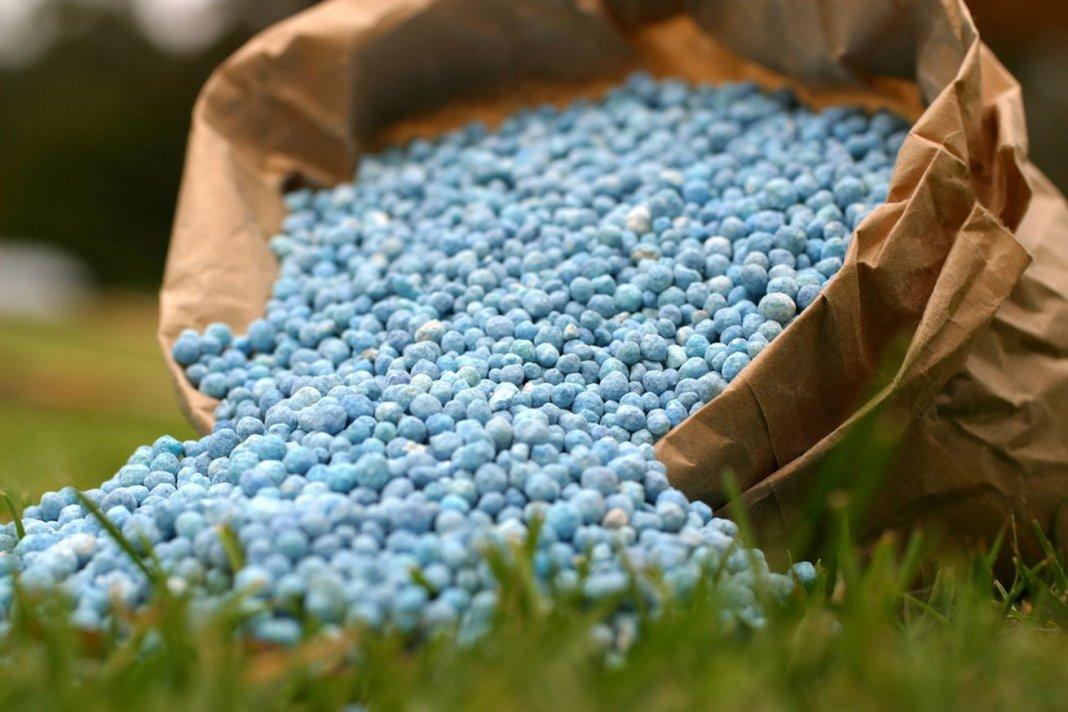
Slow-release fertilizers applied between main applications have proven effective. Complex fertilizers containing cobalt and boron improve vegetation. Experienced gardeners recommend Kemira and Pokon.
Pruning and tying to supports
When planting a young bush, immediately install a support for the growing shoots. Growing vines are trained onto the support, shaping the plant into the desired shape. Weak, damaged, and unwanted vines are removed to ensure a harmonious appearance. The slats should be 2 centimeters wide, otherwise the vines will not grip the support. In summer, pruning is performed to enhance the clematis's appearance, shaping it and removing wilted shoots.
Pre-winter pruning is a necessary procedure prescribed by the cultivation techniques for Clematis de Bouchaud. This group of clematis produces buds only on young vines (third pruning group). After the winter growing season has concluded:
- in warm regions, shorten the vines, leaving 2-3 nodes;
- In places with cold winters, cut to the base, leaving a few centimeters above the soil.
De Boucho does not bloom on branches left over the winter, so they are cut off without regret.
Mulching the soil
Clematis grow best when the root zone is shaded and cool. Mulch protects the roots from hot sunlight and retains moisture. The plant requires less watering. After watering and loosening the soil, the root zone is covered with mulch. The organic matter will later turn into fertilizer.
Pest and disease control
Clematis 'Comtesse de Bouchaud' rarely gets sick. Fungal diseases (the most common is wilt) develop with excess moisture, poor ventilation, and overcrowding. Damaged sections of vines are cut out, and the bush is thinned. The soil and healthy shoots are treated with a weak solution of potassium permanganate and a fungicide (Fundazol, Topaz). The most dangerous clematis pests are:
- aphid;
- nematodes;
- spider mite;
- slugs.

To destroy pests, mechanical removal methods, folk remedies and insecticides (Actellic, Akarin, Aktara, Nematophagin) are used.
To avoid infection by diseases and pests, weeds are removed, and in the spring the soil is prophylactically treated with fungicides, Fitoverm.
Shelter for the winter
In most regions of Russia, gardeners cover clematis bushes for the winter, as frost can damage overwintering buds. After pruning, the plant is covered with peat and a layer of mulch (sawdust, pine needles), then covered with leaves and spruce branches. For insulation, roofing felt, wooden boards, or boxes are used. When warm weather arrives, the covers are removed to prevent rotting, as overheating the roots slows growth and ultimately kills the clematis.
Methods of reproduction
Vegetative propagation preserves the maternal properties of the plants, allowing for the creation of exact copies of Clematis de Bouchaud. Seedlings can be shared with neighbors or used to increase the number of beautiful bushes in your own garden. Vegetative propagation requires no special knowledge or skills, is simple, and accessible to any gardener.
Dividing the mother plant
Clematis bushes can be divided if they are at least five years old. This is the most labor-intensive and unsafe method, yielding only a small amount of planting material. Before the active growing season begins, the bush is removed from the soil, taking care not to damage the roots, and divided into 2-3 pieces. The cuts are moistened with a solution of potassium permanganate, and the divisions are planted in their permanent locations.
Layering method
If the vines are placed on the soil and small sections covered with soil, rooting occurs. This is the basis for propagating clematis by layering. Healthy, strong shoots are selected from the center of the bush and pinned to the ground, leaving a surface area of up to 20 centimeters. The soil around the layers is loosened, watered, and fertilized. The area is covered for the winter. Young clematis seedlings are separated the following spring and transplanted to their permanent location.
Cuttings
Cuttings are taken from mature clematis (3-4 years old). At the beginning of active growth, the vines are cut into 5-6 centimeter sections of stem with two buds. The cuttings are placed in containers filled with a mixture of sand, peat, and fertile soil. They are watered with a Kornevin solution.
Cuttings root best at a constant temperature of 18-22°C, in a greenhouse. When the heat subsides, the seedlings are planted outdoors. Before the cold weather sets in, the young clematis plants should establish themselves in their new location and take root.
Clematis de Bouchaud has been cultivated in various regions of the world for many years. The popularity of this clematis hasn't diminished over the years, and new varieties often surpass this favorite not only in beauty but also in ease of maintenance. In Russia, clematis de Bouchaud is prized for its frost resistance, delicate flower beauty, and enviable longevity.
Related posts:
 Description of the burning clematis, planting and care in open ground, propagation
 Description and pruning group of clematis President, cultivation and care
 Description and pruning group of clematis Rouge Cardinal, cultivation and propagation
 Description and characteristics of Manchurian clematis, cultivation techniques
 Description of clematis varieties, planting and care, propagation methods
 Description and characteristics of the clematis variety Kaiser, planting and care, pruning group
 How to propagate clematis at home: timing, methods, and technologies
 Description and pruning group of Clematis Mountain, planting technology and care