
- Description and characteristics of clematis
- Selection and growing regions
- Clematis Manchurianum in landscape design
- Frost resistance, drought resistance
- Resistance to diseases and pests
- Agricultural technology for growing Far Eastern clematis
- Site selection and soil composition requirements
- Preparation before planting
- Recommended planting times and algorithm
- Watering
- Fertilizing Manchurian clematis
- Trimming
- Tying to supports
- Loosening and weeding
- Pest and disease control
- Covering shrubs for winter
- Methods of reproduction
- Cuttings
- Dividing the bush
- Seeds
- Gardeners' reviews
Gazebos and terraces decorated with tall, flowering vines are considered works of art. Clematis Manchuria is a perennial herbaceous plant used for artistic landscaping. Its twining, branched stems with small white buds adorn vertical structures and fences. Clematis thrives in sunny areas and is highly resilient. It is ideal for parks and gardens—it attracts attention with its delicate fragrance and striking appearance.
Description and characteristics of clematis
In Latin, clematis translates as "vine shoot" or "climbing shrub." Colloquially, clematis is also called clematis. This variety has the following characteristics:
- The Manchurian plant bears no resemblance to grapes, but grows up to 1.5 m in height, forming a large bush with small white buds.
- Manchurian clematis has a pleasant, slightly pungent aroma that can be detected in hot weather. Allergy sufferers are advised to avoid exposure to clematis for too long.
- The bush is characterized by branched stems that twine around any structure standing nearby.
- The leaves have a complex structure, containing 4 to 8 leaflets. The flowers are small, white, and have 4 long petals, forming a head. A single vine can produce 100 to 550 flowers.
The variety is undemanding in terms of care and adapts to the Russian climate. June and July are considered the period of abundant flowering.
Selection and growing regions
The first breeding efforts to cultivate Clematis Manchurianum were conducted in Japan. The flower was brought to Europe in the 16th century, quickly becoming popular. It was brought to Russia in the 19th century as a greenhouse plant. Large-scale breeding efforts to cultivate clematis in the Soviet Union began in 1950.
Russian breeder M. A. Beskaravaynaya developed the plant through hybridization, using the Manchurian clematis as the parent plant. She succeeded in developing over 45 clematis varieties, all differing in color, leaf size, and flower bud size.
This shrub is easy to care for and is drought and frost resistant. Clematis Manchurianum grows in ponds, hillsides, meadows, and fields. It thrives in sunny locations with moderate humidity.
Clematis Manchurianum in landscape design
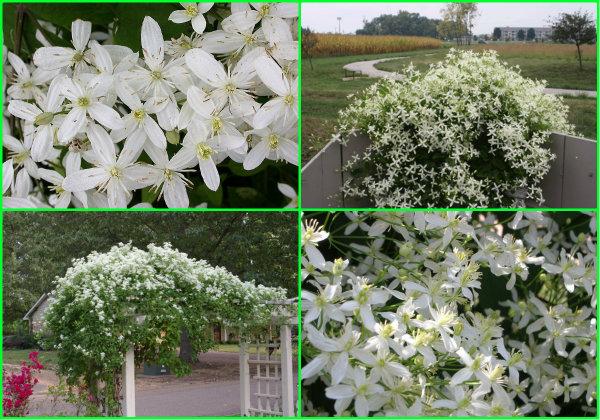
Clematis is an attractive flowering shrub used in landscaping gardens and parks. A creative solution would be to plant it near brick walls, verandas, balconies, or gazebos. Landscape designers have found a use for clematis in vertical gardening. It is suitable for entwining arches and separating different areas of a property. Other flowering vines are planted alongside Manchurian clematis to cover arbors or hedges.
Frost resistance, drought resistance
Clematis Manchurianum should be grown in a sunny, open location in the southern or eastern part of the garden. The plant is susceptible to strong winds, so the planting site should be protected from gusts of wind. A support should be installed near the planting to support the plant and protect it from the wind. The plant is resistant to temperature fluctuations and frost. With proper preparation and protection, it can survive temperatures as low as -41°C (-41°F). OWITH.

Clematis requires moderate watering; overwatering can cause root rot. Planting the shrub under a storm drain or near groundwater is strictly avoided.

Resistance to diseases and pests
Clematis Manchuria is susceptible to attack by slugs, snails, and spider mites. Slugs and snails are removed manually, and spider mites are killed with acaricides.
The shrub is susceptible to the following diseases:
- fungal infections;
- gray rot;
- powdery mildew;
- rust.
Before planting, the root system is treated with Fundazol or Bordeaux mixture. Root-knot nematodes are considered particularly dangerous for clematis; they feed on the rhizomes, causing the plant's death. If the planting material is affected by root-knot nematodes, it cannot be saved; it is uprooted and burned.
Agricultural technology for growing Far Eastern clematis
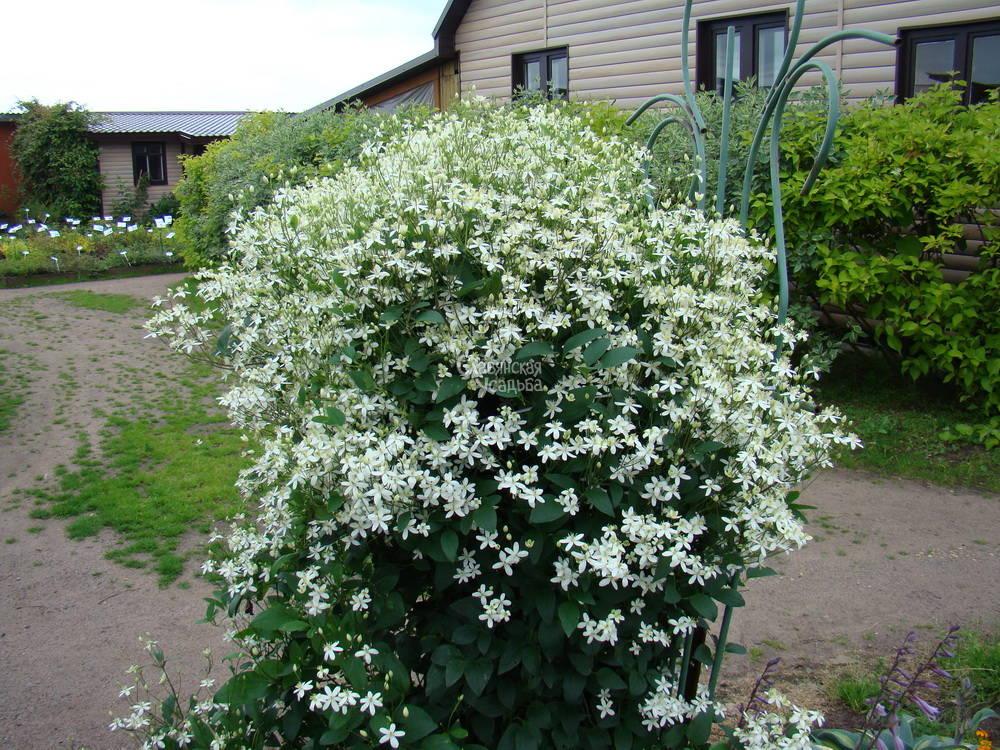
Clematis Manchurianum is suitable for growing indoors. It decorates country houses, fences, facades, and architectural structures. Careful preparation of the planting material and the site is the key to successfully growing this vine-like perennial.
Site selection and soil composition requirements
The location for placing the flower must meet the following requirements:
- It is preferable to plant clematis in sunny places;
- If planting is planned near a wall or fence, it is recommended to choose the eastern or southern side;
- It is important to maintain a distance from the wall - in the 2nd-3rd year the plant grows and needs a larger area;
- Places with close groundwater levels should be avoided; clematis requires elevation and protection from strong winds.

The soil should be fertile, loamy or sandy. Florists recommend mixing the soil with sand, peat, and mineral fertilizers. A substrate containing superphosphate, ash, and lime is also acceptable.
Preparation before planting
When selecting planting material, consider the condition of the shoots and rhizomes—remove any cracked, damaged, or broken specimens. Healthy clematis have green, clean leaves, free from rusty or whitish spots. Before planting, soak the root system in Kornevin or another growth stimulant. Dig, loosen, and fertilize the planting site beforehand. Next, dig a deep hole and line the bottom with expanded clay, pebbles, or other drainage material. Top the hole with a soil mixture containing sand, peat, ash, or humus.
Recommended planting times and algorithm
Clematis Manchurianum can be planted in spring, summer, and autumn at temperatures from +7 OC. A bush with an open root system quickly withers; it must be placed in soil immediately after purchase.

Clematis planting occurs in the following sequence:
- First, select a location and dig a hole 60 cm deep and in diameter.
- Mineral fertilizers are added to the excavated soil, and a drainage layer of crushed stone or expanded clay is laid on the bottom.
- The substrate is poured into the hole, forming a mound, and watered with two buckets of water.
- After the water has been absorbed, the trunk of the bush is placed in the center of the hole and the roots are straightened.
- The plant is compacted, covered with a 14-16 cm layer of soil, and watered generously. The area around the trunk is mulched with peat or sawdust.
A support is installed near the planting - it will provide additional support for the flower.
Watering
Clematis Manchuria doesn't require abundant watering. In spring and fall, it should be watered once every 7 days, and in hot weather, three times every 7 days. Water only the area around the trunk; water should not touch the leaves or flowers. The frequency of watering depends on the age of the plant and weather conditions. A young shrub will require 4-6 liters of water, while mature specimens require one bucket of water.


Fertilizing Manchurian clematis
If the soil is fertilized with a soil mixture containing sand and humus before planting, the plant requires no additional feeding for the first 12 months. In the second year, it is fertilized with cow manure and mineral fertilizers once each in June, July, and August.
The nutrient substrate is mixed with the following fertilizers:
- nitrogen - during the growing season;
- potassium - during the formation of ovaries;
- phosphorus - when the buds have finished blooming;
- mineral - after pruning the bush.
Chemical mixtures are alternated with organic additives such as manure and humus.
Trimming
Clematis Manchurianum is classified in the third pruning group; after the last bud has bloomed, all shoots are pruned. To maintain bushiness and density, leave 2-3 leaves on the shoots; for large, lush blooms, prune all shoots completely.

Tying to supports
In its second or third year, clematis begins to grow rapidly, so when planting, supports are installed near the plant—these protect it from wind gusts and direct the growth direction of the shoots. As new shoots emerge, they are tied to the supports. They are also used for vertical gardening.
Loosening and weeding
This vine-like plant does not tolerate direct sunlight well. To prevent overheating, mulch it with dry bark, grass, leaves, peat, sawdust, or pine needles. Place the mulch around the trunk.
The bush also requires periodic loosening to allow air to penetrate the root system. Neglecting this procedure will cause the plant to stop growing and wilt. Clematis should be loosened with a three-pronged hoe after each watering.

Pest and disease control
Despite its strong immunity, the plant is susceptible to infection by the following pathologies:
- Gray mold can be identified by a brown coating on the leaves. These are pruned along with the infected shoots, and the main stem is treated with Fundazol.
- Powdery mildew is identified by white spots on leaves and shoots. It can be controlled with a topaz solution or Fundazol.
- Rust is characterized by orange swelling on the shoots. It is removed with Bordeaux mixture.
Clematis Manchurianum is susceptible to attack by the following pests:
- slugs and snails - they are collected manually by placing cabbage leaves under the flower, which attract pests;
- Spider mites - eat buds and leaves, they are eliminated with acaricidal preparations.
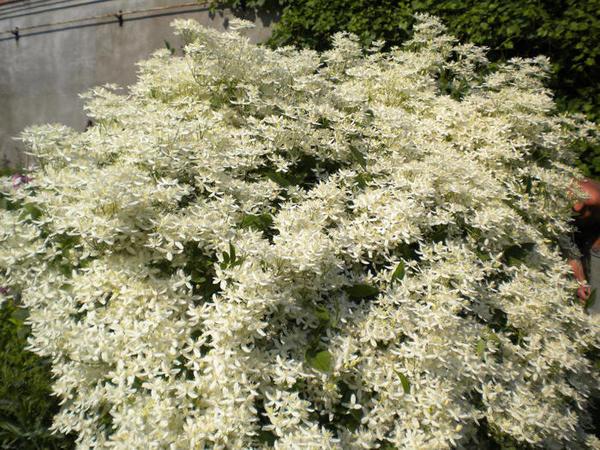
To ensure lush flowering and healthy condition of the flower, it is necessary to carry out timely treatment with fungicidal and acaricidal agents.
Covering shrubs for winter
This vine-like perennial is considered frost-hardy, but gardeners recommend playing it safe and additionally insulating the shrub with fallen leaves. As the weather warms, melting snow can flood the shrub, so in the fall, it's necessary to create a mound of manure around the trunk.
Insulation is carried out at the end of November, when the temperature drops to -4 OClematis Manchuria is covered with dry soil or peat to form a mound 40-50 cm in diameter. Before severe frosts, wooden boards or roofing felt are laid on top of the mound.
Methods of reproduction
Clematis Manchuria propagates by seed, division, and cuttings. Growing from seed is a labor-intensive and time-consuming process, with the first shoots appearing 1.5 to 2 years after planting. Gardeners prefer faster and more effective propagation methods—cuttings and division.


Cuttings
The procedure is carried out in mid-spring, during the active growing season. The shoots are pruned along with the buds, 3 cm from each bud, and the shoot is cut. The cuttings should be 10-15 cm long. The shoots are treated with a growth stimulant and planted in the soil.
Dividing the bush
This method is suitable for mature bushes aged 5-7 years. The division procedure is recommended in mid-autumn. The flower is dug up along with its roots, divided, and planted individually in open ground.
Seeds
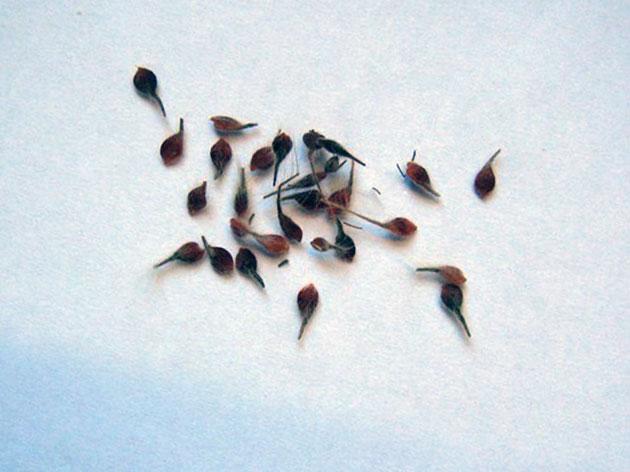
The seeds are sown in March, and the first shoots appear within 6-8 weeks. The seedlings are soaked in water or Kornevin for a week, placed in a pot, and covered with a plastic bag. The seedlings are ready for planting outdoors after 2.5 years.
Gardeners' reviews
With proper care, Manchurian clematis delights the eye with its abundant blooms for 14-20 years. It thrives alongside other ornamental plants. This shrub is easy to care for and has a striking appearance, making it extremely popular among gardeners.
Alevtina, 59: "I'm a flower lover and created a large flower bed in my garden. I needed some lush, foliage-filled climbing vines to create a hedge. I settled on the Manchurian clematis. I bought the cutting and immediately planted it in the ground, following all the care instructions. I've been enjoying it for four years now, and over time, it's grown and will soon completely cover the hedge."
Petr, 75: "I love tending to flowers at my dacha. I planted a Manchurian clematis; it's been growing for six years now, and the care is basic. I periodically have to tie up the shoots to keep them from drooping. In the summer, I water it frequently, but sparingly. We don't have severe frosts here; before the cold weather sets in, I cover the plant with hay. The root system doesn't freeze, and with the arrival of warmer weather, the bush begins to revive. It blooms profusely, with the first buds appearing in June and wilting in September. Two years ago, I propagated the clematis by dividing the bush and planted the seedlings near the gate. Now I have a beautiful flower arch at the entrance to the yard."
Lyudmila, 62: "I adore the Manchurian clematis for its decorative qualities and ease of care. I feed the plant infrequently, watering it on hot days. I regularly prune it and treat it with acaricides and fungicides. I know the variety is frost-hardy, but I play it safe and mulch the area around the trunk with hay or dried leaves for the winter, then cover it with soil. In March, the shoots begin to grow vigorously, quickly becoming covered with foliage. I love clematis for its pleasant scent and beautiful white flowers."
Related posts:
 Description of the burning clematis, planting and care in open ground, propagation
 Description and pruning group of clematis President, cultivation and care
 Description and pruning group of clematis Rouge Cardinal, cultivation and propagation
 Description of clematis varieties, planting and care, propagation methods
 Description and characteristics of the clematis variety Kaiser, planting and care, pruning group
 Description and pruning group of Clematis Mountain, planting technology and care
 Description and characteristics of the clematis variety Comtesse de Bouchaud, planting and care instructions
 Description and pruning group of clematis Varshavska Nike, cultivation and care