
- Advantages of the 3rd pruning group
- Methods of determination
- The most beautiful varieties of clematis of the 3rd pruning group
- With large flowers
- Mephistopheles
- Smoky
- Turquoise
- Victory Salute
- Space Melody
- Golden Jubilee
- Small-flowered
- Avant-garde
- Arabella
- Princess Kate
- Manchurian
- Princess Diana
- Clematis flammea
- Varieties with double inflorescences
- Blue Flame
- Stasik
- Mazuri
- Purpurea Plena Elegans
- The best varieties of white clematis
- Khuldin
- Paul Ferges
- John Huxtable
- Roco-Colla
- Summer snow
- Delicate pink inflorescences
- Pink Fantasy
- Comtesse de Bouchaud
- Hagley Hybrid
- Dunata
- What to choose depending on the region
- For the Urals
- For Siberia
- For the middle zone
Clematis are stunning vine-shaped plants with beautiful, graceful flowers. Their gorgeous, long-lasting blooms make them popular in gardens and parks. There are over 300 species and 3,000 varieties, classified by many characteristics. Gardeners prefer clematis in pruning group 3, the best varieties of which offer a surprising variety of colors, sizes, and shapes.
Advantages of the 3rd pruning group
The undeniable advantages of clematis varieties included in this group:
- the pruning process takes a little time;
- It is easy to prepare the crop for winter and create a favorable existence for it in harsh times, since the pruned crop takes the form of a compact bush;
- There is no need to worry about preserving the stems during the winter, as they are fragile;
- frost resistance, even if the stems are frozen, clematis will produce new shoots, provided that the roots were covered and not damaged by frost;
- undemanding to soil composition and location;
- unpretentiousness of plants compared to other groups;
- good drought tolerance;
- the ability to cover the entire surface and form flowers at the required height;
- variety in brightness and shades of flowers;
- the ability to decorate flower arrangements and delight the eyes of others before the onset of cold weather.
Important! Along with its advantages, gardeners also point out its disadvantages. Group 3 clematis have a delayed flowering period because they need to accumulate sufficient foliage before budding.
Methods of determination
The main characteristics that distinguish Group 3 clematis are: flowering begins in July and continues to grace the garden until early fall, exclusively on shoots formed this year, while those from last year remain budless. Therefore, long shoots should be removed for the winter, trimmed with sharp pruning shears.
It's important to allow as many new shoots to form as possible early in the season. Before covering the plant for the winter, prune it as short as possible, leaving shoots no longer than 40 cm. Then carefully mound the base and cover with humus, straw, and rotted leaves. Any shoots that remain above ground are best covered with cardboard boxes or spunbond.
Clematis groups 1 and 2 typically require light pruning, as they tend to produce flowers on last year's shoots. If the group of clematis is unknown, a mixed pruning pattern is recommended. The appearance of new buds will reveal the clematis variety next season.

It is possible to correctly determine the group depending on the characteristics of the crop’s growing season:
- The first group. Flowers begin to bloom in early spring. These varieties don't need to accumulate foliage, as their energy is focused on maintaining shoots over the winter. Pruning is not required; a touch-up at the end of flowering is sufficient.
- The second group. These varieties are characterized by double flowering in a single season. First, on the previous year's shoots, and then on newly formed branches in late August. The plants require only light pruning and thinning of overly dense bushes.
- The third group, which comprises the majority of the plant's species and varieties, produces vibrant buds on new shoots. Complete pruning is mandatory.
Take a look Also

Important! Don't save old stems for Group 3 clematis, as they will grow larger next year and turn into huge, untidy clumps.
The most beautiful varieties of clematis of the 3rd pruning group
Clematis varieties of the 3rd group are classified depending on the size of the flower, the presence of doubleness and color.
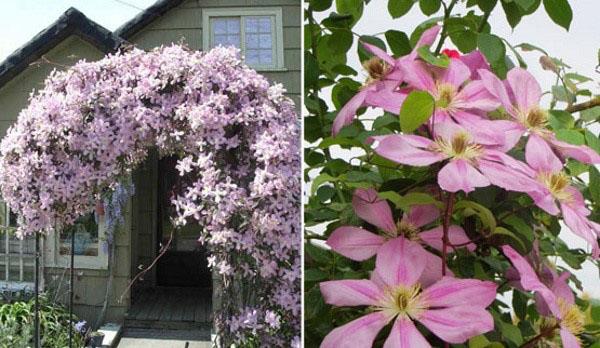
With large flowers
Most clematis have large buds, which makes people admire the flowering and play of colors of the plant for a long time.
Mephistopheles
The plant's vines reach a height of 3 to 4 meters. This variety boasts a striking dark purple, almost black flower with a diameter of 10 to 14 cm. Mephistopheles thrives in open, sunny areas.
Smoky
This clematis variety was developed by the Jackman-Lanuginosa breeding group. It produces smoky-colored flowers that, when open, measure 14 to 18 cm in diameter. It is used for vertical landscaping and creating unique landscape compositions. Flowering occurs from July to August.

Turquoise
The Biryuzinka variety belongs to the Jackman group and was developed in 1971. It is used in virtually all regions for landscaping and unique design projects. The open bud reaches 12 to 16 cm in diameter. Luxurious and vibrant blooms begin in July and continue through September. The flowers are typically blue in color. The brownish-red shoots can grow up to 3.5 m.
Victory Salute
This variety was bred in 1971. It is distinguished by its beautiful late flowering. Buds form only in the third ten days of July. The petals are lilac, purple, or violet. Flower size ranges from 16 to 18 cm.
They are capable of performing various functions: covering the soil between plants, intertwining bushes and fruit trees.
Space Melody
The vine grows up to 3 m, a size suitable for decorating arches and walls. The inflorescences are characterized by scarlet flowers with a violet tint. The bud is small, reaching 10 cm in diameter.
Golden Jubilee
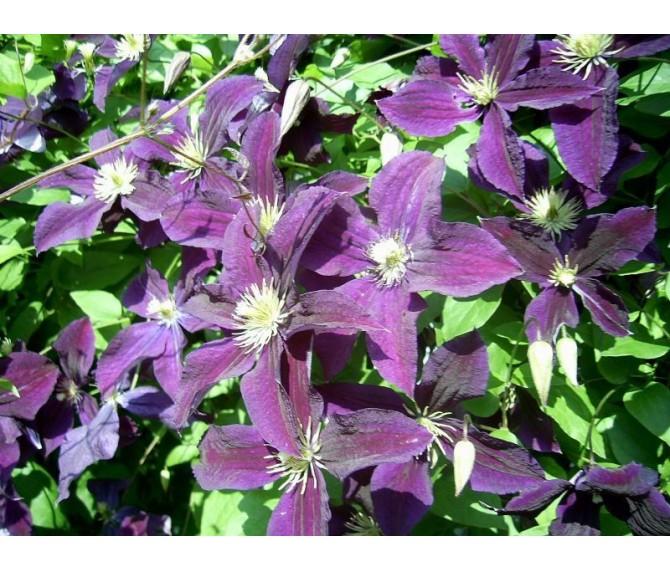
Its blooms in July attract attention. The petals are purple, with a golden center. The stem grows up to 2.5 m, and the bud diameter is 18 cm.
Small-flowered
Clematis with small flowers are extremely popular among gardeners because they have a key advantage: a single bush produces numerous buds, some even up to 100.
Avant-garde
This frost-hardy variety thrives in both sun and shade. It blooms late and is easy to maintain. With a stem length of 2.5 m, designers use it to enhance gazebos, verandas, arches, and partitions. Clematis Avantgarde can be grown indoors in pots. Blooming lasts from June to September, the flowers are small, only 5 cm, and have a warm hue.
Arabella
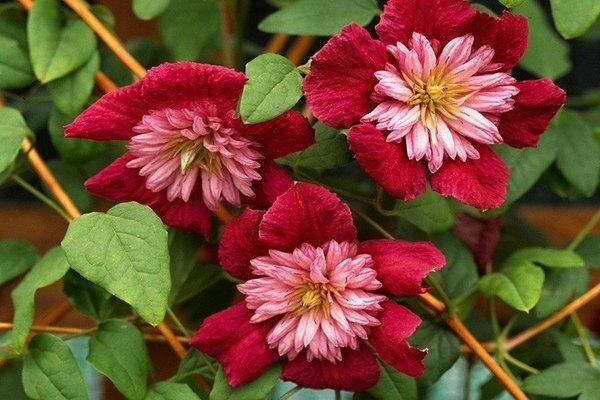
One of the most common varieties, often used for garden decoration. It is characterized by miniature flowers with a creamy center that fades to purple as the petals expand. The vine begins growing from early June through October, reaching a height of up to 2 meters. By midsummer, it becomes densely covered with inflorescences.
Princess Kate
This variety has recently appeared on the market and has not yet been widely distributed. The bush is compact, reaching up to 1.5 m in height. Its main feature is its long, luxurious blooms, which begin in early June and decorate flowerbeds until the end of September. The inner part of the bud is a soft pink, while the outer part is purple. Each bud measures 7 to 8 cm and has six narrow, long, delicate petals.
Manchurian
A perennial plant with stems ranging from 1.5 to 3 meters in length. The flower is only 2 cm in diameter with white petals. This variety demonstrates frost and drought resistance, but is quite susceptible to major diseases. It blooms from July to August.


Princess Diana
The four-petaled, raspberry-colored flower is only 7 cm in diameter. It blooms from June to the first ten days of October. The shoots grow up to 3 m. The plant can be grown both in pots and in the open ground.
Clematis flammea
A perennial plant growing 4-5 m tall. The shrub spreads 3-4 m. This variety is distinguished by its small white buds, which stand out strikingly and harmoniously against the dark green leaves. A single bush can produce 300-400 flowers, reminiscent of tiny stars against the night sky.
Varieties with double inflorescences
Double buds have always attracted attention with their originality and natural beauty. Breeders have developed several clematis varieties with similar blooms.
Blue Flame
This variety was developed by breeders in 1961 and is now widely used in vertical decoration. Each double flower, dark blue with a violet tint, measures 12-15 cm in diameter, and the vine itself can reach 3-4 m in height. The buds begin to open in May and bloom until September.
Stasik
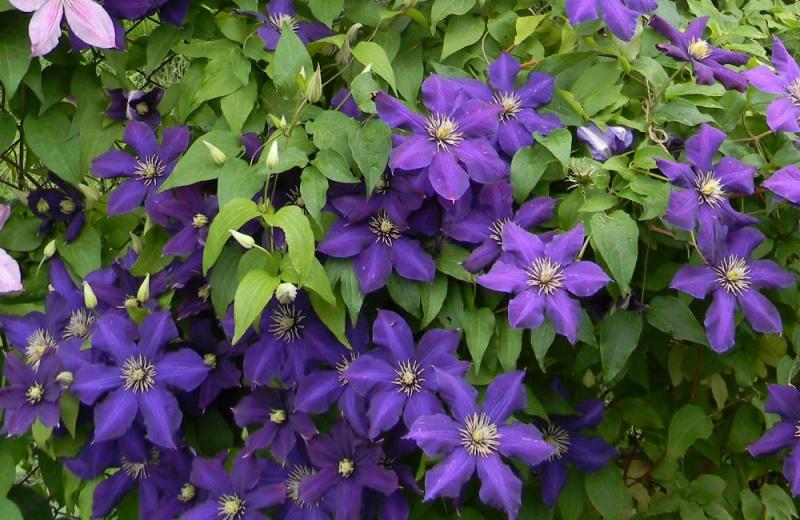
The variety was bred by Maria Sharonova in 1972 and named after her grandson, who was also a breeder. The branches reach 4 meters in length. The flower, a pleasant purple hue with contrasting white stripes, is 12 cm in diameter and, despite its size, looks striking on the slender stems.
Mazuri
The flower first appeared in Poland and has won numerous awards. Its main feature is its enormous, double flowers, a rich blue or lilac hue, 17 cm in diameter. It blooms spectacularly from July to early September. It is successfully cultivated in northern regions, provided the perennial bushes are covered for the winter.
Purpurea Plena Elegans
With its double purple blooms, this clematis is hard to pass by without a glance. It graces flowerbeds with its blooms from July to September. The vines grow up to 3 meters long. Due to its rapid and dense growth, it looks perfect in outdoor settings.

The best varieties of white clematis
White buds enchant and soothe. This color signifies nobility and prosperity, high status, and a rich inner world, which is why many homeowners plant white clematis in their gardens.
Khuldin
A profusely blooming, easy-to-grow clematis variety with contrasting white flowers 8 to 10 cm in diameter and elongated vines capable of climbing and securing themselves to any tree or support. A delicate and attractive variety for arbours, balconies, and interesting floral arrangements.
Paul Ferges
The Paul Ferges clematis variety is characterized by stunning white blooms that appear in July and last until October. The shoots don't need staking; they attach easily to supports and reach heights of over 7 meters.

John Huxtable
One of the most common late-blooming varieties. Blooming begins in midsummer and continues into early fall. The buds are bright white, unblemished and spotless. They look beautiful against the dark foliage. This variety is ideal for landscaping and garden design.
Roco-Colla
This variety with an interesting and amusing name was developed by breeders in Estonia. It captivates with its white buds, which have subtle cream veins. It blooms profusely from August to October. The vines are 1.5 to 2 meters long and attach to artificial supports of various shapes.
Summer snow
This variety was developed in 1964 by Russian breeder Volosenko-Valenis. The 4-5 cm flower has a unique shape, with snow-white petals and prominent stamens. A single bush bears numerous white flowers with an intense, sweet fragrance. The plant grows from 5 to 7 m tall.

Delicate pink inflorescences
Pink clematis are perfect for gardens and parks. Their neutral coloring allows them to fit into virtually any landscape composition.
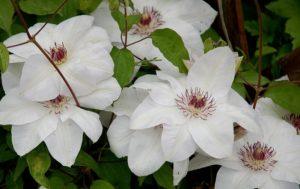
Pink Fantasy
This variety, developed in Canada in 1975, is characterized by large, original flowers with 5-7 pinkish petals and a diameter of 10-15 cm. Slender shoots grow to a height of 2-2.5 m in favorable conditions; in temperate climates, the vine reaches a maximum height of 1.5 m.
Comtesse de Bouchaud
This perennial plant is widely used for vertical gardening and creating beautiful compositions. The stem, reaching 3-4 meters, branches and attaches to various supports. The lilac-pink flower is 10-15 cm in diameter and impresses with its luxurious blooms and long life.

Hagley Hybrid
This variety was developed through extensive and complex experiments. It is a graceful shrubby vine, growing no more than 2-2.5 meters tall. The flowers open in late June and remain attractive until September. The plant is adorned with gorgeous blooms, 12-18 cm in diameter, containing six pointed petals. The color is light pink, slightly lilac, with a beautiful pearlescent sheen and small violet-purple dots.
Dunata
A clematis variety with luxurious flowers with pinkish petals. Flowering peaks in late June and early July, which is unusual for Group 3 clematis. The shoots grow from 2.5 to 3.5 meters long. They attach well to the substrate and require no additional staking.
What to choose depending on the region
When choosing a variety, you should pay attention to both its general characteristics and take into account the climatic features of the region.

Important! If you choose the wrong variety for your region, the plant may fail to thrive and die.
For the Urals
The most typical species for the Urals are:
- Jackman. Large-flowered varieties of shrubby vines. Characterized by a strong root, long vines that can grow up to 4 m, elongated leaves, and a flower diameter of 20 cm. Most varieties have a lilac color. Promising varieties include Rouge Cardinal and Bella.
- Integrifolia. Bushes grow to 2.5 m tall, with buds up to 12 cm in diameter. A promising variety for the Urals, Purpurea plena elegans.
- Vinzella. 3.5 m shoots, small but abundant buds (up to 100 per bush). Suitable varieties: Prince Charles, Ville de Lyon.
The varieties of these species are adapted to the harsh climate and weather of the Urals.

For Siberia
The Jackman variety thrives in Siberian conditions. The most hardy varieties include Huldin, Hagley Hybrid, and Ville de Lyon. All varieties require careful covering and preparation for frost.
For the middle zone
Many varieties are adapted to temperate climates, as winters are milder and the warm seasons are longer. Varieties that thrive and bloom in temperate climates include 'Alenushka,' 'Arabella,' 'Danuta,' and 'Madame Julia Correvon.'
Pruning is considered an important agricultural practice when growing clematis in the garden. This procedure allows the bush to be trained on supports of varying heights and configurations, resulting in long, colorful blooms, maintaining its decorative appearance, and increasing its resistance to adverse environmental factors. Their low maintenance, easy care, and uniquely beautiful and expressive flower coloring make pruning group 3 clematis popular among gardeners.
Related posts:
 Description and characteristics of clematis varieties, recommendations for selection
 80 Best Eggplant Varieties for Different Regions with Descriptions and Characteristics
 Description of clematis varieties, planting and care in open ground, and propagation methods
 Description of Jackman's clematis varieties and pruning group, cultivation and propagation
 Description of the Piilu clematis variety, planting and care instructions, pruning group
 Description and characteristics of the Polish Spirit clematis variety, planting and care instructions
 The best grape varieties for growing in the Urals, planting and care rules in summer
 50 Best Pumpkin Varieties with Descriptions and Characteristics for Outdoor Planting