
- Description of clematis Miss Bateman
- Selection and cultivation regions
- Benefits of using in landscape design
- Planting and caring for vines
- Site selection and preparation
- Preparing seedlings
- Disembarkation times and rules
- Regularity of watering
- What fertilizers does the plant like?
- Loosening and mulching the soil
- Pruning group
- Protection from insects and diseases
- Shelter for the winter
- Flower propagation technique
- Layering
- Cuttings
- By dividing the bush
- Gardeners' reviews of the variety
Gardeners looking to transform their property into a tropical oasis choose clematis. This shrubby vine is easy to maintain and offers excellent ornamental qualities. Landscape designers use clematis in various variations—to decorate unsightly buildings, enhance gazebos, and as part of flowerbed arrangements. Although the clematis known as 'Miss Bateman' was bred over a century ago, it has remained popular with gardeners.
Description of clematis Miss Bateman
This shrubby vine is a perennial plant. Miss Bateman is a large-flowered clematis variety belonging to the Patens group. This climbing plant has strong resistance to pathogens and pests, is easy to care for, and is distinguished by its high winter hardiness.
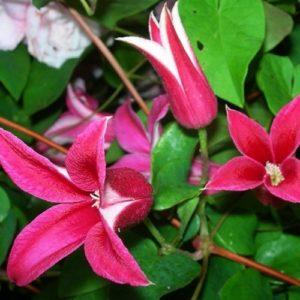
With proper care, the vine can reach 3 meters in length, with its first flowers appearing in June and displaying vibrant colors until the end of August. Since clematis 'Miss Bateman' belongs to pruning group 2, buds form on both current-year shoots and those that overwintered last year.
It is noteworthy that with proper agricultural technology, the crop enters the flowering process twice per season.
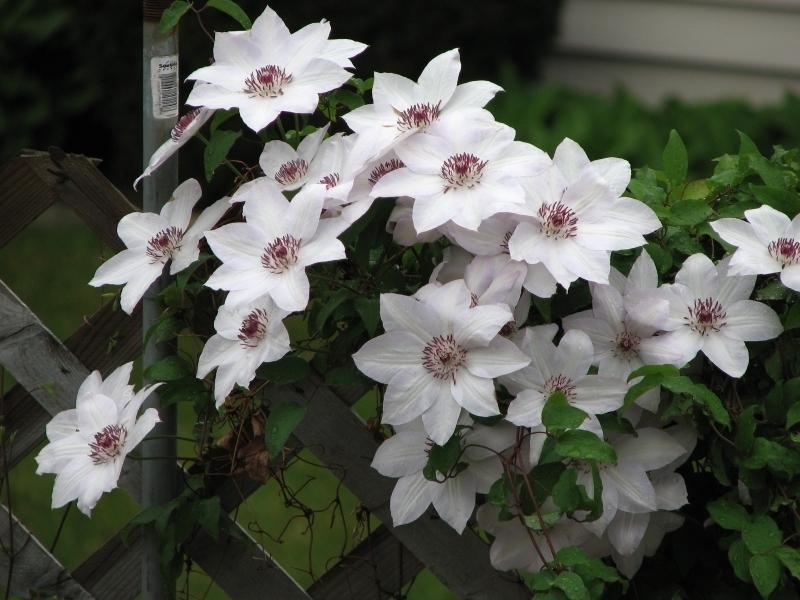
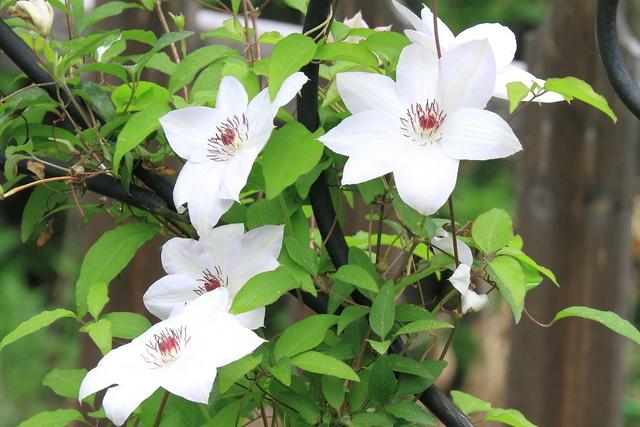
Radical pruning isn't necessary; partial pruning is sufficient. The milky-white flowers don't exceed 17 cm in diameter. The intensity and richness of the petal color directly depends on the growing location—a sunny spot is essential; shade will dull the buds' hue. Despite its great popularity among gardeners, this variety of clematis is not included in the State Register of Russia.
Selection and cultivation regions
This variety was developed by the English breeder Charles Noble. It's not the only variety he developed, but it is one of the most beautiful. Miss Bateman was first introduced to gardeners back in 1871, but remains popular with gardeners worldwide. The breeder named the variety after the daughter of James Bateman, the renowned orchid breeder. The Miss Bateman clematis easily tolerates temperatures down to -35°C (-22°F) and is hardy to Zone 4.

Benefits of using in landscape design
Clematis are particularly popular among landscape designers, and the Miss Bateman variety is no exception. Here are some examples of how to use this shrubby vine:
- As a decoration for a veranda or gazebo.
- For creating decorative arches.
- For decorating the walls of buildings.
- As an independent flowerbed decoration and in a composition with other flowers.
The advantages of growing this particular variety include its relatively high winter hardiness, decorative qualities, and the ability to bloom twice per season.
Planting and caring for vines
Since clematis, including the Miss Bateman variety, are long-lived plants and can grow in the same location for over 25 years, the plant's location must be carefully chosen to meet all the requirements of a shrubby vine. If the site is chosen incorrectly, the clematis will not bloom abundantly and will grow slowly.
Site selection and preparation
Before planting clematis, it's important to know which areas are absolutely unsuitable for it. Since the plant dislikes high humidity, avoid areas with a high water table. This is only acceptable if a strong drainage system is installed. Windy, drafty areas are also undesirable, as are low-lying areas where cold air stagnates and dampness accumulates. Avoid placing plants directly next to building walls or under roofs—water runoff from rain will destroy the clematis.
A sunny, draft-free spot with fertile loam soil is ideal for planting this variety. Unlike other varieties, Miss Bateman requires full sunlight; shade negatively affects the petal color, making them pale and dull. Before planting, dig over the selected area and remove any weed roots. Add nutrients if necessary. If the soil is too acidic, deacidify it.

Preparing seedlings
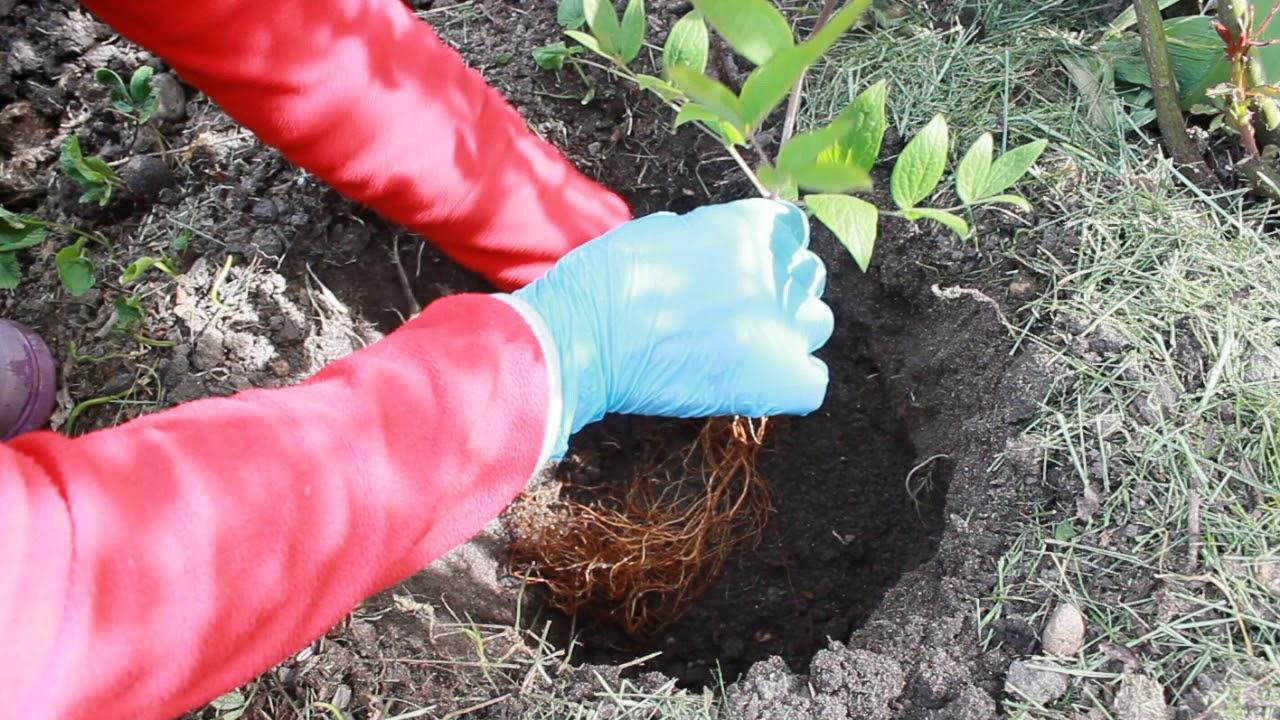
The principles for selecting clematis seedlings depend on their root system. Typically, two-year-old seedlings with either a closed or open root system are available for sale. If the plant's roots are in a container, it's impossible to examine their condition. In this case, pay attention to the shoots—there should be at least three, strong and resilient. When purchasing a seedling with an open root system, carefully inspect the roots.
The main criterion for the quality of a seedling is strong and healthy roots, the presence of at least 3, and dormant buds must also be present.
If the seedling is not transplanted to a permanent location immediately after purchase, and its roots have dried out, place them in a bucket of water for several hours, to which you can add a few drops of rooting stimulator.
Disembarkation times and rules
As for the timing of clematis planting, it's not critical for closed-root varieties—planting can be done throughout the growing season. For bare-root plants, work should be done in the spring, but it's important to be on time, as this variety begins its growth early. As soon as the soil warms up well, planting can begin.
If you weren't able to plant clematis in the spring, postpone the work until the fall. However, keep in mind that the plant will need at least a month before the first frost to fully establish itself, otherwise it won't survive the winter.

Planting algorithm for clematis Miss Bateman:
- They dig a hole the size of which is within 60 x 60 x 60 cm.
- A drainage layer of broken brick or fine gravel is placed on the bottom. The layer should be at least 15 cm thick.
- Supports are installed immediately to prevent the young plant from breaking from gusts of wind.
- A little sand and non-acidic peat, humus, wood ash and mineral fertilizer (100 grams) are added to the excavated soil.
- Half of this mixture is poured onto the drainage layer so that a small mound is formed.
- Place the seedling and carefully straighten its roots so that they point downwards.
- Pour the remaining soil so that there is a bowl-shaped depression around the shoots, about 10 cm deep.
- Pour a bucket of non-cold water into the hole.
- After this, a thin layer of mulch consisting of non-acidic peat is poured.
The remaining formation is gradually filled with fertile soil throughout the summer. If you plan to plant several clematis, be sure to leave 1.5 meters between them to prevent them from competing for nutrients.
Regularity of watering
Throughout the summer, when the weather is hot, clematis should be watered at least once a week. The water should be warm, and the amount should be calculated based on the soil conditions—on average, 1-2 buckets of water per mature plant, ensuring the soil is moist to a depth of 50 cm.
What fertilizers does the plant like?
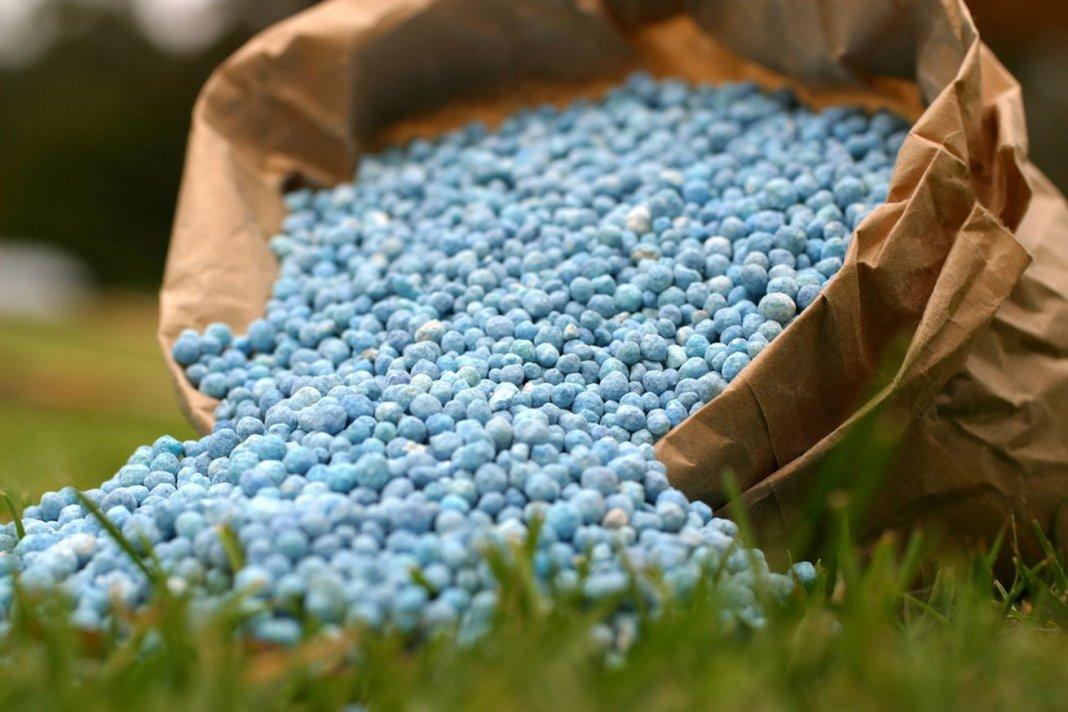
During the first growing season, clematis doesn't require any fertilizer; the ingredients added at planting are sufficient. Starting the following year, use a complete mineral fertilizer or regular mullein, diluted with water at a ratio of 1:10. Add 20 grams of the mixture to a bucket of water and fertilize the clematis once a month. Experienced gardeners recommend alternating organic and mineral fertilizers when applying fertilizer. Fertilizing clematis is especially important during the budding period.
Loosening and mulching the soil
If the soil isn't mulched, loosen the soil around the clematis after each watering or rainfall, removing weeds that can trigger disease outbreaks. If a layer of mulch is placed around the bush, this procedure is unnecessary. For this, use whatever you have on hand: non-acidic peat, sawdust, or shredded tree bark.
Tip! Clematis roots don't like overheating, so to prevent this, plant low-growing annuals around the bushes.
Pruning group
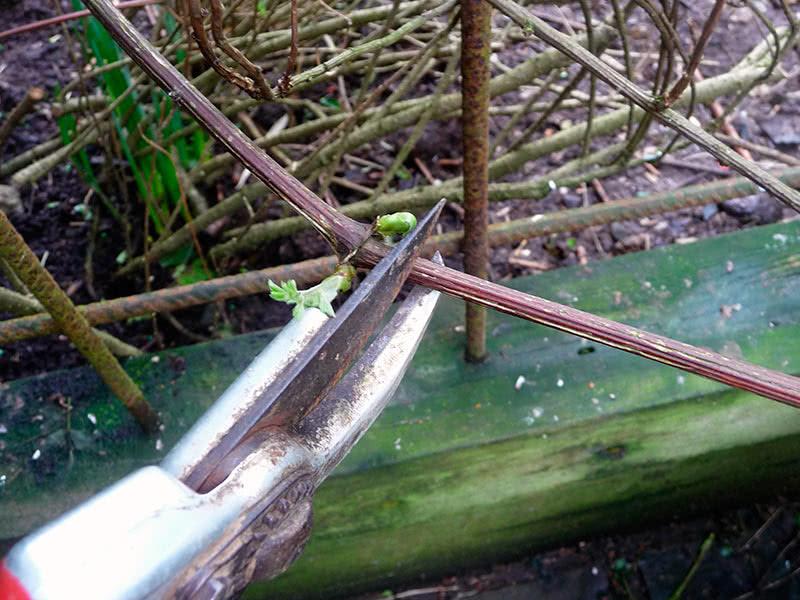
This clematis variety belongs to Group 2, and its first bloom will occur on last year's shoots, so the bush shouldn't be pruned drastically in the fall. Leave shoots 1 to 1.5 meters long. A universal procedure is suitable for rejuvenating the bush: weak shoots are pruned to the stump, and only the tips of strong shoots are slightly shortened. It's important to ensure that the number of shoots is even.
Protection from insects and diseases
Despite its strong immunity, this clematis variety is susceptible to fungal diseases if agricultural practices are not followed. These include powdery mildew, wilt, and gray mold. As a preventative measure, it is recommended to monitor air and soil humidity, promptly remove weeds, and avoid dense plantings of clematis.
If the disease does affect the plants, copper-containing preparations or Fundazol are used for treatment.
Spider mites and nematodes are the main pests of clematis. If nematodes cannot be controlled (by digging up and burning the bushes), then any insecticide can be used to eliminate spider mites.
Shelter for the winter
Preparing a plant for winter is carried out according to the following algorithm:
- Garden soil or humus is added to the root zone.
- Treat the soil with any fungicide.
- When the temperature drops to -6 degrees, cover the plants.
- Spruce branches are placed under the stems, the shoots are wrapped in a ring, wrapped in spunbond and placed on a substrate.
- Dry leaves are thrown on top and a piece of roofing felt is placed.
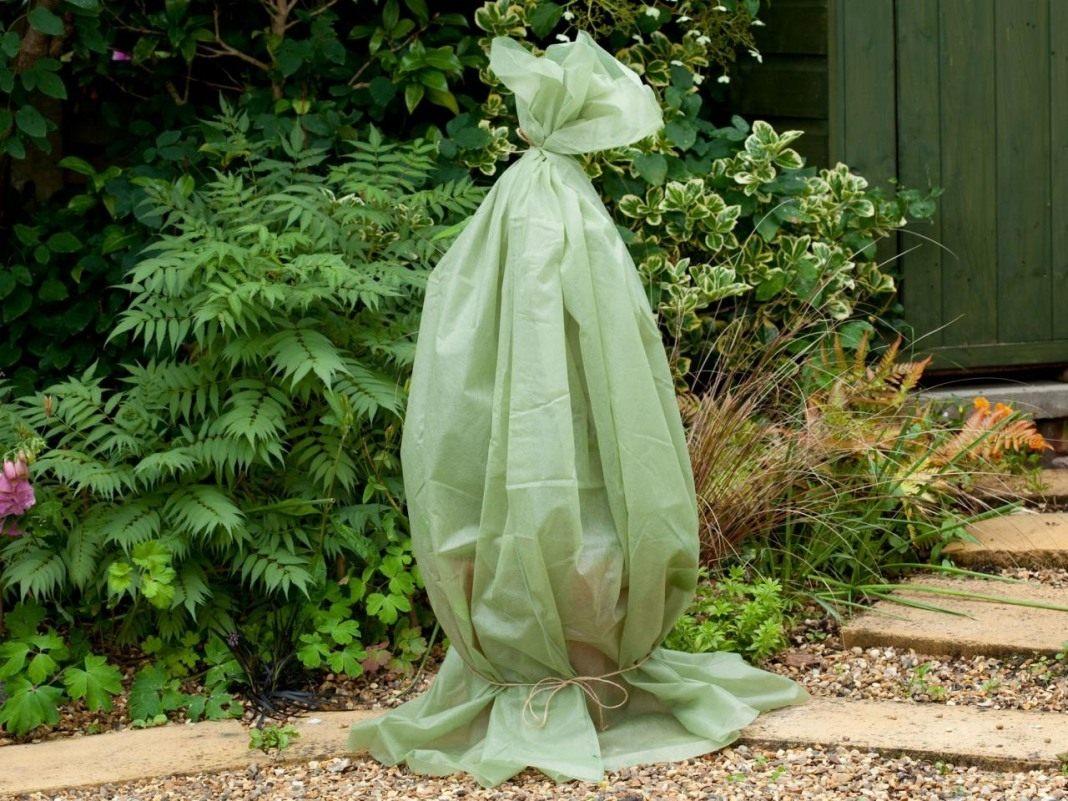
If there is enough snow in winter, throw it over the clematis cover.
Flower propagation technique
To propagate this variety of clematis, three simple methods are used.
Layering
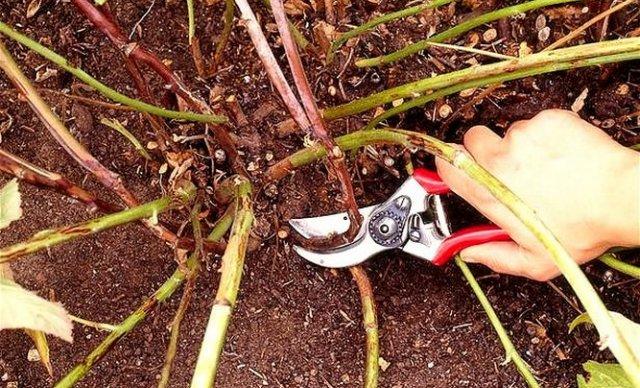
The most convenient and effective method is to dig a trench next to the clematis bush, place one of the lower shoots in it, secure it with a staple, and cover it with soil. By fall, the shoot will have rooted, and then it can be transplanted to its permanent location.
Cuttings
The middle portion of the shoots is used for cuttings. Young clematis are rooted either in clear plastic cups filled with water or in a mixture of sand or peat. Later, they are planted outdoors.
By dividing the bush
For bushes older than 5 years, part of the clematis with roots and shoots is cut off and planted in a new area.
Gardeners' reviews of the variety
Zhanna Vasilievna, 56, Lipki: "During the first season, we removed all the buds from the clematis to allow the plant to gain strength. The following year, it bloomed profusely, with very large buds."
Maria Vladimirovna, 39, Samara: "On the recommendation of a friend, I bought this variety and I haven't regretted it. Its enormous buds during flowering are truly captivating. I had a spider mite attack once, but after two treatments with Actellic, I was able to get rid of them."
Related posts:
 How to propagate clematis at home: timing, methods, and technologies
 Description and pruning group of clematis Ashva, the subtleties of growing and care
 Description of Jackman's clematis varieties and pruning group, cultivation and propagation
 Description and pruning group of clematis Cardinal Wyszynski, cultivation and care
 Description and characteristics of the clematis variety Comtesse de Bouchaud, planting and care instructions
 Description of the best varieties of Tangut clematis, planting, growing and care
 Description and pruning group of clematis Rouge Cardinal, cultivation and propagation
 Description and pruning group of clematis President, cultivation and care