
- Description of clematis Ashwa
- Selection and cultivation regions
- Frost resistance, drought resistance
- Resistance to diseases and pests
- Features of cultivation
- Choosing a suitable location
- Preparing seedlings
- Planting dates and algorithm
- Tips for caring for clematis
- Irrigation
- Adding nutrients to the soil
- Mulching and loosening the soil
- Formation of vines and pruning group
- Diseases and pests, methods of control and prevention
- Covering shrubs for winter
- Reproduction methods
- Gardeners' reviews
This shrubby vine, a member of the Clematis family, has become a firm fixture in the gardens of both domestic and international gardeners. This is thanks to the plant's striking appearance and undemanding growing conditions. Over the decades, breeders have developed hundreds of diverse varieties, among which the clematis known as Ashva stands out. While growing these vigorous and vigorous vines requires a large amount of space, which not every gardener has, Ashva, due to its modest size, can easily accommodate a small area.
Description of clematis Ashwa
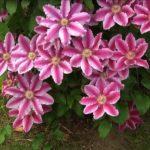
The shrubby vine of the Ashva variety is a perennial climbing plant classified in the Jackmani group according to one classification system and the Patens group according to another. The plant is undemanding in terms of growing conditions, produces large buds, and is quite compact. Clematis reaches a maximum height of 2 meters. It propagates easily by cuttings, layering, seeds, and division.
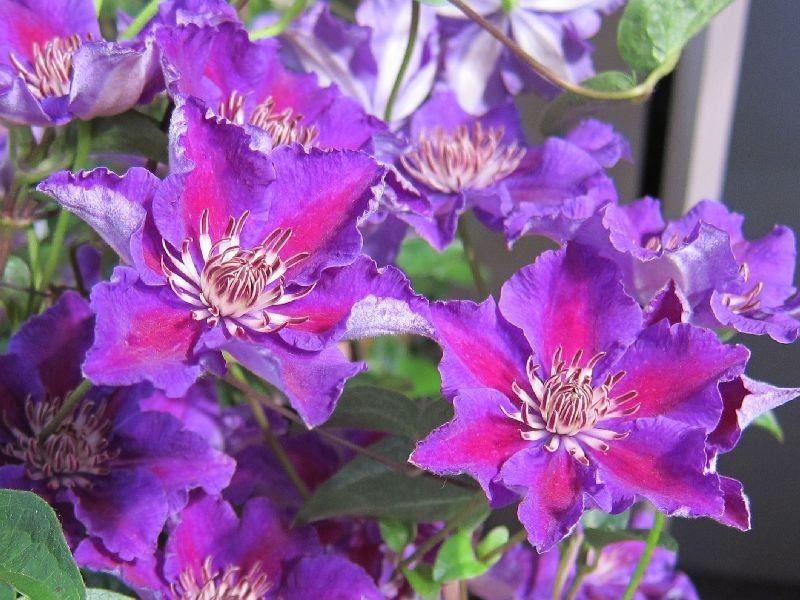
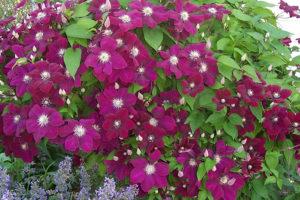
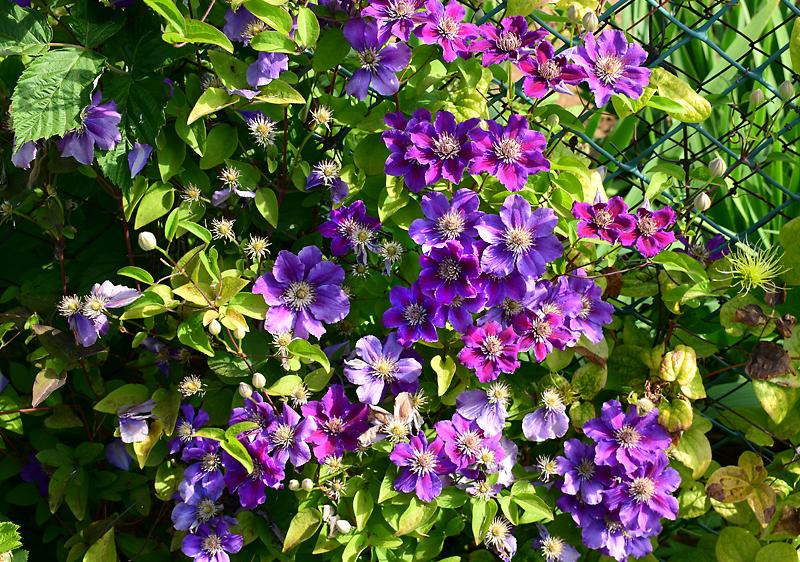
The bud is no more than 9 cm in diameter, and the wavy petals are purple-violet, each with a red stripe down the center. The plant's flowering period depends directly on the growing region—the further south the plot, the earlier the clematis blooms. On average, this begins in June, and flowering continues until September or October.
Since this variety belongs to Group 3, radical pruning is essential before winter preparation. The plant generally tolerates temperatures down to -30°C without issue. It is highly resistant to diseases and pests. Despite its widespread and popular distribution, Ashva is not included in the State Register of the Russian Federation.
Selection and cultivation regions
This variety was developed by a Baltic breeder. In the early 1990s, Lithuanian gardener Leonardas Bakevičius introduced his new creation to gardeners. The first clematis seedlings appeared in gardening stores in 1998. The Ashva variety won a bronze medal at the prestigious Plantarium exhibition, held annually in the Netherlands. The clematis received its award in 2004.
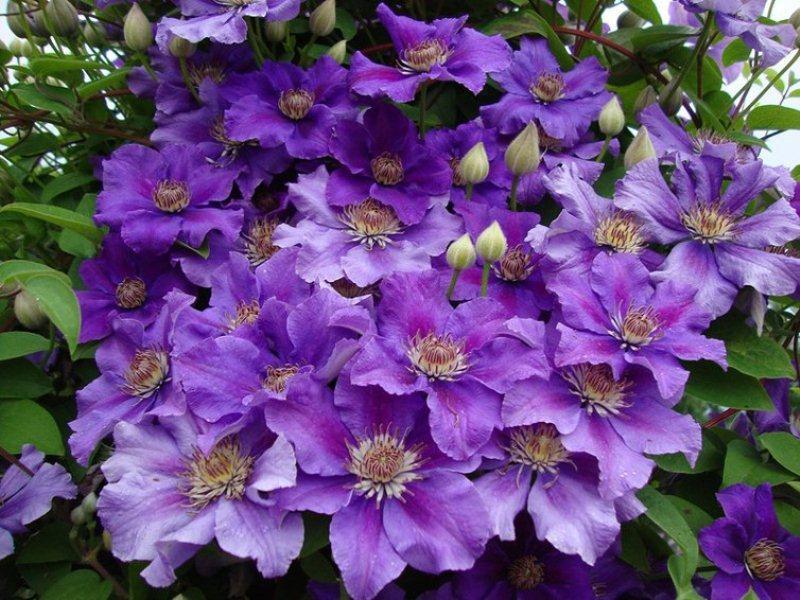
Frost resistance allows the hybrid plant to be grown in almost all regions of Russia, except for regions with harsh winters.
Frost resistance, drought resistance
With proper shelter, this clematis variety can withstand short-term temperature drops down to -30 degrees Celsius. It also tolerates extreme heat, but only with regular and abundant watering.
Resistance to diseases and pests
When properly managed, clematis is rarely attacked by pathogens or insect pests. However, despite its strong immunity, the plant still requires preventative measures.
Features of cultivation
Almost all clematis are long-lived, growing in the same location for about 25 years. Therefore, choosing a site for the plant requires careful consideration and responsibility. To ensure a plant with abundant and decorative blooms, follow the soil and seedling preparation guidelines and adhere to the planting algorithm recommended by experienced gardeners.
Choosing a suitable location
The ideal location for the plant is a sunny or partially shaded spot. It should be protected from winds and drafts. If this rule is neglected, clematis branches will break, buds will be damaged, and the clematis will not achieve its intended decorative effect.
Also, never plant clematis in areas with a shallow water table, as its root system reacts negatively to high humidity. Planting clematis under roofs or close to walls is also not recommended, as rainwater will damage both the leaves and flowers. If the soil is poor, add compost or humus when digging the soil, and add a small amount of superphosphate and wood ash to the holes.
Preparing seedlings
Clematis seedlings are sold with both closed and open root systems. In the former case, it's much more convenient to plant the young plants directly in their container. If you purchased a bare root seedling, it's recommended to soak it in a bucket of water with a few drops of rooting stimulant added.

Advice! Never purchase clematis seedlings from spontaneous markets where there are no certificates of conformity for the variety. Furthermore, there is a risk of purchasing a diseased plant that will infect other crops in the garden.
Planting dates and algorithm
The timing of planting will depend on the seedling category and the climate in the intended growing region. For closed-rooted plants, this is of little importance; planting can be carried out throughout the growing season. Open-rooted seedlings, however, are planted in the spring, when the soil has warmed to a depth of 20 cm and the threat of recurrent night frosts has passed. In rare cases, planting can be postponed until the fall, but keep in mind that at least a month must remain before the first frost, otherwise the plant will not have time to establish roots and will not survive the winter, even with protection.
When carrying out planting work, follow the step-by-step instructions:
- First of all, prepare a hole for clematis, its dimensions are 60 x 60 x 60.
- The excavated soil is mixed with humus, peat, sand, wood ash and mineral fertilizers for flowering plants.
- After the soil has settled a little (this usually takes 2-3 days), begin planting the seedling.
- Install support immediately, as the plant will not be able to support the weight of the shoots and buds on its own.
- Place a drainage layer in the form of fine crushed stone or perlite and pour in half of the prepared mixture.
- Place the clematis seedling, carefully spreading out the roots, and add the remaining soil.
- After this, water with non-cold water and cover with a small layer of mulch consisting of pine needles or crushed tree bark.

Recommendation! When planting this clematis variety, remember to plant the root collar at least 7 cm deep.
During the first weeks of growth in a new location, young seedlings must be shaded from the scorching sun. Experienced gardeners recommend planting low-growing annuals around the clematis to prevent overheating of the Ashva's root system.
Tips for caring for clematis
Growing care for this clematis variety is simple; even a novice gardener can handle it. All the plants require is regular watering, nutrient application, pruning according to group, and preparation for winter frosts. Disease and pest prevention are also essential.
Irrigation
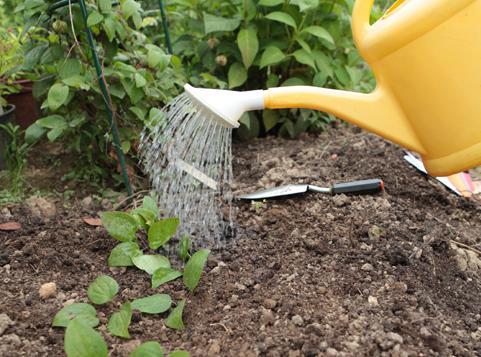
Clematis are generally moisture-loving plants, and the Ashva variety is no exception. Water regularly—in extreme summer heat, once a week, using 1-2 buckets of water per mature plant, depending on soil conditions and the presence or absence of natural precipitation. However, overwatering clematis will only cause harm—root rot and a risk of fungal diseases.
Adding nutrients to the soil
During the first season after planting, avoid using fertilizer, as the variety dislikes excess nutrients. Clematis thrives on a fertilizer mixture added to the planting hole. Starting in the second season, fertilize the shrubby vine, alternating mineral and organic fertilizers at least once a month. The plant responds well to watering with potassium permanganate and boric acid diluted in water.
Mulching and loosening the soil
After each watering or rainfall, the soil around the clematis is loosened, but this is done with extreme care to avoid damaging the plant's roots. This procedure saturates the soil with oxygen, which the root system needs for proper development. Weeds are also removed promptly—not only do they rob the clematis of nutrients, they also provoke outbreaks of diseases dangerous to the plant.
If you don’t want to bother with weeding, mulch the soil around the vine with a 10 cm layer, using either tree bark (chopped), or dry leaves or sawdust.

Formation of vines and pruning group
Since this clematis variety belongs to pruning group 3, flowering will occur only on the current year's shoots. Therefore, in the fall, old branches are not retained; they are pruned to a height of at least 30 cm above ground level. Also, throughout the growing season, perform a sanitary procedure, removing broken, diseased, and dead branches.
Diseases and pests, methods of control and prevention
Because this clematis variety is highly resistant, it rarely requires treatment for diseases. However, if cultivation practices are severely violated, clematis can be affected by fungal diseases. As preventative measures, it is recommended to regulate moisture, promptly remove weeds, and treat the soil with copper-containing preparations in the spring. If disease does damage the plants, fungicides are used after removing the affected parts from the bush.
Pests that sometimes plague clematis include spider mites and nematodes. In the former case, insecticides are helpful; in the latter, the plant will have to be dug up and burned, as there is no treatment for clematis.
Covering shrubs for winter
To prevent the root system from freezing, clematis must be covered before the onset of cold weather. First, cover the pruned bush with dry leaves, then place a wooden box on top and cover it with spunbond or plastic film.
Reproduction methods
There are four methods for propagating clematis: seed, layering, cuttings, and rhizome division. The first method is generally used only by breeders, as there's no guarantee the resulting plant will have the same qualities as the parent plant. The last three methods are usually chosen:
- Cuttings. They are taken from the center of a branch, treated with a rooting stimulant, and planted in a mini greenhouse for rooting.
- Layering. One of the lower clematis shoots is placed in a pre-dug trench and pinned down with staples. Soil is added on top, and in autumn, the plant is planted in its permanent location.
- Dividing the bush. This is used for clematis specimens that are over 5 years old.
Gardeners' reviews
Elvira Georgievna, 59, Mytishchi: “I’m very pleased with the clematis variety. I planted it in my garden two years ago. Surprisingly, it doesn’t get sick at all, and pests don’t bother it.”
Marina Vyacheslavovna, 42, Penza: "My husband and I spent a long time thinking about how to decorate our garden gazebo. We saw this clematis variety in a neighboring plot and decided to try planting it ourselves. It's a great choice for those on a lazy budget—it requires virtually no maintenance. Just cover it properly for the winter, and you're guaranteed a riot of color in the spring and summer."
Related posts:
 How to propagate clematis at home: timing, methods, and technologies
 Description and pruning group of clematis Rouge Cardinal, cultivation and propagation
 Description of Jackman's clematis varieties and pruning group, cultivation and propagation
 Description and characteristics of the clematis variety Comtesse de Bouchaud, planting and care instructions
 Description of the best varieties of Tangut clematis, planting, growing and care
 Description and pruning group of clematis Cardinal Wyszynski, cultivation and care
 Description and characteristics of the clematis variety Kaiser, planting and care, pruning group
 Description and pruning group of clematis variety Nelly Moser, planting and care rules