
- Characteristics of the Kaiser variety
- Features of growth and flowering of clematis
- Application in landscape design
- Growing conditions requirements
- Rules and terms of planting
- Care instructions
- Watering and fertilizing
- Trimming
- Support and garter
- Preparing for the winter period
- Diseases and pests
- Methods of reproduction
- Gardeners' reviews of the Kaiser variety
The Kaiser clematis began its triumphant march through blooming gardens in mysterious Japan. The efforts of top breeders have created this unique shrubby vine. A fragrant cloud of exquisite double flowers is an unforgettable sight and can transform any garden. Every year, this Japanese wonder gains more and more admirers.
Characteristics of the Kaiser variety
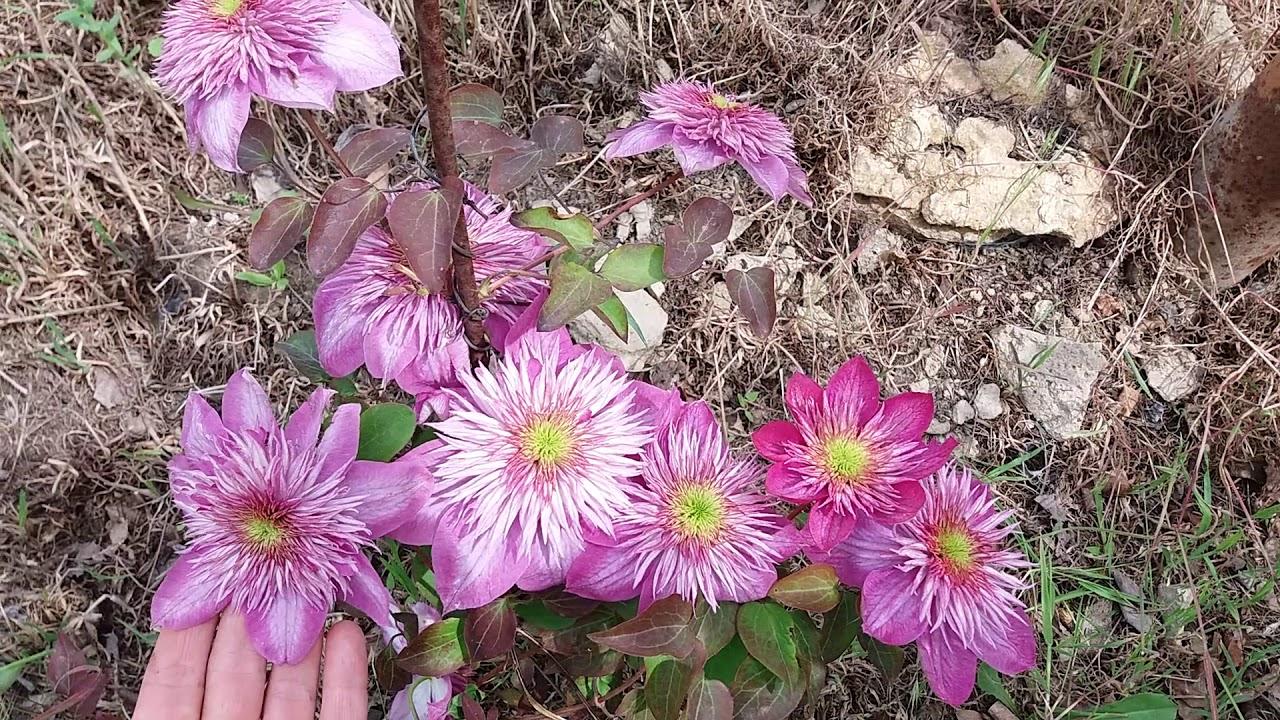
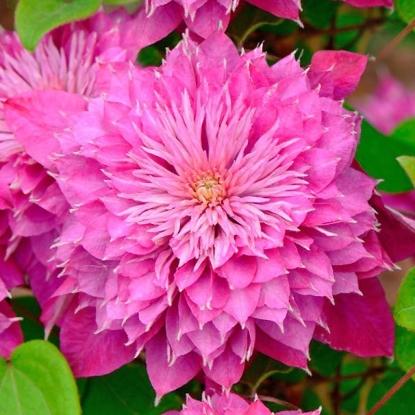
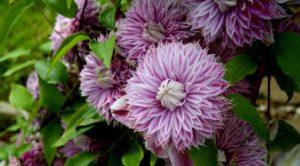
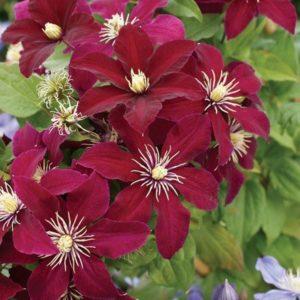
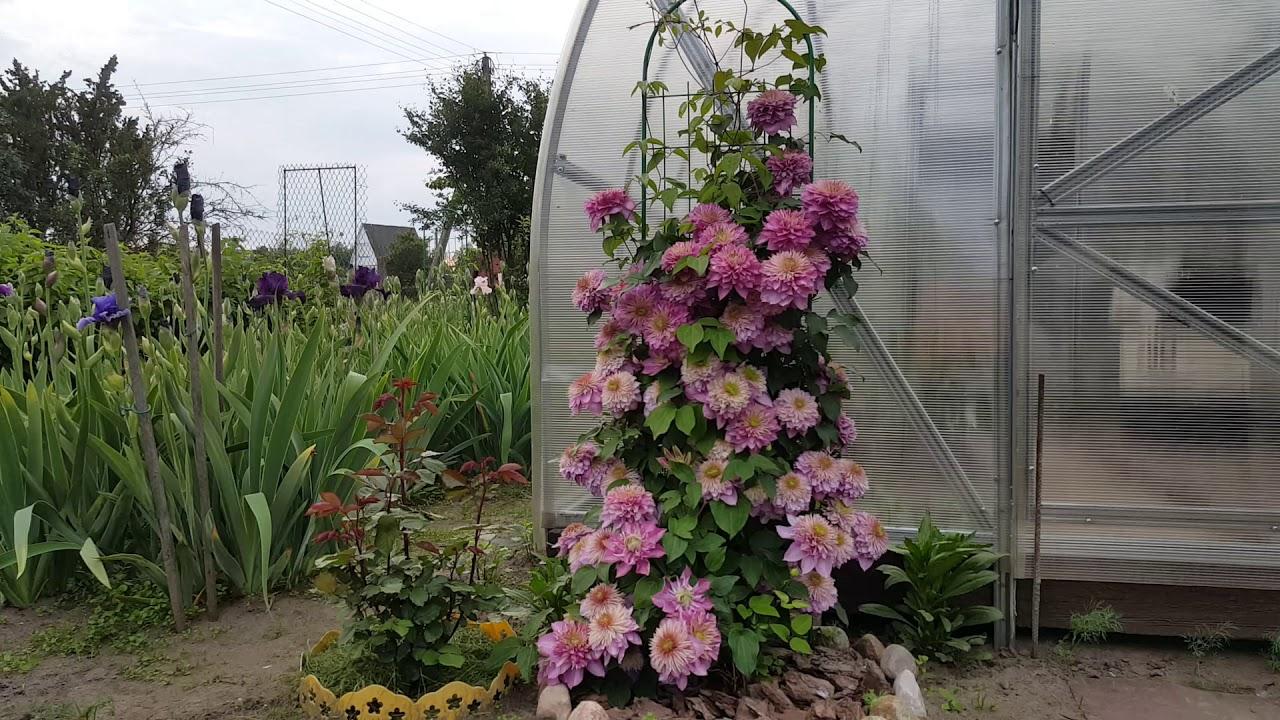
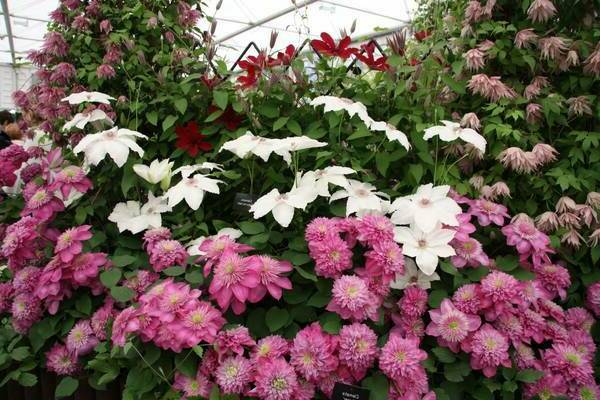
Clematis 'Kaiser' is a spectacular vine with a complex character. Its double, multi-petaled flowers come in vibrant pink and purple hues. The golden-yellow centers of the flower heads lend a festive appearance to the buds. The leaves of this shrubby vine are a rich emerald hue. The plant's large flowers boast a refined, discreet fragrance. The diameter of the open bud reaches 10-14 cm. Clematis stems grow up to 2 m.
With proper care, this plant can reward its owner with a truly fantastic display. A cascade of multi-tiered, vibrant flowers will grace any garden with regal grandeur. The vine's only drawback is its tendency to rot when covered during warm winters.
Features of growth and flowering of clematis
The first buds form on the overwintered shoots of the vine. The profuse flowering period of the Kaiser clematis begins in mid-May and continues until mid-June. A second, prolonged bloom begins in early July. The buds on the young shoots are no longer as large, but this doesn't affect the overall appearance. A cascade of flowers adorns the garden until September.
The color of the buds depends on the vagaries of the weather and the time of year. While clematis flowers boast a delicate pink hue in early summer, by the end of August, the outer petals take on a purple hue, and the centers of the buds turn greenish. Vigorous growth and full development of clematis depend entirely on proper agricultural practices. Without proper care, the vines become frail and the flowers become smaller.
Application in landscape design
Like all members of the friendly Clematis family, clematis Kaiser looks harmonious against the wall of a gazebo or terrace. Its whimsical flowers framed by emerald leaves will highlight the beauty of wooden structures. Clematis also looks spectacular when planted alone. It makes a wonderful soloist in a colorful chorus of summer flowers.
You can enhance the elegance of clematis with low-growing annuals. Marigolds or daisies are good companions.
A flowering vine will add a unique charm to a secluded corner of the garden. Arches, pergolas, and trellises covered with flexible vines will serve as a screen and hide unsightly outbuildings.
Growing conditions requirements
Clematis Kaiser won't thrive in spartan conditions. It prefers full sun and partial shade. It should be placed in a well-protected location. Clematis thrives in a southern, southeastern, or southwestern garden. The planting site should be protected from flooding during heavy rains. Therefore, if planting clematis against a building wall, maintain a minimum distance of 50 cm between the plant and the wall. The vine also thrives in areas with low groundwater levels.
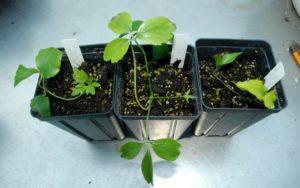
Clematis is demanding when it comes to soil. It blooms and thrives in loose, fertile sandy loam or loamy soil. The soil should be slightly alkaline or neutral. The vine requires support, especially in the first year after planting. During this period, the plant's shoots are very fragile and prone to breakage from wind and rain.
Clematis Kaiser doesn't tolerate sudden temperature changes well, and the first real frost can kill it. Therefore, the plant overwinters under cover. Caring for this flowering arrangement involves regular watering, pruning, and fertilizing.
Rules and terms of planting
Fall planting of the Kaiser clematis is only possible in areas with mild climates. The delicate seedlings do not tolerate even light frosts well, so unfavorable conditions can have a detrimental effect on the vine's development. In central Russia, Kaiser clematis is planted only in the spring. Several warm months will give it time to strengthen and develop strong roots. The plant does not respond well to transplanting, so it is best to immediately place it in its permanent location and not replant it again.
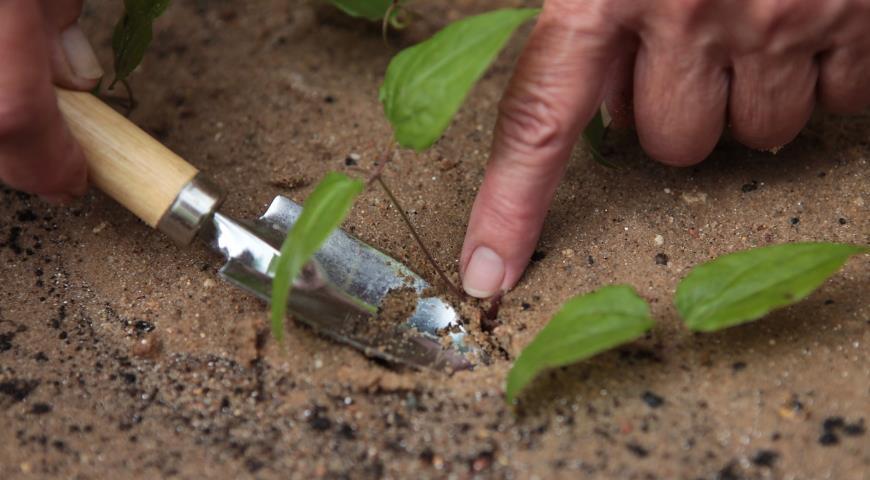
Clematis is planted in dry, warm weather. If the day promises to be hot, it's best to plant early in the morning. The planting hole should be spacious (60 x 60 cm), as this beautiful plant will grow in it for several years. The planting depth is 50-60 cm. A drainage mixture consisting of broken brick, crushed stone, and sand should be placed at the bottom of the hole. The layer should be at least 15 cm thick. This is important because the plant does not tolerate stagnant water and can quickly rot.
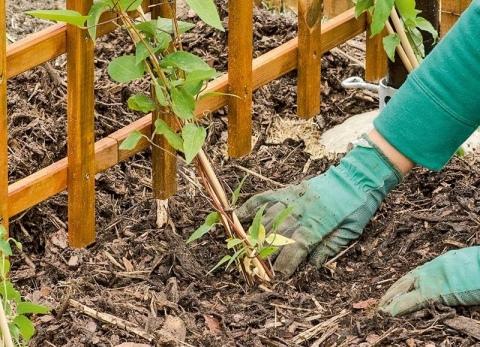
The next step is installing the support. This is best done during planting. The structure will be securely anchored in the soil and will support the seedling for the first few days. A substrate consisting of humus and garden soil is prepared in advance. Ash and superphosphate are added to the planting mixture.
Fill the hole halfway with fertile soil. If the garden soil is acidic, add dolomite flour. Lightly rake the soil toward the center of the hole, forming a small mound. Remove the pre-soaked seedling from the water and place it on top of the mound. Carefully spread the plant's roots, then fill the remaining space with soil. The root collar is buried 5-7 cm deep. Trim the vine shoots, leaving 2-3 buds above the soil surface.
If the groundwater level is close to the site, you can create channels to drain excess water. After this process, the young plant should be watered and shaded from the harsh sun. It's also important to protect the roots from drying out. Bark or peat are suitable as mulch. During the first year of the clematis's life, all flowers are ruthlessly removed. The vine should focus its energy on developing its root system and growing strong shoots.
Clematis are rarely replanted. Reasons for relocating this beautiful plant may include overgrown neighbors, garden remodeling, or the construction of a flower bed within the area. This work is carried out in the spring, after the onset of stable warm weather.
Care instructions
Clematis Kaiser can hardly be called an unpretentious plant, but with good care, the owners' efforts will be repaid a hundredfold.
Watering and fertilizing
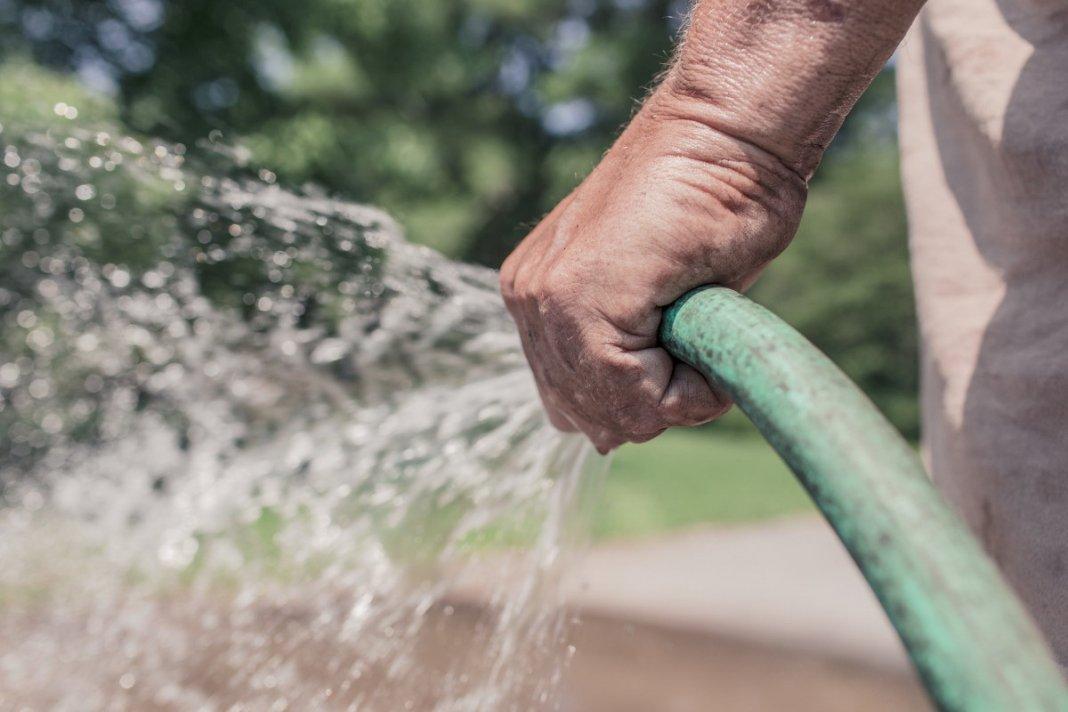
Clematis requires abundant watering, but at the same time, it does not tolerate stagnant water. This controversial beauty requires a tailored approach to care. The root zone of the vine is watered when the soil has dried to a depth of 7-9 cm. Pour a bucket of warm water under each bush. Water carefully, being careful not to splash the leaves or shoots.
After each treatment, loosen the root zone and sprinkle it with a small amount of fertile soil. By the end of August, a small mound should form around the vine's roots. The mound should be 5-8 cm high. Feed the green plant once a week. The plant responds well to a complete fertilizer for vines or flowering plants.
Organic fertilizers are excellent for clematis development. During flowering, Kaiser clematis requires phosphorus and potassium. These nutrients are responsible for flower bud formation. During this period, fertilizers with a high content of these components are used. Clematis does not tolerate chlorine, so this should be taken into account when choosing a fertilizer blend.
During the budding period, it is recommended to feed the vine with lime milk. The fertilizer is a solution of 10 liters of water, 150 g of slaked lime, and 100 g of ash. Apply the fertilizer to the roots of the clematis. Care must be taken to avoid the solution coming into contact with the leaves and shoots of the plant. Applying lime milk begins in late May and ends just before budding begins.
Once buds begin to appear, stop all fertilizing. This will help extend the flowering period. After the flowering period ends, apply fertilizer as usual. In the second half of summer, organic fertilizer is not recommended, and with the onset of autumn, fertilization ceases.
Trimming
The large clematis family can be divided into 3 groups.
- The liana blooms only on flexible shoots of the current year.
- Clematis blooms twice per season. During the first flush, flowers appear on the previous year's shoots. During the second flush, flowering is concentrated on the current season's new shoots. Clematis Kaiser belongs to this group.
- Clematis forms buds and flowers only on young shoots, so it blooms only once per summer.
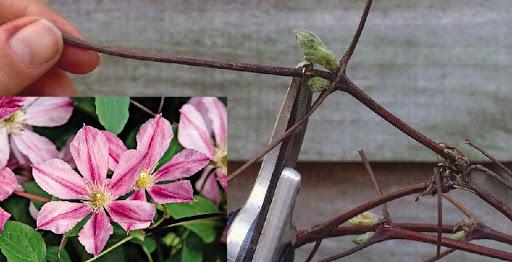
Since clematis Kaiser belongs to Group 2, the plant undergoes light pruning in the fall. Shoots are pruned back, leaving a 1-meter-long section of vines intact. Weak branches are removed completely. In the spring, the vine, freed from its covering, is sanitized. Broken vines are removed with pruning shears. The next pruning is done after the first, abundant bloom has ended. At this point, all old shoots are removed. During the summer, dense clematis thickets are thinned slightly. This is done to improve airflow to the vines.
Support and garter
The shoots of the clematis variety Kaiser grow quickly, so they need to be tied up weekly. Timely staking is especially important for young plants. The branches of seedlings are still fragile and easily broken by even a gust of wind. Trellis or netting are not suitable for supporting clematis. Removing long vines from such a structure is a real pain. A frame-like support is much more convenient. Twine or rope stretched over such a base will reliably protect the vines from damage. In the fall, the twine is cut off, and the vine is safely stored for the winter.
The appearance of the structure is of great importance. The dense foliage and flowers of the clematis will completely conceal the support only by August. The trellis will be visible most of the time, so the support should be decorative. The optimal height of the structure is 1.5 m.
Preparing for the winter period
Preparing the Kaiser clematis for winter begins as early as October. After pruning, the area around the clematis is cleared of leaves and stem cuttings. The root zone is insulated with a mixture of sand and ash. When frost sets in, the branches are carefully laid on a bed of mulch. Cover the stems with non-woven fabric and spruce branches. When the weather gets cold, the structure is hidden under a wooden box. The entire structure is covered with fallen leaves or hidden under spruce branches. Roofing felt can be used instead of leaves.
Diseases and pests
Clematis Kaiser suffers most from spider mites and all types of aphids. Slugs are also a frequent nuisance. Controlling these nasty insects is difficult. Preventative measures are much easier. Pests won't appreciate regular dousing with a weak solution of tar soap or insecticides. For preventative measures, use diluted solutions. The vine's branches should be inspected regularly. Diseased or suspicious shoots should be removed immediately.
During periods of prolonged rainfall, clematis can be affected by rot and fungi. In these cases, the soil beneath the plant should be treated with a solution of Fundazol or another fungicide. The leaves and flowers can be sprayed with Fitosporin. Visibly affected parts of the vine should be removed and burned immediately.
Methods of reproduction
Clematis Kaiser is a hybrid variety, so it cannot be propagated by seed. If desired, you can increase the number of seedlings in three ways:
- Layering. In early June, one of the shoots is buried in the soil. The tip of the shoot should remain above ground. The buried branch is periodically moistened. After a couple of months, the shoot should take root. The following spring, the plant can be planted in its permanent location.
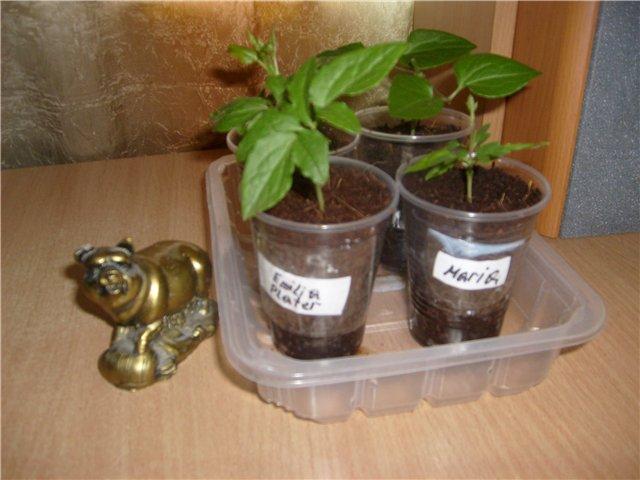
- Cuttings. Place the cutting in a container filled with damp sand. Cover with a plastic bag. The cutting should root in approximately 50-60 days.
- By dividing an adult clematis.
Gardeners' reviews of the Kaiser variety
Elena K., Voronezh: "Last year, I planted a Kaiser clematis seedling. It sat idle all summer, barely growing. I insulated it for the winter according to all the rules, but I had little hope of success. But this year, the Kaiser grew by leaps and bounds and even produced a few flowers. It's absolutely beautiful! Now I don't regret the time or effort at all."
Alexey, Domodedovo: "I saw a gorgeously blooming clematis at my neighbor's dacha. It turned out to be a Kaiser variety. I begged for a cutting, and now I'm working on it. I really want to see such a miracle in my garden."
Tatyana R., Odintsovo: "I've been growing my clematis Kaiser for about five years. It really started blooming about two years ago. It took some work, but the results were beyond praise."
Related posts:
 Description of the burning clematis, planting and care in open ground, propagation
 Description and pruning group of clematis President, cultivation and care
 Description and characteristics of the clematis variety Comtesse de Bouchaud, planting and care instructions
 Description and pruning group of clematis Rouge Cardinal, cultivation and propagation
 Description and characteristics of Manchurian clematis, cultivation techniques
 Description of clematis varieties, planting and care, propagation methods
 Description and pruning group of clematis variety Purpurea Plena Elegans, growing rules
 Description and pruning group of Clematis Mountain, planting technology and care