
- Description of the Niobe variety: all the pros and cons
- Origin and growing regions
- Flowering characteristics and use in landscape design
- Landing
- Site selection and preparation
- Timing and planting pattern for seedlings
- Further care in open ground
- Watering frequency
- Feeding the plant
- Pruning and tying to supports
- Mulching and loosening the soil
- Pest and disease control
- Covering the plant during the winter
- Reproduction methods
- Gardeners' opinions on the Niobe variety
Many gardeners grow not only vegetables and fruit trees, but also ornamental plants. Clematis is ideal for landscaping. These herbaceous climbing vines are characterized by rapid growth and excellent ornamental qualities. Clematis, with the exotic name Niobe, is also a popular choice among gardeners.
Description of the Niobe variety: all the pros and cons
The hybrid clematis Niobe is renowned not only for its attractive appearance but also for its ease of care and low maintenance. This shrubby vine belongs to the Jackmanii group and is characterized by large buds. Since the vine grows no more than 2.5 meters in length, landscape designers use it for both vertical and horizontal landscaping.
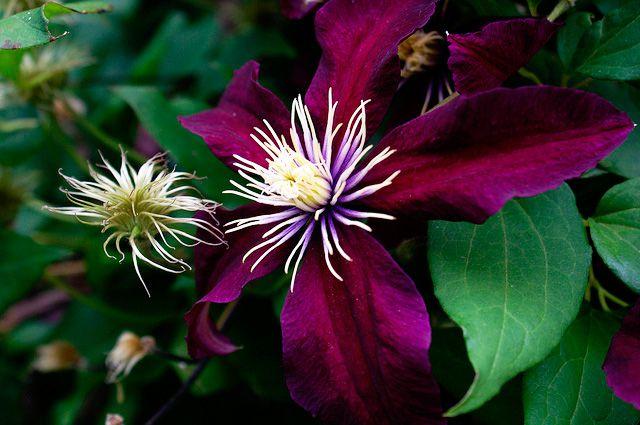
Clematis blooms on the current year's shoots, placing it in Group 3 and requiring radical pruning before winter. Niobe clematis is a mid-flowering variety, with the first buds appearing in July and the last in September. The petals are dark purple, and the flower diameter ranges from 10 to 15 cm. The yellow anthers provide a striking contrast.
Clematis has a good immunity and is rarely attacked by insect pests and diseases. Despite this hybrid's popularity among both foreign and domestic gardeners, it has not been included in the Russian State Register.
Origin and growing regions
Clematis Niobe is a Polish selection created by renowned gardener Władysław Noll. He presented his creation to the community in 1975. That same year, the hybrid was registered with the Royal Horticultural Society (London, UK). This clematis can be grown practically throughout the entire territory of Russia, as it has good frost-resistant qualities and, provided it is covered, easily survives the winter.
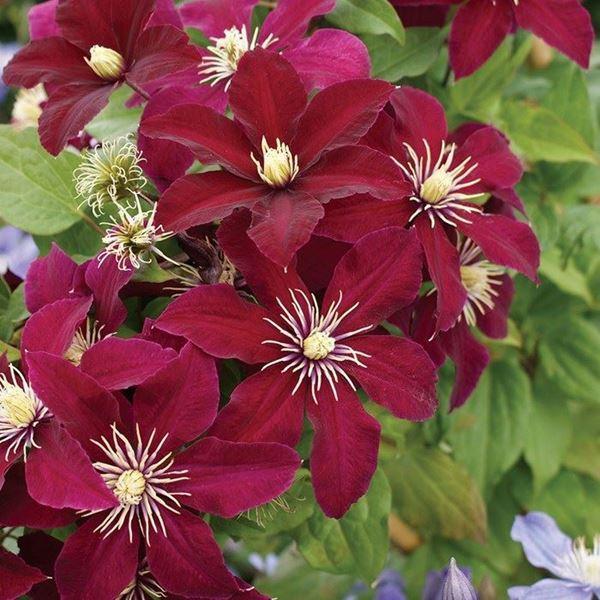
Flowering characteristics and use in landscape design
The flowering time of this clematis hybrid depends on the growing region. In temperate climates, the first buds appear in July, and the last ones appear in September. In southern regions, flowers can appear on the clematis until late autumn.
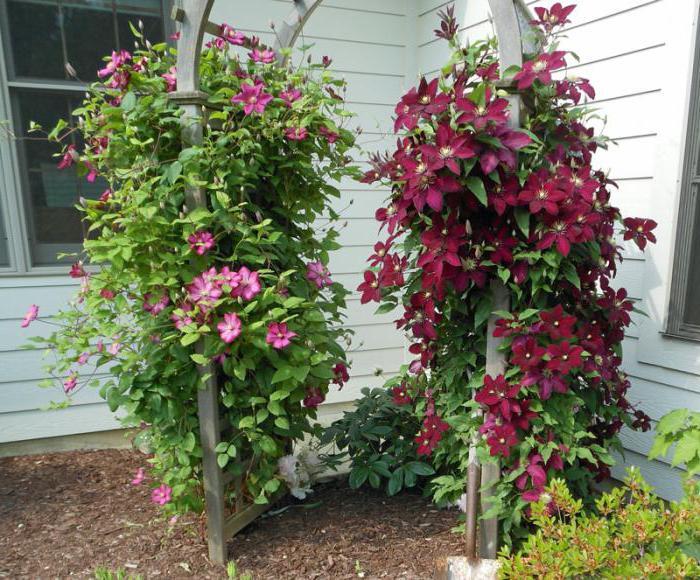
Due to its compact size, the vine is used not only to decorate garden plots, but also gazebos, arches, building walls and fences.
Many clematis lovers also grow it as a potted plant on balconies and loggias. If you plant the bush near a tree, the vine will completely encircle it within a few years.
Landing
Since clematis is a perennial plant and, with proper cultivation, can thrive in one location for about 20 years, planting seedlings requires careful consideration. Selecting a suitable site, preparing the soil, and purchasing high-quality materials are essential. Only by following all these guidelines will clematis delight you with abundant blooms and excellent health.
Site selection and preparation
When choosing a site for clematis, keep one rule in mind: the shoots should be exposed to the sun, while the roots should be in the shade, as they do not tolerate heat. Low-lying areas or areas where the groundwater level is close to the soil surface are unsuitable for planting. Also avoid areas exposed to wind and drafts, as the delicate flower petals will lose their decorative appearance and the vine itself may break. The distance from building walls or fences should be between 70-100 cm.
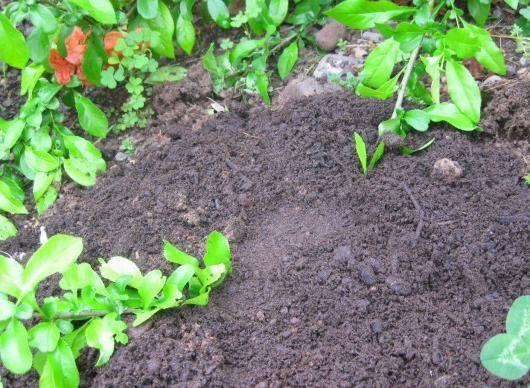
As for the soil, it should preferably be neutral, fertile, light, and well-drained. Before planting, the soil should be dug over, weed roots removed, and nutrients added.
It's best to purchase clematis seedlings from gardening stores or nurseries; sellers at spontaneous markets won't be able to provide gardeners with a certificate of hybrid conformity. It's preferable to purchase seedlings with a closed root system; these clematis plants establish themselves more quickly in a new location and are less susceptible to disease.
Timing and planting pattern for seedlings
For colder regions, spring planting of clematis is preferable. Over the summer, the seedlings will adapt to the new conditions and will survive the cold period without any problems. In southern regions, the procedure can be postponed until autumn; the main thing to remember is to leave at least a month before the first frost.
Step-by-step instructions for planting the Niobe hybrid:
- First, prepare a hole, its dimensions are 60 x 60 x 60 cm.
- A drainage layer is arranged at the bottom - for this, broken brick, small crushed stone or perlite are used.
- The soil removed from the hole is mixed with humus, wood ash and a little superphosphate are added.
- A support is immediately installed, to which the young seedling is subsequently tied so that it does not break.
- Fill in half the soil and water it a little.
- Place the seedling so that its roots are facing downwards and add the remaining soil.

At first, the root system of clematis is shaded; experienced gardeners recommend planting low annual plants around it.

Further care in open ground
The health and ornamental qualities of clematis depend on continued adherence to proper agricultural practices. These include watering and fertilizing, loosening and mulching the soil, pruning and preparing for winter, as well as preventative treatments against diseases and pests.
Watering frequency
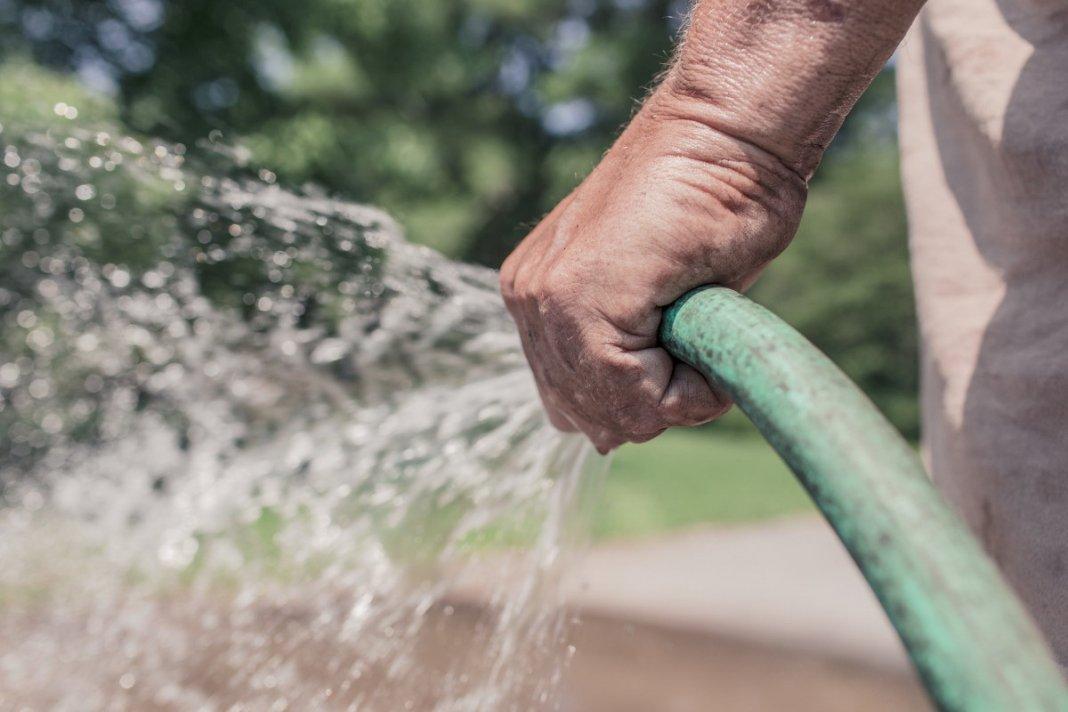
Clematis thrive on moisture, but it's important not to overwater—excess water will cause rhizome rot and fungal diseases. Typically, watering is done once a week, using two buckets of water per mature plant. However, if there has been no rain for a long period and the weather is hot, increase the frequency to twice every seven days. It's recommended to water either early in the morning or after sunset to prevent water droplets from burning the leaves and buds when exposed to sunlight.
Feeding the plant
Young first-year seedlings don't need additional feeding; the nutrients added at planting are sufficient for the entire season. Fertilizers are added starting the following spring. Initially, nitrogen and potassium fertilizers are used to stimulate growth and subsequent bud formation. At the beginning of the flowering period, complex fertilizers are used. In preparation for winter, clematis is fertilized with well-rotted compost or mixtures containing phosphorus, calcium, and manganese.
Pruning and tying to supports
When planting clematis, a support is installed, to which the vine's shoots are subsequently tied. Without this, the plant's branches will break under the force of the wind and lose their decorative appearance. However, there are cases where tying is not necessary. The first is when clematis is used as a groundcover. The second is when it is grown as a trailing plant in hanging pots.
Since the hybrid belongs to Group 3, all shoots are pruned before winter, leaving no more than 20-30 cm above ground level. Clematis blooms on the current year's branches, so there's no point in leaving old shoots. Throughout the summer, perform sanitation, if necessary, removing broken and diseased branches.
Mulching and loosening the soil
Weeding and loosening the soil are essential when caring for clematis. This should be done to a depth of no more than 20 cm to avoid damaging the hybrid's roots. Loosening the soil saturates it with oxygen, which is essential for the clematis's full development and the formation of a strong root system.
If you don't want to constantly fight weeds, the root area can be mulched with any organic material - sawdust, non-acidic peat, or spruce needles.
Pest and disease control
Prevention is essential to prevent disease and insect attacks. It's helpful to treat the soil around clematis with copper-containing preparations or fungicides in the spring after the snow melts. It's also recommended to promptly remove fallen leaves from the area where pests overwinter, maintain a regular watering schedule, and prune clematis.
Covering the plant during the winter
In southern regions, where winter temperatures are not very low, a 10-15 cm layer of mulch consisting of humus, dry leaves, and peat is sufficient to cover clematis. In colder regions, a wooden box is placed on top and covered with spruce branches. This cover will protect the root system from freezing and prevent it from rotting.
Reproduction methods
Clematis Niobe is propagated in four ways:
- seeds;
- dividing the bush;
- cuttings;
- layering.
The first method is rarely used by gardeners due to the time-consuming process. It is more often used by breeders developing new hybrids.
Gardeners' opinions on the Niobe variety
Lidiya Vasilievna, 57: "This is the first clematis hybrid I've ever dared to plant at my dacha. The seedling took root quickly and didn't cause us any problems. We water it occasionally and loosen the soil, and the blooms are long and profuse."
Zhanna Alexandrovna, 36: "One of my favorite clematis, thanks to its long flowering period. I lightly cover it in winter after pruning; our region is warm, so the roots have never frozen."
Related posts:
 Description and pruning group of clematis President, cultivation and care
 Description of the burning clematis, planting and care in open ground, propagation
 Description and pruning group of clematis Rouge Cardinal, cultivation and propagation
 Description of clematis varieties, planting and care, propagation methods
 Description and characteristics of Manchurian clematis, cultivation techniques
 Description and characteristics of the clematis variety Kaiser, planting and care, pruning group
 Description and pruning group of Clematis Mountain, planting technology and care
 Description and characteristics of the clematis variety Comtesse de Bouchaud, planting and care instructions