
- Appearance and characteristics of the plant
- Origin and properties of the flower
- Advantages and disadvantages of using in landscape design
- Where is stinging clematis grown?
- Necessary conditions for growth and flowering
- Planting multi-flowered clematis
- Deadlines
- Preparing the site and planting material
- Direct landing
- How to care for a plant
- Watering and fertilizing
- Pruning and shaping
- Tying up
- Mulching and loosening
- Protection from pests and diseases
- Preparing for winter
- Reproduction
- Possible problems
- The plant has stopped growing.
- The inflorescences are becoming smaller
- Drying of the tops
Gardens and summer cottages are decorated not only with flower beds but also with ornamental shrubs. Clematis, also known as clematis spp., is ideal for this purpose. It can climb vertical surfaces and adorn building walls, columns, or fences. This highly decorative plant is undemanding in terms of growing conditions and care. It has gained popularity among both novice and experienced gardeners. Landscape designers widely use clematis spp.
Appearance and characteristics of the plant
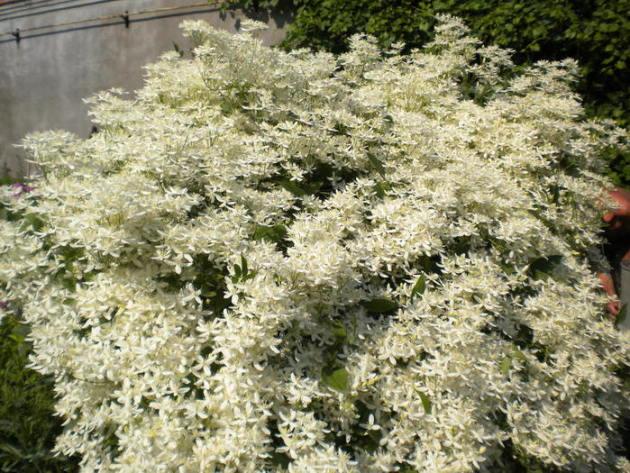
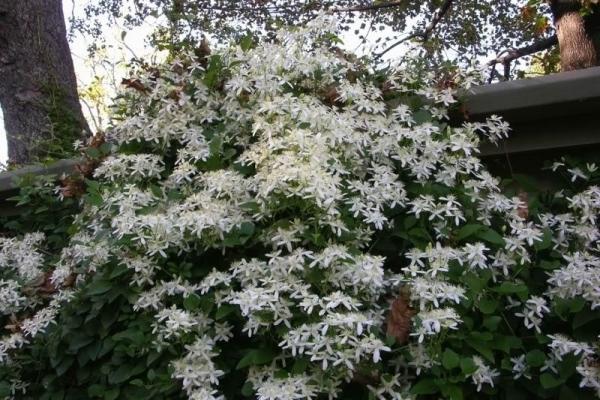
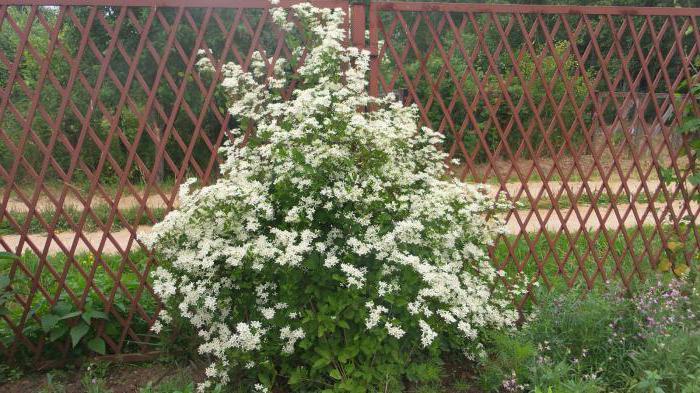
Clematis spp. is a small-flowered shrub whose vines can cover an area 5 meters high and 4 meters wide. Remarkably, the shoots themselves, as they grow, twine around nearby structures. As a result, unsightly walls or fences are transformed into a decorative green carpet with beautiful buds.
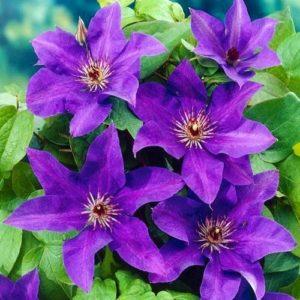
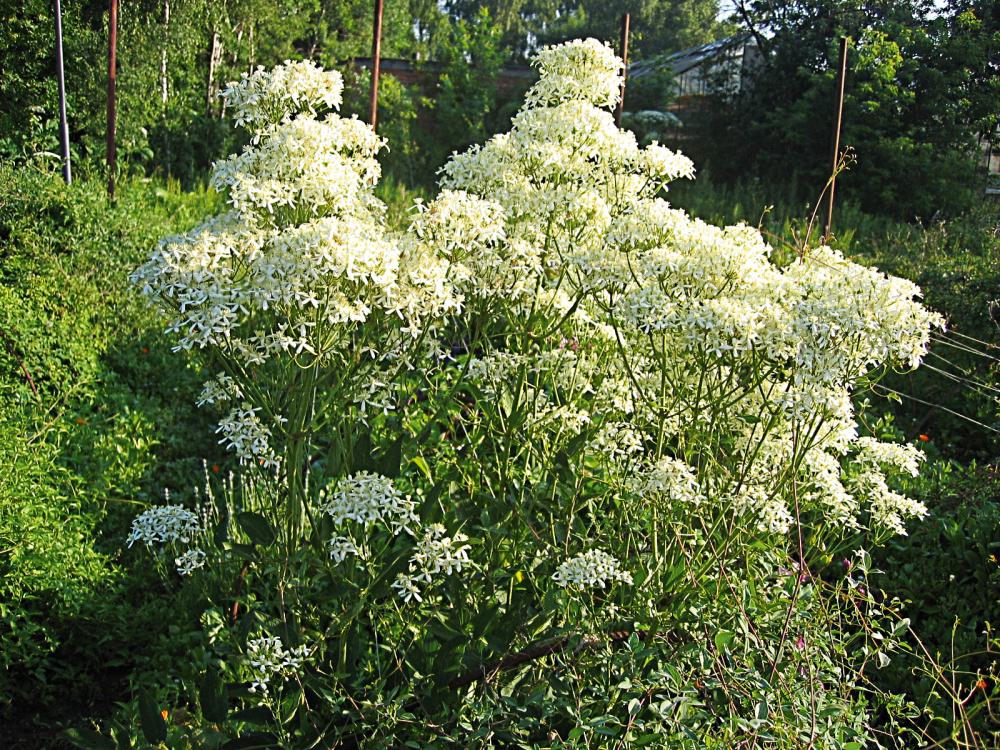
This species has small, dark green, oval-shaped leaves. Each vine produces up to 400 buds. When fully opened, they resemble stars. The buds themselves are small, no more than 3 cm in diameter even when fully open. This unusual plant with its small white flowers looks beautiful both as a stand-alone plant and as a backdrop for other plants.
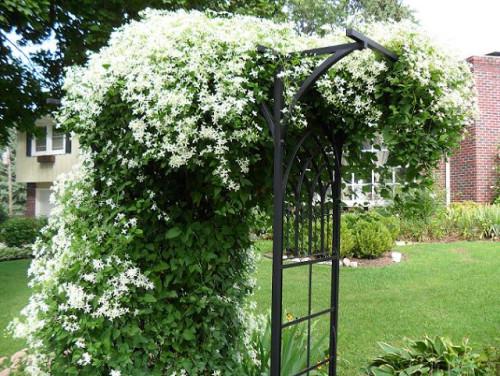
Bushy clematis also looks attractive when used to decorate arbors. It can be combined with other varieties with contrasting flower colors and similar bloom periods.
Origin and properties of the flower
In the wild, clematis spp. is found on forest edges, hillsides, and in undergrowth. Its shoots reach 5 meters in length. In the wild, the plant can be found in the Transcaucasus, Asia, Africa, and Mediterranean Europe.
During flowering, clematis emits a pleasant honey-vanilla aroma. The vine is a honey plant. After flowering, it is covered with large, reddish-brown seeds, giving the bush a decorative appearance until autumn. In warm climates, stinging clematis only partially sheds its leaves at the end of the growing season.In harsh conditions, the entire above-ground part dies off in the fall, and with the arrival of warmer weather, growth begins from the tillering point. Thanks to this characteristic, the burning clematis easily tolerates even severe winter frosts.
Advantages and disadvantages of using in landscape design
Clematis spicata has found wide application in landscape design. It's most often used as a ground cover for various supports. Its upright white cascade can cover an unsightly wall or fence, or it can be used as a decorative feature for a gazebo. It can also be planted near trees to twine around their trunks. It's important to remember that the vines will need to be tied first, as they won't be able to wrap around the support on their own.
Landscape designers can sometimes work wonders by shaping the bush and directing its vines. The clematis spicata becomes like a white cloud, enveloping windows, arches, and entryways. Climbing roses, honeysuckle, or wild grapes are ideal complements.
The vine's advantages include its low maintenance, suitability for shaping, and high ornamental value. Its disadvantages include a short flowering period and the need to remove dead stems at the end of the growing season when grown in northern climates or temperate climates.
Where is stinging clematis grown?
The clematis is grown in the Mediterranean and Caucasus climates. It has also thrived in temperate climates. In the south, the plant doesn't do well due to overheating of the soil during the summer, which it struggles to tolerate. In this case, it's recommended to plant dense annuals nearby.
Necessary conditions for growth and flowering
The clematis is not a fussy plant requiring special attention. However, to maximize its decorative qualities, certain requirements must be met:
- planting work should be carried out in March or September;
- for planting, choose a place that is completely protected from wind and drafts;
- The size of the planting hole should be 60 x 60 cm.
The plant requires good lighting, but too much sunlight can also negatively impact its health. The vine does not tolerate overheated soil, so it is recommended to plant the soil around it with dense annuals or groundcover.

Planting multi-flowered clematis
Simple gardening techniques allow gardeners to grow white, small-flowered clematis in their own garden. All they need to do is choose the right location, plant the vine, and provide it with easy care.
Deadlines
Planting of clematis is planned for the first month of spring or fall. These timings may vary depending on the growing region. In any case, in spring, the vine should be planted before the buds begin to swell. In autumn, work should be carried out during the clematis's dormant period, but no later than early October.
Preparing the site and planting material
Clematis flammea can grow in one place without replanting for up to 30 years. Plant the plant near a gazebo, outbuilding, pergola, fence, or arch. The location should be sheltered from winds and well-lit. However, avoid planting the vine in direct sunlight. In hot climates, it can be placed in partial shade.
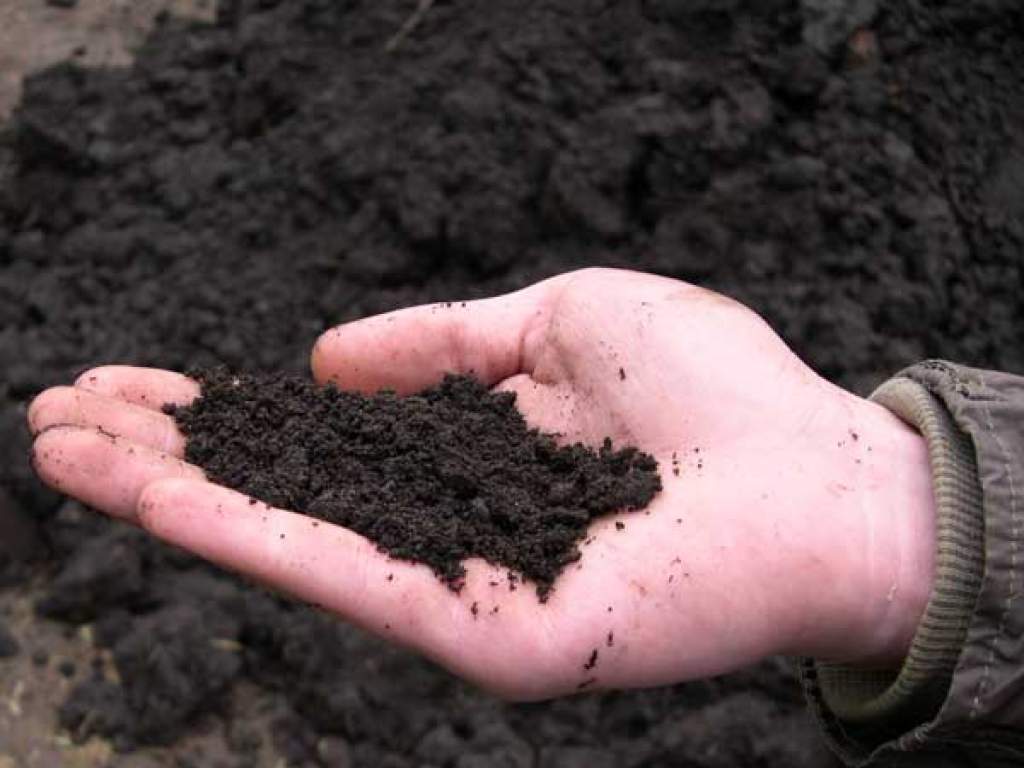
The clematis prefers loose, light soils with abundant nutrients. The soil should be low or neutral in pH. If the soil is acidic, add a small amount of lime before planting. Loams and sandy loams are ideal for clematis.
Avoid planting clematis in lowlands or marshy areas, or where groundwater is close to the soil surface. Such conditions promote root rot and the death of the plant. During prolonged rainy seasons, experienced gardeners recommend sprinkling wood ash under the bush.
It's recommended to dig a hole for clematis well in advance. It should be 60 cm deep and 60 cm wide. Next, prepare a nutritious soil mixture consisting of garden soil, wood ash, superphosphate, peat, and humus. Just before planting, water the soil with a weak solution of potassium permanganate. It's important not only to properly prepare the site and the planting hole, but also to select the seedling. To do this, inspect the seedling, paying particular attention to the following:
- clematis should not have any mechanical damage;
- the seedling should not show any signs of disease or pest damage;
- the root system must consist of at least 5 roots;
- An autumn seedling should have 2 shoots, and a spring seedling should have at least 1.
Clematis that are two years old and have a closed root system take root best. It is recommended to prune the shoots just before planting, leaving no more than five buds.
Direct landing
Planting of clematis occurs in early fall or early spring. In cold climates, spring planting is preferable, while in the south, fall planting is preferable. A support is placed in a pre-prepared hole, and a drainage layer of any available material is added to the bottom:
- broken brick;
- crushed stone;
- sand;
- expanded clay;
- pebbles.
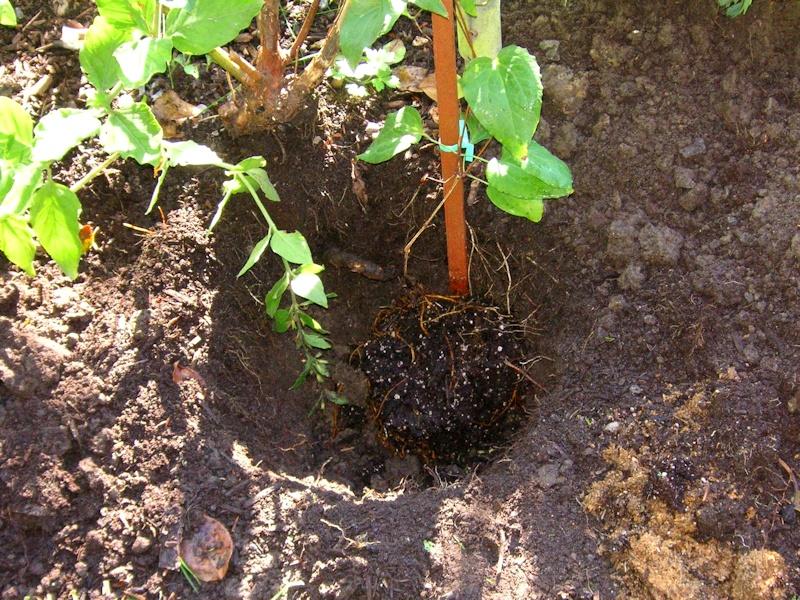
A mound of fertile soil is added over the drainage layer, forming a small mound onto which the clematis is placed, carefully spreading out the roots. The seedling is covered with soil so that the root collar is below soil level. A funnel-like structure is formed around it. The plant is watered generously and mulched with peat. During the first few weeks, the clematis will require light shade, which can be removed later.
How to care for a plant
Proper care of the clematis is the key to abundant and beautiful blooms. As the vine grows and develops, it may require not only fertilizing and watering, but also shaping, adjusting light levels, staking, and preparing for winter.
Watering and fertilizing
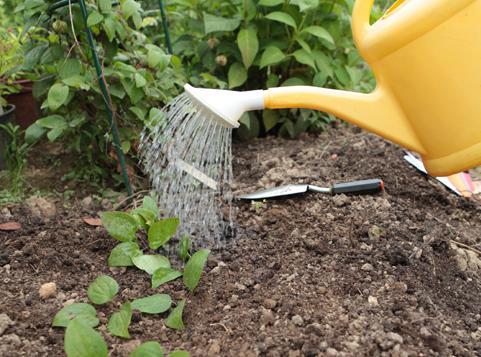
When watering clematis, maintain a strict balance and avoid overwatering the soil. Otherwise, the roots may rot and the vine will die. When watering, aim for the roots, avoiding the stems and leaves. If the clematis is planted near a roof and rainwater runs under it, constantly monitor the soil moisture. If necessary, sprinkle the soil with a moisture-absorbing substance (such as ash). It should be borne in mind that young seedlings require more moisture than already formed bushes.
During the clematis's development period, fertilize it monthly with organic or mineral fertilizers. Don't apply all the fertilizers at once; alternate between organic and mineral fertilizers every other month. Fertilizers are applied immediately after watering to ensure even distribution and faster absorption by the vine.
Pruning and shaping
The appearance of the clematis depends largely on proper pruning and shaping. The first pruning is done before planting, stimulating shoot growth. Young shoots should be pinched. To extend the flowering period, a group of side shoots that don't affect the plant's appearance are partially pruned. All shoots are pruned in the fall, as they die back with the onset of cold weather, and new ones form in the spring.
Tying up
Clematis spp. requires staking because it's unable to climb a support structure naturally. First, you need to create a frame of the required size and shape. To ensure the vine can easily climb a hedge, its mesh width should be no more than 1.5 cm. The vines are tied with pieces of twine or thin fabric rope.
Mulching and loosening
As clematis grows, the soil around it should be loosened after each watering or heavy rainfall. Weeds and other growth that rob the vine of nutrients should also be removed. Experts recommend mulching the soil around clematis with peat or dried grass clippings.
Protection from pests and diseases
The burning clematis is rarely susceptible to diseases or pests, but under unfavorable conditions the vine can be damaged by:
- rust;
- gray mold;
- wilt;
- powdery mildew.
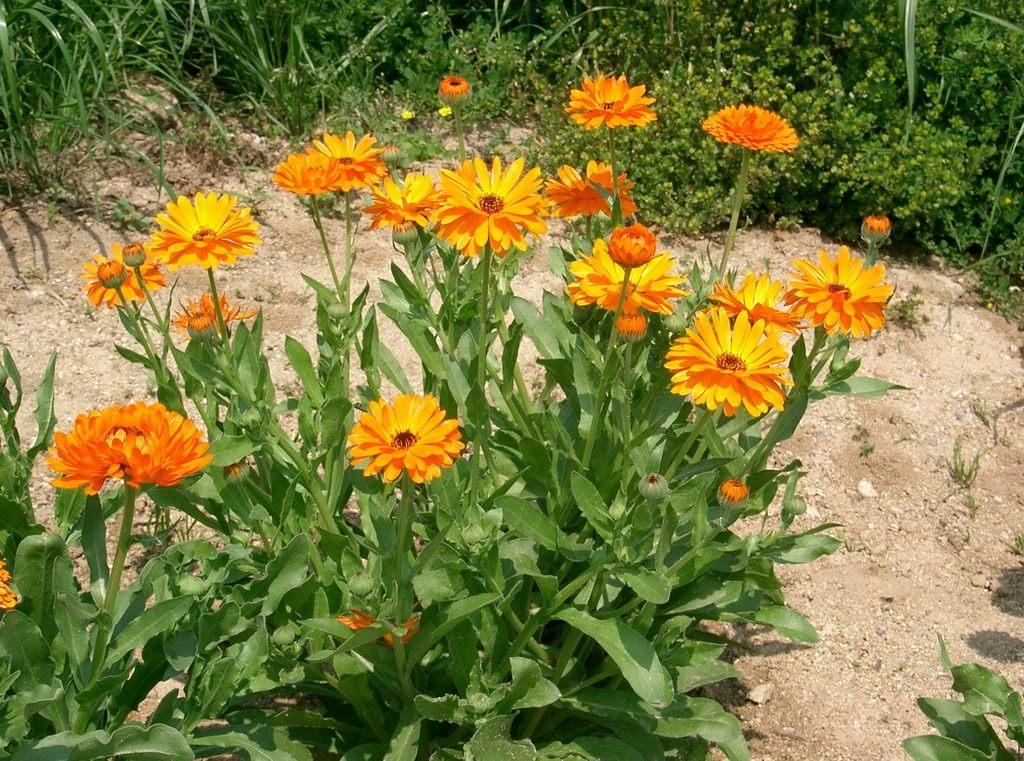
At the first sign of disease, remove the affected shoots immediately and treat the bush with specially formulated pesticides. To repel pests, plant calendula or marigolds near the clematis. Their distinctive scent will repel insects, and the flowers themselves will add an additional decorative touch.
Take a look Also

Preparing for winter
The clematis overwinters well in open ground without any special preparation. Its above-ground part dies back with the onset of cold weather, but the root can withstand even severe frosts and produces new shoots in the spring. In the fall, it is recommended to immediately prune the vine almost to the rootstock, leaving a stump of about 2.5 cm. If winter snowfall is light, you can cover the plant with fallen leaves or spruce branches.
Reproduction
Clematis is propagated by seeds, layering, cuttings, or by dividing the mature plant. Seeds can be sown either outdoors or in a greenhouse. In the former case, they are sown in early April, and in the latter case, in November. The seeds are planted in a mixture of equal parts soil and sand, and covered with peat moss, the layer of which should be no more than 2 cm thick. To propagate clematis by division, carefully dig up the old plant and separate it into sections, which are immediately replanted.
Lateral shoots are used as propagation layers. Trenches are dug near the shoots and the shoots are carefully placed in them. The branches are then pressed down with staples and covered with soil. After a year, the young bushes can be separated from the mother clematis and planted in their permanent location.
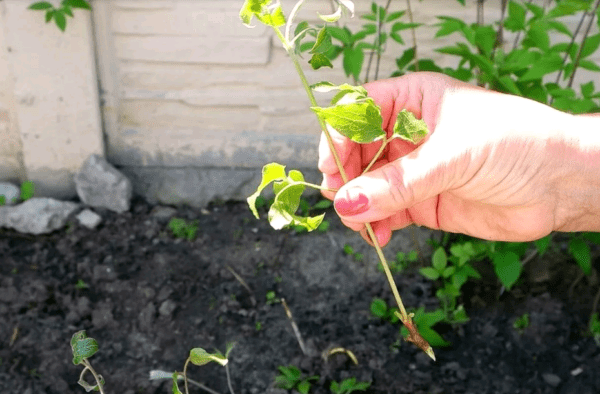
Clematis cuttings should be treated with a rooting stimulant to facilitate rooting. The soil temperature should not drop below 18°C during the rooting process. Until the planting material has rooted, it should be protected from direct sunlight.
Possible problems
When growing clematis, gardeners may encounter certain problems. Specifically, the vine sometimes stops blooming, its inflorescences become smaller year after year, or the tops begin to dry out. It's important to correctly identify the cause of this problem and take steps to address it.
The plant has stopped growing.
This problem most often occurs in the first year of life, when the seedling truly stops growing and its height does not exceed 0.2-0.3 m. This is caused by improper care. The vine will require enhanced nitrogen-rich fertilizers and good watering.
The inflorescences are becoming smaller
This problem is typical for older bushes aged five years or more. The root system extends too deep into the soil, and watering it doesn't provide the necessary moisture. As a result, the root system weakens. Several plastic bottles should be buried upside down 0.5 meters from the main trunk of the bush. Cut off the bottoms and fill them with water. This encourages deeper penetration of the water.
Drying of the tops
The main cause of this problem is insufficient moisture. Drying of the tops can also be caused by aphids. In the former case, the plant requires increased watering. In the latter case, clematis should be treated with special insecticides. As a preventative measure, other flowers with a strong, distinctive aroma (such as tobacco, marigolds, or calendula) are planted near the clematis.
Related posts:
 Description and pruning group of clematis President, cultivation and care
 Description and pruning group of clematis Rouge Cardinal, cultivation and propagation
 Description and characteristics of Manchurian clematis, cultivation techniques
 Description of clematis varieties, planting and care, propagation methods
 Description and characteristics of the clematis variety Kaiser, planting and care, pruning group
 Description and characteristics of the clematis variety Comtesse de Bouchaud, planting and care instructions
 Description and pruning group of Clematis Mountain, planting technology and care
 Description of the best varieties of Tangut clematis, planting, growing and care