
- Specifics of planting and growing clematis in the Urals
- What varieties are suitable?
- Jacqueman
- Integrifolia
- Viticella
- Flamula
- Timing and rules for planting clematis in the Urals
- Selecting a site and preparing seedlings
- Planting diagram
- Caring for clematis in the Urals
- Watering
- Top dressing
- Trimming
- Preparing for winter
- Protection from diseases and pests
- How to propagate clematis
- By cuttings
- Layering
- Dividing the bush
- Seeds
Clematis are popular members of the Ranunculaceae family, which includes approximately 300 plant species. They grow as vines or shrubs. However, gardeners most often grow the vines, which serve as a true garden decoration. The plant is considered a heat-loving plant, but some varieties can be grown in regions with harsh climates. To ensure successful planting and care of clematis in the Urals, it's important to consider many nuances.
Specifics of planting and growing clematis in the Urals
Clematis can be planted in the Urals, especially the southern part. The plants tolerate low temperatures well. For growing heat-loving crops in areas with variable rainfall and extreme temperature fluctuations, it's recommended to carefully select the variety. Today, there are many plants that are adapted to severe frosts.
When growing clematis in the Urals, it's best to choose winter-hardy hybrid varieties. These species require careful planting and careful care. This will ensure abundant flowering throughout the summer.
What varieties are suitable?
To grow clematis in this region, it's best to use hybrids that belong to pruning groups 2 and 3. However, these varieties require careful care. During harsh winters, the root system should be covered.
Jacqueman
This is a large-flowered vine that grows as a bush. It has shoots up to 4 meters long and is adorned with decorative feathery foliage and strong roots. It is easy to grow. The flowers grow up to 20 centimeters and are lilac-colored. Varieties in this group are distinguished by their profuse blooms. Flowers appear on branches of the current year. It is recommended to completely prune the branches or shorten them to 30 centimeters.
Integrifolia
This group includes hybrids of the entire-leaf clematis. This group includes shrubs that grow up to 2.5 meters. The flowers stretch up to 12 centimeters in diameter and are bell-shaped. Buds form on the current year's branches and require pruning after frost.

Viticella
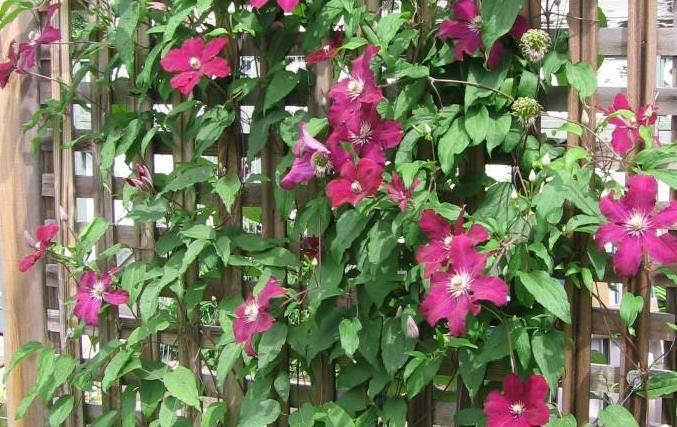
This group includes purple clematis hybrids. They are vines with a bushy habit. Their shoots reach 3.5 meters and feature compound leaves and large flowers, up to 12 centimeters in diameter. These plants typically produce red and pink flowers. Purple inflorescences are also common. A single plant can produce up to 100 flowers. These flowers are borne on the current year's shoots and are completely cut back by winter.
Flamula
This vine is often called a fluffy cloud. It is adorned with hundreds of creamy-white, star-shaped flowers 2-4 centimeters in diameter. They have a pleasant fragrance. The bushes typically bloom relatively late, from August until frost. The leaf petioles are attached to supports. The vine grows up to 3 meters tall. The plant can withstand temperatures as low as -34 degrees Celsius. The bushes are not pruned for the winter; instead, the shoots are covered.
Timing and rules for planting clematis in the Urals
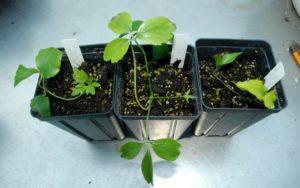
For normal development, the plant requires high-quality care. Proper planting is crucial. It is recommended to plant the bushes in the soil in the spring. This will allow them to establish roots before the cold weather sets in.
Selecting a site and preparing seedlings
When growing clematis outdoors, choose the location carefully. The plant does not tolerate drafts and wind. Therefore, if the site is chosen incorrectly, the plant will not enjoy vigorous flowering and rapid growth.
Clematis thrives in a dry location that doesn't experience stagnant water in the spring. If the groundwater table is high, a 20-centimeter-deep drainage layer should be created. This should be made of crushed stone or crushed brick. Clematis requires adequate light, so a sunny location is recommended.
Choosing the right seedlings is crucial. To ensure proper establishment, it's important to examine the above-ground portion and roots for any mechanical damage. It's also important to check for any infectious diseases.
If there are any damaged areas, you may suspect the plant is infected with tinder fungus. Therefore, it's best not to purchase such a seedling.
Before purchasing a clematis, it's important to examine its roots. If the central roots are covered with numerous small shoots and are not overdried, the plant is safe to purchase. If the selected cutting has only a main root and no side branches, the vine will likely not take root. Before planting, it's recommended to soak the bush in a growth stimulant.

Planting diagram
Clematis is considered an easy-to-grow plant. However, it is picky about soil composition. The plant requires light, well-fertilized, and aerated soil. If the soil is clayey or loamy, it should be mixed with sand.
The success of growing the crop depends on proper planting and care. First, dig a 60-centimeter hole. Place a mound in the center and cover it with soil. It's recommended to mix equal parts humus, compost, and garden soil. Add 400 grams of dolomite flour to the mixture. To improve its properties, add 150 grams of superphosphate.
To plant clematis, it is recommended to place it in the center of the hole. Then, carefully distribute the roots over the mound and cover with soil. After planting, compact the soil and tie the seedling to the support. Afterward, water the plant with warm water.
Caring for clematis in the Urals
This plant doesn't require any specific conditions. To ensure lush blooms, it's recommended to water it regularly, fertilize it, loosen the soil, and prune it regularly. Groundcover crops should be placed around the bush. They will help protect the vine's root system from overheating in hot weather and prevent rapid moisture evaporation.

Watering
For normal growth, the plant needs proper watering. Failure to properly water the soil can lead to the plant's death. The vine doesn't respond well to frequent watering. Watering the center of the plant is dangerous. This can lead to root rot. This prevents moisture from reaching the clematis roots.
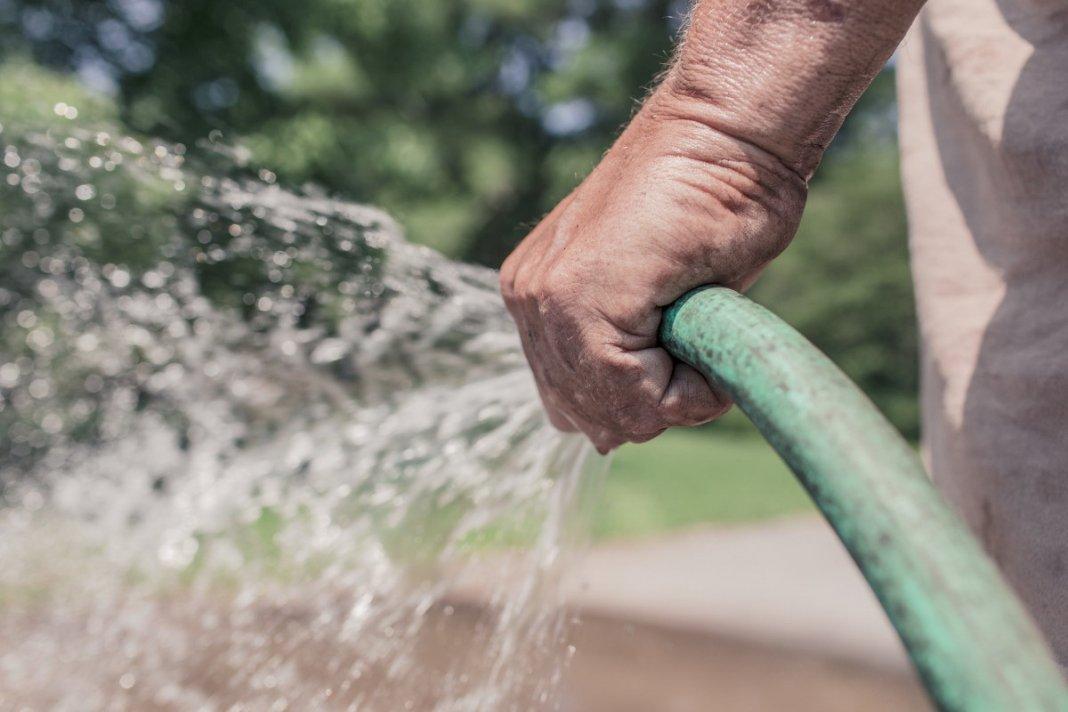
This plant is characterized by massive roots that extend quite deep. Therefore, it requires timely watering. A mature plant should receive at least 3 buckets of water at a time. It is recommended to water the soil every 4 days. It is important to ensure that the water does not spread out into a puddle, but rather penetrates the soil structure. To do this, dig a trench 40 centimeters from the plant. When planting, you can dig 3 small pieces of plastic pipe into the soil and gradually add water as the soil becomes moist.
Top dressing
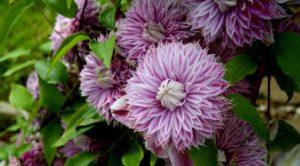
Clematis requires a lot of fertilizer. This plant blooms profusely, so renewing its above-ground parts requires a lot of energy. It is recommended to apply fertilizer in small amounts. Excessive application can cause chemical burns on the bushes. When growing clematis, alternate between organic and mineral fertilizers. Fertilizing the vine is recommended at least four times per season. Water the plant thoroughly before applying fertilizer. This will help prevent chemical burns.
In the fall, before preparing the bush for winter, it's recommended to add bone meal to the soil. Apply 200 grams of bone meal per square meter. The plant requires a lot of phosphorus for proper growth. Without this nutrient, the foliage will turn brown, and the plant will stop growing.
Fertilizing a flowering plant is not recommended. This will significantly shorten the flowering period. During the active vegetative stage, clematis requires additional nitrogen. Without it, the plant will not reach its full potential. The foliage and flowers will be small, and they often turn yellow or reddish.
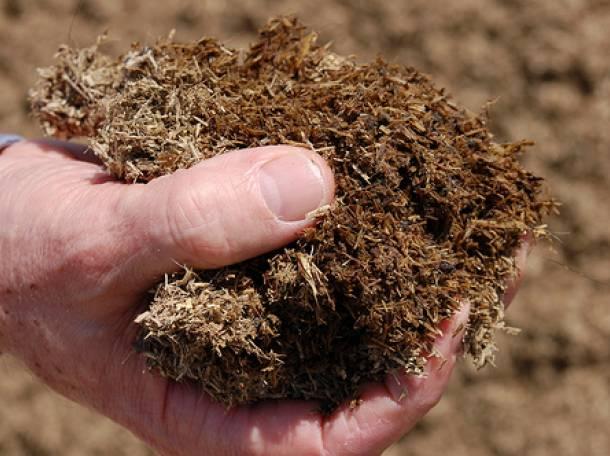
To replenish nitrogen reserves in the soil, clematis should be fertilized with a solution of chicken manure or slurry. It is recommended to alternate organic fertilizers with mineral fertilizers. The plant responds well to ammonium nitrate and nitroammophoska. It can also be safely fertilized with urea. In the spring, it is recommended to feed the bushes with potassium. With the arrival of warm weather, it is recommended to water the bushes with lime milk. This prevents soil acidification.
Trimming
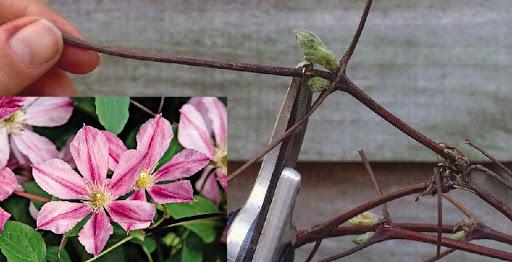
Proper and timely pruning is considered a key component of plant care. This procedure helps prevent bushes from becoming overcrowded and promotes their rejuvenation. It also helps promote more intense flowering. To prolong flowering, it is recommended to prune weak, thin, and damaged shoots in the spring. In summer, remove secondary branches from the bushes. This helps stimulate new growth and prolong flowering.
Almost all clematis varieties grow rapidly upward after planting. Therefore, it is recommended to prune the bushes, leaving a few strong buds. This procedure encourages the growth of several basal stems. When pruning clematis with annual shoots, it is recommended to remove old branches almost to the ground in the spring. This helps stimulate the development of new branches.
Preparing for winter
In late autumn, it is recommended to prune clematis. The procedure depends on the plant group. The bushes should be removed from their supports and covered with sand. Ash can be used instead of sand, if necessary. Hilling should be done to a depth of 15-20 centimeters.
It's recommended to place the shoots on the ground and cover them with leaves and pine needles. To further protect the plants, cover them with roofing felt. The bushes can be covered with a box on top, then sprinkled with soil.
Protection from diseases and pests
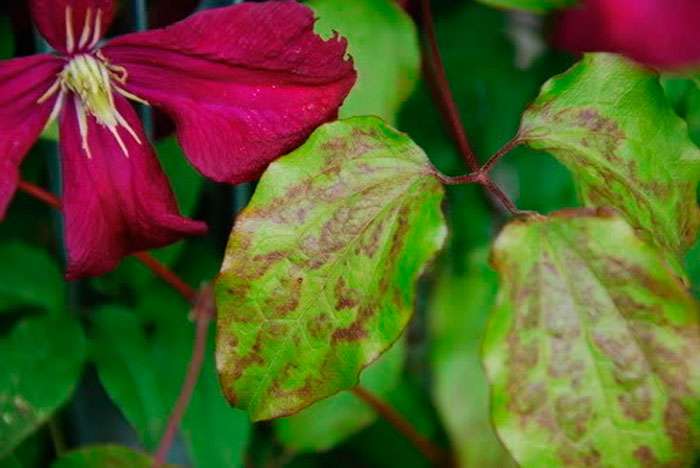
Clematis is considered fairly resistant to diseases. However, sometimes the bushes suffer. Most often, the plant experiences rust and wilting. The plant is resistant to viral infections. Wilt is a fungal infection characterized by foliar wilting. In the early stages of development, the plant can be treated with fungicides. In more severe cases, the bush will have to be removed along with the soil. Failure to do so risks infecting nearby bushes.
Rust causes brown spots on the bushes. Bordeaux mixture can help cure the disease. Nematodes are a pest to watch out for. An insecticide can help kill these pests.
How to propagate clematis
Clematis can be propagated in various ways, including division and cuttings. Clematis can also be propagated by layering or seeds. Each method has its own specific characteristics.
By cuttings
To carry out cuttings, it is recommended to perform the following steps:
- Cut the shoots and divide them into cuttings. They should be 8-12 centimeters long.
- Immerse in a rooting stimulator for 24 hours.
- Plant in a greenhouse. For this purpose, it is recommended to cover the planting material with jars.
- Keep the soil moist until roots appear.
- After the roots have formed, move them into the soil.
Layering
It is recommended to propagate the crop by layering according to the following scheme:
- In October, clear the lower branches of the crop.
- Cut them back to the first bud.
- Fasten several branches together and bend them towards the ground, placing them in a furrow.
- Secure the tied branches and carefully sprinkle, compacting the soil.
- At the end of autumn, cover with dry leaves or spruce branches.
- In spring, open and water.
- In autumn, separate the branches from the bush and place them in a permanent location.
Dividing the bush
This method is only suitable for propagating young plants. Mature plants have extensive root growth, making separation quite difficult.
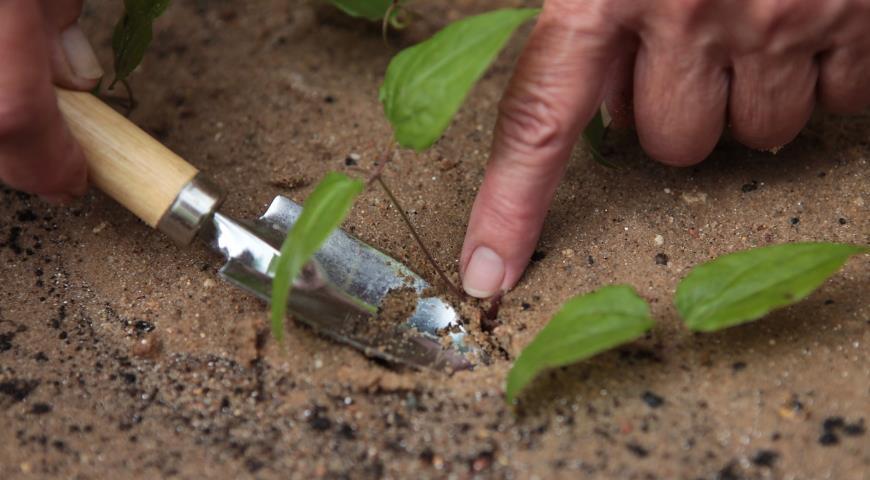
This procedure should be performed in the fall. To do this, the bush will need to be dug up with a lump of soil and divided into several pieces. It's best to use a sharp knife for the division. The resulting pieces should have at least one or two good-quality buds.
Seeds
This method is only suitable for propagating small-flowered clematis species. To perform the procedure, follow these steps:
- Place the seeds in a container of water 10 days before planting. Change the water every 1-2 days.
- Fill the seedling containers with a special substrate.
- Lightly moisten the soil and then place the seeds.
- Fill the container with sand and cover it with glass. You can also use film.
Seedling trays should be kept in a dry room, with the temperature maintained at at least 25 degrees Celsius.
Clematis can be grown in the Urals. However, it's important to choose special varieties that are resistant to severe frosts. Proper and thorough care is also crucial.
Related posts:
 Methods for planting and propagating cherries at home
 The best grape varieties for growing in the Urals, planting and care rules in summer
 Conditions for growing mandarin at home and rules for caring for the tree
 Growing and caring for hazelnuts in open ground, rules for planting hazelnuts
 Rules for planting and caring for pears in open ground, how to grow them correctly
 Description and rules for growing Solaris grapes
 The best methods for growing grapes from seeds at home
 Description and cultivation of the 15 best cherry plum varieties for the Moscow region, planting and care rules