
- Varieties of clematis
- Early
- Alpine clematis
- Clematis montana
- Clematis erecta
- Tangut
- Late flowering
- Shade-tolerant
- Frost-resistant
- Hybrid
- Large-flowered
- Small-flowered
- Blooming all summer
- Terry
- Bushy
- The best varieties of clematis
- White or cream
- Yellow
- Pink
- Reds
- Blue and blue
- Purple and lilac
- Brown
- Recommendations and tips for choosing
It's impossible to say how many varieties of clematis have been bred. This climbing plant is grown by gardeners in the southern, central, and Siberian regions. Bushes, trees, and garden structures are used for support. The shoots grow quickly, and the flowering period is long-lasting. Some varieties bloom throughout the summer.
Varieties of clematis
When choosing flowering perennials for the garden, gardeners pay attention to several important parameters of the variety:
- timing and duration of flowering;
- shade tolerance;
- frost resistance;
- size, color, structure of the flower;
- stem type and length.
Taking these characteristics into account, all varieties of clematis are divided into several groups.
Early
Early flowering clematis include varieties whose buds open in spring (April, May) and early June.
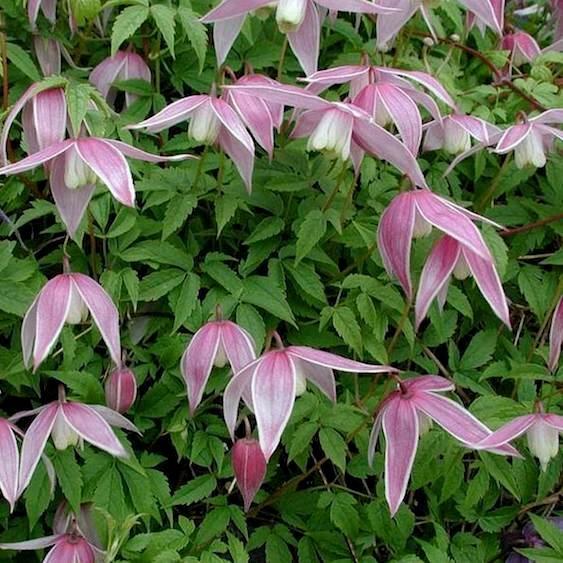
Alpine clematis
Blooms from April to June. Buds appear on overwintered branches. This variety is grown in the Non-Chernozem zone. Young branches are pruned in the fall, and the following season they again reach 2.5 m. The solitary, medium-sized (5 cm) flowers are drooping bell-shaped, with blue-violet, rarely pink or white, petals and cream or white stamens.
Clematis montana
Mountain clematis has stems up to 5 meters long, with white or white-pink flowers. Flowering occurs in April-May. Buds form on overwintered branches. Young shoots that grow over the summer are not pruned in the fall. Mountain clematis is grown for ornamental purposes in the Caucasus and Crimea. It requires special care and a large area. This perennial is not particularly winter-hardy, so in temperate climates it is propagated, but must be covered for the winter.
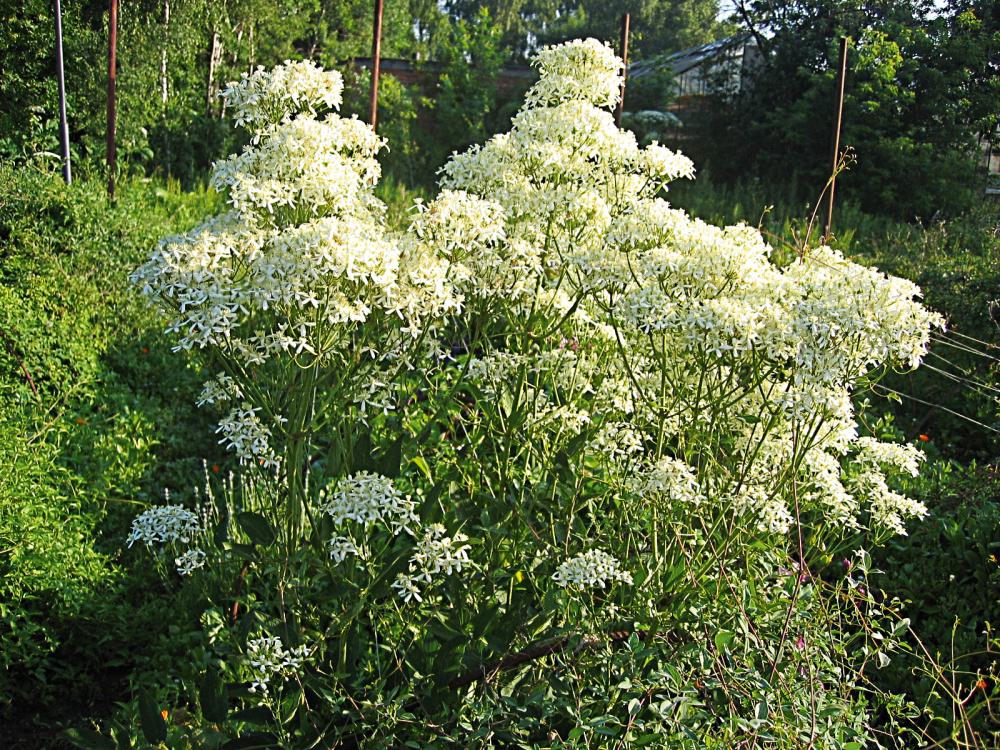
Clematis erecta
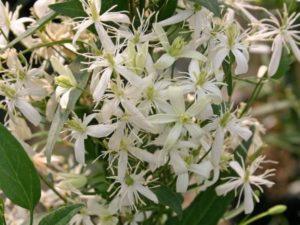
This herbaceous, upright perennial blooms in late May and continues until late July. Clematis erecta varieties (angustifolia and purple) are grown in various climate zones. In landscape design, it is used to create group plantings, rock gardens, and to create flowerbeds and borders. The flexible stems of this perennial grow up to 1.5 m, adorned with small (3 cm) flowers with yellowish anthers and white petals.
Tangut
These are shrubs or vines 0.3-4 m tall. During their full bloom, they are adorned with graceful, lantern-like flowers. They are drooping, borne solitarily on long stalks. Clematis blooms intermittently, lasting from May to September. Flower buds form on branches of the current season. The open buds are 4 cm in size, and the flowers are always yellow. This variety is grown in various regions of Russia.
Late flowering
This group includes large-flowered hybrids of Clematis texensis and some small-flowered varieties:
- Clematis viticella;
- Clematis orientalis;
- Clematis serratifolia.
Clematis that bloom in the second half of summer develop flower buds on newly formed shoots. After flowering, these are pruned back, leaving stumps 10-30 cm tall.
Shade-tolerant
There are many shady spots in the garden that need to be beautified. Shade-loving clematis varieties are perfect for this purpose:
- A vine 150-180 cm tall. Flowering period: May-June. Flowering heads are bicolored. On overwintered branches, they are double, while on new shoots, they are single.
- Olga. Grow in the garden or on the balcony as a container plant.
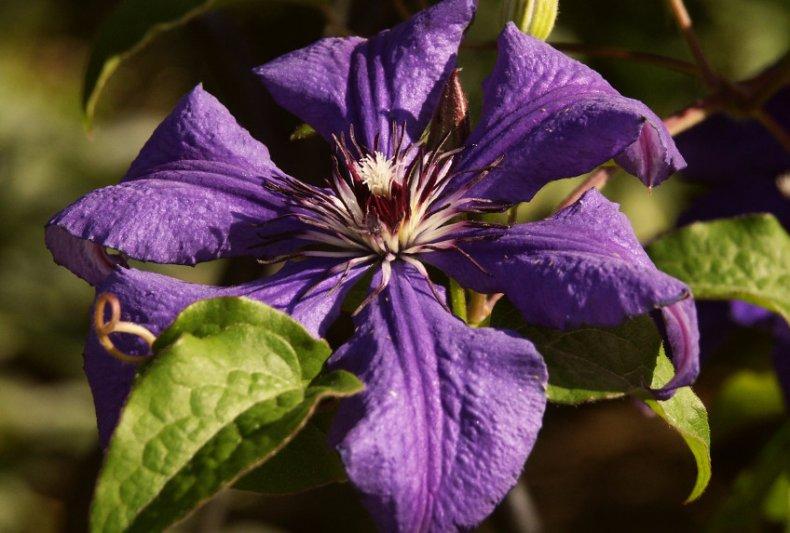
- N. Thompson. The vine grows 2-3 m tall. It blooms for the first time in May-June, with the second bloom appearing in August. The flower heads are large, 10-15 cm in diameter. The color is distinctive—purple with red stripes.
Shade-tolerant clematis grow in one area for 25 years, preferring breathable, fertile soil.
Frost-resistant
Easy-to-care for, Manchurian clematis is grown by gardeners even in Siberia. It's a frost-hardy variety. Before winter, shoots that formed over the summer are cut back to ground level. This is done after the first frost. They regrow over the following spring and summer. The maximum length of the vine is 1.5 meters.
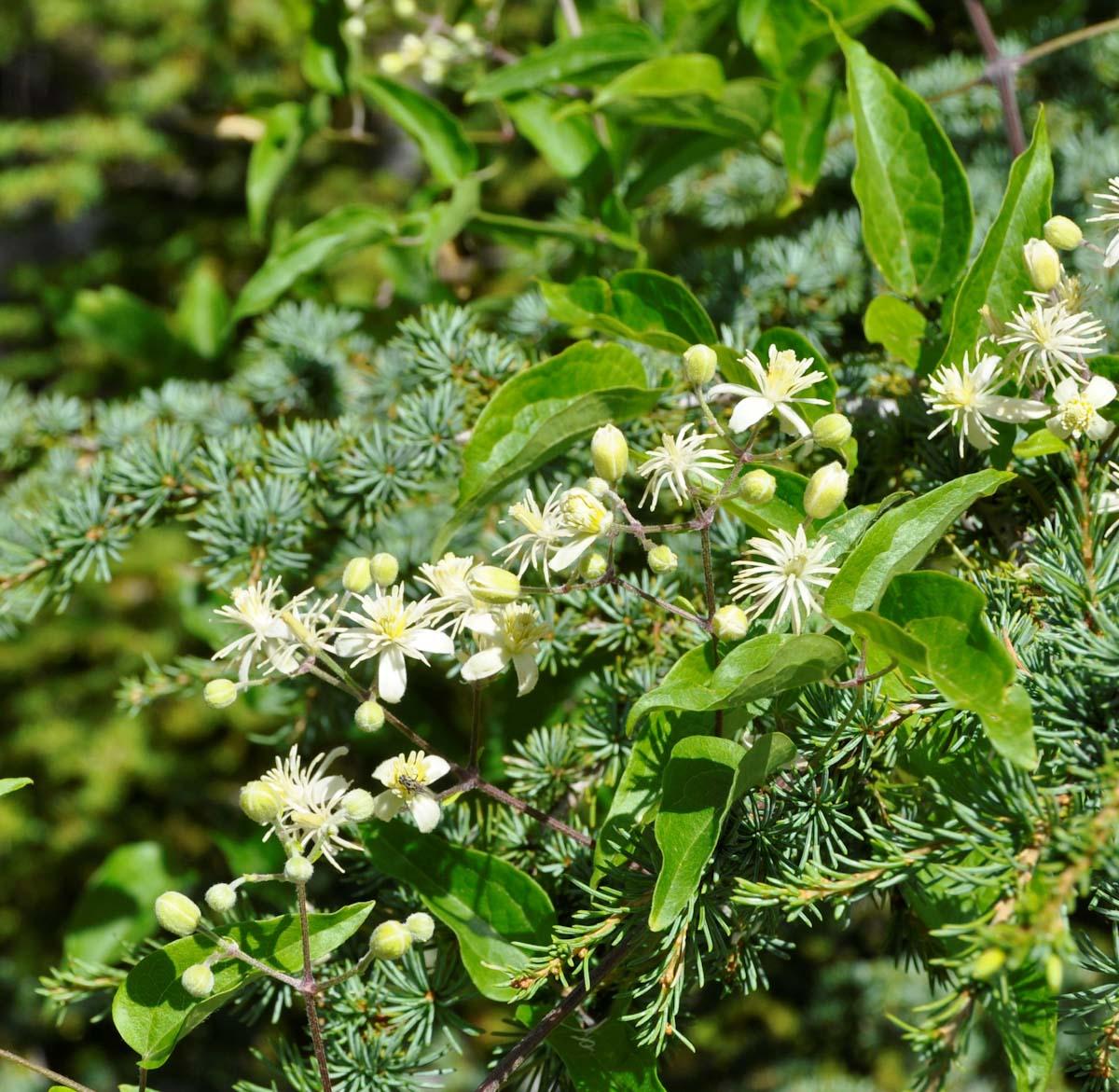
Mass flowering begins in the second half of June. Fragrant white flowers cover the bush in a lush crown. Clematis tangutica is another frost-hardy variety. Varieties in this group require little care. The vine is used to decorate outbuildings, fences, and columns.
Hybrid
Hybrids have medium-sized flowers with a diameter of 10-16 cm. These groups of plants are produced by crossing representatives of different species, so they inherit traits from both paternal and maternal lines. Hybrids are divided into two subgroups based on flowering time:
- the first subgroup begins flowering early (May-June), in the spring the buds bloom on last year’s overwintered branches;
- The second subgroup begins flowering in July, with buds forming on newly formed shoots.
Hybrids come in bush or climbing forms. Herbaceous perennials are planted next to natural or artificial supports. Bush forms are used for zoning the garden and in group plantings.

Large-flowered
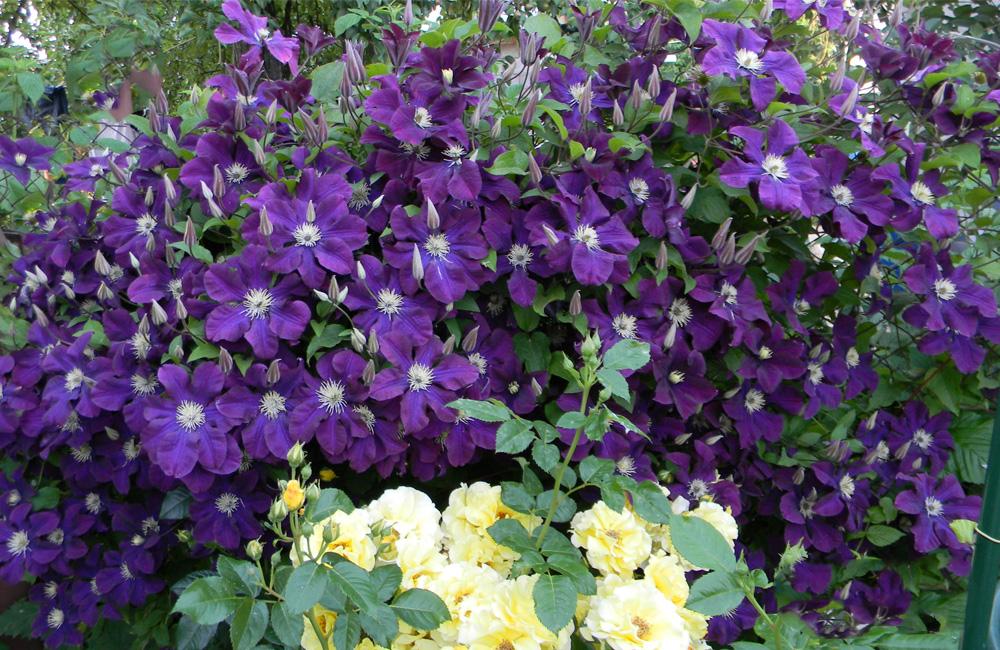
Gardeners love varieties of this variety. They bloom profusely and continuously on the current year's growth and rarely suffer from fungal infections. Large-flowered clematis are easy to care for. They belong to pruning group 3, so in the fall, they are pruned back to the first leaf. The large-flowered group includes perennials with flat flowers 10-29 cm in diameter.
| Group | Form | Maximum length | Maximum diameter | Color | Bloom |
| Lanuginosa | Curly | 3 m | 20 cm | Shades of purple, pink, white | The first is from May to June on overwintered branches, the second is from July to August on new shoots |
| Patence | 3.5 m | 15 cm | All shades of blue, violet, purple | At last year's | |
| Jackman | 4 m | Purple, blue, violet | On the new ones | ||
| Viticella | 3.5 m | 12 cm | Pink, red, purple | ||
| Integrifolia | Bushy | 1.5 m | Diverse |
Small-flowered
Small-flowered clematis have flowers 1.5-1.8 cm in diameter, blooming at different times. These varieties are widely used in landscape design and are prized for their decorative qualities. The most popular small-flowered clematis are Rouge Cardinal and Comtesse de Bouchaud.
Blooming all summer
Representatives of the 2nd pruning group (hybrids) bloom throughout the summer. The first flush of flowering begins in May-June, with buds opening on overwintered branches. In midsummer, flowers emerge on new shoots. Uniform flowering is achieved through proper pruning. The current year's shoots are shortened by half their length in the fall. Every four years, the bush is cut back right to the ground.
Terry
These are clematis of pruning group 2. Double and semi-double flowers form on last year's growth. Single, non-double flowers bloom on this year's growth in the second half of summer. Caring for double vines is difficult. They need to be covered for the winter, otherwise the shoots will freeze. In the fall, the vines must be removed, and in the spring, they must be lifted and reattached to the supports. The following varieties are reliable for gardeners:
- Arctic Queen;
- Blue Light;
- Diamantina;
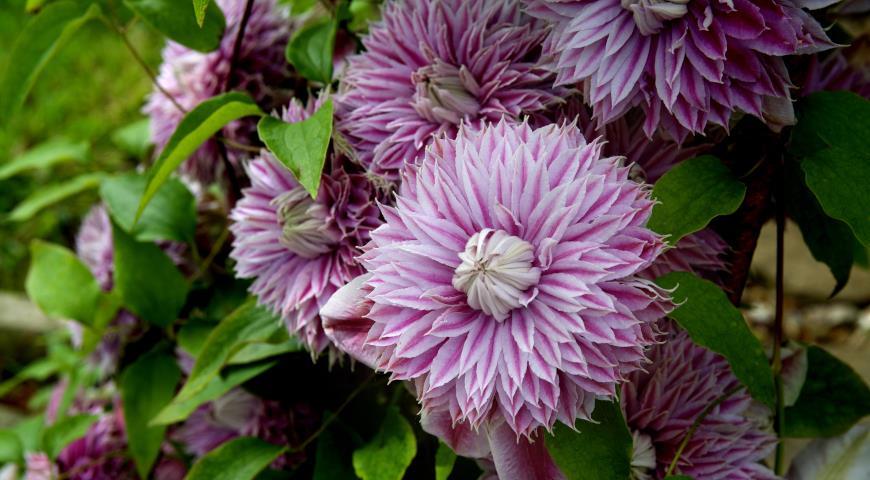
In the first half of summer, the vines are covered with beautiful double flowers; in August, they are adorned with smaller semi-double flowers.
Bushy
Bushy clematis varieties are classified in a separate group, the Integrifolia group. These are perennial subshrubs that do not or only weakly cling to support. They grow up to 1.5 m in height, rarely reaching 2.5 m. Drooping buds form on young shoots of the current year. Popular bushy clematis varieties in Russia include:
- Memory of the heart;
- Anastasia Anisimova;
- Alyonushka.
The flowers reach up to 12 cm in diameter when fully opened, and come in a variety of colors. The shoots are pruned in the fall.

The best varieties of clematis
There are so many varieties that there are no problems with choice. For the garden, you can choose a perennial of any color, flowering period, and frost resistance.
White or cream
The snow-white flowers of the Huldine clematis bloom from August to September. The shoots grow up to 3 m long, with flowers reaching 10 cm in diameter. In temperate climates, the Polish variety John Paul II overwinters well without shelter. This large-flowered variety blooms from June to October. The petals are snow-white, and the stamens are red.
Yellow
The Yellow Queen variety blooms spectacularly and can be grown in a balcony pot. This small-flowered tangut clematis has yellow flowers. Other varieties of this variety include:
- Radar of love, bell diameter 5 cm, anthers brown, petals light yellow;
- Golden tiara, bell diameter 6 cm, anthers brown, petals dark yellow;
- Grace, brown anthers, beige petals, yellow-green stamens;
- Anita, bell diameter 4 cm, stamens and anthers golden-yellow, petals beige.
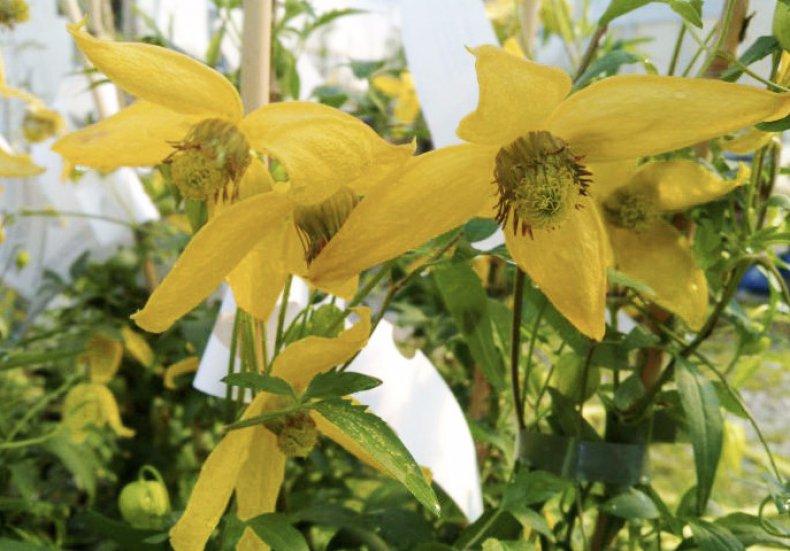
In temperate climates, Tangut clematis blooms in June and continues until the first frost. Buds form on the current year's shoots. This variety is classified as a pruning group 3 plant. Its advantages include frost and drought tolerance.
Pink
Throughout July and half of September, the Princess Diana vine, a member of the Texas group, is covered in bloom. This perennial grows equally well in sun and dappled partial shade. Its long stems (2.5 m) are adorned with oversized (6-7 cm) crimson or pink flowers, resembling small tulips.
The bushes of the charming Josephine variety are covered with double pink buds all summer long. The blooms resemble pom-poms because the outer petals do not open immediately. Josephine's flowers are impressive in size, with the largest reaching 20 cm in diameter. The fragrance is also striking, bright and rich.

Reds
The old French cultivar Madam Julia Correvon is over 100 years old, but it's still popular. The bushes are abundantly covered with beautiful wine-red flowers from July to October. They are quite large (10 cm in diameter) and bloom on long stems. This clematis grows up to 3 m.
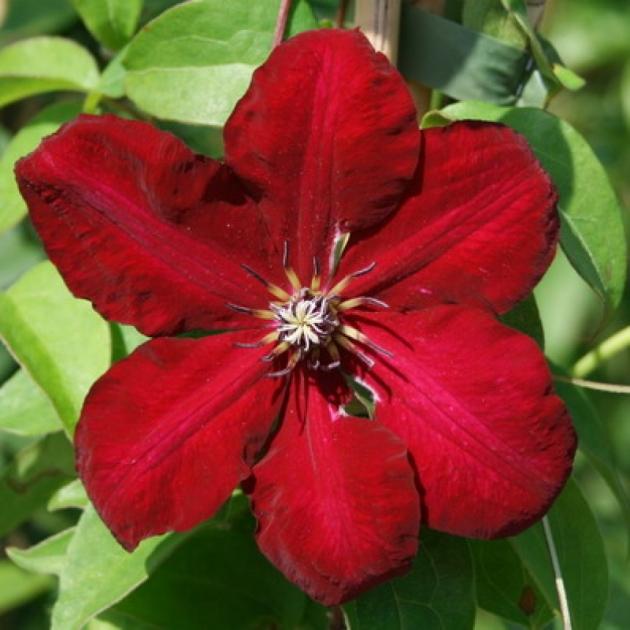
Luxurious, dark red flowers, 15 cm in diameter, bloom on the clematis Rouge Cardinal. This old and distinguished variety was awarded a gold medal at a Dutch exhibition in 1968 and a first-degree certificate in 1970. The stems grow up to 2.5 m in length.
The Allanah variety, bred in 1968, is suitable for gardens in partial shade. This clematis blooms twice per season. It has long, 3-meter-long stems and large, star-shaped, crimson-red inflorescences 15 cm in diameter.
Blue and blue
Slimakivi is an Estonian cultivar classified in pruning group 3. During its flowering period, which lasts from July to September, it is covered in charming sky-blue flowers. Buds form on young shoots. The first flowers open in mid-July. They reach 20 cm in diameter. The petals have slightly wavy edges. Over the summer, the shoots grow up to 2 m.
The petals of the Teksa clematis are unusually colored. Tiny dots are visible against a blue background. Florists compare this unique coloring to the color of denim. The blooms are large, reaching 15 cm in diameter. By the end of summer, the Teksa variety's stems reach 3 m in length.
The domestic variety Biryuzinka is grown in any climate. This vine has a long flowering period, with vines up to 3.5 meters long. The flowers have a lilac-purple border along the edges of the blue petals, and a bright yellow center due to the stamens.

Purple and lilac
In purple clematis, flower buds form on young shoots formed in the spring. The buds begin to open after mid-July. Flowering continues until September. Popular varieties:
- Venosa Violacea;
- Brunette;
- Campanulina Plena.
This variety likes its above-ground part to be well-lit by the sun during the day, while its roots are in the shade.
Brown
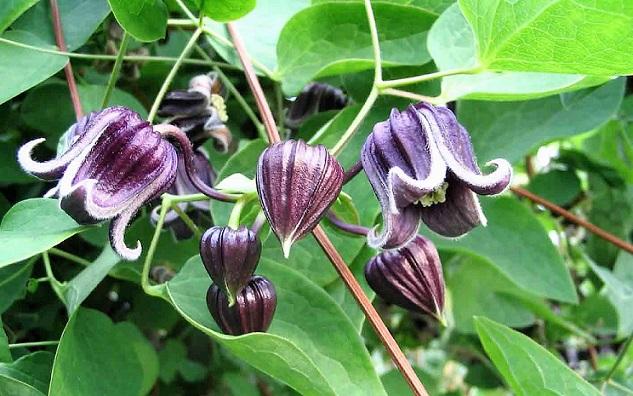
Brown clematis is a herbaceous vine native to the Russian Far East and Northeast Asia. Its vines reach 4 m in length, and its cup-shaped flowers are 2.5 cm in diameter. Buds open in July and August on the current year's shoots. Brown clematis blooms for the first time in its fourth year.
This variety is grown in temperate climates; it thrives in the south, but often suffers from powdery mildew. This perennial prefers good light, fertile, loose soil, and ample but infrequent watering.
Recommendations and tips for choosing
Small-flowered varieties of clematis are suitable for creating green walls and decorating fences. They bloom early and profusely, and the bush grows larger each year. Varieties from the Integrifolia group are a good choice. In the fall, they are pruned completely to the ground. Over the course of a season, the bush produces 15-40 new shoots.
Heat-resistant varieties of the texensis group are suitable for the southern regions of Russia. They continue to bloom in hot weather, even when the sun reaches 50°C. Heat-loving varieties such as Alba, Bicolor Siboldi, and other representatives of the Florida and Montana groups are not suitable for temperate climates. In severe winters, they freeze to death even under cover.
For group plantings, select clematis from pruning groups 2 and 3 with a long flowering period: 'President,' 'Chalcedony,' 'Andromeda,' and 'Grunwald.' Before planting, consider the size and shape of the vertical support. Arches and pyramidal tripods are most commonly used in amateur gardens.
Related posts:
 Growing Climbing Roses and the Top 10 Varieties, Planting, and Care in the Open Ground
 Top 50 best new rose varieties of 2025 with descriptions and characteristics
 Descriptions of hosta species and the top 25 most beautiful varieties, growing rules
 Top 12 Floribunda Rose Varieties: Planting and Care in the Open Ground
 The best varieties of clematis of the 3rd pruning group with descriptions and characteristics
 Top 16 Peony Rose Varieties, Planting and Caring for Them in the Open Ground
 Top 16 Best Hybrid Tea Rose Varieties: Planting and Care in the Open Ground
 Top 10 Best English Rose Varieties: Planting, Care, and Growing Guidelines