
- Characteristics of Purpurea Plena Elegans
- Clematis breeding and growing regions
- Use in landscape design
- Frost resistance, drought resistance
- Susceptibility to diseases and pests
- Planting a plant
- Site selection and preparation
- Timing and technology of planting
- Caring for Clematis Purpurea Plena Elegans
- Watering and fertilizing
- Pruning and tying to supports
- Mulching
- Shelter for the winter
- Pest and disease control
- Methods of reproduction
- Dividing bushes
- Layering
- Cuttings
- Reviews
The Purpurea Plena Elegans clematis has become a favorite among experienced gardeners, but it can be a real discovery for novice gardeners. This easy-to-grow plant delights with not only beautiful but also long-lasting blooms. With simple care and cultivation guidelines, even beginners can handle it, which is why this vine is gaining popularity every year.
Characteristics of Purpurea Plena Elegans
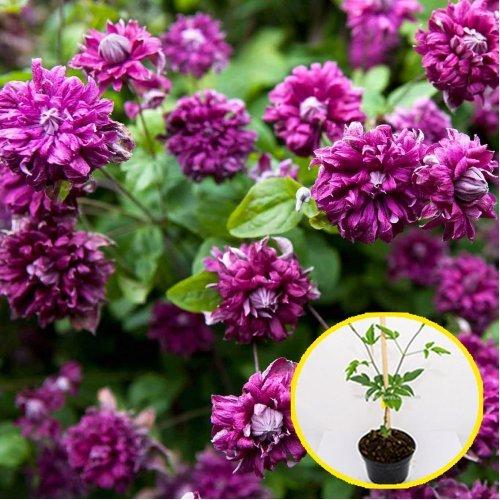
This clematis variety has certain characteristics that make it easy to distinguish from other varieties. These distinctive features also serve as a basis for identifying the flower's strengths and weaknesses.
Clematis breeding and growing regions
Purpurea Plena Elegance was developed by French breeders over a hundred years ago. Its exact origin is unknown. Some sources attribute it to F. Morel, others to E. André. Today, the variety remains popular and remains in demand in the gardening market.
Clematis belongs to the third pruning group and tolerates winter well without shelter, even in harsh climatic conditions. Thanks to these qualities, it is cultivated everywhere, including in Siberia.
Use in landscape design
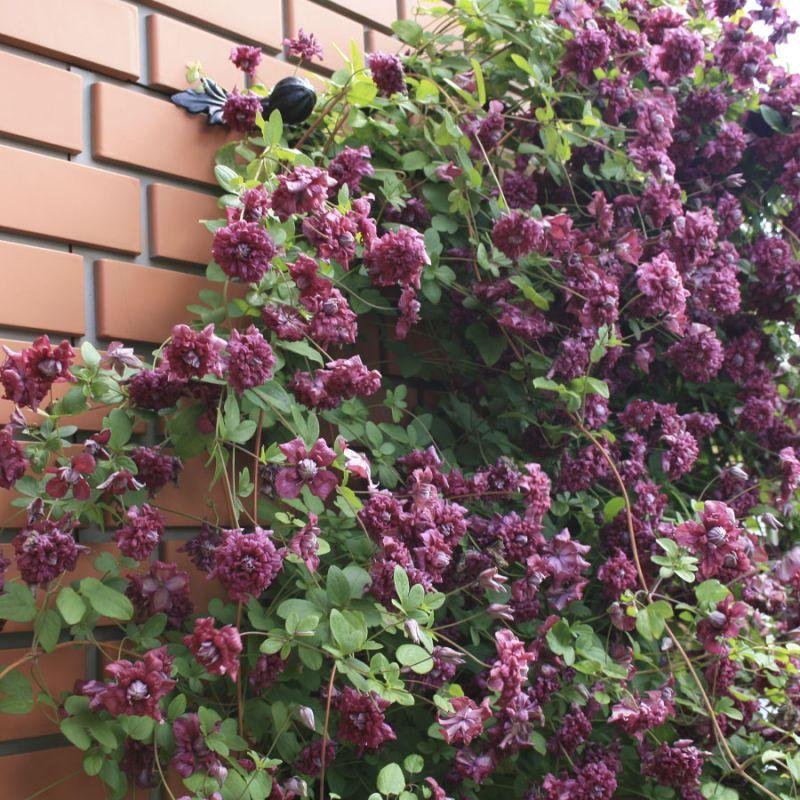
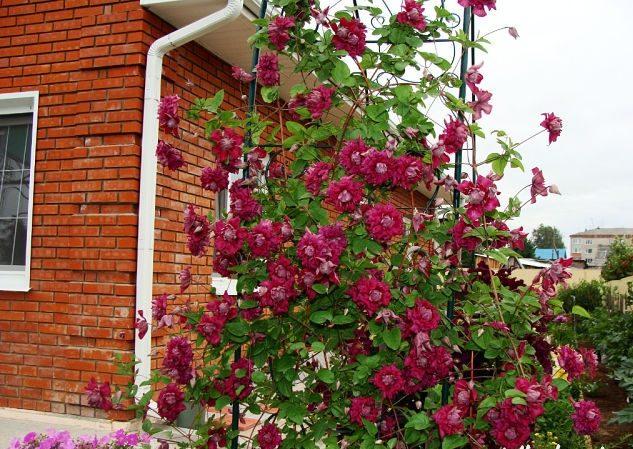
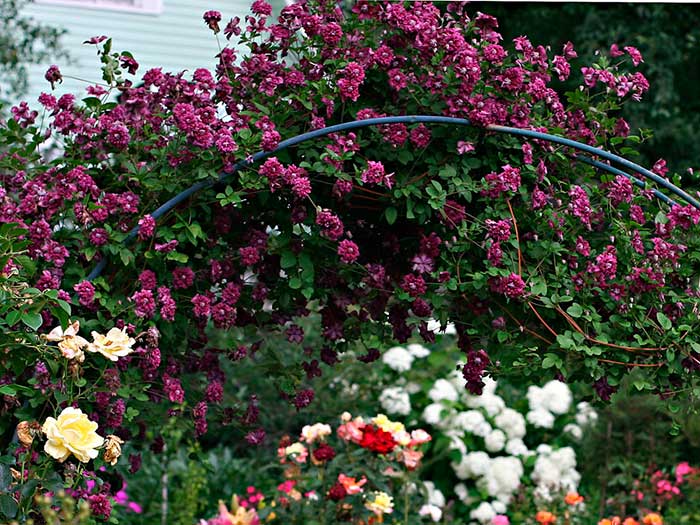
The advantages of the Purpurea Plena Elegans variety include its versatile use in landscaping. The plant makes an excellent addition to areas such as:
- pergola;
- arch;
- alcove;
- fence.
Clematis is also often used as a vertical component in mixed borders. Clematis is planted near old walls, trees, and even garbage heaps to conceal their unsightly appearance and create a tidy area.
Frost resistance, drought resistance
Clematis variety Purpurea Plena Elegans can withstand temperatures down to -40 C. It can survive for a long time without watering, but in this case, its decorative qualities are reduced and flowering becomes less profuse.
Susceptibility to diseases and pests
Purpurea Plena Elegans is highly resistant to common diseases, but requires preventative treatments. Attention should also be paid to pest prevention and control, as they can cause significant damage to the clematis and reduce its ornamental value.
Planting a plant
Planting a vine isn't particularly difficult, but there are certain considerations. If ignored, the plant will grow poorly, become diseased, and fail to produce the desired results.
Site selection and preparation
Choosing the right site is the key to successfully growing clematis. The plant requires good drainage, completely eliminating waterlogging, and adequate light. Purpurea Plenas Elegans can also grow in partial shade, but its growth will be somewhat slower.
The liana should be protected from drafts and strong winds.
Clematis thrives in light, well-drained soil with ample nutrients. The root system must not only be able to grow vigorously but also to breathe. In areas with high acidity, add lime or wood ash before planting.
Timing and technology of planting
The planting time for clematis Purpurea Plena Elegans depends on the type of seedling. If it has an open root system, the bush should be planted in early fall or late spring. Climbing vines with a closed root system can be transplanted to their permanent location at any time from spring to fall.
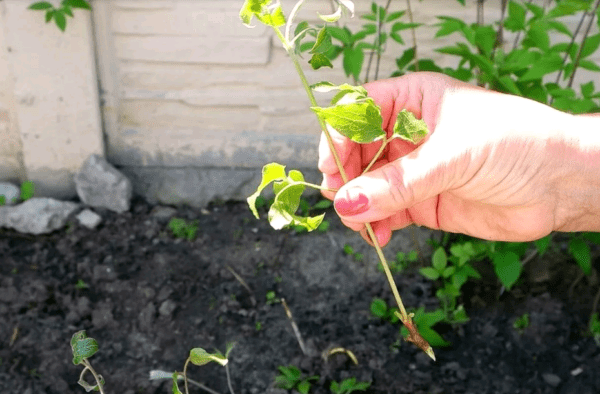
For planting, purchase clematis seedlings with dormant buds. Whitish shoots on the plants are a bad sign. This indicates they were stored for too long in unsuitable conditions, and such vines will cause the gardener a lot of trouble in the future. Seedlings should not show any mechanical damage or signs of disease.
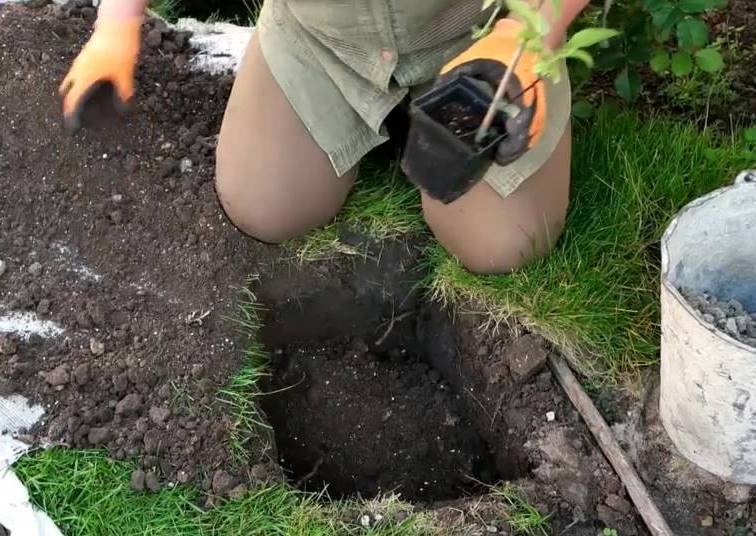
Clematis is planted in pre-prepared holes approximately 1/4 cubic meter in size. These are first filled with a mixture of soil, compost, fertilizer, and ash.
Humus can be used instead of compost. Add a layer of drainage material (expanded clay, pebbles, sand, or broken brick) to the bottom. Prepare the planting hole several weeks before planting. At the same time, install sturdy supports that must be dug into the ground. Pour a nutritious soil mixture into the bottom of the hole to form a mound, and carefully spread the clematis roots over the surface. The root collar should be buried 3-10 cm deep.
Caring for Clematis Purpurea Plena Elegans
Proper care of clematis guarantees long-lasting and abundant flowering. The plant develops normally, is disease-free, and is less susceptible to pest attacks.
Watering and fertilizing
Due to a lack of moisture, nutrients from the soil are not fully absorbed. This shortens not only the flowering period but also the number of buds that form, reducing the vine's decorative appeal. Water 3-4 times a week. It's best to do this on cloudy days or in the evening.
During the first year after planting, clematis doesn't require additional feeding. The fertilizer applied at planting is sufficient. Beginning in the second year, both organic and mineral fertilizers are added to the vine. Fertilize once a month. Foliar sprays with easily absorbable chelated micronutrients should be applied with equal frequency.

Pruning and tying to supports
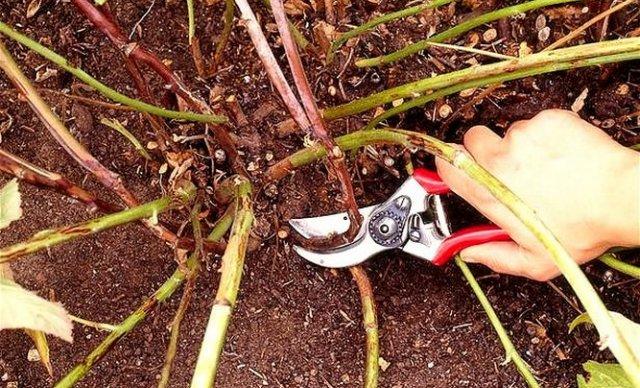
In the first year, it's recommended to prune the Purpurea Plena Elegans clematis to three buds above the ground. This procedure is repeated annually in the fall. With the arrival of warm spring weather, the plant will begin to grow new shoots.
Clematis supports are installed before planting. Once the vines are long enough to support them, they are guided in the desired direction and secured to the support with twine. The clematis will then grow around the hedge itself, requiring no additional support.
Mulching
Clematis thrives in sun and warmth, but its root system often suffers from overheating or dry soil. Therefore, experienced gardeners mulch the root zone with a thick layer of loose material. This not only retains moisture and protects the roots from overheating, but also provides the plant with additional nutrition. It is recommended to add a layer of fresh mulch every month, such as mown hay, compost, or sawdust.
Shelter for the winter
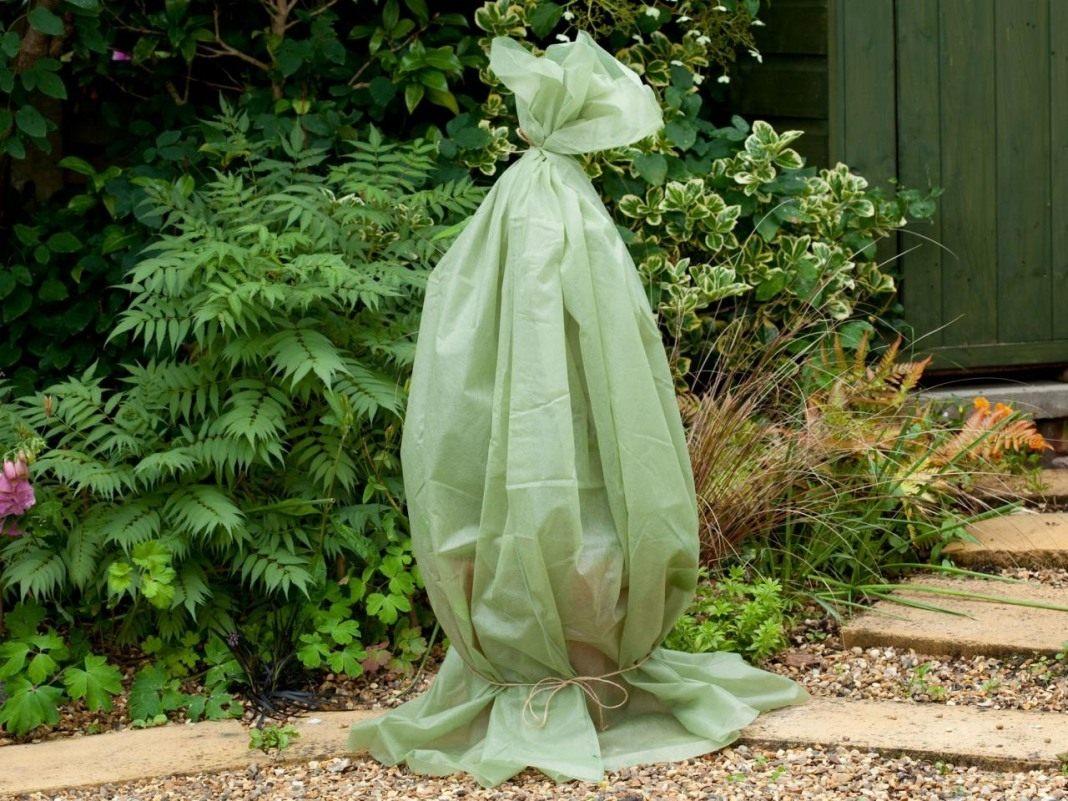
The Purpurea Plena Elegans clematis doesn't require additional shelter, as it's pruned short in the fall. In regions with harsh winters and little snow, apply an additional layer of mulch and cover the root ball with non-woven material, securing it to prevent it from being blown off by gusts of wind. With the arrival of spring warmth, the clematis is gradually uncovered.
Pest and disease control
The Purpurea Plena Elegans clematis variety is characterized by high resistance to common diseases. However, experienced gardeners recommend preventative treatment of the root zone with Fitosporin in early spring. Spraying with Fitoverm can protect the vine from pests. In spring, a mixture of sand and ash should be added to the area around the plant's trunk.
Methods of reproduction
There are several proven methods that allow gardeners to independently propagate the Purpurea Plena Elegans clematis variety.
Dividing bushes
This method is suitable for bushes around 4-5 years old. Clematis is propagated in the fall or spring. To do this, carefully dig up the bush, separate a section, and replant it in a new location.
Layering
This method is the simplest and most reliable. First, dig trenches about 10 cm deep near the clematis bush. Then, place mature shoots in these trenches and cover them with a light soil mixture, leaving only the tip of the branch exposed. The new plant can be separated only the following season.
Cuttings
Propagation by cuttings allows you to obtain many new seedlings at once. It is recommended to take cuttings before the flowering period. Bushes aged 3-4 years are suitable for this purpose. Select a shoot from the center of the bush and cut it into 6-7 cm long pieces. Each cutting should contain at least two buds. Treat the cuttings with a rooting stimulant, plant them in a mixture of river sand and peat, and leave them until fully rooted, moistening the soil periodically.

Reviews
The Purpurea Plena Elegance clematis variety is not new, so many gardeners have personally experienced its advantages and disadvantages and are ready to share their feedback.
Anatoly Nikolaevich, experienced gardener: "My wife and I have been improving our property for a long time. We recently discovered the Purpurea Plena Elegans clematis. It overwinters well in our Siberian climate, even with full pruning. Over the summer, the plant develops a large amount of foliage, and then becomes completely covered in flowers. We also like the fact that it's very easy to care for and doesn't require much time or effort."
Oksana Alexandrovna, a budding amateur gardener: "I was recently introduced to clematis by my neighbors. The Purpurea Plena Elegance variety has become one of my favorites thanks to its long flowering period and extraordinary beauty. I also like that it grows quickly, covering a space of about 1.5 meters."
Maria Igorevna, a novice gardener: "I was afraid to work with clematis, having heard from friends many times that they're capricious plants. A couple of years ago, a neighbor persuaded me to take a cutting of Purpurea Plena Elegans from her. I was surprised when the vine bloomed in its first year after planting. To help the plant gain strength and survive the winter, I had to pluck the buds. But the following year, the clematis delighted me with its beauty. It seemed like it would bloom forever. Now it's one of my favorites in my garden."
Andrey Stepanovich, homeowner: "My sister recommended planting clematis to cover the unsightly wall of the shed in the yard. The main criteria was ease of care and low maintenance, since I spend a lot of time at work. The salesperson recommended Purpurea Plena Elegans, for which I am very grateful. I am completely satisfied with the variety. The only inconvenience is that the vines have to be pruned every fall, and then tied up again and trained in the right direction when the weather warms up. But I've come to terms with this minor drawback and don't even consider it."
Related posts:
 Description and pruning group of clematis President, cultivation and care
 Description of the burning clematis, planting and care in open ground, propagation
 Description and pruning group of clematis Rouge Cardinal, cultivation and propagation
 Description and characteristics of Manchurian clematis, cultivation techniques
 Description and characteristics of the clematis variety Kaiser, planting and care, pruning group
 Description of clematis varieties, planting and care, propagation methods
 Description and pruning group of Clematis Mountain, planting technology and care
 Description and characteristics of the clematis variety Comtesse de Bouchaud, planting and care instructions