
- Clematis Nelly Moser: characteristics and description
- Application in landscape design
- Landing rules
- Selecting and preparing a site
- Landing dates and plan
- Care instructions
- Regularity and rules of watering
- Plant fertilizing
- Loosening and mulching
- Pruning group
- Preventive treatments and control of diseases and pests
- Winter protection
- Methods of reproduction
- Gardeners' reviews of the variety
Perennial clematis vines are an essential part of garden decor, prized for their ease of maintenance and beauty not only by ordinary gardeners but also by landscape designers. Over the decades, breeders have developed numerous varieties and hybrids of this flower, adapted to specific climates and growing conditions. The clematis variety "Nelly Moser" is still considered one of the most popular, although it was developed by French gardeners long ago.
Clematis Nelly Moser: characteristics and description
The clematis cultivar was first introduced by French breeders in 1897. A characteristic feature of the plant is the intensive growth of young shoots, which range in length from 3 to 3.5 meters. Clematis has a powerful and wide root system, as well as oval leaves with a slightly pointed tip.
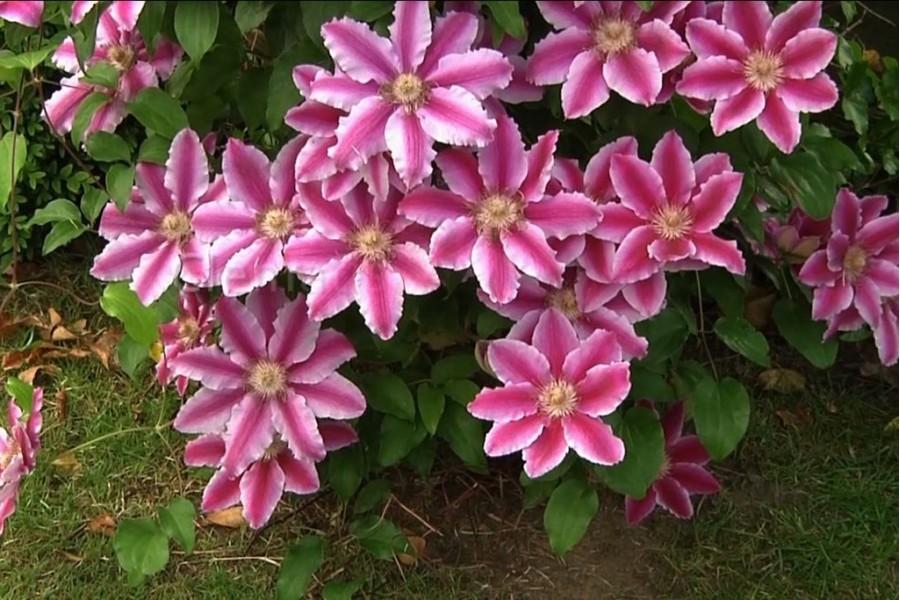
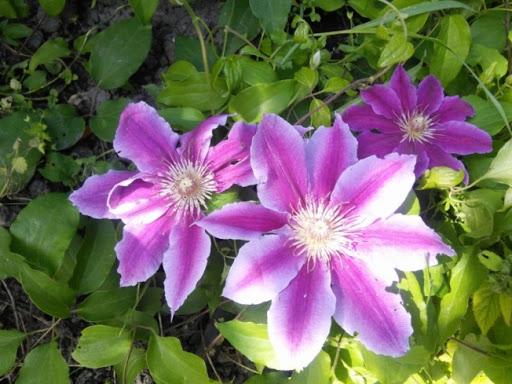
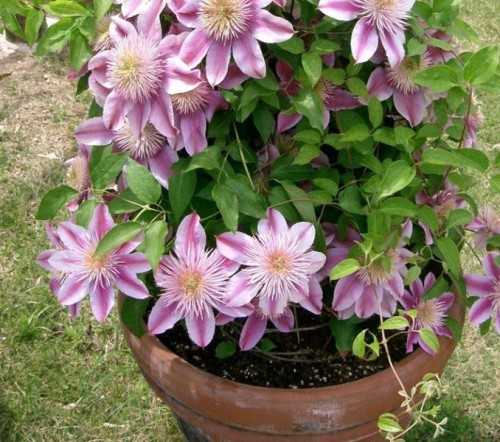
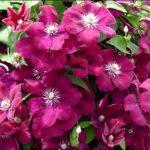
The Nelly Moser variety belongs to the Patens group of clematis; buds form on both current and previous year's shoots. The flower is approximately 18 cm in diameter. The inner surface of the petals is a rich purple, while the outer surface is paler. Each petal has a distinct stripe of bright red with a purple tint.
The Nelly Moser clematis begins blooming in June, with flowers appearing first on last year's shoots. A second flush of bloom follows in July, this time on younger branches. Each shoot produces about 10 buds, which delight with their decorative appearance until the onset of cold weather.
Application in landscape design
The versatility and unpretentiousness of this clematis variety allows it to be used in the following situations:
- In compositions with coniferous plants.
- For decorating the walls of unsightly buildings and fences.
- For decorating gazebos, terraces and arches.
- For decorating alpine slides together with other plants.
- In combination with lilac or viburnum.

Landing rules
Before planting, consult the recommendations of experienced gardeners. The health and abundant flowering of clematis depend on the correct location, soil preparation, and the quality of the seedlings purchased.
Selecting and preparing a site
The ideal location is an east-facing location, where the plant will receive ample morning sunlight and be protected from the midday heat. It's important to remember that clematis petals will fade if exposed to constant sunlight, losing their decorative appeal. The site where the vine is to be planted should be free from drafts and strong winds, as this will damage the fragile shoots. Low-lying areas, where meltwater accumulates in the spring after snowmelt, are also unsuitable for clematis. Furthermore, excessive moisture can promote the development of fungal diseases.
The best soil for Nellie Moser is sandy loam or loamy soil, with a slightly alkaline or slightly acidic pH. Loose, humus-rich soil that allows air and moisture to pass through is preferable. Plants should be spaced 1-1.2 meters apart.
If the soil in the area is not fertile, the planting hole is filled with the following components:
- peat (2 buckets);
- compost or humus (2 buckets);
- river sand (1 bucket);
- superphosphate (100 grams);
- wood ash (0.5 liters).
All these ingredients are mixed and added to the dug hole on top of the drainage layer. The hole is prepared 30 days before planting; its dimensions are 60 x 60 x 60 cm.
Landing dates and plan
The timing of planting clematis Nellie Moser depends directly on the growing region. In southern regions, work is carried out in October, and in northern regions, in mid-spring, or at the latest in the first month of autumn.
Landing algorithm:
- A drainage layer is arranged at the bottom of the pit, and a nutrient substrate is poured onto it.
- A seedling is placed on the formed mound, carefully straightening the roots.
- Cover with the remaining soil and water generously, compacting the soil around the clematis.
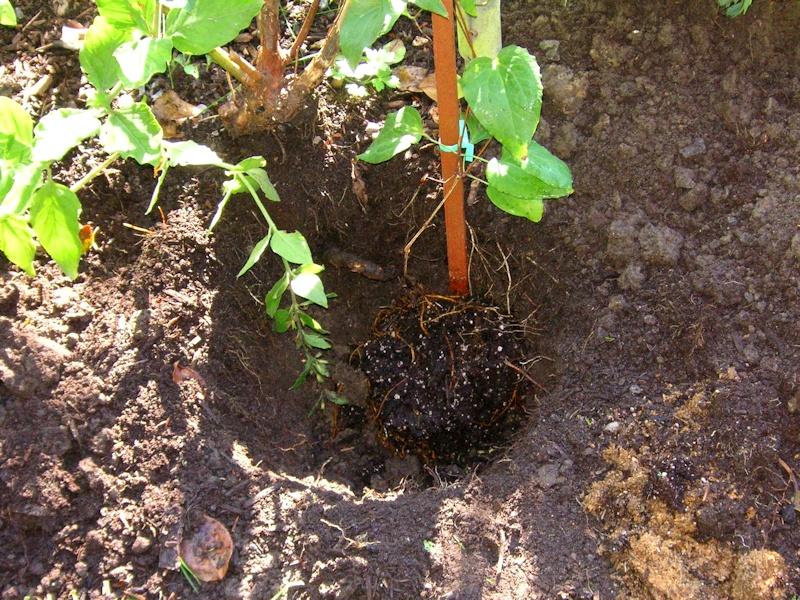
Important! Ensure the plant's root collar is buried at least 10 cm deep, otherwise the clematis will suffer from excess moisture accumulation.
Care instructions
Growing care for the Nelly Moser clematis is simple; even a novice gardener can handle it. The basic techniques include watering, fertilizing, pruning, loosening the soil, and preparing it for winter. Preventative treatments to protect the plant from diseases and insect pests are also important.
Regularity and rules of watering
The frequency of clematis watering depends on the weather. If it's hot and there's no rain, water twice a week, but be careful not to overwater the area around the trunk. Water in the morning or after sunset. On average, up to 10 liters of water are used per plant.

Plant fertilizing
Without adding nutrients, you won't be able to achieve abundant flowering. The procedure is carried out according to the following algorithm:
- In the first month of spring, when intensive growth occurs, use organic matter. A solution of bird droppings or mullein will do.
- The period of bud formation. During this time, mineral compounds containing nitrogen, potassium, and phosphorus are needed.
- After the flowering period is over, it is recommended to use mineral fertilizers again.
It is important to remember that during flowering, crops should not be fed.
Loosening and mulching
After rainfall and irrigation, the soil around the clematis is loosened. This procedure is carried out with extreme caution, as the plant's roots are located close to the soil surface and are easily damaged. This procedure helps oxygenate the soil and eliminate weeds that can spread diseases.
A mulch layer eliminates the need for regular loosening. Shredded tree bark or dry sawdust are used for this purpose. This layer also prevents the root system from overheating.
Pruning group
The French variety of clematis belongs to Group 2, so before preparing for winter, branches are shortened by half their length. Complete removal of some shoots is only necessary if thinning is necessary.
Preventive treatments and control of diseases and pests
The following diseases and pests are considered the most dangerous for this variety of clematis:
- Gray mold. Fundazol is used to treat the vine.
- Wilt. After removing clematis from the area, treat the soil with copper-containing preparations. There is no treatment for infected bushes.
- Rust. For spraying, prepare a 2% solution of Bordeaux mixture.
- Powdery mildew. For treatment and prevention, prepare a solution of baking soda or 300 grams of laundry soap and 30 grams of copper sulfate per 20-liter bucket of water.
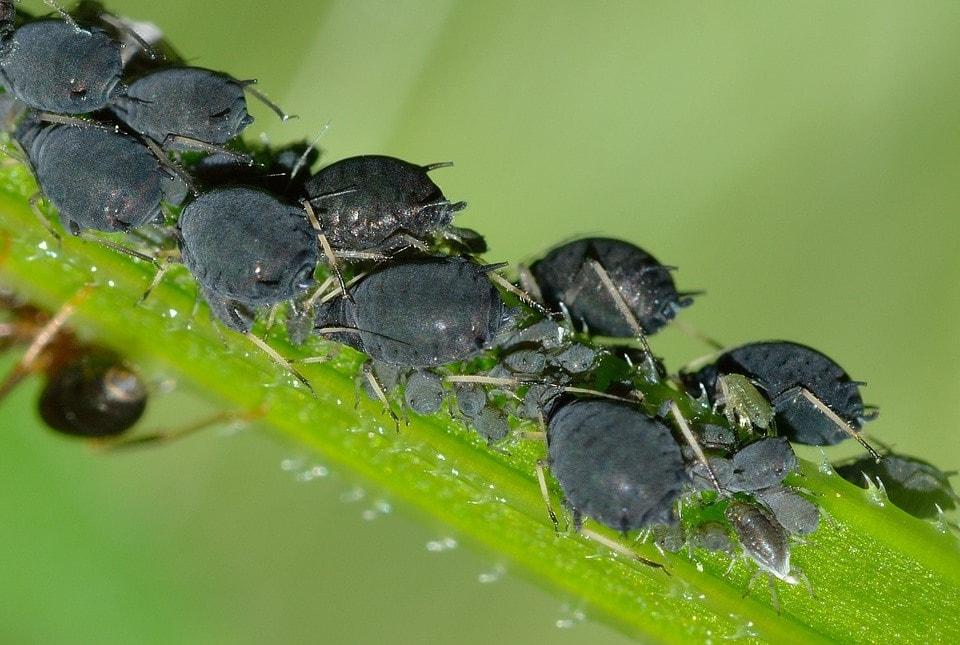
- Aphids. To destroy this small pest, use any insecticide.
Winter protection
In regions with mild winters, clematis does not require additional cover. If the soil freezes to a depth of 5 cm or more during winter, the area around the trunk is insulated with peat, and the plant branches are twisted and bent toward the ground, covered with agrofibre or spunbond.
Methods of reproduction
Gardeners do not propagate the French clematis variety by sowing seeds, as this process is lengthy and labor-intensive, and there is no guarantee that the young bushes will inherit the characteristics of the mother plant.
There are three simple methods used for breeding:
- Autumn layering.
- Dividing the bush.
- Last year's shoots.
Gardeners' reviews of the variety
Anna Petrovna Maltseva, 49: "Clematis Nellie is one of my favorite varieties. We enjoy its flowers practically all summer long. We haven't had any problems with care, the main thing is not to overwater the plants to avoid diseases."
Darya Alexandrovna, 38: "I bought this clematis on the advice of the seller and have no regrets. The beautiful flowers have completely covered the arbor, and we haven't had any problems with them. The only problem is that in our climate, you have to provide winter cover to protect the root system."
Related posts:
 Description of Jackman's clematis varieties and pruning group, cultivation and propagation
 How to propagate clematis at home: timing, methods, and technologies
 Description and pruning group of clematis Ashva, the subtleties of growing and care
 Description and characteristics of the clematis variety Comtesse de Bouchaud, planting and care instructions
 Description of the best varieties of Tangut clematis, planting, growing and care
 Description and pruning group of clematis Cardinal Wyszynski, cultivation and care
 Description and characteristics of the clematis variety Kaiser, planting and care, pruning group
 Description and pruning group of clematis Rouge Cardinal, cultivation and propagation