
- Clematis Cardinal Vyshinsky - characteristics of the variety
- Pros and cons of growing
- Examples in landscape design
- Landing specifics
- Selecting and preparing a site
- Preparing seedlings
- Optimal planting times and patterns
- Cardinal Care Guide
- Regularity of watering
- What fertilizer does the plant prefer?
- Loosening the soil and removing weeds
- Trimming
- Preventive treatments
- Preparing for winter
- Methods of reproduction
- Layering
- Dividing the bush
- Cuttings
- Seeds
- Gardeners' reviews of the variety
Among Polish-bred clematis, the 'Kardinal Wyszynski' variety is particularly popular with gardeners. This herbaceous perennial vine is used to decorate the walls of buildings, arbors, create hedges, and combine with other flowers. Its high winter hardiness and long, abundant flowering season are the qualities that have contributed to its popularity. Before planting, the clematis variety's requirements for site and cultivation are carefully studied.
Clematis Cardinal Vyshinsky - characteristics of the variety
The herbaceous vine, which is the clematis cultivar 'Kardynal Wyszynski,' is quite compact. It grows to a height of no more than 3.5 meters, making it sometimes used in gardening, not only in summer cottages but also in hanging baskets to decorate balconies. The plant has a well-developed root system that grows up to 1 meter.
The variety owes its name to Warsaw Metropolitan Stefan Wyszynski and was developed by Polish breeders in the late 20th century. The color of its petals matches the ceremonial attire of Catholic priests. In 1990, the Cardinal Wyszynski flower won a gold medal at the prestigious international exhibition held annually in the Netherlands.
Large, bright green leaves densely cover the shoots. Between them are specialized tendrils that allow the plant to cling to supports. This clematis variety belongs to Group 3 and requires drastic pruning in preparation for winter frosts. There's no point in leaving shoots, as flowering occurs on the current year's branches.
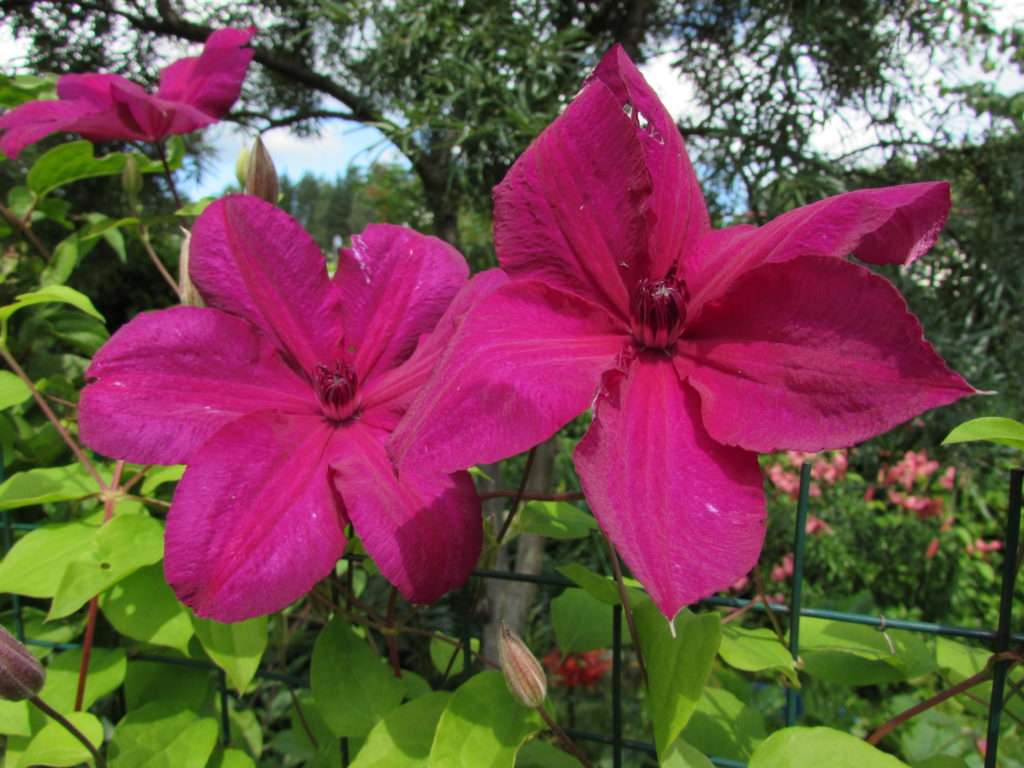
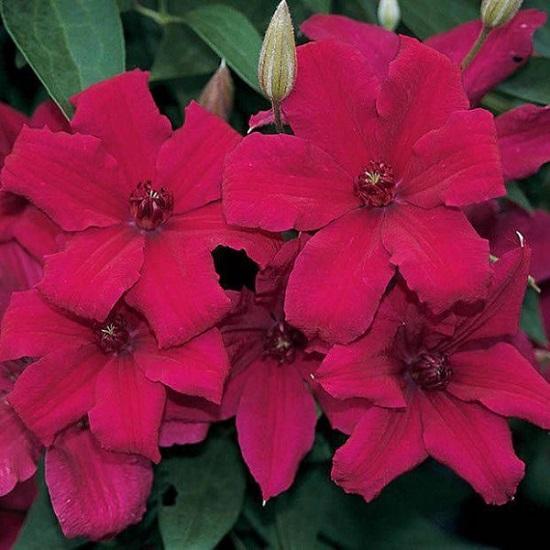
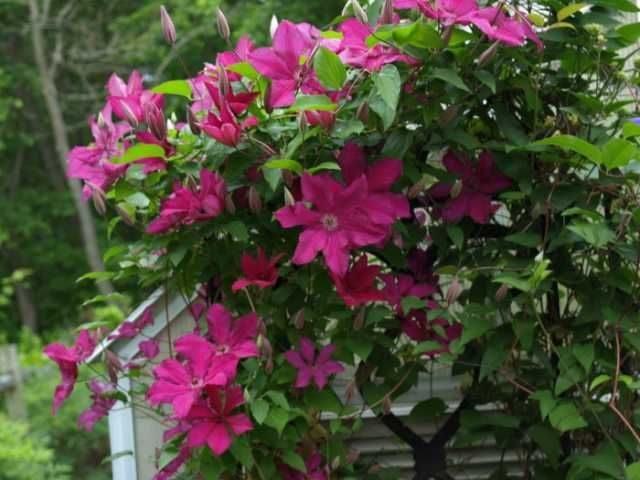
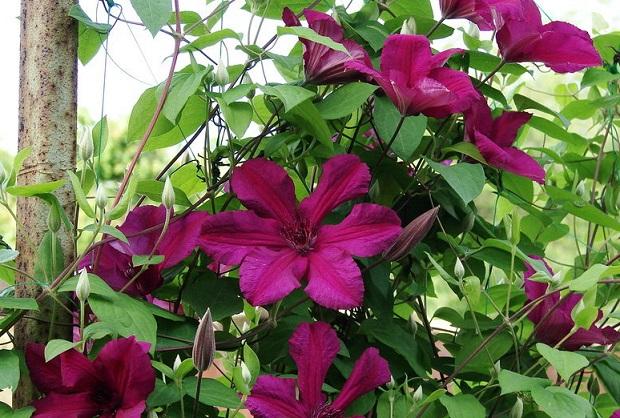
Polish clematis buds reach 14 cm in diameter, and with proper cultivation, specimens up to 20 cm have been seen. The deep red petals, with a subtle transition to dark pink, are the signature color of Cardinal Wyszynski. The petals are large and wavy-edged. This variety is characterized by a long flowering period—buds adorn the vine from July to September, with each flower remaining attractive for 15 days.
Pros and cons of growing
Before purchasing clematis Cardinal Wyszynski, consider the plant's advantages and disadvantages. The undeniable advantages that attract gardeners include:
- Decorative appearance.
- Compact size of the liana.
- Long flowering period.
- Unpretentiousness to the growing site.
- High frost resistance.
- Strong immunity to pathogens and insect pests.
- It is possible to use clematis both in open ground and in hanging pots.
This clematis variety doesn't have many drawbacks, but they do exist, and they should be considered before planting. The plant thrives in sunlight, but if constantly exposed to intense rays, its color will fade. Even in the shade, it won't display all the ornamental qualities it claims—the buds will be small and unattractive. Partial shade is considered ideal.

Examples in landscape design
Clematis is a perfect choice for decorating a garden. Here are some examples of how to use it:
- For decorating mesh fences and creating hedges.
- For decorating the walls of unsightly and outbuildings.
- As a decorative element for gazebos and arches.
- In composition with other flowers.
- In hanging pots on the balcony.
Cardinal Vyshinsky is used for both vertical and horizontal gardening.
Landing specifics
Before planting, study the plant's requirements for location, soil quality, and nutrients. Seedlings are purchased and prepared for planting. Following the planting instructions is also key to successfully growing clematis.
Selecting and preparing a site
First, determine which areas are definitely unsuitable for clematis. The plant dislikes areas with close groundwater levels, as roots begin to rot and dangerous fungal diseases develop. Low-lying areas, where fog and dampness accumulate in the mornings, are also not recommended for clematis. If the flowers are being planted to decorate the walls of buildings, be sure to leave at least 60 cm between them.
Otherwise, water running off the roof during rain will damage the decorative appearance of buds and foliage, and also cause increased dampness in the root area.
An area with full sun for the first half of the day and partial shade for the second is ideal for planting clematis seedlings. It's also important to ensure the area where clematis grows is protected from strong winds, which can damage the plant's delicate petals. Once the planting site has been selected, it's time to prepare it. It's best to do this in the fall by digging and adding compost. In the spring, the area is dug again shallowly and holes are prepared for planting the seedlings.
Preparing seedlings
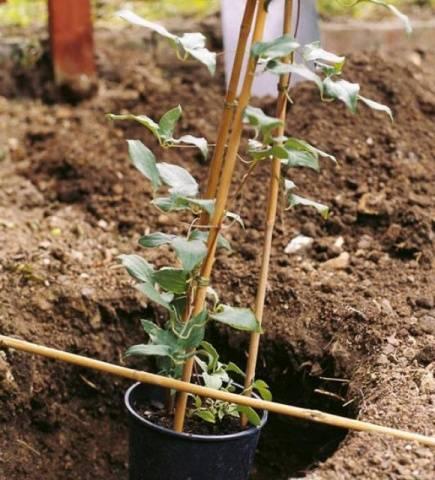
Clematis seedlings of the Cardinal Vyshinsky variety are available in two varieties: closed-root and open-root. In the first case, simply dip the roots and container in a bucket of water and let them sit for about half an hour before planting. In the second case, soak them in a clay slurry, to which you can add a growth stimulant, such as "Kornevin," to improve adaptation to the new location.
Experienced gardeners recommend purchasing clematis seedlings from specialized nurseries and stores rather than from spontaneous markets. This helps avoid counterfeit products, as planting material is expensive.
Optimal planting times and patterns
Spring is considered the optimal time for planting clematis seedlings. However, if the plant is a closed-root specimen, it can also be planted in the fall. The key point to keep in mind when planting in the fall is that there should be at least 30 days before the first frost, allowing the plant's roots time to establish themselves in their new location and strengthen.
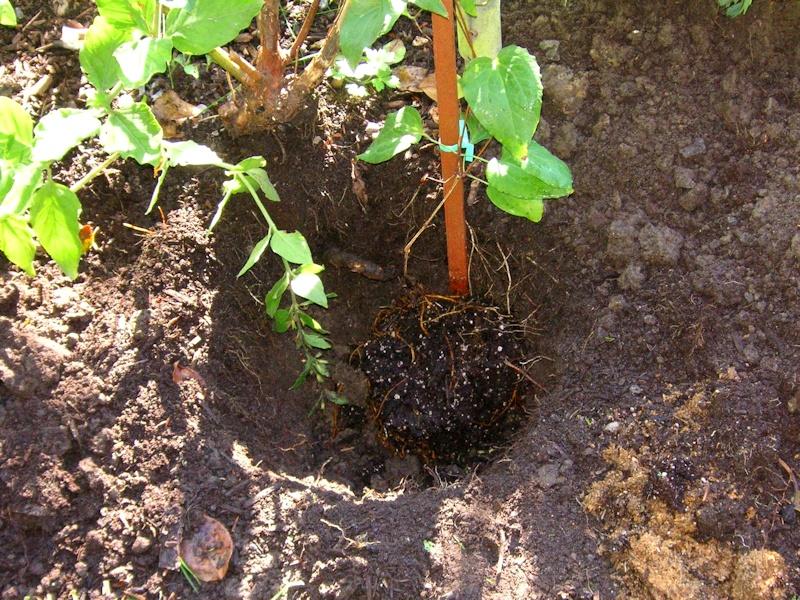
Step-by-step instructions for planting clematis 'Cardinal Wyszynski':
- They dig a spacious hole with dimensions of 60 x 60 x 60.
- At the bottom of the hole, arrange drainage consisting of small crushed stone or broken bricks; perlite is also suitable.
- The soil removed from the hole is mixed with compost, 60 grams of superphosphate and wood ash.
- Half of the composition is poured onto the drainage layer.
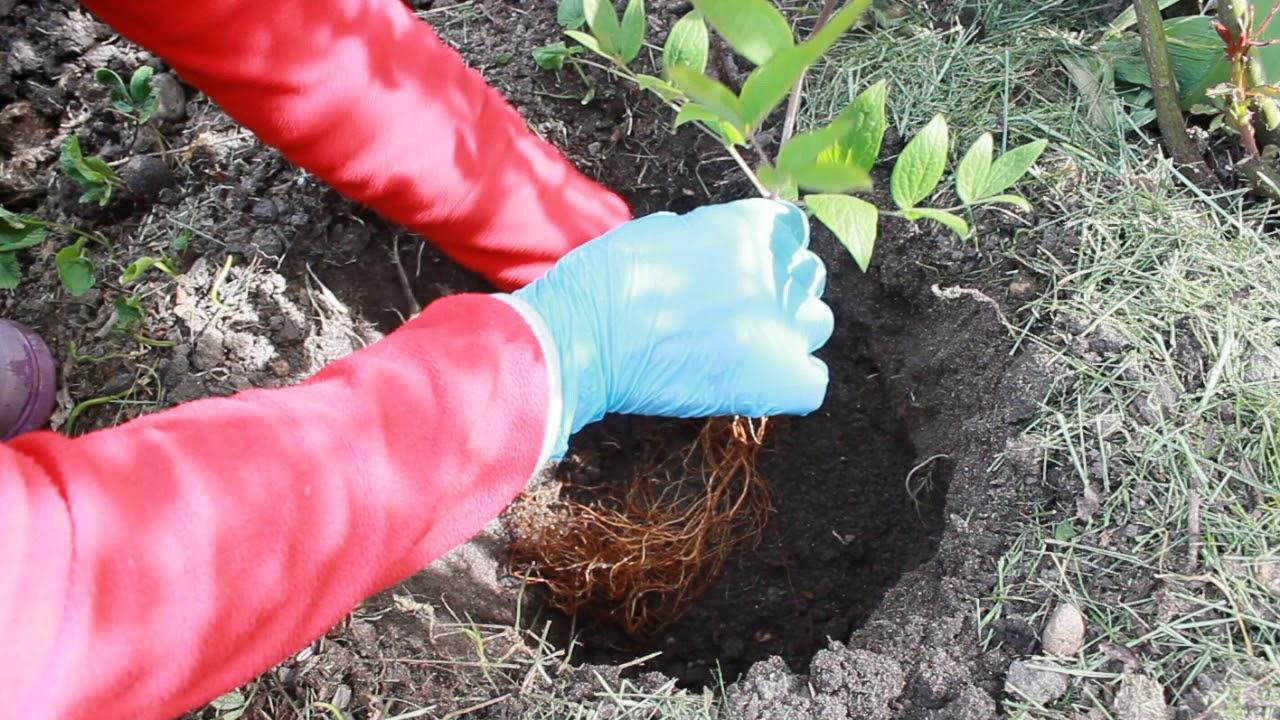
- The seedling is placed exactly in the middle and its roots are straightened.
- When filling with the remaining soil, deepen the root collar by 10 cm, then the bush will form a large root ball, which will subsequently help it survive the harsh winter frosts.
- The seedling is watered and tied to a support.
To prevent the root system from overheating (clematis dislike this), mulch the root area. It is also recommended to plant annuals around the area to provide shade for the Cardinal Wyszynski.
Cardinal Care Guide
The health of the bush and abundant flowering depend on proper gardening practices and adherence to gardening recommendations. Clematis requires no special care—irrigation, fertilizing, weeding, pruning according to its group, winter preparation, and disease prevention—that's all the Cardinal Wyszynski plant needs.
Regularity of watering
The frequency and amount of watering directly depend on the climate of the growing region and the presence or absence of natural precipitation. On average, Cardinal Wyszynski clematis should be watered once every seven days, usually in the evening after sunset. One mature bush will require 20 to 30 liters of warm, settled water. During prolonged hot weather, the frequency and volume of watering should be increased, with watering performed twice a week.
What fertilizer does the plant prefer?
During the first growing season after planting, there's no need to add nutrients—the clematis will thrive on the fertilizer already placed in the hole. Starting in the second season, fertilizing begins, following this schedule:
- Spring - use complete mineral complexes, humus or compost.
- Summer (flowering period) - additional potassium compounds are added.
- Early autumn – phosphorus-containing complexes are used.
Under no circumstances should fresh manure be used to fertilize clematis.
Loosening the soil and removing weeds
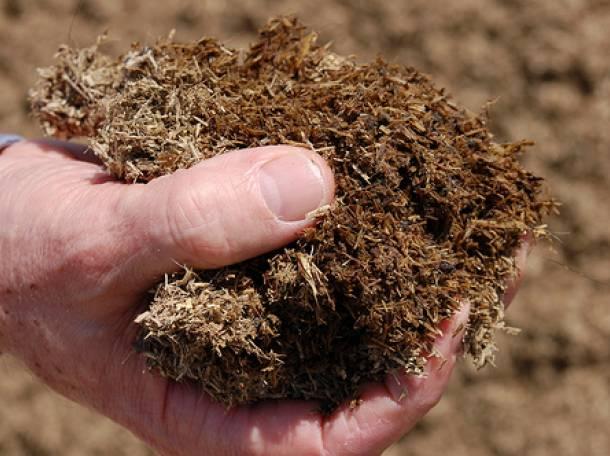
To ensure sufficient oxygen for the clematis root system, the soil is loosened after each rainfall or irrigation, but this is done carefully and to a depth of no more than 20 cm. Weed roots are also removed to prevent them from choking the plant and depriving it of nutrients. Weeds also cause various clematis diseases.
Trimming
The procedure is carried out according to the pruning group to which Cardinal Wyszynski belongs. This means that in October, before preparing for the winter, all clematis shoots are pruned, leaving no more than 30 cm above ground level. Throughout the growing season, sanitary treatments are carried out as needed, removing broken, dried, and diseased branches.
Preventive treatments
To prevent the spread of diseases, fungal diseases are considered the most dangerous and common. Preventative measures are taken using fungicides. Also, if the soil was heavy, the plant is susceptible to wilt. As a preventative measure, spray clematis in the spring with a dolomite flour solution (200 grams per bucket of water).

Preparing for winter
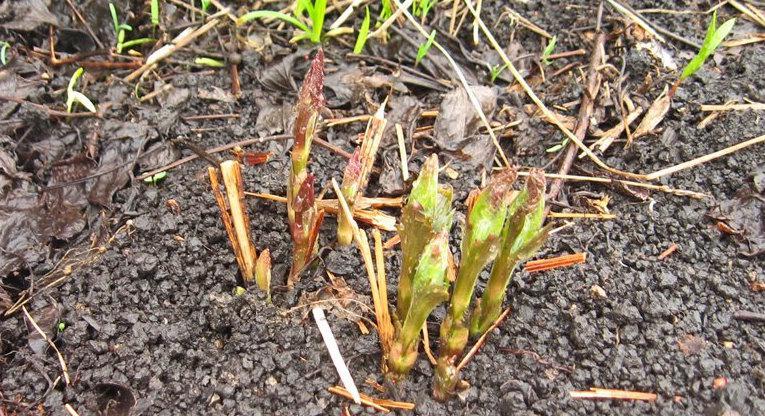
After the fall pruning, prepare the plant for winter. To do this, cover the clematis with dry fallen leaves and spruce branches. In colder regions, place a wooden box on top and stretch plastic sheeting over it, but make sure to poke a few holes for air circulation.
Methods of reproduction
The Cardinal Vyshinsky clematis variety can be propagated using several simple methods. Each gardener can choose their preferred method.
Layering
Select one of the healthy lower clematis shoots and plant it in a pre-prepared trench. For secure placement, you can pin it down with staples, leaving only the tip above the surface. By fall, the shoot will have developed its own roots, and it is separated from the mother plant and planted in its permanent location.
Dividing the bush
For division, select a clematis specimen that is at least 5 years old. Using a sharp spade, divide it into several equal-sized pieces and transplant them to another site.
Cuttings
To obtain planting material, use the middle section of a healthy clematis shoot. Treat the cuts with crushed charcoal and a rooting stimulant. Plant in a mixture of peat and sand and cover with plastic film to create a greenhouse effect. Remember to periodically remove the covering and air the cuttings. Once fully established, transplant the clematis to its permanent location, which can be done in both spring and fall.
Seeds
Seed propagation of clematis 'Cardinal Wyszynski' is rarely used by ordinary gardeners. Not only is it time-consuming, but there's no guarantee the resulting plant will replicate the qualities of the parent plant. This method is most often used by breeders to create new clematis varieties and hybrids.
Gardeners' reviews of the variety
Anna Sergeevna, 38: "I grow Cardinal Wyszynski on my balcony—I haven't noticed any particular problems caring for it. I prune the shoots in winter and move them indoors, and when spring arrives, I return the pot to the balcony."
Tamara Vladimirovna, 57: "One of my favorite varieties at the dacha. It blooms profusely and for a long time, with large buds. I lightly cover it in winter, so it tolerates frosts without a problem. I haven't noticed any diseases in all the time I've been growing it."
Related posts:
 Description and pruning group of clematis Rouge Cardinal, cultivation and propagation
 Description of the Cardinal strawberry variety, planting and cultivation
 Description of Jackman's clematis varieties and pruning group, cultivation and propagation
 How to propagate clematis at home: timing, methods, and technologies
 Description of the Cardinal grape variety and growing rules
 Description and pruning group of clematis Ashva, the subtleties of growing and care
 Description of the best varieties of Tangut clematis, planting, growing and care
 Description and characteristics of the clematis variety Comtesse de Bouchaud, planting and care instructions