
- Description and characteristics of the culture
- The main types and varieties of prince
- Korean
- Siberian
- Large-petaled
- Alpine
- Examples in landscape design
- Features of cultivation
- Site selection and preparation
- Preparing seedlings
- Planting dates and patterns
- Watering and loosening
- Top dressing
- Trimming
- Protection from insects and diseases
- Shelter for the winter
- Methods of reproduction
- Cuttings
- Seeds
- By dividing the bush
- Reviews of clematis
Growing clematis agnathus requires certain considerations. This plant has excellent ornamental qualities and is often used in landscape design. To ensure its healthy growth and attractive appearance, it requires thorough and proper care. This should include timely watering, fertilization, and pruning. Protecting the bushes from diseases and pests is also essential.
Description and characteristics of the culture
Clematis is a close relative of the clematis. They belong to the same genus, but differ in flower structure. The plant is a woody vine with twisted petioles, which it uses to cling to supports.
The plant is characterized by a fibrous root system, which is considered quite fragile. The plant has compound leaves arranged oppositely and characterized by long petioles. The bushes are adorned with large, single flowers. They have a regular shape and a double perianth. The calyx consists of 4-8 petal-like sepals. These sepals can have various shades—blue, white, pink. Blue, lilac, and purple tones are also common.
The petals are approximately half as long as the sepals and have a dull white color. The flowers resemble drooping bells with numerous stamens. The bushes begin flowering in May. After flowering, the fruits appear in August or September.
The main types and varieties of prince
The plant has many varieties and cultivars, each with its own distinctive characteristics.

Korean
This is a rather unique plant from Korea. The creeping vines reach 2-3 meters. They are characterized by yellow-red flowers, sometimes with a purple tint. The plant is considered unpopular and is rarely grown.
Siberian
This vine grows in coniferous forests and can be found in most regions of Russia. It is considered a fairly sun-loving plant and reaches a height of 3 meters. The flowers are 3-4 centimeters in size. The sepals are white or white-yellow and covered with hairs. The plant begins flowering in mid-summer.
Large-petaled
This variety has richly colored flowers. The sepals reach 5 centimeters in length and are elongated. The plant is adorned with numerous linear petals. Flowering begins in May. The Far East is considered the homeland of this plant. It can be found in Korea, China, and eastern Siberia. Many varieties were developed in Canada. Almost all varieties are highly frost-resistant.
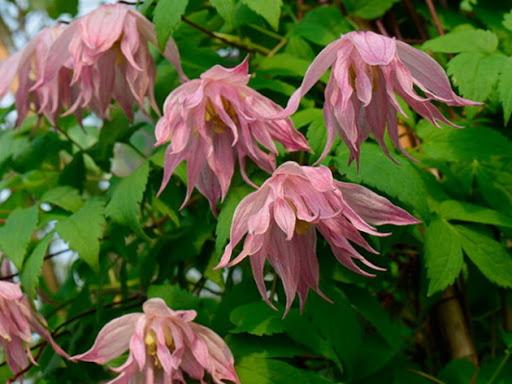
The most popular ornamental varieties include the following:
- Markhams Pink is a beautiful cultivar with rich pink flowers. The outside is vibrant, while the center is more delicate. These bushes are pruned to Group I.
- Ballet Skist – the bushes are complemented by large flowers of a rich pink hue.
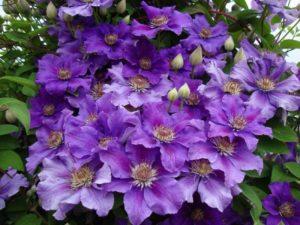
- Cecil is a frost-hardy plant with large flowers. The sepals are typically violet-blue. This plant belongs to the first pruning group.

Alpine
This plant grows in the forests of the Baltics and central Europe. The vines grow up to 3 meters. It is characterized by broad, bell-shaped flowers. They reach 2-6 centimeters in diameter and include four blue or purple sepals. The petals are small. The bush is adorned with trifoliate leaves. Flowering begins in May or June. Young shoots can bloom again. This species has a large number of ornamental cultivars:
- Willie is a striking variety with pink-lilac sepals and white-yellow petals. Flowers reach 5-6 centimeters in diameter. This cultivar belongs to the first pruning group.
- Pamela Jackman – this vine blooms profusely and produces rich purple flowers. It belongs to pruning group I.
- Lemon Dream grows to 3 meters tall and produces white flowers with a delicate lemon hue. The plant is highly frost-resistant and belongs to pruning group I.

Examples in landscape design
Argyria lilies are most often planted where trees cannot be grown. They are also used for vertical gardening. The bushes can also be used as groundcover. Argyria lilies look beautiful on arches or in pergolas. They can be a true garden centerpiece and pair beautifully with a variety of flowers. Even after flowering, the plant retains its decorative appeal, resembling a green carpet.
Culture can be a great addition to an old fence as it will help hide some of the imperfections.
Features of cultivation
For the plant to thrive and bloom profusely, it requires comprehensive and high-quality care. It can be grown in various regions. However, certain guidelines should be followed.
Site selection and preparation
Prince's cap lilies thrive in partial shade. When growing bushes in southern regions, it is recommended to plant them in partial shade. It is best to plant them near trees or buildings. If placed in too sunny a location, the leaves and flowers may become small.

It's important to ensure the area where these plants are grown is free of strong winds and drafts. Soil structure is also crucial. It should be breathable and absorb moisture quickly. For overly acidic soil, it's recommended to add slaked lime. Use 100 grams of lime per plant.
It's recommended to prepare the hole in advance. This should be done 10-14 days before planting. A high-quality drainage layer is essential. This can consist of crushed slate or brick. Fertilization is also important. One bush will require 5 kilograms of compost or humus. Wood ash can also be used—approximately 0.5 liters. Superphosphate is also beneficial for the plant.
Preparing seedlings
To ensure seedlings adapt well to their new location, it's recommended to properly prepare them for planting. Soaking the plant in a growth stimulant is also recommended. After this, the seedling should be pruned. The cut should be made just above the second bud.


Planting dates and patterns
It's recommended to plant the plant in spring—May is ideal. Planting can also be done in early fall or late August. For this, it's recommended to dig a 60-centimeter hole.
When planting, the root collar should be deepened by 6-12 centimeters. To disinfect the soil, it is recommended to water it with a weak solution of potassium permanganate. If buds appear on the bushes during the first year, it is best to remove them.
Watering and loosening
It's recommended to water the plant every 7-10 days. The soil should be soaked to a depth of 40-50 centimeters. Two days after watering, it's recommended to loosen the soil. This will help oxygenate it.
In hot weather, the plant requires more frequent watering. In this case, it is recommended to moisten the soil every 2-3 days. Afterward, cover the soil around the plant with a layer of mulch. This procedure helps retain moisture and prevents weed growth.

Top dressing
Proper plant care requires regular fertilization. Nutrients promote more abundant blooms and more vibrant petal colors. For this purpose, it is recommended to fertilize the plant once a month. Fertilizer should be applied initially at the initial stage of shoot development, then again during bud formation. The last time the bushes are fertilized is after flowering.
Organic fertilizers are acceptable. Urea solution, mullein, and quail manure are all excellent choices. Water the plant before applying fertilizer.
Trimming
There are several pruning groups for plants. Most varieties belong to the first group. They can be left unpruned. However, only sanitation measures should be taken, removing dead branches and faded buds.

If you want to change the shape of the crop, it is recommended to carry out this procedure in the fall, after flowering has completed.
Protection from insects and diseases
To ensure the plant grows normally and produces lush blooms, it needs to be protected from diseases and pests. Princes' rhododendrons most often suffer from the following problems:
- Powdery mildew. This disease is predominantly common in the south. It affects all parts of the plant. Leaves become covered with a white coating, and shoots die. To combat this disease, it is recommended to collect fallen leaves, trim, and burn the affected shoots.
- Rust. This disease affects all above-ground parts of the plant, causing them to become covered with reddish-yellow blisters. Treatment with Topsin-M can help combat this disease.
- Brown spot. This disease affects only the leaves. They become covered with white or brown spots bordered by purple. Black dots can be seen on the surface. Copper sulfate, Bordeaux mixture, and Topsin-M can help combat this condition.
- Root-knot nematode. In this case, the roots become covered in swellings. To combat this problem, treat the soil with Carbotion a month before planting.
- Slugs and snails. These pests cause damage to foliage. It is recommended to collect them by hand and destroy any eggs they lay. Spraying the soil with metaldehyde is acceptable.
- Mealybugs. These pests attack foliage and shoots. Malathion can help control them.
- Rodents. Mice and rats eat leaves, stems, and roots. To prevent this, cover the plant with spruce branches for the winter.

Shelter for the winter
Mature plants are highly frost-resistant. Therefore, they don't need to be covered for the winter. Pruning is also not necessary. This is done only to shape the plant.
Methods of reproduction
There are many methods for propagating crops. Each has its own advantages and disadvantages.
Cuttings
In this case, it's recommended to take summer cuttings. This procedure is typically performed in early July. Rooting the branches should be done in a greenhouse. For this, it's recommended to add 15 centimeters of expanded clay and 10 centimeters of sand. After planting, cover the cuttings with plastic wrap and maintain a temperature of 20-25 degrees Celsius. To stimulate root formation, it's recommended to treat the branches with a growth stimulant.
Seeds
When propagated from seed, the crop is unlikely to retain its varietal characteristics. A two-month stratification period is required before spring planting. It is recommended to mix the seeds with sand, moisten them, and refrigerate them. It is also possible to sow the seeds in the ground in the fall.
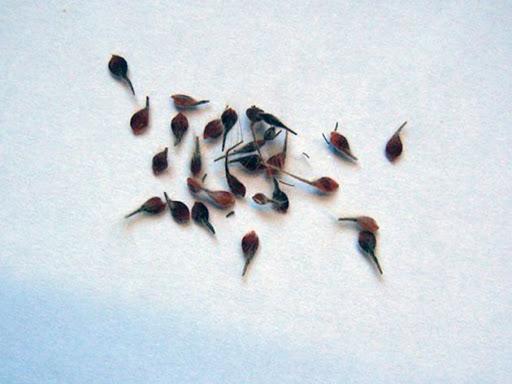
When sprouts appear, they should be lightly shaded and watered regularly. With the arrival of autumn, they are planted in their permanent location.
By dividing the bush
This method is suitable for rejuvenating mature plants. The procedure should be performed in April, before the growing season begins. To do this, it is recommended to dig up the bushes and divide them into several sections. Then, plant them in prepared holes.
Reviews of clematis
Numerous reviews of the culture testify to its popularity:
- Veronica, 34: "The clematis is a very beautiful plant that truly enhances my garden. It's similar in appearance to clematis. It's completely low-maintenance and blooms profusely."
- Pavel, 50: "I really like rhododendrons. I planted them along the fence, and they quickly created a living hedge. Now my property is private. The bushes don't require much care. Just water them once a week and fertilize them occasionally with organic matter."
The rhododendron is a popular plant often used in landscape design. To ensure its healthy and lush growth, it requires comprehensive and high-quality care. It's also important to protect the plant from diseases and pests.
Related posts:
 Methods for planting and propagating cherries at home
 The best grape varieties for growing in the Urals, planting and care rules in summer
 Growing and caring for hazelnuts in open ground, rules for planting hazelnuts
 Conditions for growing mandarin at home and rules for caring for the tree
 The best methods for growing grapes from seeds at home
 Description and rules for growing Solaris grapes
 Rules for planting and caring for pears in open ground, how to grow them correctly
 Description and cultivation of the 15 best cherry plum varieties for the Moscow region, planting and care rules