
- Clematis Warsaw Nike: characteristics and description
- Use in landscape design
- Landing features
- Site selection and preparation
- Preparing seedlings
- Optimal time and landing scheme
- How to care for a plant
- Watering
- How and when to fertilize flowers
- Loosening and mulching the soil
- Shaping and pruning
- Tying up
- Treatment against diseases and pests
- Shelter during the winter period
- Reproduction methods
- Gardeners' reviews of the variety
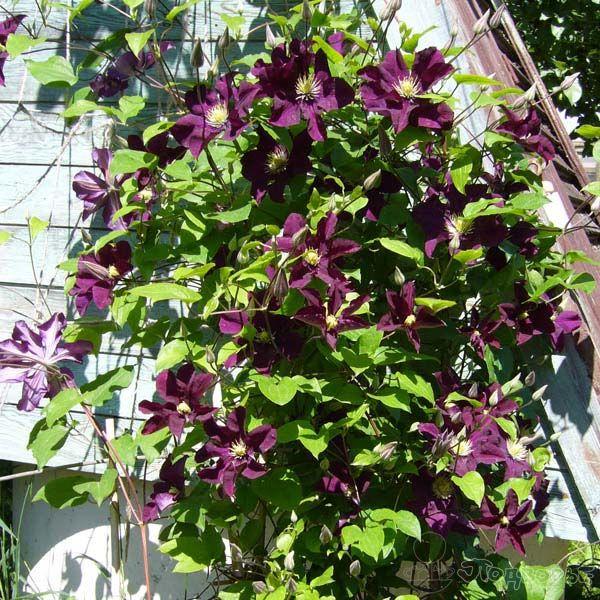
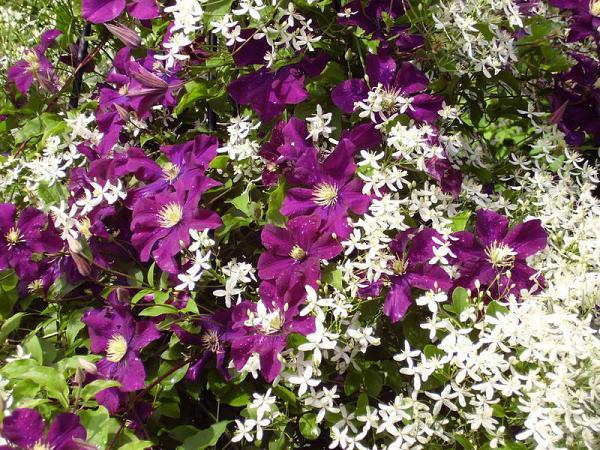
Among the wide variety of flowers in the front garden, the Varshavska Nike clematis is often found. This perennial vine belongs to the Ranunculaceae family. This shrub attracts gardeners with its ability to bloom continuously and abundantly throughout the summer season. Its dark purple flowers and velvety green leaves create a beautiful floral carpet that will adorn a gazebo, veranda, arch, or hedge.
Clematis Warsaw Nike: characteristics and description
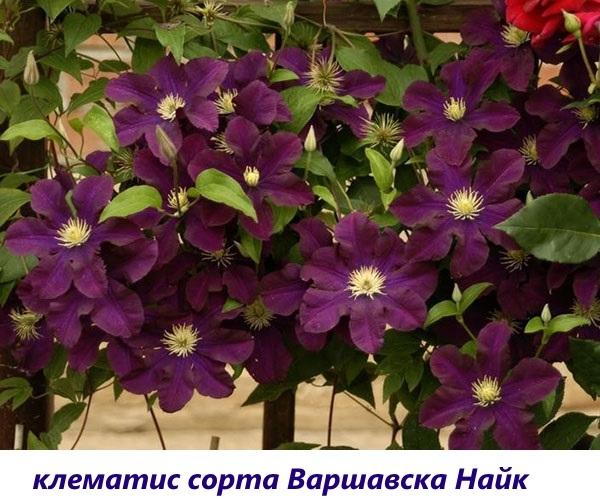
Clematis 'Warszawska Nike' became known to Polish breeder and Catholic monk Stefan Franczak in 1982. The researcher initiated the creation of new varieties of woody perennials. Over 30 years of breeding, he developed more than 65 clematis cultivars, each distinguished by its ornamental function and varying tolerances to adverse environmental conditions.
Clematis Polish Night has the following characteristics:
- the plant is a profusely flowering shrubby liana, reaching 3 m in height;
- the leaves are oval, dark green, with a velvety texture;
- the bush has large flowers and 7 petals that overlap each other;
- the petals are oval in shape, the tips are pointed, the surface is velvety with wavy edges;
- the petals are painted in dark purple color, near the middle the color is lighter;
- The buds are filled with white stamens and yellow anthers.
Clematis Varshavska Nike is considered a cold-resistant plant, surviving at -34 OIn warm summers, flowering begins in early June and August. The shrub is long-lived; with proper soil preparation and care, it can live up to 28 years in the same location.
Use in landscape design
Clematis Varshavska Nike is widely used by landscape designers to create decorative arches and flower arrangements. A popular solution is to grow clematis on delicate wrought iron supports—the original arrangement attracts attention with its presentable appearance.
Landing features
Clematis Varshavska Nike is a sun-loving plant, but a shade object should be placed near the roots to prevent the rhizome from drying out. It is recommended to plant small flowers around the trunk circle to shade the roots. Site selection and soil composition are important for successful clematis growth.
Site selection and preparation
Clematis is considered a long-lived plant and should be kept in a consistent location. Repotting can negatively impact mature shrubs.
Florists recommend planting the flower on the southern and southeastern side of the garden, protected from strong gusts of wind.
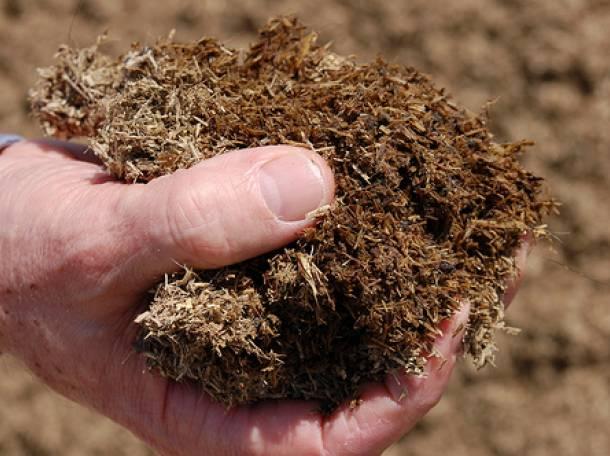
Select fertile, light, slightly alkaline soil for planting. One to two months before planting, dig a hole 60 cm deep, 60 cm high, and 60 cm in diameter. Line the bottom of the hole with a drainage layer of rotted manure, compost, and nutrient-rich soil. Enrich poor soil with peat, sand, compost, superphosphate, and dolomite flour.
Preparing seedlings
Varshavska Nike planting stock must be healthy, free of spots, cracks, and rot. Store seedlings in a bright room. Any emerging buds should be pinched off to strengthen the root system. If the root system is closed, the seedling is removed from the pot and transplanted into a hole along with the soil.
If the roots are exposed, soak them in Epin or Matador for 2.5 hours. Then remove them, dry them, and place them in a prepared hole. For full rooting, it's recommended to purchase two-year-old plants.
Optimal time and landing scheme
Clematis Varshavska Nike is an early bloomer and is planted in early spring or autumn when the temperature stabilizes at +12 OC. For transplanting into open soil, use two-year-old plants that have already developed a root system. The rhizome should have 5-8 roots 40-50 cm long. A healthy young bush should have developed vegetative buds.

Planting operations are carried out according to the following algorithm:
- First, you need to dig up the soil in the prepared hole, fill it with a nutrient mixture and form a small mound.
- The plant with exposed roots is divided, placed on a prepared mound, compacted and covered with the remaining soil.
- The planting must be watered with two buckets of water.
You can prevent soil overheating by mulching the tree trunk area and planting annuals or herbs. These will shade the root system, preventing infection and pests.
How to care for a plant
Clematis Varshavska Nike is considered an easy-to-care-for variety, and its care is no different from that of other tree-like plants. This vine-like perennial thrives with timely watering, fertilizing, and pruning.
Watering
For watering, use settled water. In normal weather, water the plant once every seven days; in hot weather, increase the frequency to three times a week. Young seedlings require two buckets of water, while mature plants will require four buckets. It is strongly recommended not to water the leaves or stems; water should only be applied at the roots.

How and when to fertilize flowers
Fertilize Varshavska Nike during active growth. The following nutrients are recommended for fertilizing the shrub:
- complex preparations (Kemira, Fitosporin);
- ammonium nitrate;
- phosphorus and potassium mixtures;
- nitrogen fertilizers;
- mineral fertilizers;
- chicken droppings;
- rotted manure;
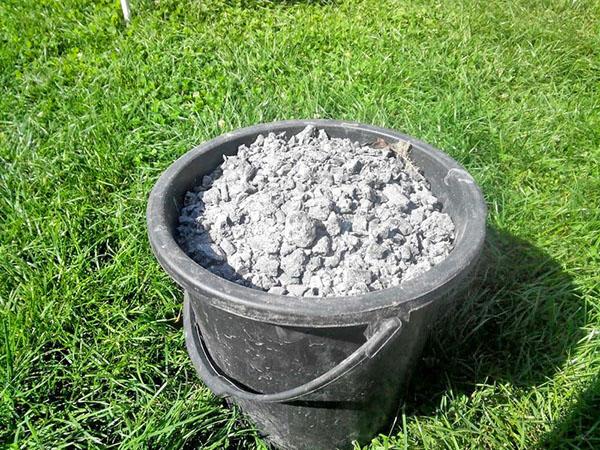
- wood ash.

For preventative purposes, in mid-July, the liana-like perennial is sprayed with a solution of boric acid and potassium permanganate.
Loosening and mulching the soil
Loosening the soil around the Varshavska Nike clematis allows oxygen to reach the rhizome, which promotes root strengthening and vegetative growth. The soil around the trunk is loosened with a three-pronged hoe, cleared of weeds, and covered with mulch.
Clematis is mulched:
- rotted manure;
- humus;
- compost;
- wood chips;
- pine needles;
- leaves;
- dry grass/hay.
Mulching can help retain moisture in the roots and make the soil looser.

Shaping and pruning
Each plant is assigned a specific pruning group; the Varshavska Nike clematis belongs to groups 2 or 3. Pruning is necessary to promote abundant flowering and the formation of large buds. The shoots are removed in October, before the onset of cold weather, leaving one bud.
There are three types of pruning. To promote timely flowering, the flowering parts of branches formed during the current season are removed. Medium pruning involves cutting branches before the true leaf forms. Severe pruning involves removing the entire branch.
Tying up
Clematis Varshavska Nike is considered a tall, vigorous climber that requires support. Support can be provided by an arch, special mesh, or a post. It looks spectacular planted on a wire fence, gazebo, house wall, or wrought iron gate. Staking the stems is essential when growing clematis; without additional support, the stems can twist or break.
Treatment against diseases and pests
Clematis Varshavska Nike is susceptible to the following diseases:
- Rust is identified by orange spots on the shoots. Affected leaves dry out, and shoots become deformed. The infection can be eliminated with Topaz, Hom, and Bordeaux mixture. Infection can be prevented by promptly removing weeds and destroying infected shoots.
- Gray mold. Dark spots and a silvery coating appear on affected leaves, which also stops shoot growth and bud formation. Treatment can be done with Azazen and Fundazol.
- Powdery mildew. The infection is identified by a white coating on leaves, young shoots, and flowers. The disease is controlled with Topaz or a soda solution.
- Wilt is a particularly dangerous disease for clematis. The disease is caused by microscopic fungi that invade the clematis's body. Infected shoots develop vascular blockages, stop breathing, and begin to darken and wilt. In the initial stages, clematis is treated with fungicides; if the infection is active, it is dug up and burned.
Clematis Varshavska Nike is attacked by nematodes. These are small worms that feed on the rhizome. The root system becomes covered with growths, the perennial stops growing, the leaves wilt, and the clematis dies. The infected plant must be dug up and burned, and the soil treated with nematocides.

Shelter during the winter period
Clematis Varshavska Nike is considered a cold-hardy variety, but gardeners recommend covering it before the onset of cold weather. Covering is done as follows:
- the planting is irrigated and fertilized with phosphorus-potassium mixtures;
- the shoots are fixed with a rope, covered with agrofibre, and lowered to the ground;
- Spruce branches, dry leaves, boards or slate are placed on top.
In spring, covering materials are removed only after the temperature has stabilized.
Reproduction methods
Clematis Varshavska Nike is propagated mainly by vegetative means:
- Green cuttings. When buds have formed on the flower, shoots from the middle part of a two-year-old plant are cut. The cuttings are soaked in growth-stimulating solutions and planted in a pot with peat and sand.
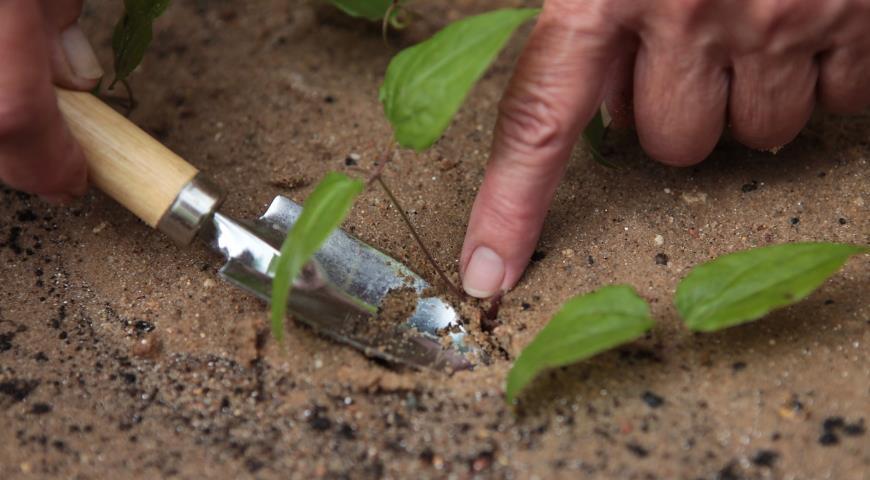
- Layering. In mid-October, one shoot is lowered to the ground and covered with soil. After the new shoots emerge, they are cut off and potted until the root system is established.
- By dividing the bush. Five-year-old specimens are used for propagation. They are dug up whole, and the rhizome is separated.
Florists almost never use seed propagation, as it is a long and labor-intensive process.
Gardeners' reviews of the variety
Clematis Varshavska Nike attracts attention with its striking appearance, pleasant fragrance, and long flowering period. This flower has earned popularity among gardeners.
Antonina, 40: "I love clematis, and the Varshavska Nike variety is a special place in the garden. I planted it near the fence, and after four years, the bush has grown all over the fence, forming a veritable wall of flowers."
Dmitry, 39: "My wife and I planted a Varshavska Nike clematis, and we've been admiring its beauty and lush flowers for five years now. We use mineral and organic fertilizers."
Tatyana, 56: "I planted clematis at my dacha, afraid they'd die in the winter—we live in a cold region. On a neighbor's advice, I covered the plant with insulation and was surprised—when the weather warmed up, it started to thrive, and in the summer, it delighted me with its spectacular buds. I recommend the Varshavska Nike clematis."
Related posts:
 Description and pruning group of clematis President, cultivation and care
 Description of the burning clematis, planting and care in open ground, propagation
 Description and pruning group of Clematis Mountain, planting technology and care
 Description and pruning group of clematis Rouge Cardinal, cultivation and propagation
 Description and characteristics of Manchurian clematis, cultivation techniques
 Description and pruning group of clematis Mrs. Cholmondeley, cultivation and care
 Description of clematis varieties, planting and care, propagation methods
 Description and characteristics of the clematis variety Kaiser, planting and care, pruning group